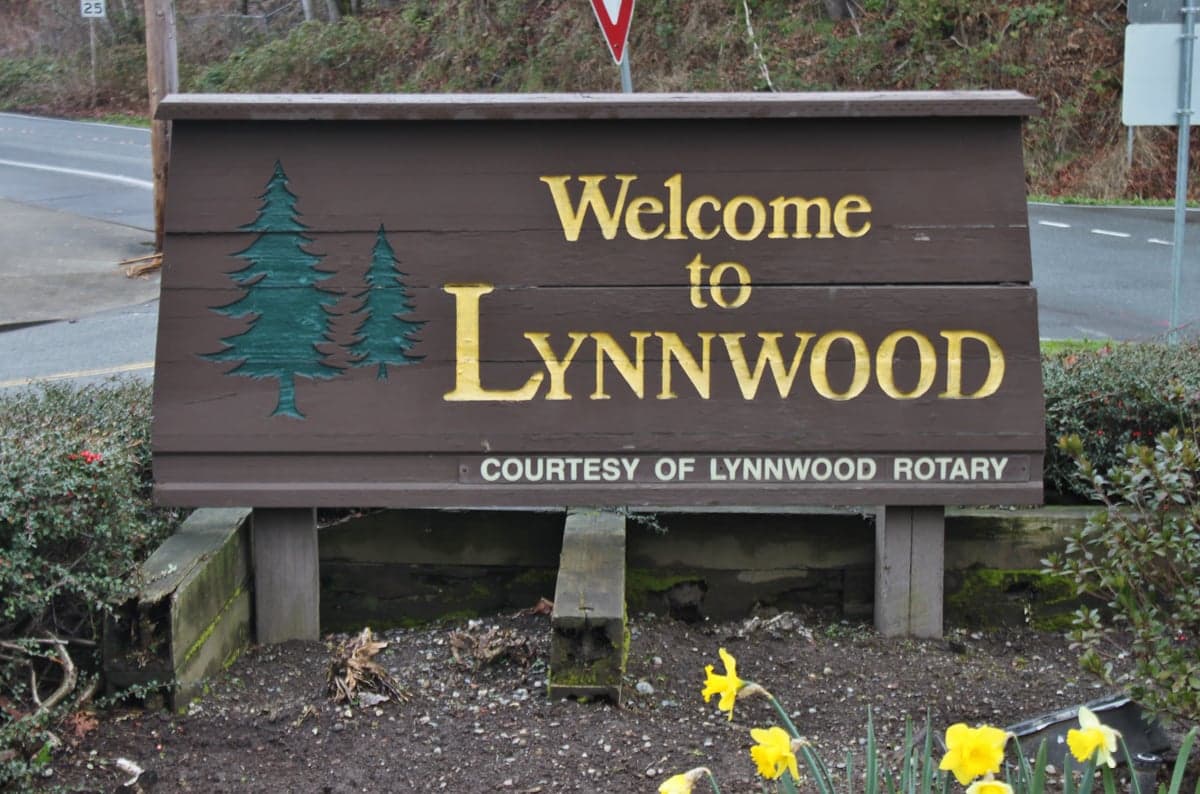
Photo: Wikipedia
Personal Sovereignty in Lynnwood, WA
Viable for self-reliance. Generally workable, though some barriers may limit total independence.
What does Personal Sovereignty tell us?
Personal Sovereignty measures your capacity for self-reliance and independence with minimal government friction. Higher scores mean fewer barriers between you and the way you want to live... but it assumes you have the space you need and good neighbors.
What does this tell us?
Personal Sovereignty measures your capacity for self-reliance and independence with minimal government friction. Higher scores mean fewer barriers between you and the way you want to live... but it assumes you have the space you need and good neighbors.
State Policy
Energy independence: Importer (55% of energy produced in-state)
Personal Liberty
Homesteading

Personal Liberty Analysis
For conservative-leaning individuals and families who prioritize personal sovereignty—meaning the ability to live, defend, and provide for themselves without excessive government interference—Lynnwood, Washington presents a deeply mixed picture. Located in Snohomish County, roughly 15 miles north of Seattle, Lynnwood sits within a state that has aggressively expanded its regulatory reach into nearly every corner of private life, from taxation and gun ownership to medical choices and parental authority. While the city itself offers some practical advantages for self-reliant living, the overarching legal and political environment in Washington state imposes significant constraints on personal autonomy that a survivalist or prepper-minded individual must weigh carefully. The bottom line: Lynnwood is a place where you can carve out a degree of self-sufficiency at the household level, but you will be doing so under the constant shadow of a state government that views personal sovereignty as a threat to be managed.
Tax burden and regulatory posture in Washington state
Washington state’s tax structure is a double-edged sword for those seeking financial sovereignty. On the positive side, there is no state income tax, which means every dollar you earn stays in your pocket—a significant advantage for high-earning professionals and business owners who want to maximize savings for prepping, land, or equipment. However, the state compensates with some of the highest sales taxes in the nation. Lynnwood’s combined state and local sales tax rate is 10.1% as of 2026, which applies to nearly all goods, including firearms, ammunition, tools, and building supplies. This effectively acts as a consumption tax on the very items a self-reliant household needs most. Property taxes in Snohomish County are moderate, around 0.9% of assessed value, but annual reassessments mean your tax bill can rise sharply if the market heats up. More concerning for the sovereignty-minded is the regulatory posture: Washington has a sprawling administrative code that governs everything from building permits to water rights. The state’s Growth Management Act forces cities like Lynnwood to enforce strict urban growth boundaries, limiting rural-style development and making it difficult to buy land for homesteading within city limits. Permitting for anything beyond a simple shed can take months, and the state’s environmental regulations (particularly the Shoreline Management Act and the State Environmental Policy Act) add layers of bureaucracy to even modest property improvements. This regulatory density is a form of soft control—it doesn’t ban self-reliance outright, but it makes it expensive and time-consuming to pursue.
Self-defense rights and gun law specifics in Lynnwood
For those who view the Second Amendment as the bedrock of personal sovereignty, Washington state has become a hostile jurisdiction. In 2023, the state legislature passed a ban on so-called "assault weapons" (a term that covers many semi-automatic rifles, including the AR-15 platform), along with a ban on high-capacity magazines (over 10 rounds for long guns, over 15 for handguns). These laws are currently in effect, though they face ongoing legal challenges. Lynnwood itself has no additional local gun restrictions beyond state law, but the practical effect is that purchasing a new AR-15 or standard-capacity magazines is illegal as of 2026. Additionally, Washington requires a background check for every firearm sale, including private transfers, and imposes a 10-day waiting period on all handgun purchases. Open carry is legal without a permit, but concealed carry requires a license (issued by the county sheriff, with a shall-issue policy). The state also has a "red flag" law (Extreme Risk Protection Order) that allows law enforcement or family members to petition a court to temporarily seize firearms from someone deemed a risk—a tool that critics argue can be abused. For the prepper, this means that building a robust personal armory is legally constrained, and the political climate in Olympia suggests further restrictions are likely. Self-defense in the home is protected under the "castle doctrine" (no duty to retreat), but Washington does not have a "stand your ground" law for public spaces, meaning you must retreat if safely possible before using deadly force. This legal landscape forces a strategic approach: focus on training, legal compliance, and perhaps consider moving to a more firearm-friendly county if that is a priority.
Self-reliance and homesteading viability in Lynnwood
Lynnwood is a suburban city with a population around 40,000, and its zoning reflects that. The vast majority of residential lots are small—typically 5,000 to 7,000 square feet—which severely limits homesteading potential. Raising chickens is allowed in most residential zones (up to four hens, no roosters), but larger livestock like goats or pigs is prohibited. Gardening is permitted, but the small lot size means you’re looking at a few raised beds, not a food-producing property. Off-grid living is essentially impossible within city limits: the city requires connection to municipal water and sewer, and solar panels are allowed but must meet building code and utility interconnection standards. Rainwater collection is legal but limited to 3,500 gallons of storage without a permit, and the state’s water rights laws complicate any serious irrigation. For those seeking true self-reliance, Lynnwood is a stepping stone, not a destination. The real opportunity lies in Snohomish County’s rural areas, such as Granite Falls, Arlington, or the Skykomish Valley, where you can find 5- to 20-acre parcels with fewer zoning restrictions. However, commuting to Lynnwood from those areas is 30-60 minutes each way. Within Lynnwood itself, the best you can do is a suburban homestead: a large garden, a few chickens, and a well-stocked pantry. The city’s proximity to the Puget Sound also means you have access to fishing and crabbing, but those are public resources subject to state Department of Fish and Wildlife regulations, including licensing and seasonal limits.
Personal liberties: parental rights, medical autonomy, speech, and property
On the cultural front, Washington state has moved aggressively to centralize authority over children and medical decisions. Parental rights in education have been significantly eroded: the state’s "Healthy Youth Act" mandates comprehensive sex education that includes LGBTQ+ content, and schools are not required to notify parents if a child requests a name or pronoun change. The state also has a "shield law" that protects minors seeking gender-affirming care from parental notification in certain circumstances. For conservative parents, this creates a direct conflict between family values and state policy. Medical autonomy is similarly constrained: Washington has a strict vaccine mandate for school attendance (though religious exemptions are available), and the state’s "death with dignity" law allows physician-assisted suicide, which some view as a slippery slope. On the positive side, property rights are relatively strong in terms of ownership—there is no state-level rent control, and the state’s "takings" laws require compensation for regulatory actions that significantly diminish property value. However, the state’s environmental regulations can effectively limit how you use your land. Free speech is protected under the First Amendment, but the state has enacted laws against "malicious harassment" and "cyberstalking" that some critics argue chill political speech. The overall picture is one of a state that respects property ownership but is deeply skeptical of individual autonomy in family and medical matters. For the sovereignty-minded, this means you must be proactive: homeschool if possible, avoid unnecessary medical interventions, and be prepared to engage politically to defend your rights.
In the broader context of the Pacific Northwest, Lynnwood offers a moderate degree of personal sovereignty compared to Seattle proper (where taxes are higher and regulations more stringent) but falls far short of rural areas in Idaho or Eastern Washington. The city’s advantages—no income tax, decent property rights, and access to public lands—are real, but they are offset by a state government that actively restricts gun ownership, parental authority, and medical freedom. For a survivalist or prepper, Lynnwood is a place to live while you build resources and plan an eventual move to a more liberty-friendly jurisdiction. It is not a place to dig in and make a stand. The best strategy is to treat Lynnwood as a base of operations: keep your head down, comply with the law where you must, and focus on building the skills and capital needed to relocate to a state that still respects the individual’s right to self-determination.

* Values derived from national, state, county, city and local statistics and may differ in a specific area. Last updated: 2026-04-21T11:13:09.000Z
Narrative content on this page is AI-generated and may contain mistakes. Verify any details that matter before acting on them.
ReloMaps may earn a commission from affiliate links at no extra cost to you.

