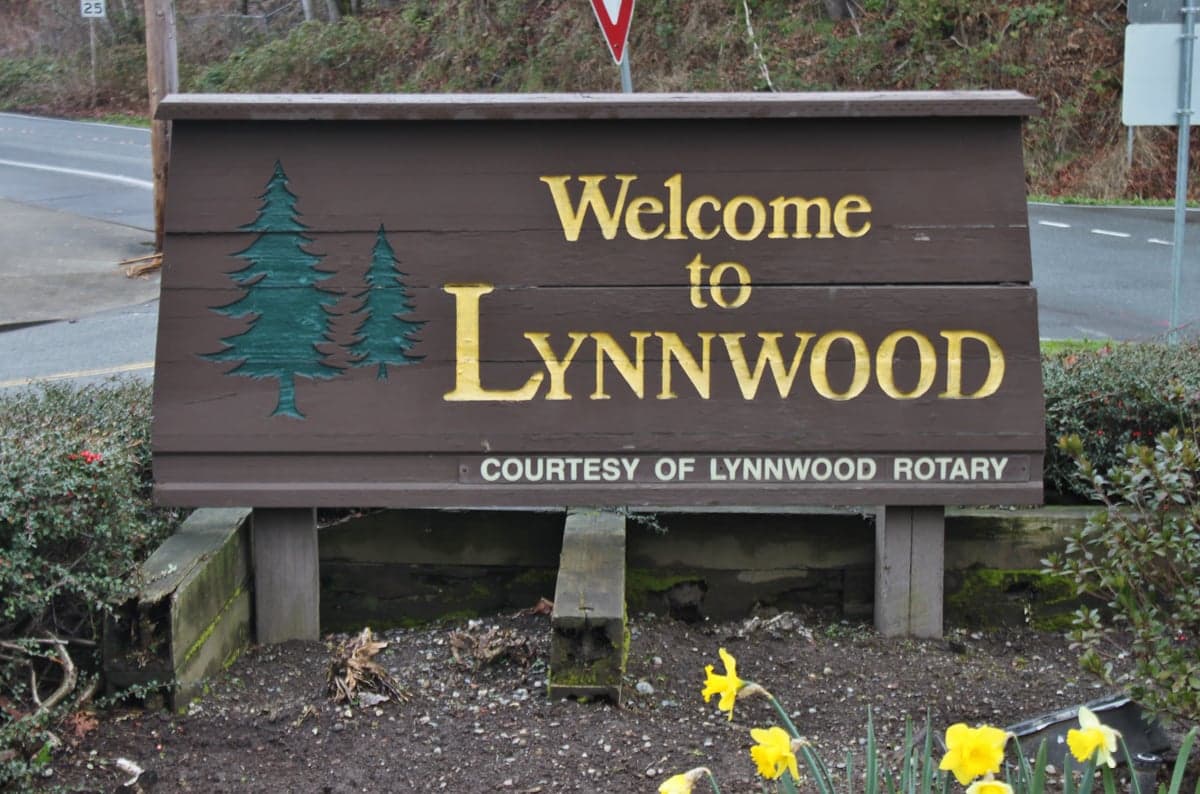
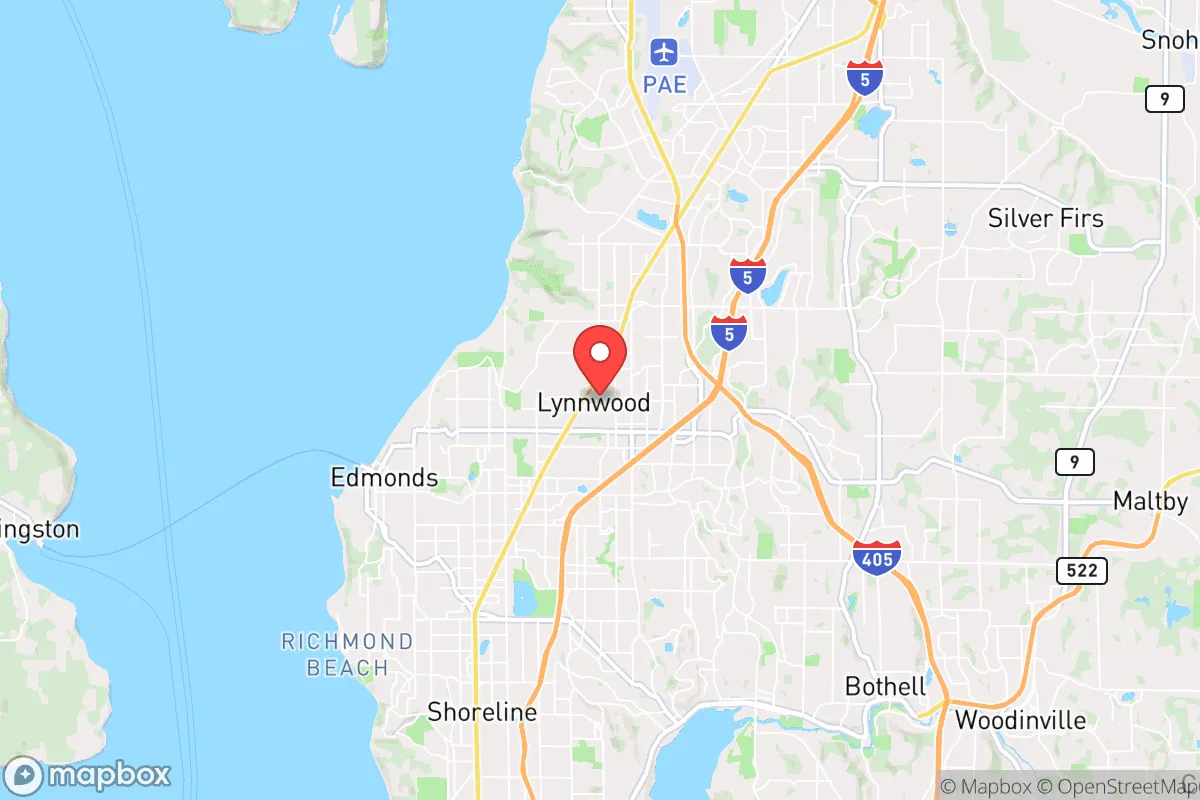
Photo: Wikipedia
Strategic Assessment of Lynnwood, WA
High tactical risk. This location is likely close to major population centers, strategic targets, or sits in a high-disaster corridor. A retreat property and careful exit planning is required.
What does the Strategic Assessment tell us?
Our Strategic Assessment grades tactical survivability of an area. Major population centers, military targets, fallout zones, natural disasters, and border exposure all drive risk — lower exposure means a more defensible position in a crisis.
This is heavily inspired by Joel Skousen's Strategic Relocation book. Highly recommended you checkout the book ($)What does this tell us?
Our Strategic Assessment grades tactical survivability of an area. Major population centers, military targets, fallout zones, natural disasters, and border exposure all drive risk — lower exposure means a more defensible position in a crisis.
This is heavily inspired by Joel Skousen's Strategic Relocation book. Highly recommended you checkout the book ($)Strategic Pillars

Key Distances
Regional Safe Places
Below is our recommended "safe zones" in Washington and the surrounding area based on our strategic heuristics. For most people, it's unrealistic to live in a “safe zone” full-time due to work, family or other personal reasons. They tend to be more rural. However, many of these areas are perfect for second homes and retreat properties that double as a vacation home or even a short-term rental.
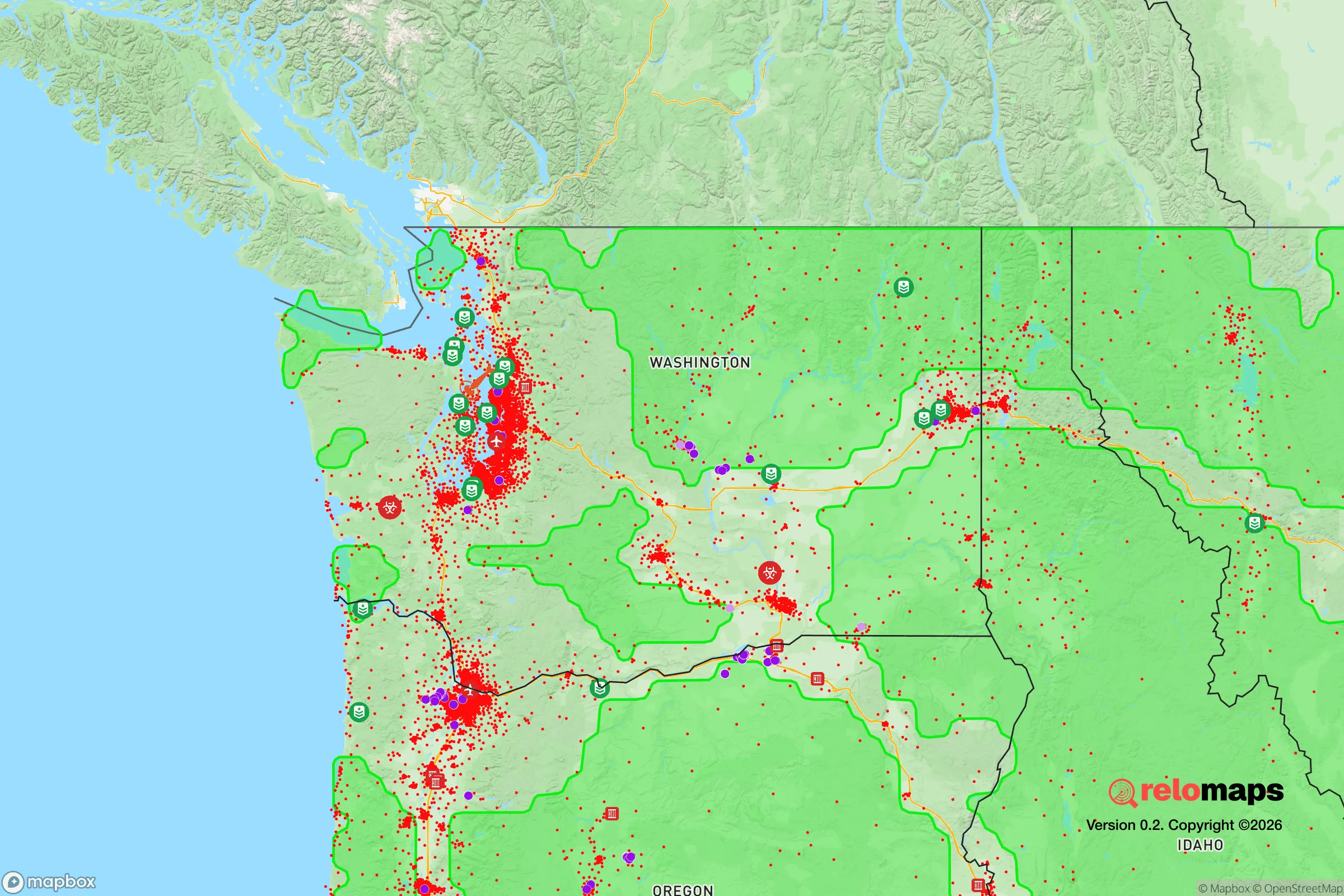
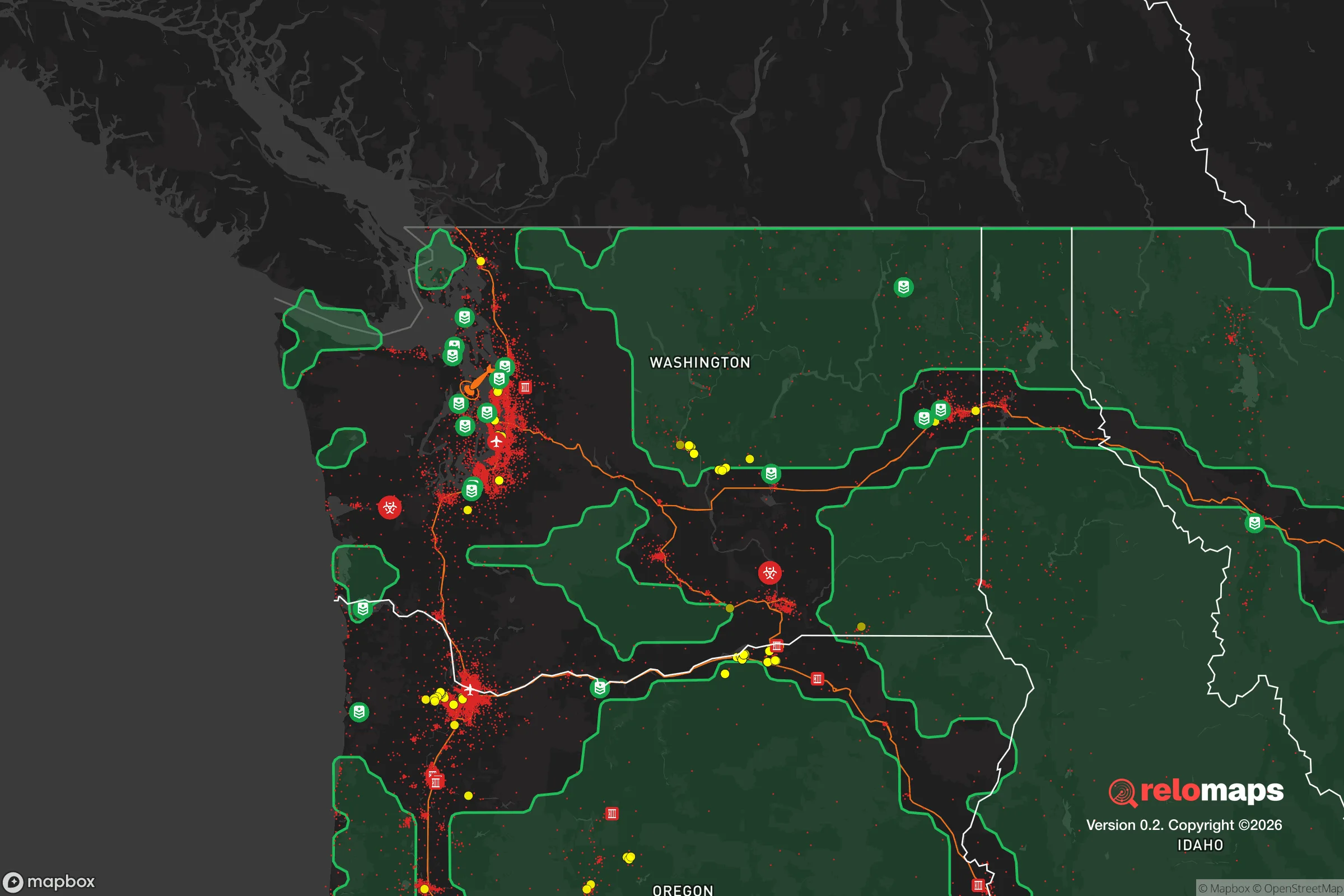


Important Note: For informational purposes only. This does not mean nothing bad ever happens in the green zones. Please use common sense. This is based on public data and modeled with AI. We tried to take a conservative approach but mistakes happen. We update this regularly as new information becomes available.
Solar Generator Recommendations
Backup power matters more here than in safer locations. We've picked three solar generators across budgets and capacity tiers — start with the budget unit if you only need a few essentials, or step up if you want to run a fridge and HVAC for days at a time.

Jackery Portable Power Station Explorer 300
Budget OptionPower on the Go: Weighing only 11 lbs, it's convenient to set up and store with book-sized foldable solar panels

BLUETTI Portable Power Station AC180
Designed for both indoor and outdoor scenarios, AC180 is highly capable as it has a robost capacity and continuous output power.

EF ECOFLOW DELTA Pro Ultra Power Station
Upgraded PickEcoFlow DELTA Pro Ultra is a whole-home energy system designed to grow with your family. Integrated with the Smart Home Panel 2, it scales to meet your evolving energy needs — keeping your home powered, intelligent, and secure through every stage of life.
We earn a commission, at no additional cost to you.
Strategic Assessment Analysis
Lynnwood, Washington, sits in a precarious strategic position that demands a hard-nosed assessment for anyone serious about long-term resilience. While its location in Snohomish County offers some natural advantages, its proximity to Seattle, major military installations, and critical infrastructure creates a complex risk profile that cannot be ignored. For the conservative-minded relocator who values self-reliance and preparedness, Lynnwood presents a mixed bag: decent access to resources and escape routes, but also a high likelihood of being in the path of cascading disruptions from a major event.
Geographic position and natural advantages for long-term survival
Lynnwood’s geographic position is a double-edged sword. On the plus side, it sits roughly 15 miles north of Seattle, placing it just outside the immediate blast radius of a major urban catastrophe while still being close enough to access supply chains in the early stages of a crisis. The city is nestled between the Puget Sound to the west and the Cascade foothills to the east, offering two distinct escape corridors. The Mountain Loop Highway and US-2 provide routes into the rugged, sparsely populated Cascade Range, where defensible terrain and off-grid living become viable. The city’s elevation, around 400 feet, keeps it above most tsunami and storm surge risks from the Sound, and its location in the rain shadow of the Olympic Mountains means it gets less precipitation than areas further west—a minor but real advantage for maintaining dry storage and avoiding mold issues in a long-term grid-down scenario. The surrounding forests and waterways also offer hunting, fishing, and foraging opportunities, though these would be quickly depleted in a prolonged event.
Risks, exposures, and proximity to fallout-relevant landmarks
The downsides are substantial and demand careful consideration. Lynnwood is within a 30-minute drive of Naval Station Everett, a major homeport for the U.S. Pacific Fleet, and within an hour of Joint Base Lewis-McChord, one of the largest military installations on the West Coast. In a conflict or major civil unrest, these bases become primary targets for kinetic or cyber attacks, and the resulting chaos—roadblocks, military checkpoints, and potential evacuations—would choke the I-5 corridor, Lynnwood’s main artery. The city also lies directly under the flight paths of both Boeing Field and Seattle-Tacoma International Airport, making it a potential fallout zone from a dirty bomb or aircraft-related disaster. The I-5 bridge over the Snohomish River, just north of Lynnwood, is a single-point-of-failure chokepoint; if it goes down, the city becomes a dead end for north-south movement. Additionally, the nearby Mukilteo oil refinery and the numerous fuel storage tanks along the waterfront present a significant hazard for fire or explosion, especially in the event of an earthquake or sabotage.
Practical resilience for a relocator: food, water, energy, and defensibility
For a relocator looking to hunker down, Lynnwood’s practical resilience is middling at best. The city’s water supply comes from the Spada Lake Reservoir via the City of Everett, a system vulnerable to seismic disruption—the Cascadia subduction zone earthquake is a real, if low-probability, threat. A major quake would likely sever water lines for weeks, so a well or a large rainwater catchment system is non-negotiable. The local power grid is tied to the Bonneville Power Administration, which is robust but not immune to cyberattacks or EMP events; a solar setup with battery storage is advisable, but the region’s frequent overcast skies reduce solar yield by 30-40% compared to the Southwest. Food storage is feasible, with several big-box stores (Costco, WinCo) within a 10-minute drive, but these would be looted within hours of a crisis. The city’s suburban layout—single-family homes with yards—offers some defensibility, but the dense neighborhoods and lack of natural barriers mean that a determined group could easily overwhelm a single household. The nearby Snohomish River and Lake Ballinger provide alternative water sources, but they require treatment and are likely to be contaminated by runoff or industrial spills. For a single individual or family, the best strategy is to use Lynnwood as a staging point—stockpile supplies, maintain a vehicle with a full tank, and have a bug-out plan to the Cascades or eastern Washington within the first 48 hours of a major event.
The overall strategic picture for Lynnwood is one of calculated risk. It is not a place to make a last stand, but it can serve as a viable base for those who are mobile, well-supplied, and willing to relocate quickly when the situation deteriorates. The city’s proximity to Seattle and military targets makes it a likely hotspot for unrest, but its access to multiple escape routes and natural resources gives it a slight edge over more urbanized areas. For the conservative prepper, the key takeaway is this: Lynnwood is a transitional zone, not a destination. If you are looking for a place to build a long-term, self-sufficient homestead, look further east or north. But if you need to stay close to the region for work or family, and you are disciplined about your preparations, Lynnwood can work—provided you treat it as a temporary foothold, not a fortress. The smart money is on having a fully stocked bug-out vehicle and a clear plan to get to higher, less populated ground within hours of any major event.

* Values derived from national, state, county, city and local statistics and may differ in a specific area. Last updated: 2026-04-21T11:13:09.000Z
Narrative content on this page is AI-generated and may contain mistakes. Verify any details that matter before acting on them.
ReloMaps may earn a commission from affiliate links at no extra cost to you.

