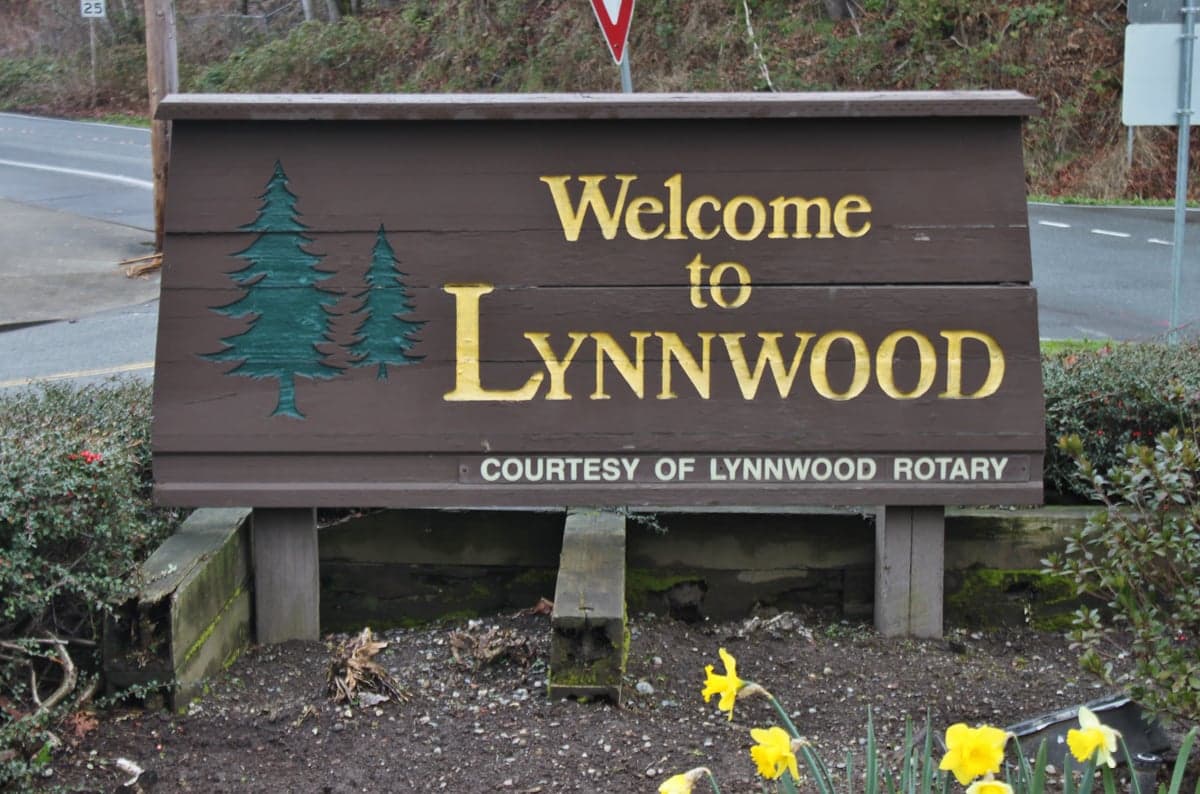
Photo: Wikipedia
Political ClimatePolitical Climate in Lynnwood, WA
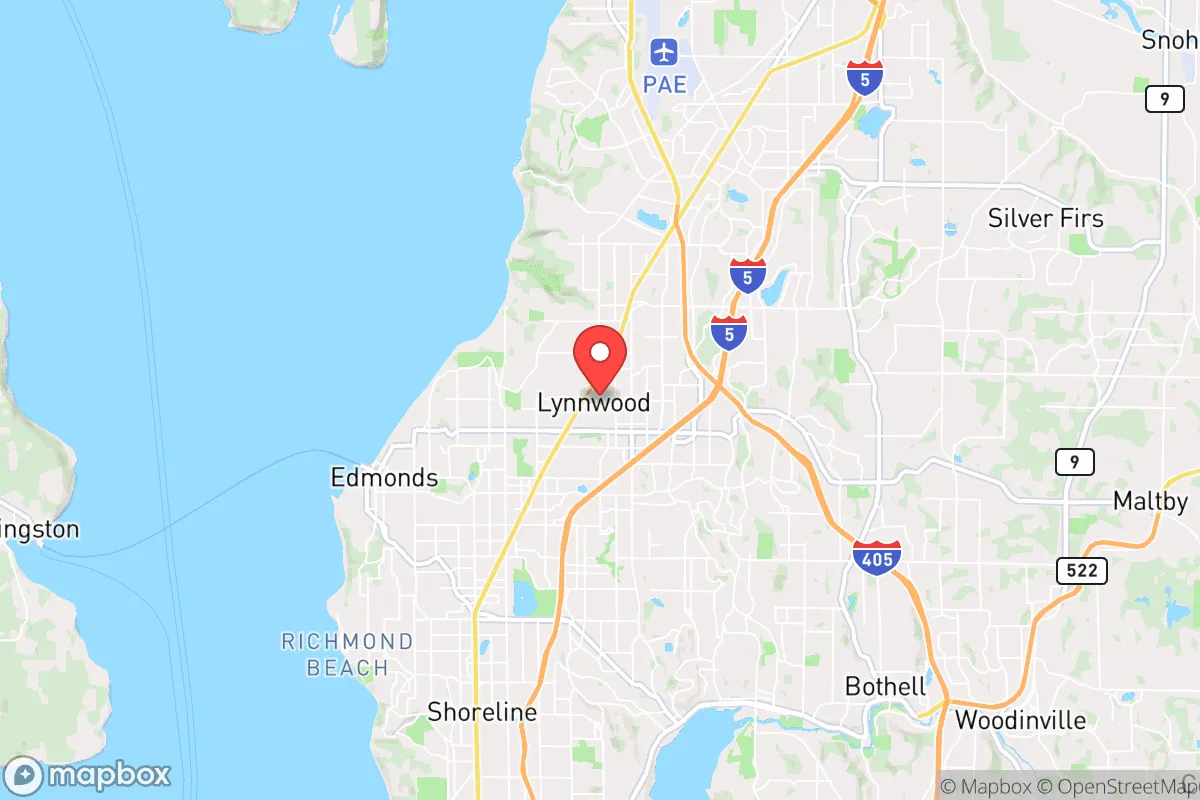
District shown is the primary district for this city’s centroid. Cities may span multiple districts.
Local Political AnalysisPolitical Analysis of Lynnwood, WA
Lynnwood’s political climate has shifted hard to the left over the past decade, and if you’ve lived here as long as I have, you’ve felt it in everything from local zoning to how the school board talks about curriculum. The Cook PVI of D+12 tells you the baseline—this isn’t a purple town anymore. Snohomish County as a whole has trended blue, but Lynnwood, sandwiched between the reliably progressive hubs of Seattle and Everett, has become a real stronghold for progressive policies. You don’t see many yard signs for the other side during election season, and the city council races rarely feature a serious conservative challenger. The trajectory is clear: each cycle, the margin widens, and the policy priorities get bolder.
How it compares
Drive ten miles north to Mill Creek or east to Bothell, and you’ll find a more balanced political mix—still blue-leaning, but with enough conservative voices to keep things from going off the rails. Head south into Shoreline or Lake Forest Park, and you’re in deep-blue King County territory, where the local government is openly experimenting with things like rent control and police defunding. Lynnwood sits right in the middle of that spectrum, but it’s been drifting southward politically. The contrast with Edmonds, just west, is interesting: Edmonds has a vocal progressive activist class that pushes hard on environmental and social justice issues, while Lynnwood’s politics are more technocratic—less street-level activism, more bureaucratic implementation of state-level mandates. Still, the end result is the same: a local government that’s comfortable with higher taxes, tighter regulations on landlords and small businesses, and a school district that’s quick to adopt the latest equity frameworks without much public debate.
What this means for residents
For a conservative or even a moderate, living here means you’re constantly navigating policies that feel like they’re written by people who don’t trust you to make your own choices. The city council has been aggressive on land-use regulations—things like mandatory inclusionary zoning and density bonuses that sound good on paper but end up dictating what you can build on your own property. The school board has moved toward ethnic studies requirements and gender-inclusive policies that parents don’t get a real say in. And the county’s property tax levies keep climbing, funding programs that many residents never asked for. If you value personal freedom—whether it’s choosing your child’s education, running a small business without endless permitting, or just keeping more of your paycheck—you’ll feel the squeeze here. The long-term trend is concerning: as the state legislature in Olympia keeps passing preemptive laws on everything from rent control to police oversight, local governments like Lynnwood’s are happy to go further, not push back.
One cultural distinction that stands out is how apolitical daily life can feel despite the political lean. Most people here are just trying to get to work, deal with traffic on I-5, and find a decent parking spot at Alderwood Mall. The progressive policies mostly show up in your tax bill or in a school email you didn’t ask for. But the direction is unmistakable: more government involvement in housing, more mandates on businesses, and less room for dissenting voices in public meetings. If you’re considering a move here, I’d say look closely at the city council candidates in the next election—they’re the ones who will decide whether Lynnwood keeps sliding left or finds a more balanced path. Right now, the odds aren’t in favor of the latter.

State Political ClimatePolitical Climate in Washington
State Political AnalysisPolitical Environment in the State
Washington State has shifted from a purple battleground to a solidly blue stronghold over the past two decades, with Democrats controlling every statewide office and both legislative chambers since 2012. The state hasn't voted Republican for president since 1984, and the 2024 election saw Kamala Harris carry it by roughly 19 points, though that margin masks a deeply fractured electorate. The real story is the urban-rural chasm: King County alone delivers about a third of the state's total vote, and its leftward drift has pulled the entire state with it, while vast swaths of eastern and southwestern Washington feel increasingly alienated from Olympia.
Urban vs. rural divide
The political map of Washington is essentially a tale of two states. The I-5 corridor from Seattle through Tacoma to Olympia is the Democratic engine, with King County producing margins of 70-80% for Democratic candidates. Seattle itself is a progressive stronghold where city council races often turn on who can be more left on housing and policing. Just east of Seattle, Bellevue and Redmond have flipped from reliably Republican to competitive or Democratic-leaning as tech workers flooded in—Microsoft's hometown now votes blue by double digits. Spokane, the state's second-largest city, is a rare bright spot: it voted for Trump in 2020 and 2024, though the surrounding Spokane County is a toss-up. Yakima and the Tri-Cities (Kennewick, Pasco, Richland) are reliably red, driven by agriculture and the Hanford nuclear site workforce. Vancouver, just across the Columbia from Portland, has been trending blue as California and Oregon transplants move in, making Clark County a perennial swing county that broke for Biden in 2020 but narrowly for Trump in 2024. The rural counties—Ferry, Stevens, Pend Oreille, Garfield—routinely vote 70-80% Republican, but their populations are too small to counterbalance King County's 2.3 million residents.
Policy environment
Washington's policy landscape is a textbook case of progressive governance with a heavy hand. There is no state income tax, which sounds great until you realize the state has the most regressive tax system in the nation, relying heavily on sales and property taxes. The state sales tax is 6.5%, but local add-ons push it past 10% in Seattle and Tacoma. The capital gains tax on profits over $250,000, passed in 2021 and upheld by the state supreme court, is functionally a wealth tax on business owners and investors. On education, Washington spends above the national average per pupil, but parental rights are weak: the state mandates comprehensive sex education that includes LGBTQ+ content from kindergarten, and there is no universal school choice program. Healthcare is dominated by the state's public option, Cascade Care, and the state runs its own health insurance exchange. Election laws are among the most liberal: universal mail-in voting is the only option, same-day voter registration is allowed, and ballots are automatically sent to every registered voter. This system has produced high turnout but persistent concerns about ballot security, especially after the 2020 election saw thousands of ballots flagged for signature issues in King County alone.
Trajectory & freedom
Washington is unmistakably trending less free, especially for conservatives and libertarians. The 2021 passage of HB 1055 effectively banned the sale of new gas-powered cars by 2035, and the state's cap-and-trade program (Climate Commitment Act) has driven gas prices to among the highest in the nation—over $5 per gallon in 2025. On gun rights, Washington has gone from a shall-issue state to one of the most restrictive: HB 1240 (2023) banned the sale of over 50 types of semi-automatic rifles, and SB 5078 (2024) requires a 10-day waiting period and safety training for all firearm purchases. Magazine capacity is capped at 10 rounds. Parental rights took a hit with SB 5599 (2023), which allows minors to receive gender-affirming care without parental consent, and the state's "shield law" protects providers who perform such care from out-of-state legal action. Medical freedom is constrained by the state's strict vaccine mandates for healthcare workers and schoolchildren, though COVID-era mandates have been relaxed. Property rights are under pressure from the state's Growth Management Act, which forces cities to upzone for density and limits rural development. The state supreme court's 2023 McCleary decision continues to force massive education spending increases, driving up property taxes.
Civil unrest & political movements
Washington has been a flashpoint for political activism on both sides. The 2020 CHOP/CHAZ occupation in Seattle's Capitol Hill neighborhood—where protesters seized six blocks and declared an autonomous zone—was a national embarrassment that lasted three weeks and resulted in two deaths. The city's response was widely criticized as feckless. On the right, the Washington State Republican Party has been riven by internal divisions between moderates and Trump-aligned activists, but grassroots groups like the Washington Gun Rights Alliance and Moms for Liberty chapters in Spokane and Vancouver have been active. Immigration politics are tense: Washington is a sanctuary state under the 2019 Keep Washington Working Act, which prohibits state and local law enforcement from cooperating with federal immigration authorities. This has led to friction in border counties like Yakima, where ICE operations are hampered. Election integrity remains a hot-button issue: the 2020 election saw King County initially report a 19% error rate in signature verification, though the state certified the results. Secession talk is mostly confined to rural counties—the "Liberty State" movement in eastern Washington has no serious political traction, but it reflects deep alienation. The 2024 legislative session saw HB 2014, which would have allowed non-citizens to vote in local elections, fail by a narrow margin—a sign of how far the Overton window has shifted.
Projection
Over the next 5-10 years, Washington will likely continue its leftward march, driven by in-migration from California and Oregon and the natural growth of the tech sector. King County's population is projected to grow by another 200,000 by 2035, cementing Democratic dominance. The state's carbon agenda will accelerate: the cap-and-trade program will push energy costs higher, and the gas car ban will force early adoption of EVs. Gun restrictions will probably tighten further—a proposed "assault weapon" registry and mandatory liability insurance for gun owners are already being discussed. Parental rights will remain a battleground, with likely attempts to expand the age for gender-affirming care without consent. The one wild card is a potential economic downturn: if the tech sector contracts, the state's revenue base (heavily dependent on capital gains and high-income earners) could crater, forcing tax increases that might trigger a backlash. But for now, the trajectory is clear: more regulation, higher taxes, and less personal freedom, especially for gun owners, parents, and small business owners.
For a conservative-leaning individual or family considering a move to Washington, the bottom line is this: the state's natural beauty and economic opportunities are real, but they come with a heavy price tag in terms of personal liberty and cost of living. If you value low taxes, gun rights, parental control over education, and a government that stays out of your life, Washington is increasingly hostile territory. The best bets for conservatives are the eastern counties—Spokane, the Tri-Cities, and Yakima—where local culture is more aligned with traditional values, but you'll still be subject to state-level policies you can't vote your way out of. If you're willing to fight for your freedoms at the ballot box and in the courts, Washington offers a beautiful place to make a stand. If you just want to live quietly without the government in your business, you might want to look at Idaho or Montana instead.
* Values derived from national, state, county, city and local statistics and may differ in a specific area. Last updated: 2026-04-21T11:13:09.000Z
Narrative content on this page is AI-generated and may contain mistakes. Verify any details that matter before acting on them.
ReloMaps may earn a commission from affiliate links at no extra cost to you.

