Photo: Wikipedia
Demographics of Lynnwood, WA
Affluence Level in Lynnwood, WA
A middle-class area roughly in line with national averages across income, home values, education, and employment.
People of Lynnwood, WA
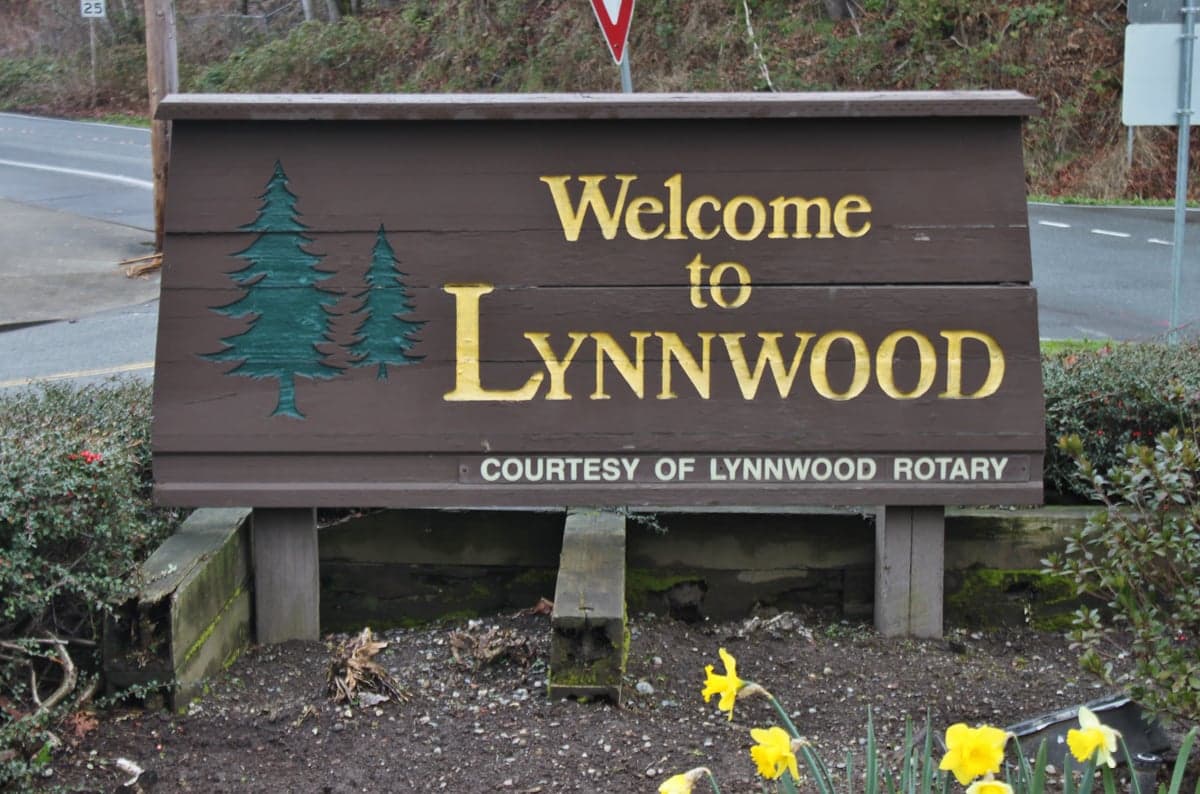
Lynnwood, Washington, today is a dense, diverse, and increasingly Asian-influenced suburb of 40,953 residents, where no single racial or ethnic group holds a majority. Its population is notably more foreign-born (11.6%) than the national average, and its character is defined by a mix of established single-family neighborhoods and newer high-density apartment and condo developments near the Alderwood Mall and transit hubs. The city feels like a quiet, family-oriented bedroom community that is rapidly urbanizing, with a distinct East/Southeast Asian commercial and cultural presence that sets it apart from older, whiter suburbs to the north.
How the city was settled and grew
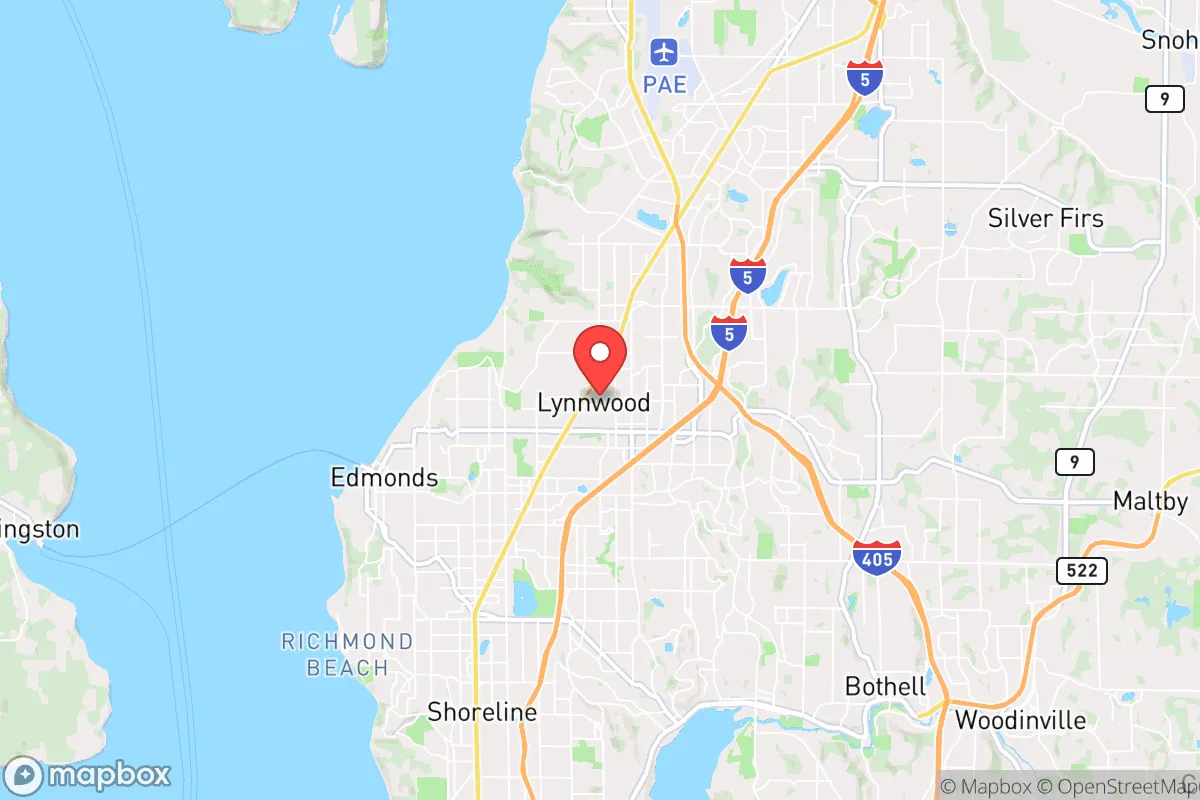
Lynnwood’s human history is almost entirely a 20th-century story. Before white settlement, the area was inhabited by the Snohomish people, who used the thickly forested land for seasonal hunting and gathering. The first permanent non-Native settlers arrived in the 1880s and 1890s, drawn by the promise of cheap, timber-rich land under the Homestead Act. These early families—mostly of German, Scandinavian, and English stock—cleared small farms and logged the dense stands of Douglas fir and cedar. The area remained sparsely populated until the 1940s, when the construction of the Boeing plant in nearby Everett (1940) and the expansion of the U.S. Navy at Naval Station Everett (later) triggered a wave of domestic in-migration. The original settlement cluster, now known as Poplar Way, grew around the intersection of what is now Highway 99 and 196th Street SW, serving as the commercial and social hub for the early farming and logging families. A second early node, Lynnwood Heights, was platted in the 1920s as a small subdivision for Seattle workers seeking rural escape, but it remained mostly empty until the post-war boom.
Modern era (post-1965)
The city’s real transformation began after the 1965 Hart-Cellar Act, which opened immigration from Asia and Latin America. Lynnwood incorporated in 1959, but its population exploded from roughly 7,000 in 1970 to over 28,000 by 1990, driven by two forces: white flight from Seattle and the first waves of Asian immigration. The Alderwood Manor area, originally a planned community of small-lot homes for working-class families, became a primary landing zone for Filipino and Korean immigrants in the 1970s and 1980s, drawn by affordable housing and proximity to Boeing and service jobs. By the 1990s, Vietnamese and Chinese families began settling in the Martha Lake and Scriber Creek neighborhoods, attracted by the growing Asian commercial corridor along Highway 99. Today, East/Southeast Asian communities (16.3% of the population) are the largest minority group, with a strong concentration in the apartment complexes and townhomes near the Alderwood Mall and along 196th Street SW. The Indian subcontinent population (3.0%) is smaller and more dispersed, with a notable cluster in the newer developments around Lynnwood City Center, where tech workers from Microsoft and Amazon have bought condos. The Hispanic population (14.8%) is concentrated in the older, more affordable housing stock of Poplar Way and the unincorporated areas just south of the city limits, with many families working in construction, landscaping, and the service industry. The Black population (8.7%) is more evenly spread but has a visible presence in the Martha Lake area, reflecting a mix of domestic migration from other parts of Washington and recent African immigrants.
The future
Lynnwood’s population is heading toward a future of continued diversification and densification, but with distinct tribalization by neighborhood. The East/Southeast Asian share is likely to grow further, driven by continued immigration and the pull of the existing ethnic infrastructure (Asian grocery stores, restaurants, and community organizations) along Highway 99. The Indian subcontinent population, while small, is growing rapidly as tech workers from the Eastside (Redmond, Bellevue) seek more affordable housing near the new Sound Transit light rail station opening in 2024. The white population (50.9%) is aging and declining in share, as younger white families often skip Lynnwood for farther-out suburbs like Lake Stevens or Marysville. The Hispanic population is stable but not booming, as many families are priced out of Lynnwood’s rising rents and move to cheaper areas in Snohomish County. The city is not homogenizing; rather, it is becoming a patchwork of distinct ethnic enclaves—Asian-dominant near the mall, Hispanic in the older southern neighborhoods, and white in the established single-family zones like Lynnwood Heights and Poplar Way. The next 10-20 years will likely see the Asian share approach 25-30%, the white share drop below 45%, and the city’s overall character shift from a quiet suburb to a denser, more urbanized, and more polyglot community.
For someone moving in now, Lynnwood is a place where diversity is a lived reality, not a slogan. It offers a solid, safe, and increasingly connected suburban life, but the experience will vary dramatically by neighborhood—from the quiet, older, white-majority streets of Lynnwood Heights to the bustling, Asian-infused commercial corridors of Alderwood Manor. The city is becoming more Asian, more urban, and more transit-oriented, and it rewards residents who are comfortable with change and cultural mixing.

* Values derived from national, state, county, city and local statistics and may differ in a specific area. Last updated: 2026-04-21T11:13:09.000Z
Narrative content on this page is AI-generated and may contain mistakes. Verify any details that matter before acting on them.
ReloMaps may earn a commission from affiliate links at no extra cost to you.

