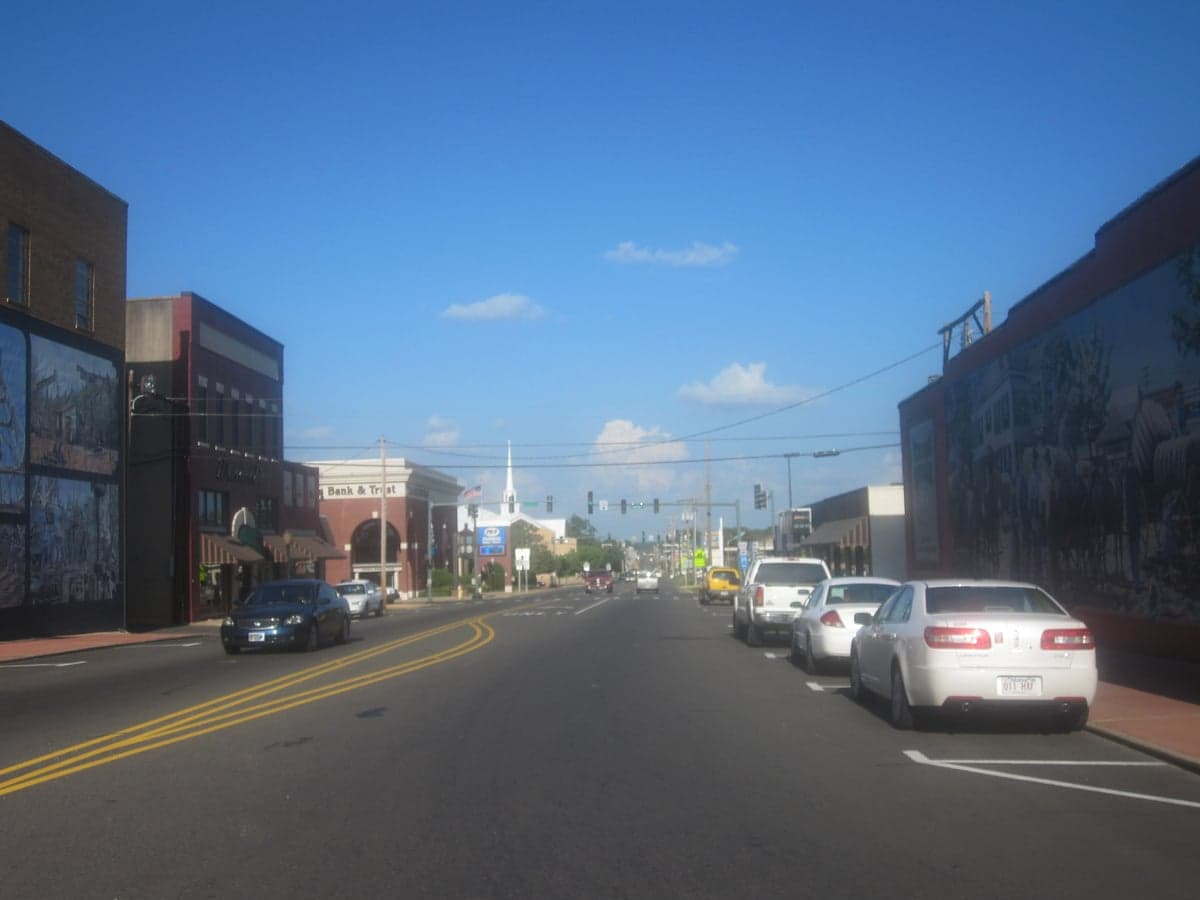
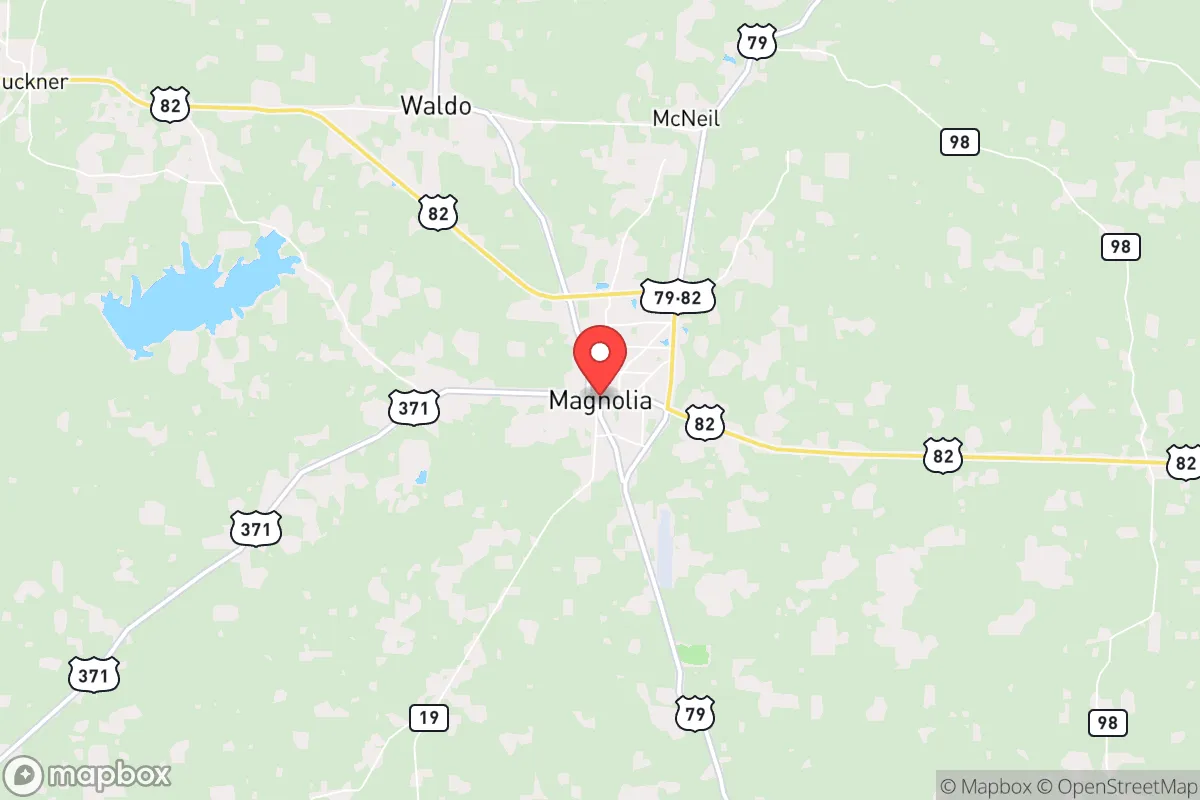
Photo: Wikipedia
Quality of Life in Magnolia, AR
Above-average quality of iife. The area offers a reasonable cost of living, decent mobility, and a mix of neighborhood amenities.
What does Quality of Life tell us?
Quality of Life blends cost of living, nearby amenities, socioeconomic signals, and neighborhood character. City-level scores represent the whole municipality; individual neighborhoods can differ.
What does this tell us?
Quality of Life blends cost of living, nearby amenities, socioeconomic signals, and neighborhood character. City-level scores represent the whole municipality; individual neighborhoods can differ.
Cost of Living
44% below national average
The Real Cost of Living in Magnolia, AR for 2026
| Tier | Individual | Family (4) |
|---|---|---|
| Survival | $10k | $19k |
| Comfortable | $32k | $48k |
| Luxury | $76k+ | $118k+ |
| Elite (Top 5%) | $101k+ | $157k+ |
89%
The Area Signal
A metric tracking the socioeconomic signals of the area.


Hobbies
Explore the areaGroceries
5 within 10 miles
Gas
0 within 10 miles
Hospital
3 within 20 miles
Airport
DFW — Dallas/Fort Worth International
Post Office
USPS — Magnolia, AR
Critical Amenities
Quality-of-Life Analysis
Magnolia, Arkansas, presents a notably affordable quality of life that attracts families, retirees, and professionals seeking a low-stress, small-town environment in the southwestern corner of the state. With a cost of living index of 56—well below the national average of 100—the area offers a financial ease that is increasingly rare, drawing residents from higher-cost regions like Little Rock and Dallas. The community is characterized by a mix of long-time locals, Southern Arkansas University faculty and staff, and newcomers drawn by the region’s quiet pace and strong sense of neighborliness.
Cost of living, housing affordability, and how Magnolia compares to nearby towns
Magnolia’s cost of living is among the most favorable in Arkansas, with a median home value of $166,500 and a median rent of just $622 per month. These figures are significantly lower than the state averages of roughly $200,000 for homes and $850 for rent, and they are a fraction of what one would pay in larger regional hubs like Texarkana (about 45 miles west) or El Dorado (30 miles east). For context, a household earning the median income in Magnolia can typically afford a mortgage on a three-bedroom home without being cost-burdened. The average commute of 17.6 minutes is short by national standards, meaning less money spent on gas and vehicle wear—a hidden affordability bonus. While property taxes in Columbia County are moderate (around 0.5% of assessed value), the lack of state income tax on Social Security benefits further stretches retirement budgets. The trade-off is a limited housing inventory; most homes are older single-family residences, and newer construction is scarce, so buyers should expect to act quickly when a desirable property appears.
Local amenities, schools, and what daily life feels like in Magnolia
Daily life in Magnolia revolves around a compact downtown core, Southern Arkansas University (SAU), and a network of parks and community events. The Magnolia Public School District serves about 2,500 students and is known for strong extracurricular programs, though test scores hover near state averages. SAU, with roughly 5,000 students, brings cultural events, a performing arts center, and NCAA Division II athletics to a town of only 11,000 residents. For everyday needs, residents shop at the local Walmart Supercenter and a handful of independent grocers; for more extensive retail or medical specialists, most drive 30–45 minutes to Texarkana or El Dorado. The town’s rhythm is unhurried: Friday night football at Panther Stadium, weekend farmers’ markets at the Columbia County Courthouse square, and annual events like the Magnolia Blossom Festival and the World Championship Steak Cook-Off draw crowds. Outdoor recreation is modest but sufficient—Logoly State Park, a 368-acre natural area with hiking trails and a lake, is 10 minutes south, and the larger White Oak Lake State Park is 20 minutes east. Healthcare is anchored by Magnolia Regional Medical Center, a 25-bed critical access hospital, though serious cases are referred to Texarkana.
Magnolia is best suited for those who value low cost, short commutes, and a close-knit community over urban amenities and career diversity. Retirees on fixed incomes will find their dollars stretch far, while young families can afford a home and save for college. Remote workers and SAU employees also thrive here, as the slow pace and low stress offset the limited dining and entertainment options. However, professionals in specialized fields or those seeking vibrant nightlife, frequent cultural events, or top-tier healthcare should look to larger cities. For the right person, Magnolia offers a quiet, financially sustainable life in the Arkansas timberlands.

Crime in Magnolia, AR
Crime rates similar to the national median for U.S. locations.
Violent CrimeViolent Crime Analysis
Property CrimeProperty Crime Analysis
Crime Analysis
Magnolia, Arkansas, reports a violent crime rate of 843.7 incidents per 100,000 residents and a property crime rate of 2,549.9 per 100,000, placing it significantly above both state and national averages. These figures indicate that residents face a heightened risk of serious offenses compared to typical communities in Arkansas and the broader United States. The combination of elevated violent and property crime rates makes safety a primary consideration for anyone evaluating a move to this Columbia County city.
Crime in context
To understand Magnolia’s safety profile, it is essential to compare its rates to broader benchmarks. The national average for violent crime is approximately 380 per 100,000, while Arkansas’s state average hovers around 530 per 100,000. Magnolia’s violent crime rate of 843.7 is more than double the national figure and roughly 60% higher than the state average. Property crime in Magnolia, at 2,549.9 per 100,000, also exceeds the national average of about 1,950 per 100,000 and is notably higher than the Arkansas state average of roughly 2,300 per 100,000. These disparities suggest that crime is a more pressing issue in Magnolia than in many comparable communities across the region.
What residents experience
For those living in Magnolia, the elevated crime statistics translate into tangible daily concerns. The high violent crime rate—driven by offenses such as aggravated assault, robbery, and, less frequently, homicide—means that incidents of physical harm are not rare. Property crimes, including burglary, theft, and motor vehicle theft, are even more common, affecting a broader swath of the population. Residents often report taking extra precautions, such as installing security systems, avoiding certain areas after dark, and remaining vigilant about locking vehicles and homes. The local justice system’s approach, influenced by progressive prosecutorial policies common in larger metropolitan areas, can exacerbate these concerns. When district attorneys and judges prioritize leniency or rehabilitation over strict accountability, it can lead to shorter sentences and quicker releases for offenders, potentially increasing recidivism and reducing the deterrent effect of law enforcement. This dynamic may leave victims feeling underserved and the public less protected, as repeat offenders remain active in the community.
Neighborhood-level variation
While citywide data paints a concerning picture, safety conditions in Magnolia are not uniform across all neighborhoods. Areas closer to the Southern Arkansas University campus tend to see higher rates of petty theft and vandalism, while residential districts on the city’s outskirts, such as those near the Magnolia Country Club, generally report lower crime incidence. The downtown core and parts of the East Side have historically experienced more concentrated violent crime. Prospective residents should research specific blocks and consult local police reports or neighborhood watch groups to identify safer pockets within the city. However, the overall elevated rates suggest that no area is entirely insulated from the broader crime trends affecting Magnolia.
* Values derived from national, state, county, city and local statistics and may differ in a specific area. Last updated: 2026-04-19T12:03:07.000Z
Narrative content on this page is AI-generated and may contain mistakes. Verify any details that matter before acting on them.
ReloMaps may earn a commission from affiliate links at no extra cost to you.

