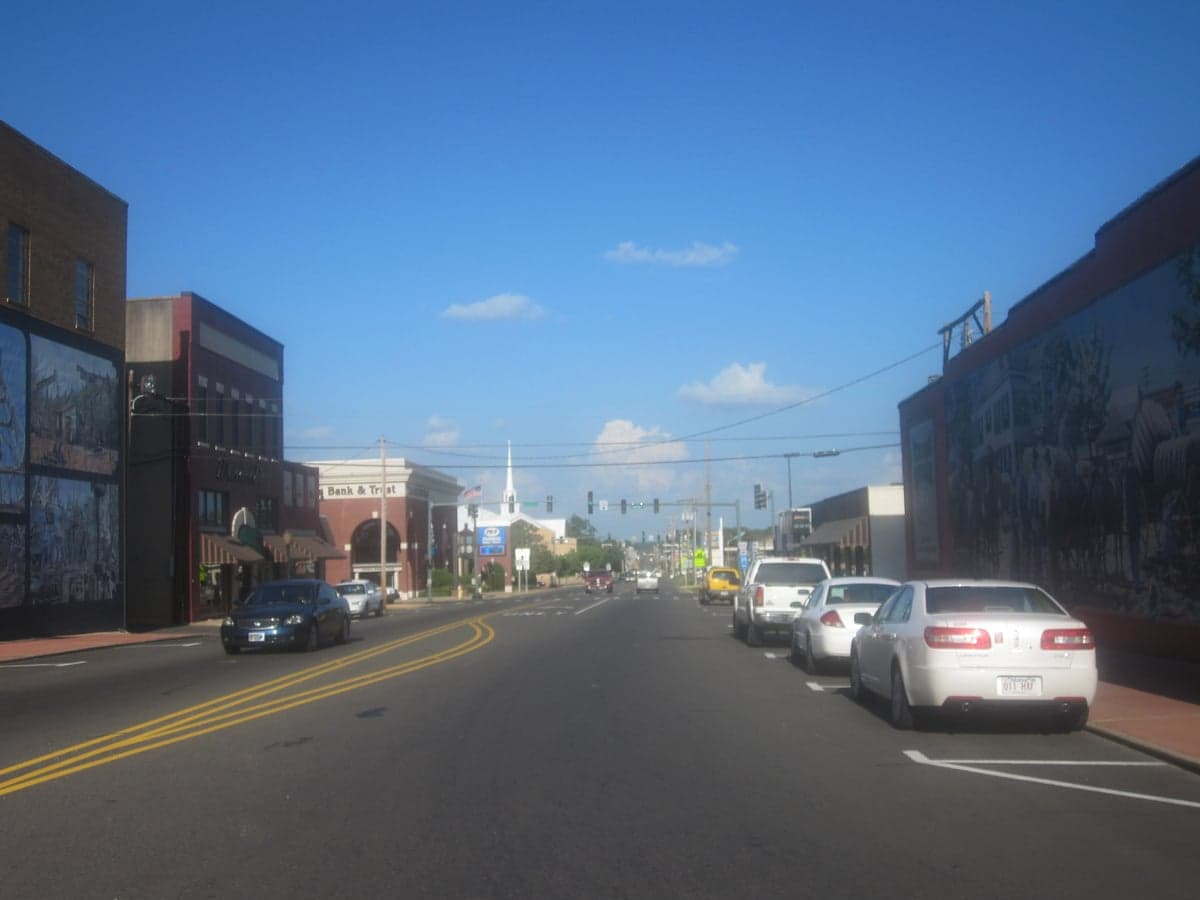
Photo: Wikipedia
Political ClimatePolitical Climate in Magnolia, AR
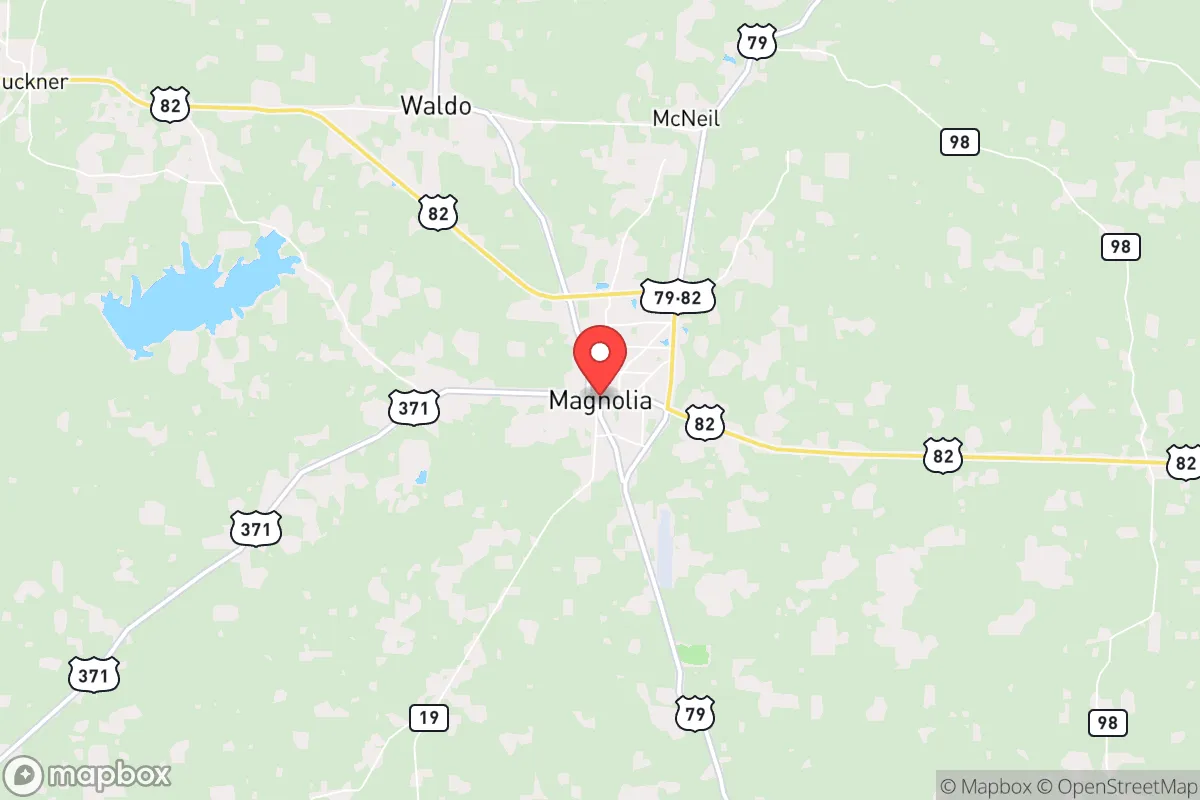
District shown is the primary district for this city’s centroid. Cities may span multiple districts.
Local Political AnalysisPolitical Analysis of Magnolia, AR
Magnolia, Arkansas, sits deep in the heart of Columbia County, and politically, it’s about as solidly red as they come. The Cook PVI clocks the area at R+20, which means you’re looking at a place where Republican candidates routinely win by double digits. That’s not just a number on a map—it’s the reality of how folks around here vote, and it’s been that way for as long as anyone can remember. The shift you see in some parts of the state, like the creeping blue in Fayetteville or Little Rock, hasn’t touched Magnolia. If anything, the local lean has gotten a little more entrenched over the last decade, especially as national politics have polarized. People here value their independence and don’t take kindly to outsiders telling them how to live, which is why the conservative streak runs so deep.
How it compares
Drive an hour north to El Dorado, and you’ll find a similar vibe—oil money, hunting leases, and a strong Baptist presence—but Magnolia feels even more insulated from progressive trends. Head east to Camden, and you start seeing a bit more economic struggle, which can swing the vote unpredictably, but Magnolia’s steady. The real contrast is with college towns like Fayetteville or Conway, where you get that younger, more transient population pushing for change. Magnolia’s got Southern Arkansas University, sure, but the student body doesn’t seem to shift the needle much. Most of the kids are from similar rural backgrounds, and the ones who aren’t tend to leave after graduation. So when you compare Magnolia to, say, Texarkana or Hope, it’s actually more conservative than both—Hope’s got a higher minority population that votes differently, and Texarkana’s a border town with some weird political crosscurrents. Magnolia’s just… steady. That R+20 rating feels earned.
What this means for residents
For the folks living here, that political climate translates into a pretty straightforward daily life. You don’t see a lot of government overreach in Magnolia—no one’s coming after your guns, your church, or your right to run your business how you see fit. The local government tends to keep its nose out of personal matters, which is exactly how most residents want it. Property taxes are low, zoning is minimal, and you can still build a shed on your land without a permit if you’re outside city limits. That’s a big deal for people who’ve watched other parts of the country get bogged down in red tape. The downside? If you’re looking for progressive policies—like public transit expansions, bike lanes, or diversity initiatives—you won’t find them here. And that’s fine with the majority. The real concern for the long term is whether outside money or federal mandates start creeping in. There’s been talk of state-level pushes for more regulation on small farms and rental properties, and that’s got some folks worried. If that trend continues, you might see Magnolia push back even harder.
Culturally, Magnolia still holds onto a few distinctions that set it apart. The annual Magnolia Blossom Festival is a big deal, and it’s got that old-school small-town feel—parades, pageants, and a lot of local pride. There’s no real push for things like sanctuary city status or defunding the police here; the sheriff’s office is well-respected, and the community backs them. One thing that’s changed in the last five years is the rise of a more vocal libertarian streak among younger residents. They’re not Democrats, but they’re skeptical of the GOP establishment too, especially on spending and foreign policy. That could be the wild card in the next decade—if the national party keeps drifting toward big-government conservatism, you might see some fractures. But for now, Magnolia’s political climate is what it’s always been: conservative, self-reliant, and wary of anyone who wants to change that. If you’re looking for a place where your rights aren’t up for debate, this is it.

State Political ClimatePolitical Climate in Arkansas
State Political AnalysisPolitical Environment in the State
Arkansas has been a reliably red state for decades, but the political landscape is more nuanced than a simple party label suggests. The state leans solidly Republican at the federal and state level, with Donald Trump winning by over 27 points in 2024, and the GOP holding supermajorities in both legislative chambers. However, the past 10-20 years have seen a dramatic shift: the old conservative Democrat strongholds in the Delta and rural areas have collapsed, replaced by a near-uniform Republican dominance outside of a few urban pockets. The real story is the growing tension between the deeply conservative, rural majority and the increasingly progressive, but still small, urban centers like Little Rock and Fayetteville.
Urban vs. rural divide
The political map of Arkansas is a study in contrasts. The state’s two major metro areas, Little Rock (Pulaski County) and Fayetteville (Washington County), are the only significant blue dots on an otherwise crimson map. Pulaski County, home to the state capital, has voted Democratic in every presidential election since 2000, though its margins have narrowed. Fayetteville, driven by the University of Arkansas and a growing tech sector, is even more progressive, with Washington County flipping from red to blue in recent cycles. Meanwhile, the rest of the state is deeply Republican. The rural Delta counties, like Lee and Phillips, are among the poorest in the nation and have trended hard right, while the northwest corner, including Bentonville and Rogers, is a GOP stronghold fueled by the Walmart headquarters and a booming population. The suburbs of Little Rock, like Conway and Cabot, are reliably red, but they are also the battlegrounds where demographic shifts could eventually matter.
Policy environment
Arkansas’s policy environment is aggressively conservative, with a strong emphasis on limited government and low taxes. The state has a flat income tax of 4.4% (down from 7% in 2015) and a sales tax that averages around 9.5% when local levies are included. There is no state property tax, but local rates are moderate. The regulatory posture is business-friendly, with right-to-work laws and minimal red tape. On education, the state has embraced school choice, with the Arkansas LEARNS Act of 2023 creating universal school vouchers and banning critical race theory and “indoctrination” in classrooms. Healthcare is a mixed bag: the state expanded Medicaid under the private option, but the legislature has repeatedly tried to impose work requirements. Election laws have tightened, with voter ID requirements and restrictions on absentee voting. The state also passed a near-total abortion ban in 2023, with no exceptions for rape or incest, reflecting the dominant social conservatism.
Trajectory & freedom
On the freedom front, Arkansas has been moving decisively in one direction: more liberty for individuals, especially on gun rights, parental rights, and economic freedom. The state passed constitutional carry in 2021, allowing permitless concealed carry, and has a strong castle doctrine. The Parental Rights in Education Act (2023) requires schools to notify parents of any changes in a child’s mental or physical health, effectively banning gender-affirming care for minors in schools. Medical autonomy is limited: the state banned gender-affirming care for minors in 2023 and has a near-total abortion ban. Property rights are strong, with no state-level rent control and minimal zoning restrictions outside of a few cities. Taxation has been trending downward, with the flat income tax rate dropping from 4.9% to 4.4% in 2024. However, there are concerns about government overreach in the form of the Arkansas LEARNS Act, which some conservatives see as a federal-style overreach into local school control, though it is popular with the base.
Civil unrest & political movements
Arkansas has seen relatively little civil unrest compared to other states, but there are flashpoints. The most visible is the ongoing battle over the Arkansas LEARNS Act, which sparked protests from teachers’ unions and progressive groups, particularly in Little Rock and Fayetteville. The state has also seen organized opposition to the abortion ban, with activists from groups like Arkansas Abortion Support Network staging rallies. On the right, the Arkansas Freedom Fund and local gun rights groups are active, and there is a growing secessionist sentiment in some rural counties, though it remains fringe. Immigration politics are relatively quiet, as Arkansas has a small immigrant population, but the state has passed laws requiring local law enforcement to cooperate with ICE. Election integrity controversies have been minimal, though the 2020 election saw some Republican activists questioning the security of mail-in ballots. The most visible flashpoint for a new resident would be the stark cultural divide between the liberal enclaves of Little Rock and Fayetteville and the rest of the state, which can feel like two different worlds.
Projection
Over the next 5-10 years, Arkansas is likely to remain deeply red, but the demographic trends are worth watching. The state is seeing an influx of conservative migrants from California and the Midwest, drawn by low taxes and a business-friendly environment, which will reinforce the GOP majority. However, the urban centers of Little Rock and Fayetteville are growing faster than the rural areas, and if that trend continues, they could eventually become more influential. The key battleground will be the suburbs of Conway and Cabot, where younger, more moderate families are moving in. The state’s policy trajectory will likely continue: more tax cuts, more school choice, and more restrictions on abortion and LGBTQ+ rights. The biggest wildcard is the Arkansas LEARNS Act, which could either be a model for school choice or a source of ongoing political conflict. For a conservative moving in, the state will feel like a safe haven for traditional values and economic freedom, but the cultural battles will intensify as the urban-rural divide deepens.
For a new resident, the bottom line is this: Arkansas offers a high degree of personal and economic freedom, with low taxes, strong gun rights, and a government that largely stays out of your life. The trade-off is a state that is culturally homogeneous outside of a few cities, and where progressive ideology is actively resisted at the state level. If you value a community that shares your conservative values and a government that respects your rights, Arkansas is a strong choice. Just be prepared for the summer heat and the occasional culture clash if you venture into the urban centers.
* Values derived from national, state, county, city and local statistics and may differ in a specific area. Last updated: 2026-04-19T12:03:07.000Z
Narrative content on this page is AI-generated and may contain mistakes. Verify any details that matter before acting on them.
ReloMaps may earn a commission from affiliate links at no extra cost to you.

