
Photo: Wikipedia
Personal Sovereignty in Washington County
Viable for self-reliance. Generally workable, though some barriers may limit total independence.
What does Personal Sovereignty tell us?
Personal Sovereignty measures your capacity for self-reliance and independence with minimal government friction. Higher scores mean fewer barriers between you and the way you want to live... but it assumes you have the space you need and good neighbors.
What does this tell us?
Personal Sovereignty measures your capacity for self-reliance and independence with minimal government friction. Higher scores mean fewer barriers between you and the way you want to live... but it assumes you have the space you need and good neighbors.
State Policy
Energy independence: Importer (30% of energy produced in-state)
Personal Liberty
Homesteading

Personal Liberty Analysis
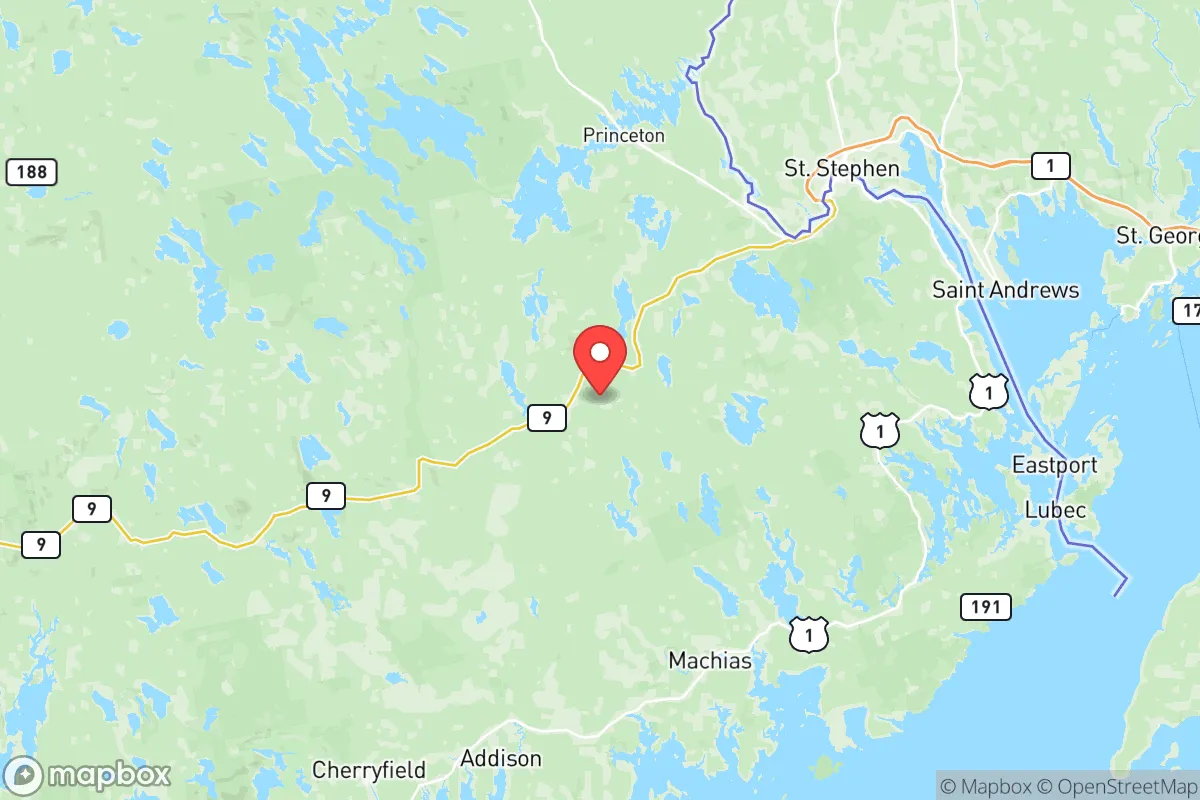
Washington County, Maine offers one of the most permissive personal sovereignty environments in the northeastern United States, with a regulatory posture that leans heavily toward individual autonomy and local control. The county's rural character, low population density of roughly 10 people per square mile, and distance from state government centers in Augusta create a de facto atmosphere where residents enjoy wide latitude in daily life. For a relocation reader prioritizing personal freedom, Washington County represents a stark contrast to the more restrictive environments found in southern Maine or the Boston-to-Portland corridor, with tangible differences visible between towns like Machias, Calais, Eastport, and the inland communities of Danforth and Princeton.
Tax burden and regulatory posture compared to southern Maine
Washington County's tax burden is among the lightest in Maine, though the state's overall tax profile remains higher than many southern or western states. Maine's income tax rate ranges from 5.8% to 7.15%, and the state's property tax mill rates vary significantly by municipality. In Washington County, towns like Machias and Calais typically see property tax rates between $12 and $15 per $1,000 of assessed value, compared to $18–$22 in Portland or Cumberland County. The county's regulatory posture is notably hands-off: there is no county-level zoning authority, and most towns have minimal land-use ordinances. Eastport, for example, has a historic district overlay but otherwise imposes few restrictions on residential property use. The state's business climate is moderate, with Maine ranking 34th in the Tax Foundation's 2025 State Business Tax Climate Index, but Washington County's local enforcement is often lenient. The Maine Department of Environmental Protection has jurisdiction over larger projects, but small-scale activities like home-based businesses, timber harvesting, and private road maintenance rarely trigger state oversight. For a reader seeking low-tax, low-regulation living, Washington County's combination of state-level taxes and local-level permissiveness is a pragmatic trade-off.
Self-defense and gun law specifics in a rural setting
Maine is a "shall-issue" state for concealed carry permits, with no discretionary denial by local authorities, and Washington County's sheriff's office in Machias processes permits efficiently, typically within 30 days. The state does not require a permit for open carry, and since 2015, permitless concealed carry has been legal for residents 21 and older. Washington County's gun culture is deeply ingrained: hunting and sport shooting are common, and the county has no local ordinances restricting firearm possession beyond state law. The town of Calais, located on the Canadian border, sees frequent cross-border traffic but maintains the same permissive stance as the rest of the county. Stand-your-ground laws apply in Maine, with no duty to retreat in any place where a person is lawfully present. Magazine capacity restrictions do not exist at the state level, and private firearm sales between individuals require no background check. For a reader prioritizing self-defense rights, Washington County offers one of the most gun-friendly environments in New England, comparable to rural areas of New Hampshire or Vermont. The only notable restriction is the state's 72-hour waiting period for handgun purchases, which applies uniformly across Maine.
Self-reliance and homesteading viability: lot sizes, zoning, and off-grid feasibility
Washington County is one of the most homestead-friendly areas in the Northeast, with large lot sizes, minimal zoning, and a culture that supports off-grid living. Minimum lot sizes vary by town but typically range from 1 to 5 acres in unorganized territories, while incorporated towns like Machias and Eastport allow smaller lots but rarely enforce minimums strictly. The county includes vast unorganized townships—areas with no local government—where land use is governed only by state law, allowing for virtually unrestricted building, farming, and resource extraction. Off-grid living is feasible and common: solar panels, wood heat, and private wells are standard, and the county has no county-wide building code enforcement. The town of Danforth, near the New Brunswick border, is known for its large tracts of affordable land—often under $1,000 per acre—where residents build without permits. Princeton, home to the former Georgia-Pacific mill site, offers industrial-zoned parcels that can be converted to residential or agricultural use with minimal red tape. The Maine Department of Agriculture, Conservation and Forestry regulates septic systems and wetlands, but these are the primary state-level hurdles. For a reader seeking self-reliance, Washington County's combination of cheap land, lax zoning, and off-grid infrastructure support is unmatched in Maine, though the short growing season (zone 4b–5a) and rocky soil limit large-scale agriculture.
Personal liberties: parental rights, medical autonomy, speech, and property
Maine's legal framework generally supports personal liberties, though some state-level policies may give pause to a conservative-leaning reader. Parental rights are protected under state law, with Maine's "Parental Involvement in Education" statute requiring schools to notify parents of curriculum changes and medical services, though the state does not have a broad parental bill of rights. Medical autonomy is mixed: Maine expanded Medicaid under the ACA and mandates vaccination for school attendance, but the state does not have a religious exemption for vaccine requirements. Washington County's rural nature means enforcement is often relaxed—many families in towns like Lubec and Jonesport homeschool or use private schools, avoiding public school mandates entirely. Speech and assembly rights are fully protected under the First Amendment, and Washington County has no local ordinances restricting political expression or public gathering. Property rights are strong: Maine's "right to farm" law protects agricultural operations from nuisance lawsuits, and the state's "private property rights" statute limits eminent domain to public use with just compensation. The county's low population and limited law enforcement presence mean that property disputes are typically resolved informally or through civil court rather than regulatory action. For a reader valuing personal autonomy, Washington County's practical enforcement of state laws is often more permissive than the letter of the law suggests, particularly in remote areas like the Downeast coast.
Overall, Washington County offers a level of personal sovereignty that is rare in the Northeast, rivaling rural areas of New Hampshire and upstate New York for individual freedom. The county's combination of low taxes, minimal regulation, strong gun rights, and homestead-friendly land use creates an environment where self-reliant individuals and families can operate with minimal government interference. While Maine's state-level policies on healthcare mandates and education may not align with every conservative preference, the practical reality in Washington County is that enforcement is light and local culture supports autonomy. For a relocation reader who prioritizes personal sovereignty above all else, Washington County stands as one of the most viable options in the region, with the caveat that the trade-off includes limited economic opportunity and harsh winters. The county's distinct towns—from the coastal independence of Eastport to the inland self-sufficiency of Danforth—offer varied flavors of the same fundamental freedom.

* Values derived from national, state, county, city and local statistics and may differ in a specific area. Last updated: 2026-09-24T07:13:37.000Z
Narrative content on this page is AI-generated and may contain mistakes. Verify any details that matter before acting on them.
ReloMaps may earn a commission from affiliate links at no extra cost to you.

