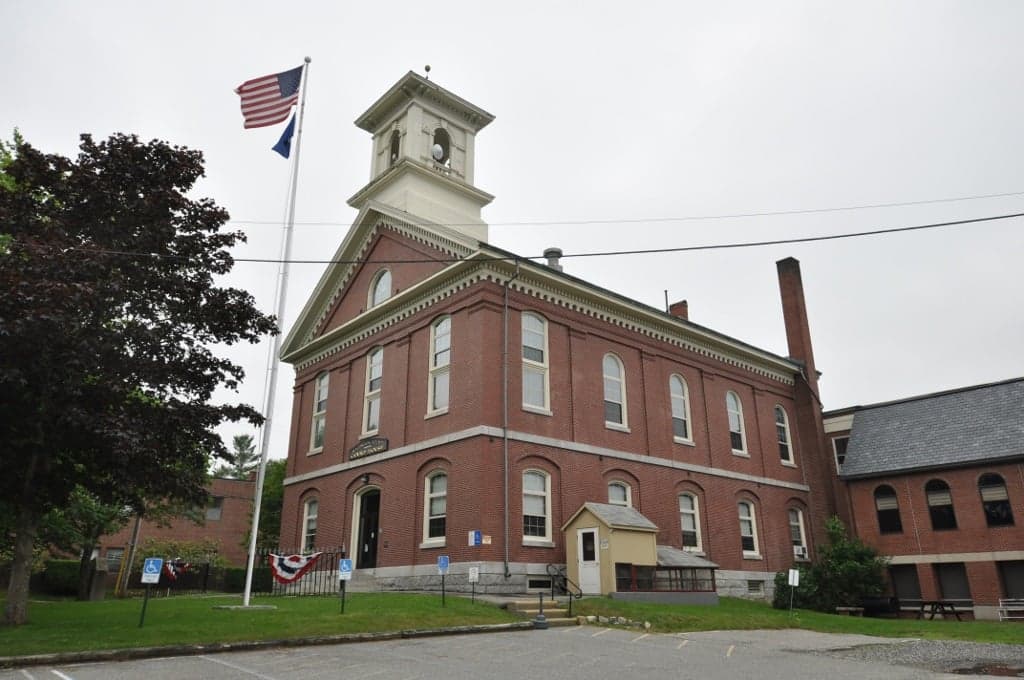
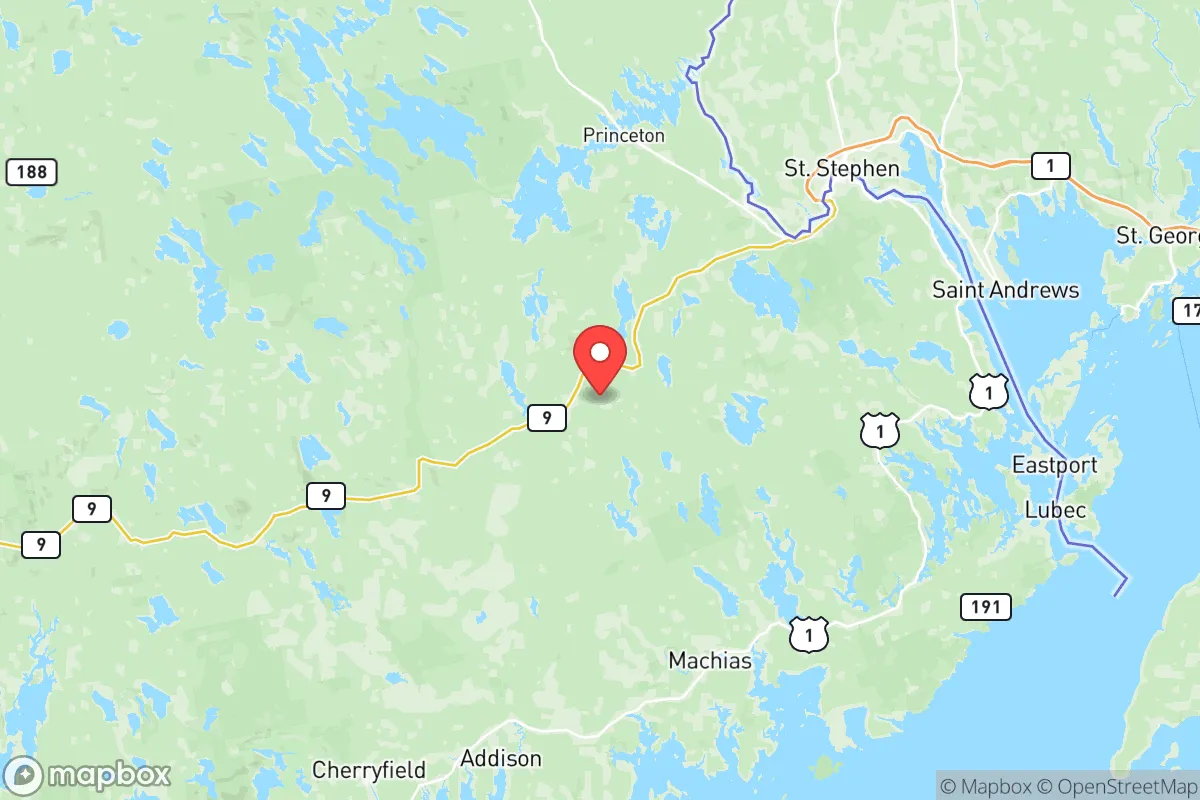
Photo: Wikipedia
Demographics of Washington County
Affluence Level in Washington County
A below-average socioeconomic profile. Incomes, home values, and educational attainment trail the U.S., with higher poverty and unemployment.
People of Washington County
Washington County, Maine, is the state’s most sparsely populated county, home to just over 31,000 residents spread across a rugged coastline of working harbors, blueberry barrens, and deep forests. The population is overwhelmingly white (88.0%) and native-born, with only 1.4% foreign-born, giving the county a distinctly homogeneous character compared to the rest of Maine and New England. Its people are defined by a quiet, self-reliant culture rooted in generations of fishing, farming, and logging, with a strong sense of local identity that sets it apart from the more populous southern counties. For a conservative-leaning individual or family considering relocation, Washington County offers a place where traditional values, low population density, and a connection to the land remain central to daily life.
Settlement & growth (pre-1960)
The human history of Washington County begins with the Wabanaki Confederacy, particularly the Passamaquoddy people, who have inhabited the region for thousands of years. Their ancestral lands stretched along the coast and rivers from present-day Eastport to Calais, with seasonal fishing villages and portage routes that later became colonial roads. European contact began with French explorers and Jesuit missionaries in the early 1600s, but permanent settlement by English colonists did not take hold until after the French and Indian War, when the region passed firmly into British control.
After the American Revolution, the first major wave of English-speaking settlers arrived from Massachusetts and other parts of New England, drawn by the promise of land grants and the rich fisheries of the Bay of Fundy. These settlers founded the county’s oldest towns, including Machias (1763), Eastport (1798), and Calais (1809), establishing an economy based on shipbuilding, lumber, and fishing. Machias, the county seat, became a center for the timber trade, while Eastport grew into a bustling port for sardine canning and transatlantic shipping. By the mid-1800s, the county’s population peaked at over 56,000, fueled by the maritime industries that employed thousands along the coast.
The second half of the 19th century brought a wave of Irish and French-Canadian immigrants, who arrived to work in the region’s sawmills, granite quarries, and sardine factories. Irish laborers settled in Lubec and Cutler, where they built the infrastructure for the fishing industry, while French-Canadian families moved into Van Buren and St. Stephen (just across the Canadian border), bringing a Catholic, French-speaking tradition that still echoes in local surnames and parish life. A smaller number of Scandinavian immigrants, mostly Swedes and Norwegians, came to work in the granite quarries of Jonesport and Beals Island, leaving a lasting imprint on the island communities’ boat-building skills.
The decline of the maritime economy after World War I, combined with the Great Depression, triggered a steady population loss that continued through the mid-20th century. The sardine canneries closed one by one, shipyards shrank, and young people left for jobs in Portland, Boston, or the mills of southern Maine. By 1960, the county’s population had fallen to roughly 35,000, a drop of nearly 40% from its 19th-century peak. The people who remained were those deeply tied to the land and sea—lobstermen, blueberry farmers, and loggers—whose families had been in the county for generations.
Modern era (post-1965)
The 1965 Hart-Cellar Act, which reshaped American immigration, had almost no effect on Washington County. The county’s foreign-born population remains minuscule at 1.4%, and the racial composition has changed little: 88.0% white, 2.3% Hispanic, 0.7% Black, and 0.3% East/Southeast Asian. The small Hispanic population is concentrated in Machias and Calais, where seasonal agricultural work in blueberry fields and fish processing plants has drawn a handful of migrant families, but no permanent enclave has formed. The Black and Asian communities are even smaller, largely composed of professionals working in healthcare or education at the county’s hospitals and schools.
Domestic migration has been the more significant force, though it has not reversed the county’s long-term population decline. Since the 1970s, a modest influx of retirees and second-home buyers from southern New England and the Mid-Atlantic has settled in coastal towns like Lubec, Eastport, and Cutler, drawn by the low cost of waterfront property and the quiet, rural lifestyle. These newcomers, often politically moderate to conservative, have brought some economic activity but have not dramatically altered the county’s demographic profile. At the same time, the county has continued to lose its native-born young adults, who leave for college or jobs in Bangor, Portland, or out of state, a pattern that has kept the median age high (roughly 48 years) and the population static or slightly declining.
Suburbanization has largely passed Washington County by. The county has no major interstate highway, no large shopping malls, and no suburban subdivisions of the kind found in southern Maine. The largest town, Calais, has just over 3,000 residents, and the county’s only city, Eastport, has fewer than 1,300. The population remains dispersed among dozens of tiny villages and unorganized townships, with the only notable concentration along the Route 1 corridor from Machias to Calais. The county’s cultural identity remains firmly rooted in its rural, working-class heritage, with a strong emphasis on self-sufficiency, outdoor recreation, and community ties that span generations.
The future
Washington County’s population is projected to continue its slow decline over the next 10 to 20 years, as the aging native-born population shrinks and outmigration of young adults persists. The county’s low birth rate and high median age mean that natural decrease (more deaths than births) will likely accelerate, barring a major economic turnaround. The foreign-born population is unlikely to grow significantly, given the county’s remote location, limited job opportunities, and lack of established immigrant networks. The small Hispanic and Asian communities are expected to remain small, with no indication of the rapid diversification seen in other parts of Maine.
One potential bright spot is the growth of remote work, which could attract a new wave of domestic migrants—families and individuals seeking affordable land, low taxes, and a slower pace of life. Towns like Machias and Calais have seen a trickle of new residents from out of state since the pandemic, and if high-speed internet expands to more rural areas, this trend could modestly offset population losses. However, the county’s harsh winters, limited healthcare access, and distance from major employment centers will likely keep this influx small compared to more accessible regions of Maine.
Culturally, Washington County is becoming more politically conservative as its population ages and as new arrivals tend to be retirees or remote workers with traditional values. The county voted heavily for Donald Trump in 2020 and 2024, reflecting a deep skepticism of government overreach and a preference for local control. The Passamaquoddy Tribe, which holds two reservations in the county (at Pleasant Point and Indian Township), remains a distinct and important community, but its population is also aging and struggling with economic challenges.
For someone moving in now, Washington County offers a place where the past is still present—a landscape of quiet harbors, blueberry fields, and close-knit communities where people know their neighbors and help each other through hard winters. It is not a place of rapid change or growth, but of stability and continuity. The people who thrive here are those who value independence, self-reliance, and a deep connection to the natural world, and who are willing to trade the conveniences of city life for the peace and freedom of one of the most remote corners of the eastern United States.

* Values derived from national, state, county, city and local statistics and may differ in a specific area. Last updated: 2026-09-24T07:13:37.000Z
Narrative content on this page is AI-generated and may contain mistakes. Verify any details that matter before acting on them.
ReloMaps may earn a commission from affiliate links at no extra cost to you.

