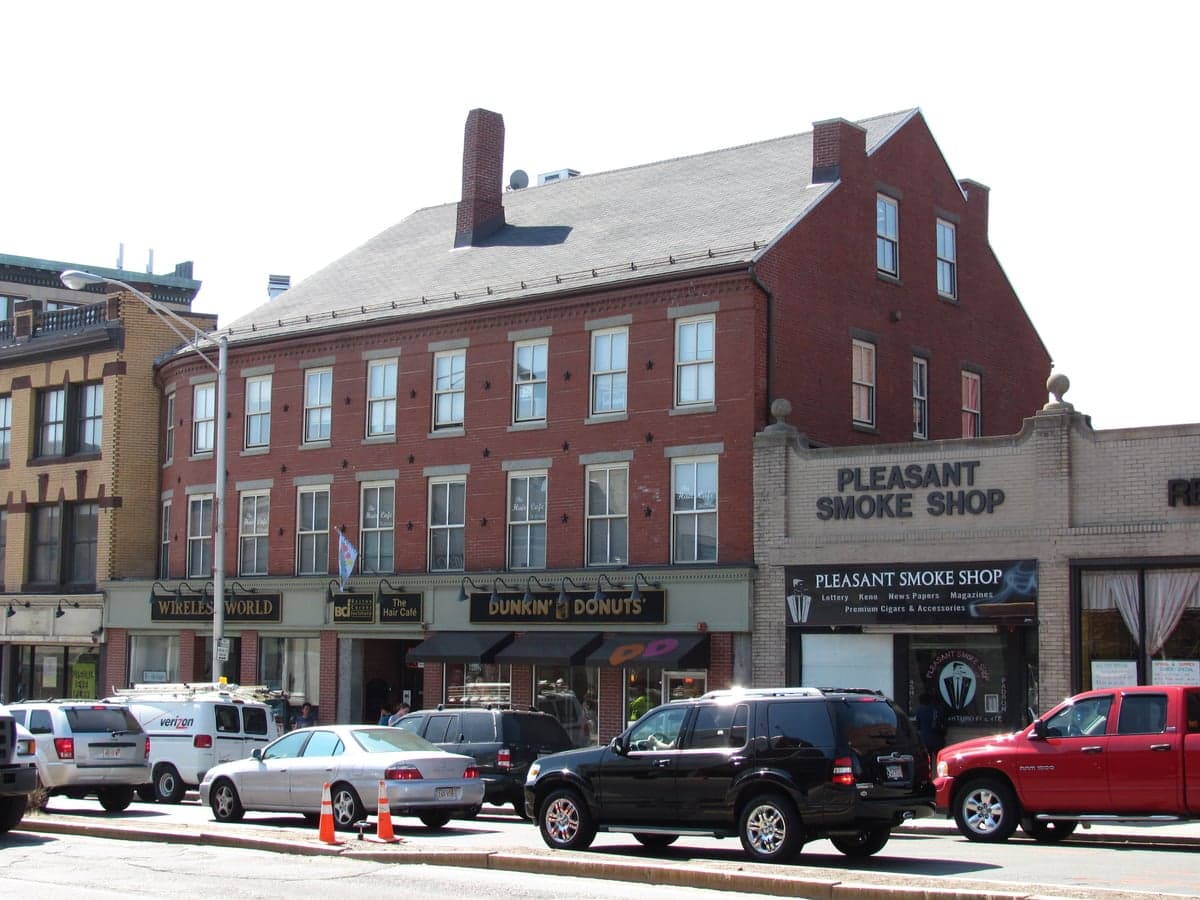
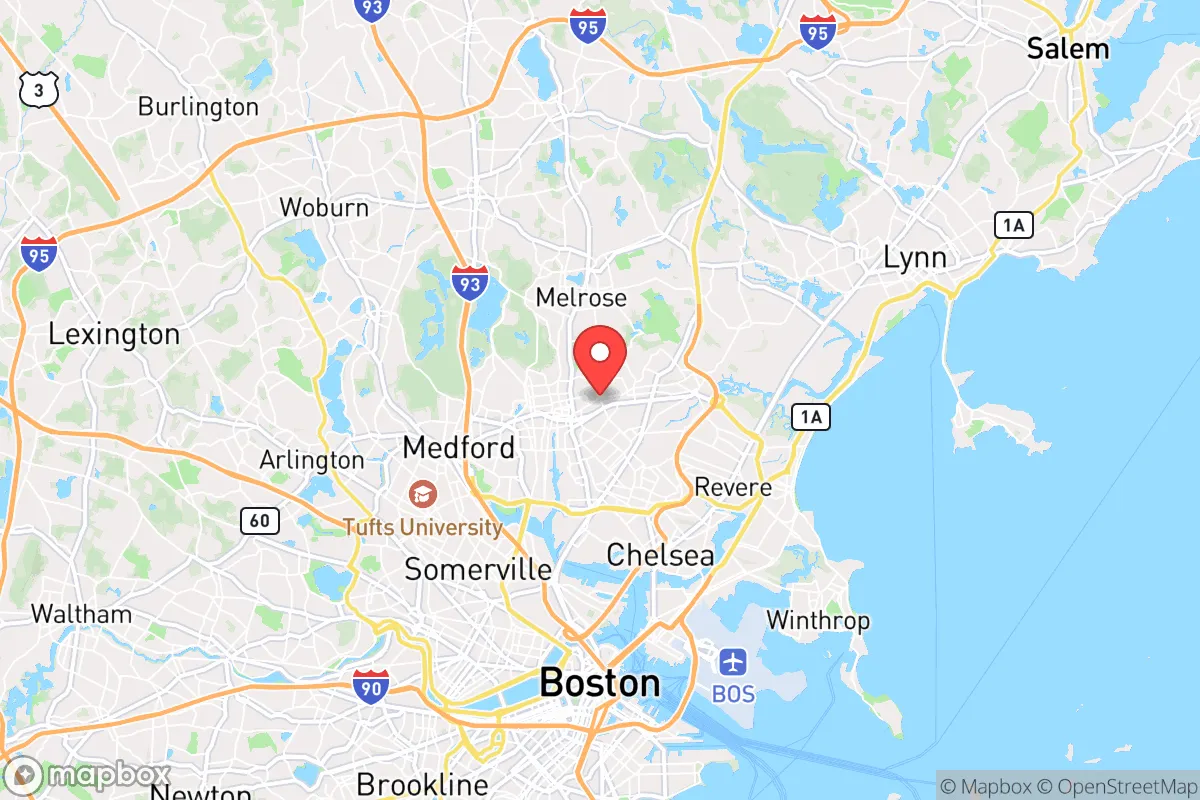
Photo: Wikipedia
Personal Sovereignty in Malden, MA
Viable for self-reliance. Generally workable, though some barriers may limit total independence.
What does Personal Sovereignty tell us?
Personal Sovereignty measures your capacity for self-reliance and independence with minimal government friction. Higher scores mean fewer barriers between you and the way you want to live... but it assumes you have the space you need and good neighbors.
What does this tell us?
Personal Sovereignty measures your capacity for self-reliance and independence with minimal government friction. Higher scores mean fewer barriers between you and the way you want to live... but it assumes you have the space you need and good neighbors.
State Policy
Energy independence: Importer (5% of energy produced in-state)
Personal Liberty
Homesteading

Personal Liberty Analysis
For the individual or family prioritizing personal sovereignty, Malden, Massachusetts presents a challenging environment. As a densely settled inner-ring suburb of Boston, its local governance is heavily influenced by state-level mandates that consistently rank among the most restrictive in the nation regarding property rights, self-defense, and taxation. While the city offers proximity to economic opportunity, the trade-off for a survivalist or prepper mindset is significant: you are operating within a legal and regulatory framework that systematically limits the autonomy a sovereign individual would otherwise hold. The overarching reality is that Malden is not a haven for those seeking to minimize government contact or maximize personal discretion in daily life.
Tax burden and regulatory posture for residents and property owners
Massachusetts carries a heavy tax burden, and Malden residents feel it directly. The state’s income tax is a flat 5.0% on all wages, with no standard deduction for most filers, meaning every dollar earned is subject to state levy. Property taxes in Malden are moderate for the metro area—roughly $4,500 annually on a median home—but the state’s overall tax climate is ranked among the bottom ten nationally by the Tax Foundation. More concerning for the sovereignty-minded is the regulatory posture. Massachusetts has a strict building code, extensive environmental permitting (Chapter 91 and the Wetlands Protection Act), and a statewide energy code that limits off-grid energy systems. Solar panel installation requires interconnection agreements with the utility, and rainwater collection is technically regulated by the Department of Environmental Protection. For a prepper looking to establish a self-reliant homestead, these layers of state oversight mean that even minor property modifications—like adding a shed, installing a backup generator, or drilling a well—can trigger permits, inspections, and fees. The city’s zoning bylaws further restrict accessory dwelling units and home-based businesses, limiting the ability to generate income or housing flexibility without municipal approval.
Self-defense rights and Massachusetts gun law specifics
Massachusetts gun laws are among the most restrictive in the United States, and Malden residents must comply with a dense web of state statutes that effectively treat firearm ownership as a heavily regulated privilege rather than a right. The state requires a License to Carry (LTC) for any handgun, which involves a background check, fingerprinting, a firearms safety course, and a fee. Local police chiefs have significant discretion in issuing LTCs, and while Malden is generally shall-issue in practice, the process can take months. The state bans so-called "assault weapons" by name and feature, limits magazine capacity to ten rounds, and requires that all firearm transfers—even private sales—go through a licensed dealer with a background check. There is no constitutional carry; open carry is effectively illegal for most people. For a survivalist, this means that building a defensive firearms capability requires navigating a bureaucratic system that can deny or delay based on subjective local judgment. Additionally, Massachusetts has a "red flag" law (ERPO) that allows family members or law enforcement to petition a court to temporarily remove firearms based on perceived risk, a mechanism that critics argue can be abused in disputes. Ammunition purchases also require a separate permit or LTC, and online ammo sales are effectively banned. In short, Malden is not a jurisdiction where a prepper can freely stockpile arms or train without state oversight.
Self-reliance and homesteading viability: lot sizes, zoning, and off-grid feasibility
Malden’s urban density—over 11,000 people per square mile—makes traditional homesteading nearly impossible. The typical residential lot is a quarter-acre or less, with many homes on 5,000- to 7,000-square-foot parcels. Zoning is predominantly single-family residential (R1 and R2 districts), with strict setback requirements and prohibitions on keeping livestock, poultry, or bees in most areas. Raising chickens, for example, requires a special permit and is limited to a small number of hens with no roosters. Gardening is permitted, but the small lot size and often shady conditions from mature trees limit food production to a few raised beds. Off-grid living is effectively illegal: the city requires connection to municipal water and sewer, and any dwelling must have a certificate of occupancy from the building department. Solar panels are allowed but must be grid-tied and approved by the utility; battery storage is permitted but adds cost and complexity. Rainwater collection for outdoor use is allowed but must not create a nuisance; indoor use is prohibited without a separate permit. For a prepper seeking to reduce dependency on external systems, Malden offers little room for meaningful self-sufficiency. The best one can do is a small vegetable garden, a backup generator (with noise restrictions), and a deep pantry—but true off-grid independence is not feasible within city limits.
Personal liberties: parental rights, medical autonomy, speech, and property
Massachusetts has a strong progressive tilt on social and medical issues, which directly impacts personal sovereignty. Parental rights are limited by state law: the Department of Children and Families (DCF) has broad authority to investigate reports of neglect or abuse, and the standard for intervention is lower than in many states. The state also mandates school attendance until age 16, and while homeschooling is legal, it requires annual approval from the local school district, including submission of a curriculum plan and progress reports. Medical autonomy is constrained by the state’s vaccine mandates: children must be vaccinated against a list of diseases to attend public school, with only medical exemptions allowed (religious and philosophical exemptions were eliminated in 2021). For adults, the state has a strict prescription drug monitoring program and limits on alternative medicine. Free speech is protected by the First Amendment, but Massachusetts has a "hate speech" law that can be used to prosecute certain types of expression, and local ordinances in Malden regulate noise, signage, and public assembly. Property rights are heavily circumscribed by the state’s wetlands and historic preservation laws; any significant alteration to a property near a wetland or in a historic district requires a public hearing and permit. For a conservative-leaning individual concerned about government overreach, these layers of regulation mean that many personal decisions—from how to educate a child to what medical treatments to pursue—are subject to state approval or oversight.
In the broader context of New England, Malden offers less personal sovereignty than rural towns in New Hampshire or Maine, where property taxes are lower, gun laws are more permissive, and zoning is less restrictive. Compared to other Boston suburbs, it is average in its regulatory burden. For a survivalist or prepper, Malden is a place to earn a living, not a place to build a sovereign life. The combination of high taxes, restrictive gun laws, dense zoning, and progressive social mandates means that personal autonomy is constantly negotiated with the state. If your priority is maximizing individual freedom—to keep and bear arms, to homeschool without interference, to live off-grid, or to make medical decisions without government input—Malden is not a strategic relocation target. It is a location best suited for those who accept the trade-off of reduced sovereignty in exchange for urban amenities and economic opportunity, and who are prepared to navigate a system that views personal independence as something to be managed rather than protected.

* Values derived from national, state, county, city and local statistics and may differ in a specific area. Last updated: 2026-05-01T07:46:35.000Z
Narrative content on this page is AI-generated and may contain mistakes. Verify any details that matter before acting on them.
ReloMaps may earn a commission from affiliate links at no extra cost to you.

