Photo: Wikipedia
Demographics of Malden, MA
Affluence Level in Malden, MA
A middle-class area roughly in line with national averages across income, home values, education, and employment.
People of Malden, MA
The people of Malden, Massachusetts, today form a dense, majority-minority city of 65,509 residents, characterized by a striking blend of established working-class families and a rapidly growing immigrant population. With a foreign-born rate of 21.2%, the city is a classic inner-ring Boston suburb that has transformed from a nearly all-white industrial town into a multi-ethnic hub where no single group holds a numerical majority. Its distinctive identity is shaped by a large East and Southeast Asian community (21.8%), a significant Indian-subcontinent population (6.8%), a substantial Black community (13.1%), and a Hispanic population (8.1%), all layered over a white population that now stands at 42.4%.
How the city was settled and grew
Malden’s original population was English Puritan farmers who settled the area in the 1640s, drawn by land grants from the Massachusetts Bay Colony. The city industrialized early, with the Malden River powering tanneries, shoe factories, and rubber works by the mid-19th century. This industrial base attracted the first major wave of immigrants: Irish laborers fleeing the Great Famine in the 1840s and 1850s, who settled in the Maplewood and Bell Rock neighborhoods, building St. Joseph’s Church and the city’s first Catholic institutions. A second wave of French-Canadians arrived between 1870 and 1900, drawn by textile and shoe factory jobs, concentrating in the West End near the Malden River. Italian immigrants followed in the early 20th century, establishing a strong presence in the Edgeworth neighborhood around Ferry Street, where Italian social clubs and bakeries still operate. By 1950, Malden was overwhelmingly white, with a population that peaked near 60,000, dominated by Irish, Italian, and French-Canadian families whose descendants still form a core of the white population today.
Modern era (post-1965)
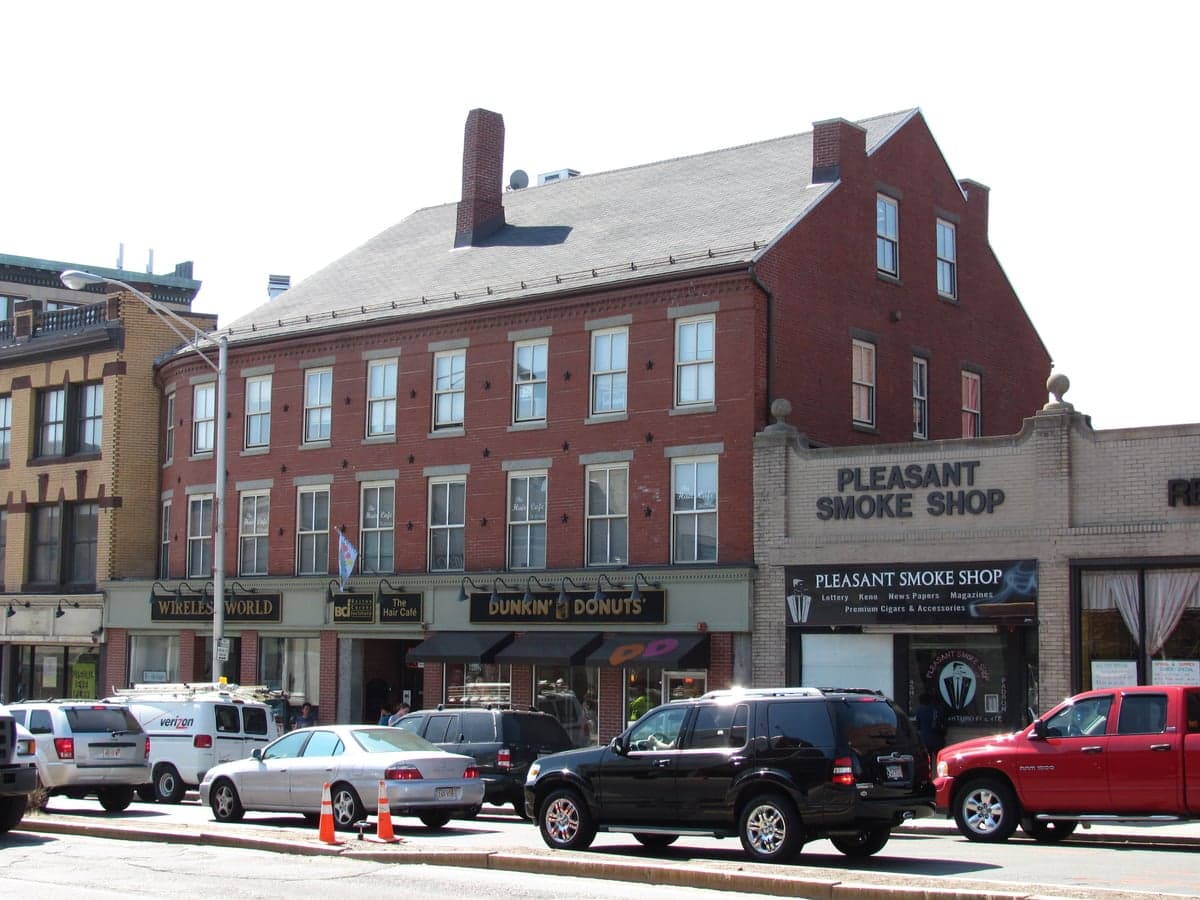
The 1965 Hart-Cellar Act reshaped Malden’s population dramatically. The first post-1965 arrivals were Chinese immigrants, many from Hong Kong and Guangdong, who began settling in the Downtown area around Pleasant Street in the 1970s and 1980s, opening restaurants and grocery stores. A larger wave of East and Southeast Asian immigrants—Vietnamese, Cambodian, and later Chinese—accelerated through the 1990s and 2000s, drawn by affordable housing stock and proximity to Boston’s Chinatown. Today, the Downtown and Faulkner neighborhoods have the highest concentrations of East/Southeast Asian residents, with Vietnamese restaurants and Chinese supermarkets anchoring the commercial strips. The Indian-subcontinent population grew later, primarily after 2000, as tech and healthcare professionals sought suburban homes with good schools; they are more dispersed but have a visible cluster in the Oak Grove area near the commuter rail. Black residents, many of Haitian and West African descent, arrived in the 1980s and 1990s, settling in the Bell Rock and Maplewood neighborhoods, while the Hispanic population—mostly Puerto Rican and Dominican—grew steadily but remains smaller than in neighboring Everett or Chelsea. The white population declined from over 90% in 1970 to 42.4% today, with many older Irish and Italian families moving to suburbs like Melrose or Stoneham.
The future
Malden’s population is heading toward greater diversity, but not toward a single melting pot. The East and Southeast Asian community is the fastest-growing segment, driven by continued immigration from China and Vietnam, and is likely to become the largest single group within a decade. The Indian-subcontinent population is growing more slowly but steadily, attracted by the city’s strong school system and commuter access to Boston’s tech corridor. The white population is aging and slowly declining, though younger white families are being drawn back by new luxury apartment construction near the Malden Center MBTA station. The city is not tribalizing into hostile enclaves, but distinct neighborhood identities persist: Edgeworth remains heavily Italian-American, Downtown is predominantly East/Southeast Asian, and Bell Rock is a mix of Black and older white residents. The next 10-20 years will likely see continued growth in the Asian and Indian populations, a plateauing of the Black and Hispanic shares, and a slow homogenization of the white population into older homeowners and new transit-oriented professionals.
For someone moving in now, Malden is becoming a denser, more transit-connected, and more Asian-influenced city—a place where a conservative-leaning family can find strong public schools, a safe environment, and a stable property market, but where the cultural and political center of gravity is shifting away from its historic Irish-Italian roots toward a multi-ethnic, immigrant-driven future. The city offers a rare combination of urban convenience and suburban safety, but newcomers should expect a population that is increasingly foreign-born and non-white, with all the cultural dynamism and occasional friction that entails.

* Values derived from national, state, county, city and local statistics and may differ in a specific area. Last updated: 2026-05-01T07:46:35.000Z
Narrative content on this page is AI-generated and may contain mistakes. Verify any details that matter before acting on them.
ReloMaps may earn a commission from affiliate links at no extra cost to you.

