Photo: Wikipedia
Political ClimatePolitical Climate in Malden, MA
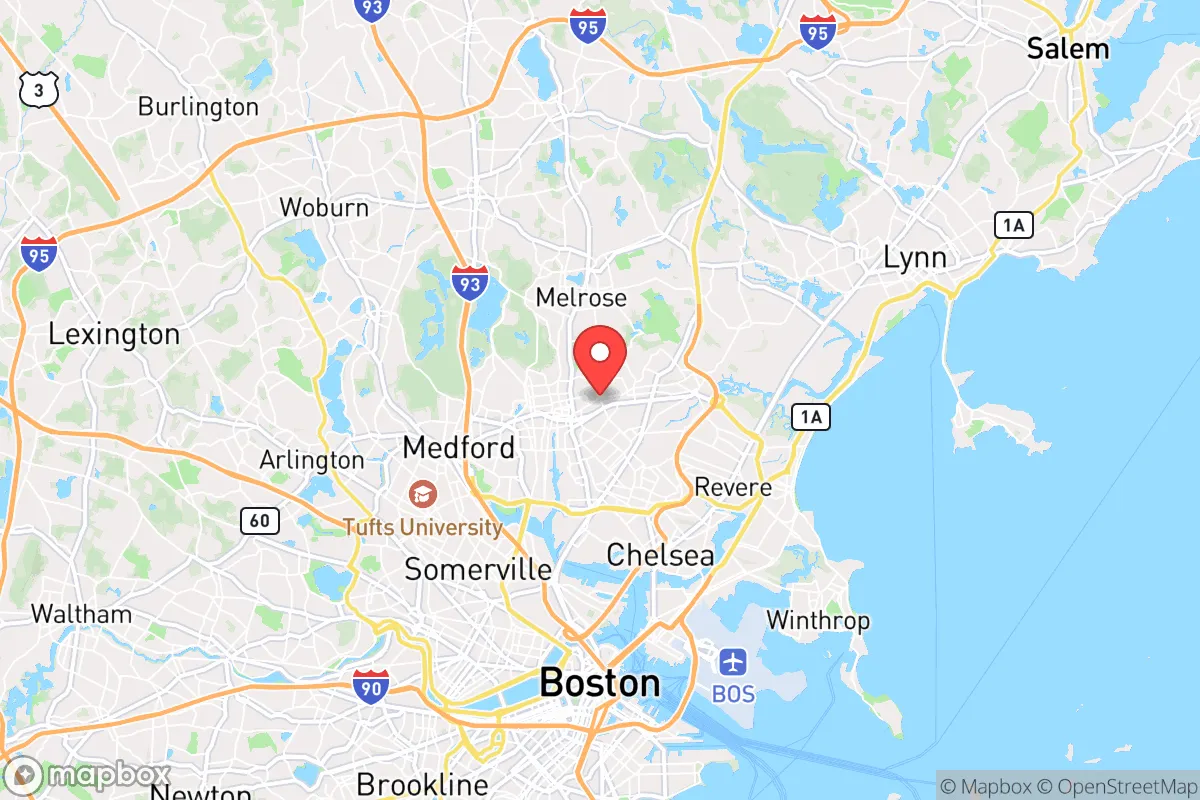
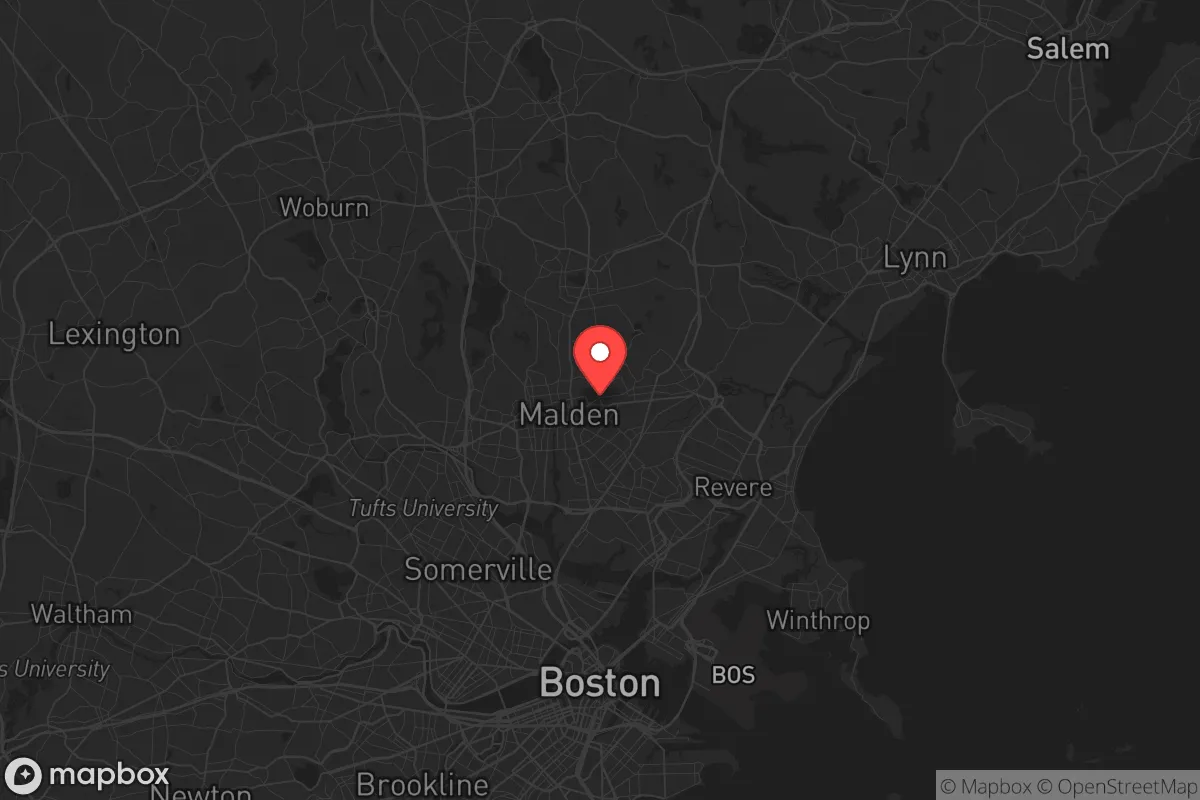
District shown is the primary district for this city’s centroid. Cities may span multiple districts.
Local Political AnalysisPolitical Analysis of Malden, MA
Malden, Massachusetts, leans heavily Democratic, with a Cook PVI of D+24, meaning it votes about 24 points more Democratic than the national average in presidential elections. This isn't a recent shift; the city has been a reliable blue stronghold for decades, but the flavor of that blue has changed. In the past, you had a mix of working-class families, many of Italian, Irish, and Jewish descent, who were Democrats but held fairly moderate, common-sense views on things like taxes, public safety, and local business. Today, the political energy here is much more progressive, driven by a younger, more transient population and a growing Asian-American community, which has shifted the local conversation toward issues like zoning reform, police oversight, and environmental mandates. The trajectory is clearly toward a more activist, government-centric approach, which is something to keep an eye on if you value personal freedom and limited interference in your daily life.
How it compares
To understand Malden’s political climate, you have to look at its neighbors. Drive ten minutes north to Melrose, and you’ll find a similar D+ lean, but with a more established, family-oriented base that’s a bit more skeptical of the far-left agenda. Head west to Medford, and it’s a similar story—progressive, but with a stronger Italian-American, union-rooted contingent that pushes back on some of the more radical proposals. The real contrast is south and east. Everett and Revere are still more working-class, with a higher percentage of conservative-leaning immigrant communities and older residents who remember when the Democratic Party wasn’t about defunding the police or eliminating single-family zoning. Malden, by comparison, has embraced the full progressive platform more enthusiastically than those towns. Even Stoneham and Wakefield, just a few miles north, are noticeably more moderate, with a stronger independent streak. So if you’re coming from a place where local government minds its own business, Malden will feel like a step into a more activist, regulatory environment.
What this means for residents
For the average resident, this political tilt translates into a few concrete realities. First, expect higher taxes and fees. The city council and school committee are generally supportive of new spending initiatives, from universal pre-K to climate resilience projects, and they’re not shy about raising property taxes or creating new fees to fund them. Second, be prepared for more rules on your property. The push for zoning reform and density mandates means the city is actively working to eliminate single-family zoning, which could change the character of your neighborhood and reduce your control over what happens next door. Third, public safety policy is a live wire. The city has shifted toward a more social-work-oriented model for policing, which sounds good in theory but has led to slower response times for some property crimes and a general sense that the police are more focused on community relations than on proactive enforcement. If you value the freedom to use your property as you see fit, to keep more of your paycheck, and to have a police force that prioritizes order, these trends are worth watching closely.
One cultural distinction that stands out is Malden’s embrace of sanctuary city policies and its aggressive push for Green New Deal-style environmental regulations at the local level. The city has a dedicated Office of Strategic Planning and Community Development that actively pursues state and federal grants for sustainability projects, which means more mandates on everything from energy-efficient renovations to stormwater management on private property. There’s also a strong, vocal activist presence in local politics—groups like the Malden Democratic City Committee and various neighborhood associations that push for progressive candidates and policies. In the long term, if these trends continue, Malden could become a model for high-tax, high-regulation urban governance in the Boston suburbs. For someone who values personal autonomy and a lighter government touch, it’s a place to watch with caution, not enthusiasm.

State Political ClimatePolitical Climate in Massachusetts
State Political AnalysisPolitical Environment in the State
Massachusetts has long been one of the most reliably Democratic states in the nation, with a partisan lean that has only deepened over the past two decades. In the 2024 presidential election, Kamala Harris carried the state by roughly 25 points, a margin that has held steady or widened since Barack Obama’s 23-point win in 2012. The dominant coalition is a mix of urban progressives, suburban moderates, and a shrinking but vocal Republican minority concentrated in the central and southeastern parts of the state. For a conservative considering relocation, the key takeaway is that Massachusetts is not just blue—it’s a deep-blue state where progressive policies are baked into the culture and governance, and the GOP has been reduced to a rump party in statewide elections.
Urban vs. rural divide
The political map of Massachusetts is a textbook case of the urban-rural divide, but with a twist: even the suburbs lean left. Greater Boston, including Boston proper, Cambridge, Somerville, and the inner-ring suburbs like Newton and Brookline, is the engine of Democratic dominance. These areas vote 75-85% Democratic and drive turnout. Western Massachusetts, particularly the Berkshires and the city of Northampton, is also deeply progressive, though less populous. The Republican strongholds are scattered: the South Shore towns like Plymouth and Marshfield, the central Massachusetts towns like Sturbridge and Spencer, and the southeastern corner around Fall River and New Bedford, which have working-class roots and a more mixed political history. However, even these areas have been trending leftward. For example, Worcester County, once a swing area, now votes Democratic by double digits in presidential races. The only reliably red pockets are the small towns in the far west, like Great Barrington and Lee, and the Cape Cod towns of Barnstable and Yarmouth, where older, more conservative populations hold on. But these are islands in a blue sea.
Policy environment
Massachusetts’ policy environment is aggressively progressive, with a tax structure that is among the highest in the nation. The state has a flat income tax rate of 5%, but a 2022 ballot question (Question 1) added a 4% surtax on income over $1 million, effectively creating a 9% top marginal rate. Property taxes are high, averaging 1.2% of home value, and sales tax is 6.25%. The regulatory posture is heavy: strict environmental rules, a near-ban on new fossil fuel infrastructure, and a robust state-level health insurance mandate that predates the ACA. Education policy is a bright spot for some conservatives—Massachusetts consistently ranks #1 in K-12 outcomes, but the system is heavily funded by local property taxes and controlled by teachers unions, which oppose school choice and charter expansion. Election laws are among the most liberal: no-excuse mail-in voting, same-day registration, and automatic voter registration are all in place. For a conservative, the policy environment feels like a one-party state where the legislature routinely overrides local zoning and gun laws with statewide mandates.
Trajectory & freedom
Over the past five years, Massachusetts has become less free by any measure of personal liberty, especially for gun owners and parents. The 2024 gun law (H.4885) expanded the state’s “red flag” law, banned a wide range of semi-automatic firearms, and imposed a 10-round magazine limit, making Massachusetts one of the strictest states in the country for gun rights. On parental rights, the 2022 “Parentage Act” removed gender-specific language from birth certificates, and the state’s Department of Education has mandated LGBTQ+ inclusive curricula without an opt-out for parents. Medical autonomy took a hit with the 2020 “Right to Repair” law, but more concerning for conservatives was the 2023 law allowing minors to consent to gender-affirming care without parental notification. Property rights are constrained by the state’s Chapter 40B law, which allows developers to bypass local zoning for affordable housing projects, and the 2024 MBTA Communities Act, which forces towns near transit to rezone for higher density. On taxation, the 2022 millionaire’s tax was a clear signal that the state is willing to raise taxes on high earners, and there’s talk of a wealth tax in the next session. The trajectory is unmistakably toward more government control over personal decisions.
Civil unrest & political movements
Massachusetts has a history of civil unrest, but it’s almost entirely from the left. The 2020 George Floyd protests in Boston were large and occasionally violent, with looting in the Downtown Crossing area. The state’s sanctuary status, codified in 2017’s “Safe Communities Act,” means local police do not cooperate with federal immigration enforcement, and ICE detainers are ignored. This has led to flashpoints in towns like Chelsea and Lawrence, where immigrant populations are high and tensions with state police occasionally surface. On the right, the “Massachusetts Fiscal Alliance” and the “Massachusetts Republican Party” are active but marginalized. There was a brief “Second Amendment Sanctuary” movement in 2020, with about 30 towns passing resolutions, but it had no legal effect. Election integrity controversies are minimal—Massachusetts has no voter ID law, and the 2020 election saw no major fraud allegations. The most visible political movement is the “Progressive Massachusetts” network, which pushes for single-payer healthcare and rent control. A new resident would notice the ubiquity of “Black Lives Matter” signs in yards and the near-total absence of Trump flags, even in rural areas.
Projection
Looking ahead 5-10 years, Massachusetts is likely to become even more progressive. Demographic trends favor the left: the state’s population is aging, but in-migration from other states is heavily skewed toward young, college-educated professionals who work in tech, biotech, and academia—all sectors that lean left. The Hispanic population, concentrated in cities like Lawrence and Lowell, is growing and votes Democratic by large margins. The Republican base is shrinking as older voters die off and younger voters move to red states. The 2024 election saw the GOP lose ground in the suburbs of Boston, and the party’s only remaining congressional seat (Rep. Richard Neal’s district) is a safe Democratic hold. Expect more gun control, more housing mandates, and possibly a state-level wealth tax. The one wildcard is the cost of living: if the tax burden drives out enough high earners, the state’s budget could face strain, but so far, the economy has held up. For a conservative moving in now, the realistic expectation is that in a decade, Massachusetts will be a one-party state with even less room for dissenting views.
Bottom line for a new resident: If you value low taxes, gun rights, school choice, or local control, Massachusetts will be a constant frustration. The state is safe, well-educated, and beautiful, but the political climate is hostile to conservative values. You’ll be a minority voice in a system that doesn’t hesitate to override your preferences. If you can afford the cost and tolerate the politics, the quality of life is high—but don’t expect to change the state’s direction. It’s a blue wall that’s only getting taller.
* Values derived from national, state, county, city and local statistics and may differ in a specific area. Last updated: 2026-05-01T07:46:35.000Z
Narrative content on this page is AI-generated and may contain mistakes. Verify any details that matter before acting on them.
ReloMaps may earn a commission from affiliate links at no extra cost to you.

