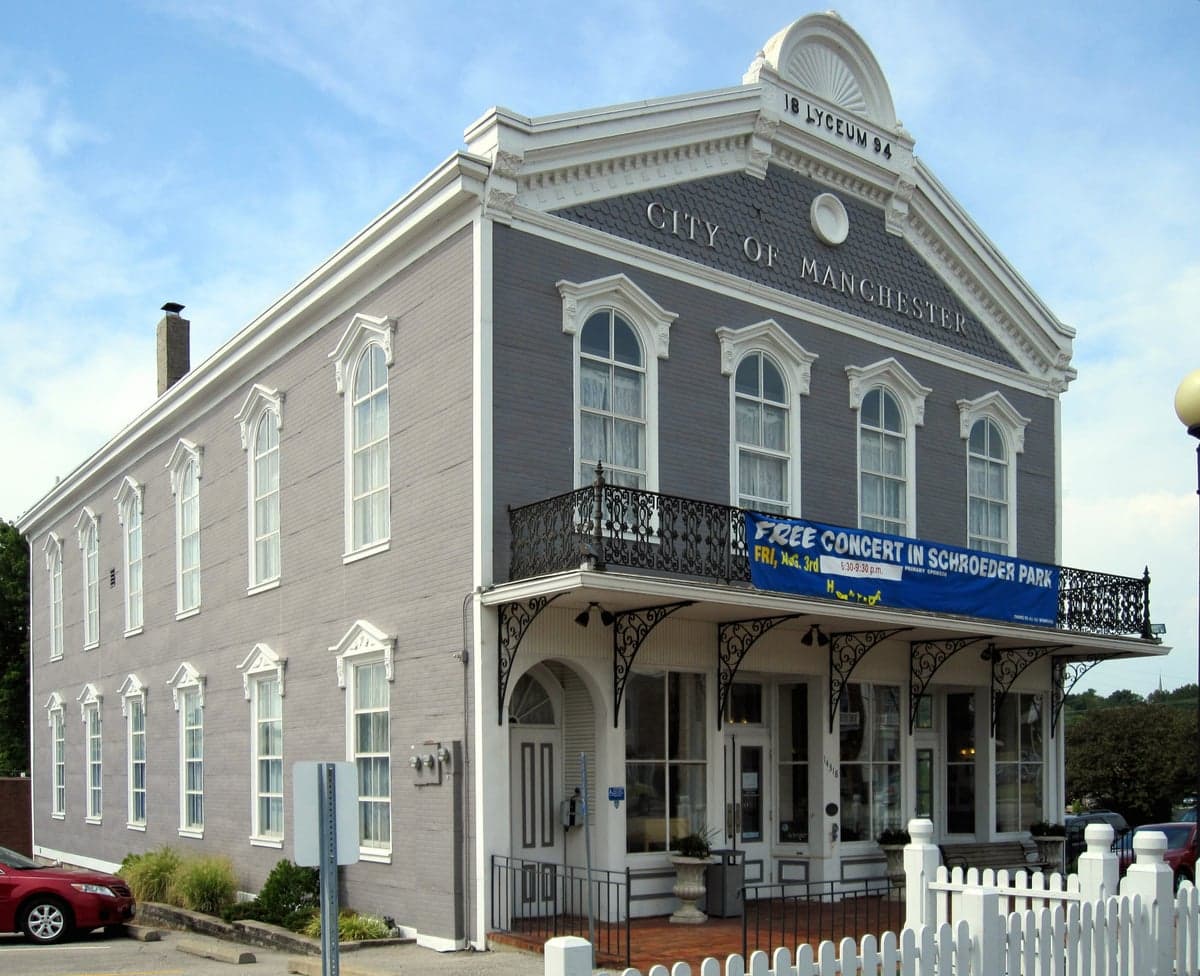
Photo: Wikipedia
Quality of Life in Manchester, MO
A high quality of life with strong walkability, manageable living costs, healthy neighborhood signals, and solid amenity access.
What does Quality of Life tell us?
Quality of Life blends cost of living, nearby amenities, socioeconomic signals, and neighborhood character. City-level scores represent the whole municipality; individual neighborhoods can differ.
What does this tell us?
Quality of Life blends cost of living, nearby amenities, socioeconomic signals, and neighborhood character. City-level scores represent the whole municipality; individual neighborhoods can differ.
Cost of Living
7% above national average
The Real Cost of Living in Manchester, MO for 2026
| Tier | Individual | Family (4) |
|---|---|---|
| Survival | $20k | $37k |
| Comfortable | $58k | $85k |
| Luxury | $143k+ | $222k+ |
| Elite (Top 5%) | $169k+ | $261k+ |
109%
The Area Signal
A metric tracking the socioeconomic signals of the area.
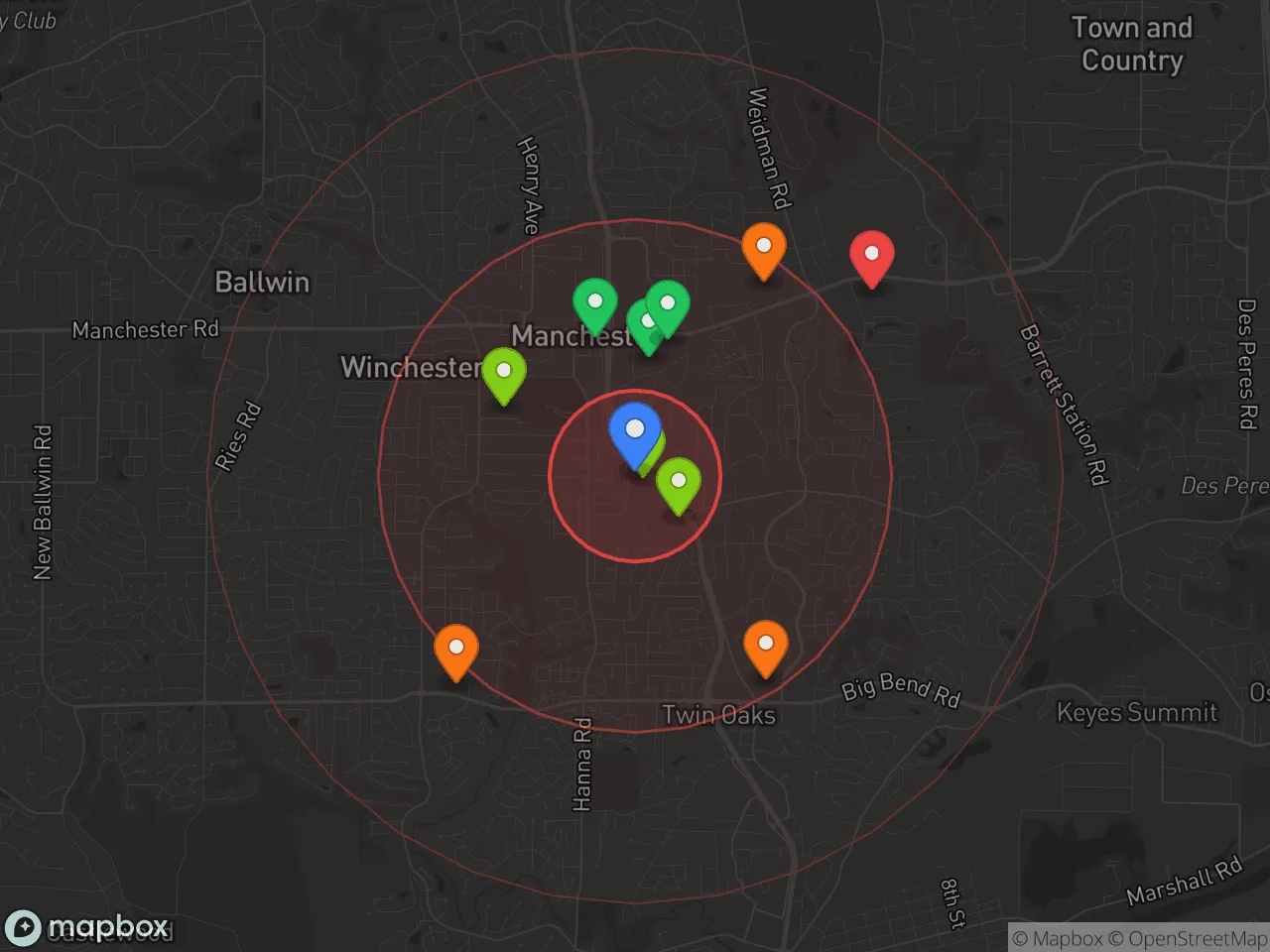
Hobbies
Explore the areaGroceries
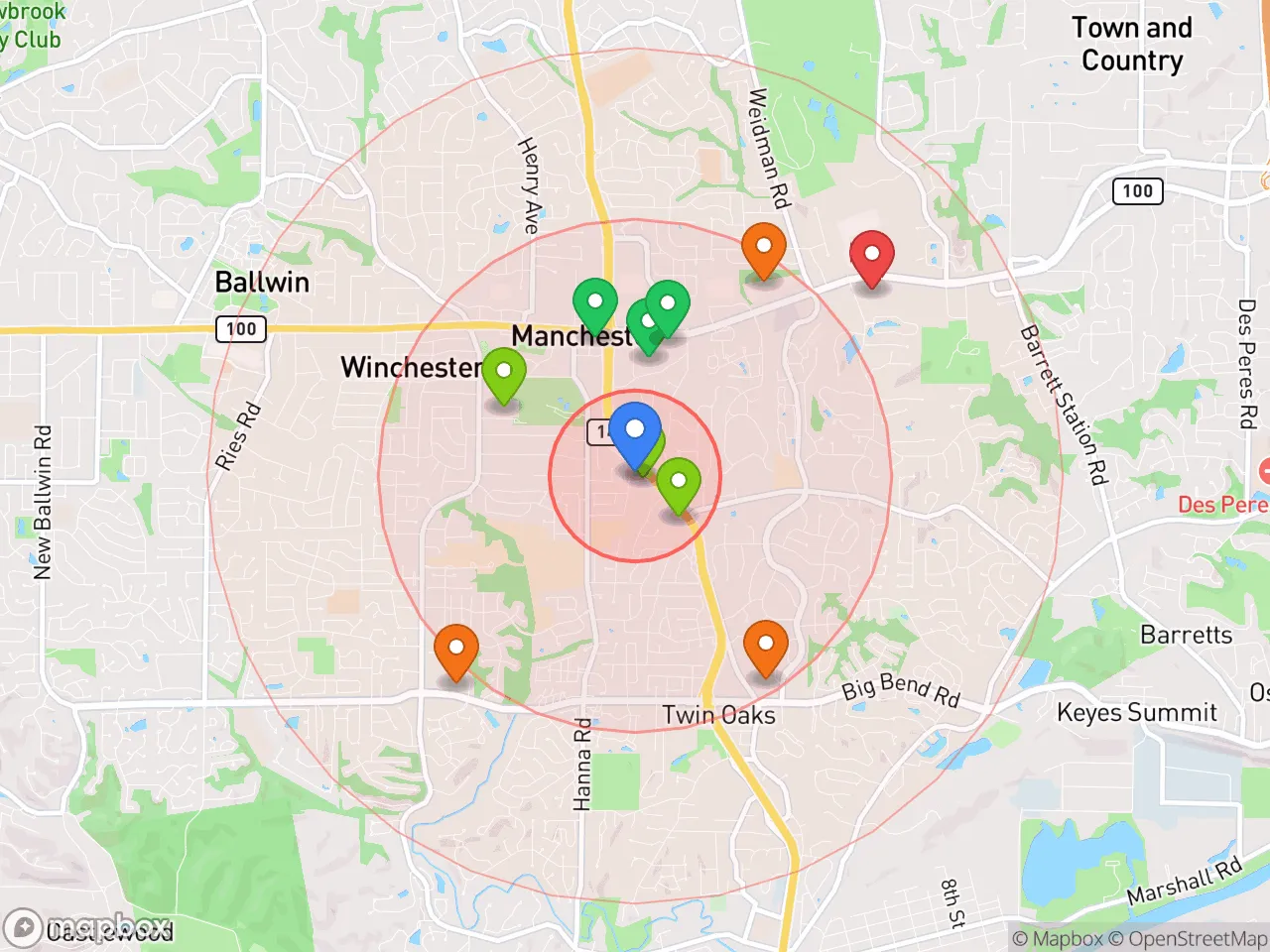
7 within 10 miles
Gas
20 within 10 miles
Hospital
20 within 20 miles
Airport
MCI — Kansas City International
Post Office
USPS — Manchester, MO
Critical Amenities
Quality-of-Life Analysis
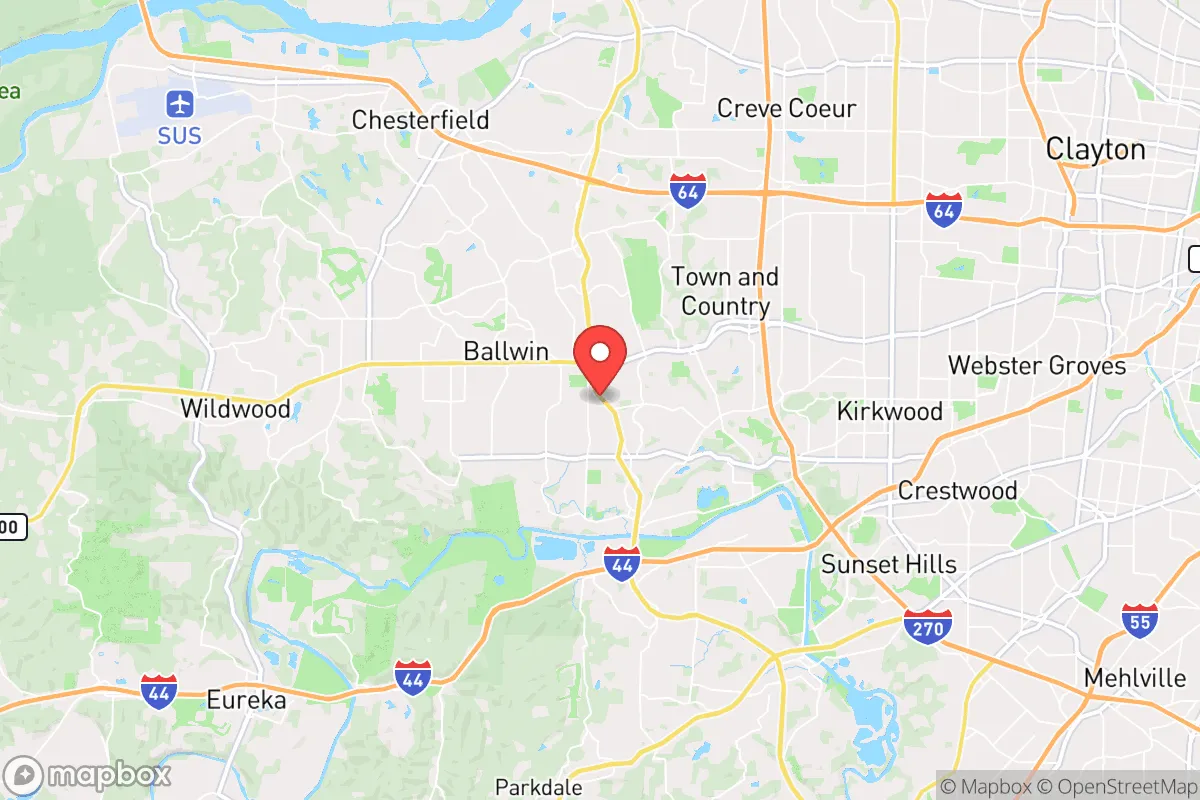
Manchester, Missouri, is an affluent western St. Louis suburb where the median household income exceeds $90,000 and the cost of living index sits at 107 (7% above the national average). The community is predominantly composed of established families and professionals who are drawn to its top-rated public schools, low crime rates, and convenient access to both the urban core of St. Louis and the outdoor recreation of the Missouri River bluffs. With a population of roughly 18,000, Manchester offers a quiet, well-maintained suburban environment that feels distinctly removed from the city’s hustle while remaining only a 20-minute commute from downtown.
Cost of living, housing, and affordability compared to St. Louis County
Manchester’s cost of living index of 107 is notably higher than the St. Louis metro average of 94, driven primarily by housing. The median home value of $298,400 is roughly $70,000 above the St. Louis County median, reflecting the premium buyers pay for the Parkway School District and the area’s low inventory of for-sale homes. Renters face a median rent of $1,248, which is about $150 above the county average but still below comparable inner-ring suburbs like Clayton or Kirkwood. Property taxes in Manchester are moderate for Missouri, averaging around 1.1% of assessed value, and there is no local earnings tax—a significant savings for commuters who work in St. Louis City (which levies a 1% earnings tax). While Manchester is not cheap, it offers better value than the priciest St. Louis suburbs: a buyer here gets more square footage and newer construction than in similarly rated school districts closer to the city core.
Schools, amenities, and what daily life is like for families
Daily life in Manchester revolves around the Parkway School District, one of Missouri’s top-performing public systems, where all four high schools (Parkway South, West, Central, and North) boast graduation rates above 95% and average ACT scores of 24.5. The district feeds heavily into the University of Missouri and Saint Louis University. For errands and recreation, residents rely on the Manchester Road corridor, which is lined with big-box retailers, grocery stores, and chain restaurants, but the area also preserves green space at Manchester Community Park (with sports fields, a dog park, and a walking trail) and the nearby Greensfelder County Park (offering 1,500 acres of hiking and mountain biking). The average commute of 21.2 minutes is shorter than the St. Louis metro average of 25 minutes, thanks to direct access to I-270 and I-64. Most families describe the rhythm as predictable and low-stress: school drop-offs, weekend soccer games, and occasional trips to the Missouri Botanical Garden or the St. Louis Zoo, both about 25 minutes east.
Manchester is best suited for families and mid-career professionals who prioritize school quality, safety, and a stable suburban lifestyle over urban nightlife or walkability. Singles and young renters may find the social scene limited—there is no downtown core, and most entertainment requires a short drive to Chesterfield or downtown St. Louis. Retirees on fixed incomes may struggle with the housing costs, though the area’s low property taxes and access to BJC HealthCare and Mercy Hospital systems (both within 15 minutes) make it viable for those with equity. For anyone seeking a quiet, well-resourced community with strong schools and a reasonable commute, Manchester delivers consistently high marks.

Crime in Manchester, MO
Lower crime rates than 90% of comparable U.S. locations.
Violent CrimeViolent Crime Analysis
Property CrimeProperty Crime Analysis
Crime Analysis
Manchester, Missouri, presents a notably safe environment compared to both state and national benchmarks, though property crime rates warrant attention from prospective residents. With a violent crime rate of just 49.8 incidents per 100,000 residents, the city is significantly safer than the national average, while its property crime rate of 1,228.3 per 100,000 sits above the national figure. This data positions Manchester as a low-risk community for violent offenses but one where residents should take standard precautions against theft and burglary.
Crime in context
Manchester’s violent crime rate of 49.8 per 100,000 is roughly 86% lower than the national average of approximately 370 per 100,000, and well below Missouri’s state rate of about 540 per 100,000. This places the city among the safest suburbs in the St. Louis metropolitan area for violent offenses. However, the property crime rate of 1,228.3 per 100,000 exceeds the national average of roughly 1,950 per 100,000 by a smaller margin and is slightly above the Missouri state average. The disparity between very low violent crime and elevated property crime is a common pattern in affluent St. Louis County suburbs, where opportunities for theft are higher but violent confrontations remain rare.
What residents experience
For daily life in Manchester, the practical safety experience is overwhelmingly positive. Most residents report feeling secure walking in their neighborhoods, using local parks, and visiting the shops and restaurants along Manchester Road. The city is served by the West County Police Department, which maintains a visible presence and responsive patrol model. The most common property crimes are vehicle break-ins and package thefts, particularly in areas near commercial corridors and apartment complexes. Residents should also be aware that Manchester falls within St. Louis County, where the prosecutorial approach has shifted in recent years. Progressive policies in the county’s justice system, including reduced prosecution of certain property offenses and lenient sentencing guidelines, have been linked to higher recidivism rates and a perception that property crimes carry fewer consequences. This ideological trend, while intended to reduce incarceration, has resulted in more offenders cycling back into communities like Manchester, directly impacting residents’ sense of security and the effectiveness of local law enforcement efforts.
Neighborhood-level variation is modest but present. The southern and eastern sections of Manchester, which border more densely populated areas of St. Louis County, see slightly higher property crime rates than the newer subdivisions in the western part of the city. Gated communities and homes with active neighborhood watch programs report fewer incidents. Overall, Manchester remains a safe choice for families and professionals, provided they take standard precautions—locking vehicles, securing packages, and maintaining outdoor lighting—to mitigate the property crime risk that persists due to broader county-level justice policies.
* Values derived from national, state, county, city and local statistics and may differ in a specific area. Last updated: 2026-10-10T16:28:12.000Z
Narrative content on this page is AI-generated and may contain mistakes. Verify any details that matter before acting on them.
ReloMaps may earn a commission from affiliate links at no extra cost to you.

