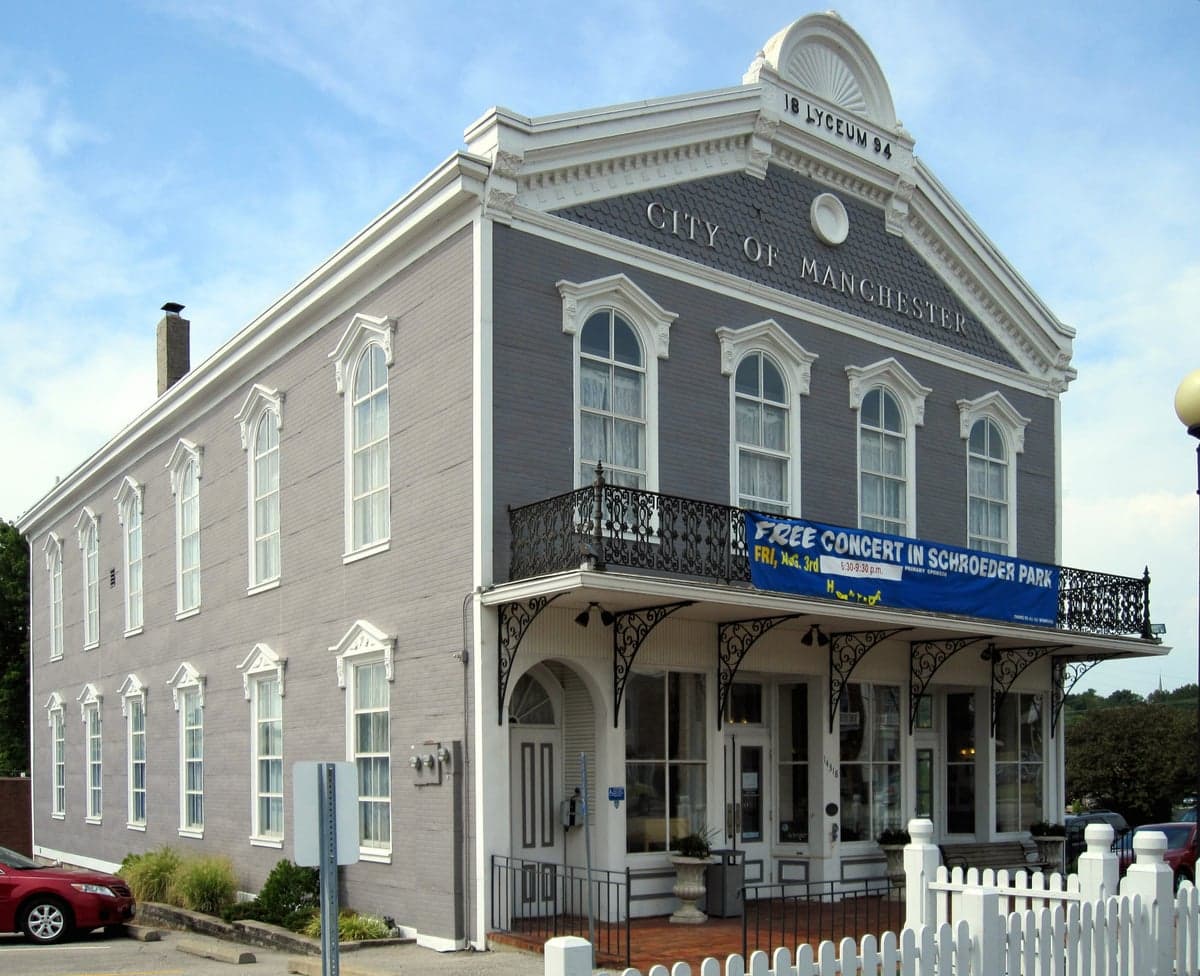
Photo: Wikipedia
Political ClimatePolitical Climate in Manchester, MO
District shown is the primary district for this city’s centroid. Cities may span multiple districts.
Local Political AnalysisPolitical Analysis of Manchester, MO
Manchester leans reliably conservative, with a Cook PVI of R+4 that puts it a few ticks to the right of the national average. That number feels about right to anyone who’s lived here a while — you’ll see plenty of Trump signs in yards during election season, and local races tend to go to candidates who talk about fiscal restraint and keeping government out of your business. But I’ve noticed a slow shift over the last decade. The old guard of rock-ribbed Republicans is still the majority, but you’re starting to see more transplants from St. Louis city and the inner-ring suburbs who bring a different set of priorities. It’s not a blue wave by any stretch, but the political temperature is warming up in ways that make some of us long-timers keep a closer eye on city council meetings.
How it compares
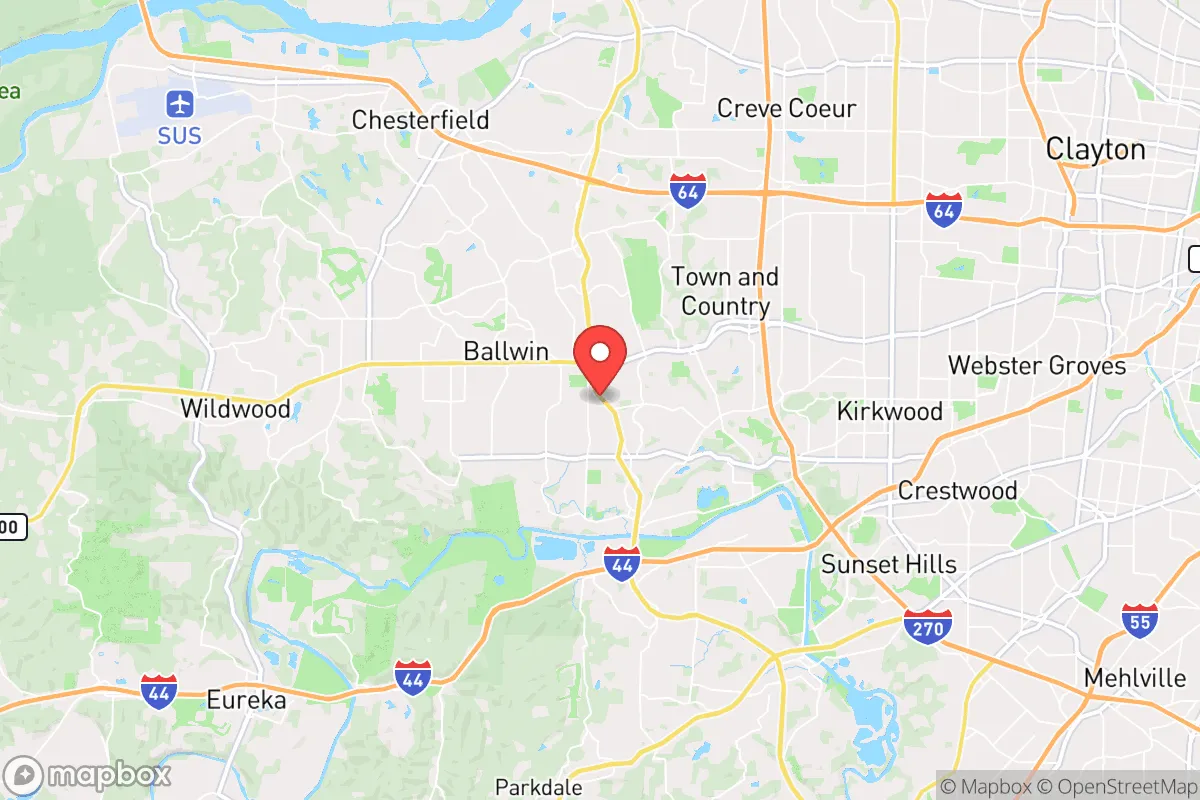
Drive ten miles east into St. Louis city proper, and you’re in a deep-blue stronghold where progressive policies on taxes, policing, and zoning are the norm. That’s a world away from Manchester. But the real contrast is with places like Clayton or University City — those are the suburbs where you see the most aggressive push toward higher density mandates, equity ordinances, and what I’d call government overreach into personal property rights. Manchester still feels more like Wildwood or Ballwin: folks here value their single-family homes, their quiet streets, and the freedom to do what they want with their own land without a bunch of red tape. The R+4 rating puts us right in the middle of West County’s conservative belt, but we’re not as deep red as, say, Washington or Union out in Franklin County. We’re a kind of bellwether — if Manchester ever flips blue, you’ll know the whole region has changed.
What this means for residents
For now, the practical effect is that your tax dollars stay local and your personal freedoms are mostly respected. The city council has historically been cautious about new regulations — no overreaching mask mandates that lasted forever, no heavy-handed business closures during the pandemic, and property taxes that are reasonable compared to what you’d pay in St. Louis County’s more progressive enclaves. But I’d be lying if I said there wasn’t pressure. You see it in school board races, where activists push for curriculum changes that don’t align with traditional values. You see it in zoning debates, where some want to force higher-density housing into established neighborhoods. The concern is that as more people move here from the city, they bring the same big-government ideas that made them leave in the first place. So far, Manchester has held the line, but it takes vigilance.
Culturally, Manchester is still a place where the Fourth of July parade matters, where the local VFW post is active, and where people wave to their neighbors. There’s no push for defunding the police here — our department is well-supported and responsive. The biggest policy distinction you’ll notice is a general reluctance to impose new fees or regulations unless absolutely necessary. That’s the West County way. If you’re looking for a place where you can live your life without a bureaucrat telling you how to do it, Manchester is still that place. Just keep an eye on the school board meetings and the planning commission — that’s where the real fight for the soul of this town is happening.

State Political ClimatePolitical Climate in Missouri
State Political AnalysisPolitical Environment in the State
Missouri has long been a bellwether state, but over the past 20 years it has shifted from a classic purple swing state to a solidly red one, with a Republican trifecta controlling the governor’s mansion and both legislative chambers since 2017. The state’s overall partisan lean is now roughly +15 to +18 points Republican in statewide races, driven by a deep rural-urban split and a steady exodus of moderate Democrats from the electorate. For a conservative-leaning individual or family looking to relocate, Missouri offers a policy environment that has become increasingly aligned with limited government, Second Amendment rights, and local control, though the major metro areas—St. Louis and Kansas City—remain progressive strongholds that can feel like entirely different states.
Urban vs. rural divide
The political map of Missouri is a textbook study in geographic polarization. The two major metros—St. Louis (St. Louis City and County) and Kansas City (Jackson County)—are deep blue islands, consistently delivering 60-70% of their votes to Democrats. St. Louis City, in particular, is one of the most liberal jurisdictions in the Midwest, with a long history of single-party Democratic rule and policies like a $15 minimum wage and sanctuary city ordinances. In contrast, the vast rural and exurban areas—places like Springfield, Joplin, Cape Girardeau, and Jefferson City—are overwhelmingly red, often voting 70-80% Republican. The suburbs have been the real battleground: St. Charles County (west of St. Louis) has flipped from purple to deep red over the last decade, while Clay County (north of Kansas City) has moved right but remains more competitive. The key driver of this divide is cultural and economic—rural and suburban Missourians tend to prioritize gun rights, lower taxes, and traditional values, while urban voters focus on social justice, public transit, and government-funded programs.
Policy environment
Missouri’s state-level policy environment is among the most conservative in the Midwest. The state has a flat income tax rate of 4.0% (down from 5.4% in 2022, with further cuts triggered by revenue triggers), no estate tax, and a relatively low property tax burden. The regulatory posture is business-friendly, with a right-to-work law (though repealed by ballot measure in 2018) and limited zoning restrictions outside major cities. On education, Missouri has a robust school choice landscape: charter schools are allowed in St. Louis and Kansas City, and the Missouri Empowerment Scholarship Accounts program provides tax-credit scholarships for private school tuition. The state also has a strong homeschool freedom law with minimal reporting requirements. Healthcare policy is mixed—Missouri expanded Medicaid via ballot initiative in 2020 (against legislative will), but the state has not adopted a state-based insurance exchange and has some of the loosest telemedicine laws. Election laws have tightened: voter ID is required, and the 2022 election law (SB 600) banned private funding of elections, limited drop boxes, and shortened the absentee voting window. For a conservative, the policy environment is generally favorable, though the Medicaid expansion and the 2018 right-to-work repeal show that ballot initiatives can override the legislature.
Trajectory & freedom
Missouri’s trajectory over the past decade has been toward greater personal freedom in several key areas, particularly gun rights and parental rights. The 2016 “Second Amendment Preservation Act” (SAPA) declared federal gun laws that infringe on the right to keep and bear arms as “null and void” in Missouri—a bold move that has sparked federal litigation but remains popular with conservatives. In 2021, the legislature passed a “Parental Bill of Rights” (HB 2040) that requires schools to notify parents of any medical or mental health services offered to their child and prohibits instruction on sexual orientation or gender identity in K-3 classrooms. On the medical autonomy front, Missouri banned nearly all abortions after 8 weeks in 2019 (with no exceptions for rape or incest), and the trigger law went into effect after Dobbs. However, there are concerning trends: the state has seen a rise in property tax assessments in growing counties like St. Charles and Boone, and the 2020 Medicaid expansion (approved by voters 53-47) added hundreds of thousands to the rolls, increasing state spending. The biggest red flag for liberty-minded residents is the growing influence of local progressive prosecutors in St. Louis and Kansas City, who have implemented “no cash bail” policies and declined to prosecute certain low-level crimes, effectively creating two-tier justice systems within the state.
Civil unrest & political movements
Missouri has been a flashpoint for civil unrest, most notably in Ferguson (a suburb of St. Louis) in 2014, where the shooting of Michael Brown sparked weeks of protests, looting, and a national conversation on policing. The aftermath saw the rise of the “Ferguson effect” and a lasting distrust between law enforcement and the community. More recently, St. Louis has seen recurring protests over police shootings and racial justice, while Kansas City has experienced organized left-wing activism around housing and tenant rights. On the right, the Missouri Freedom Caucus has become a powerful force in the state legislature, pushing for school choice, anti-vaccine mandates, and election integrity measures. Immigration politics are relatively quiet—Missouri has no sanctuary cities (St. Louis and Kansas City have “welcoming” policies but do not formally refuse cooperation with ICE), and the state passed a law in 2023 (HB 1162) requiring all employers to use E-Verify. Election integrity remains a hot-button issue: the 2020 election saw no major fraud scandals, but the 2022 law (SB 600) was driven by lingering distrust. A new resident would notice that political signs and flags are common in rural areas, and that local news is heavily polarized between urban and rural outlets.
Projection
Over the next 5-10 years, Missouri is likely to become more conservative at the state level, driven by continued out-migration from St. Louis and Kansas City to red suburbs and rural areas, and by an influx of conservative-leaning migrants from blue states like Illinois and California. The state’s population growth is concentrated in the outer suburbs of St. Louis (St. Charles, Warren, and Lincoln counties) and the Springfield-Branson corridor, all of which are reliably red. The biggest risk to this trajectory is the growing political power of the Kansas City and St. Louis metros, which could push for more progressive ballot initiatives (like Medicaid expansion and marijuana legalization, both of which passed by wide margins). However, the legislature is likely to continue tightening ballot initiative rules—a 2024 proposal to require a 60% supermajority for constitutional amendments is gaining traction. For a conservative moving in now, expect a state that remains friendly to gun rights, school choice, and low taxes, but with a persistent urban-rural cultural war that will keep politics lively. The key battleground will be the state Supreme Court and local prosecutor races, where progressive candidates could erode conservative gains.
Bottom line for a new resident: Missouri offers a high degree of personal freedom and a low cost of living, but the political climate is not monolithic. If you choose to live in the St. Louis or Kansas City metro areas, you will be in a blue bubble with progressive policies on crime, education, and taxes. If you settle in the suburbs (St. Charles, Clay, or Greene counties) or in smaller cities like Springfield or Cape Girardeau, you will find a community that aligns with traditional conservative values. The state’s trajectory is positive for those who prioritize limited government and Second Amendment rights, but you should be aware that ballot initiatives can override the legislature, and that local politics in the major metros can feel like a different country. For a conservative family or individual, Missouri is a solid choice—just pick your county carefully.
* Values derived from national, state, county, city and local statistics and may differ in a specific area. Last updated: 2026-10-10T16:28:12.000Z
Narrative content on this page is AI-generated and may contain mistakes. Verify any details that matter before acting on them.
ReloMaps may earn a commission from affiliate links at no extra cost to you.

