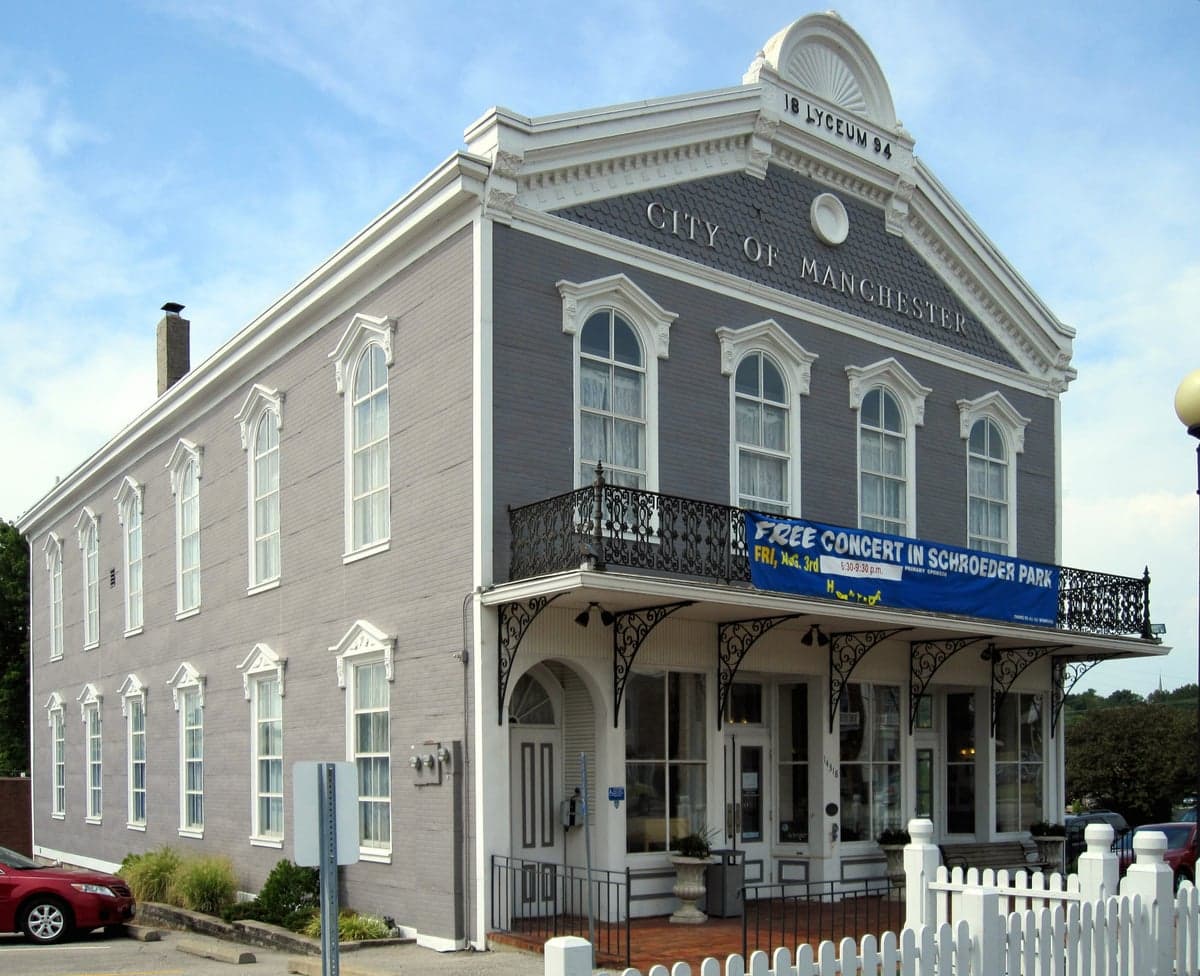
Photo: Wikipedia
Strategic Assessment of Manchester, MO
Meaningful friction. Expect exposure to either population pressure, blast zones, or natural disaster risk. Consider buying a retreat property.
What does the Strategic Assessment tell us?
Our Strategic Assessment grades tactical survivability of an area. Major population centers, military targets, fallout zones, natural disasters, and border exposure all drive risk — lower exposure means a more defensible position in a crisis.
This is heavily inspired by Joel Skousen's Strategic Relocation book. Highly recommended you checkout the book ($)What does this tell us?
Our Strategic Assessment grades tactical survivability of an area. Major population centers, military targets, fallout zones, natural disasters, and border exposure all drive risk — lower exposure means a more defensible position in a crisis.
This is heavily inspired by Joel Skousen's Strategic Relocation book. Highly recommended you checkout the book ($)Strategic Pillars

Key Distances
Regional Safe Places
Below is our recommended "safe zones" in Missouri and the surrounding area based on our strategic heuristics. For most people, it's unrealistic to live in a “safe zone” full-time due to work, family or other personal reasons. They tend to be more rural. However, many of these areas are perfect for second homes and retreat properties that double as a vacation home or even a short-term rental.


Important Note: For informational purposes only. This does not mean nothing bad ever happens in the green zones. Please use common sense. This is based on public data and modeled with AI. We tried to take a conservative approach but mistakes happen. We update this regularly as new information becomes available.
Solar Generator Recommendations
Backup power matters more here than in safer locations. We've picked three solar generators across budgets and capacity tiers — start with the budget unit if you only need a few essentials, or step up if you want to run a fridge and HVAC for days at a time.

Jackery Portable Power Station Explorer 300
Budget OptionPower on the Go: Weighing only 11 lbs, it's convenient to set up and store with book-sized foldable solar panels

BLUETTI Portable Power Station AC180
Designed for both indoor and outdoor scenarios, AC180 is highly capable as it has a robost capacity and continuous output power.

EF ECOFLOW DELTA Pro Ultra Power Station
Upgraded PickEcoFlow DELTA Pro Ultra is a whole-home energy system designed to grow with your family. Integrated with the Smart Home Panel 2, it scales to meet your evolving energy needs — keeping your home powered, intelligent, and secure through every stage of life.
We earn a commission, at no additional cost to you.
Strategic Assessment Analysis
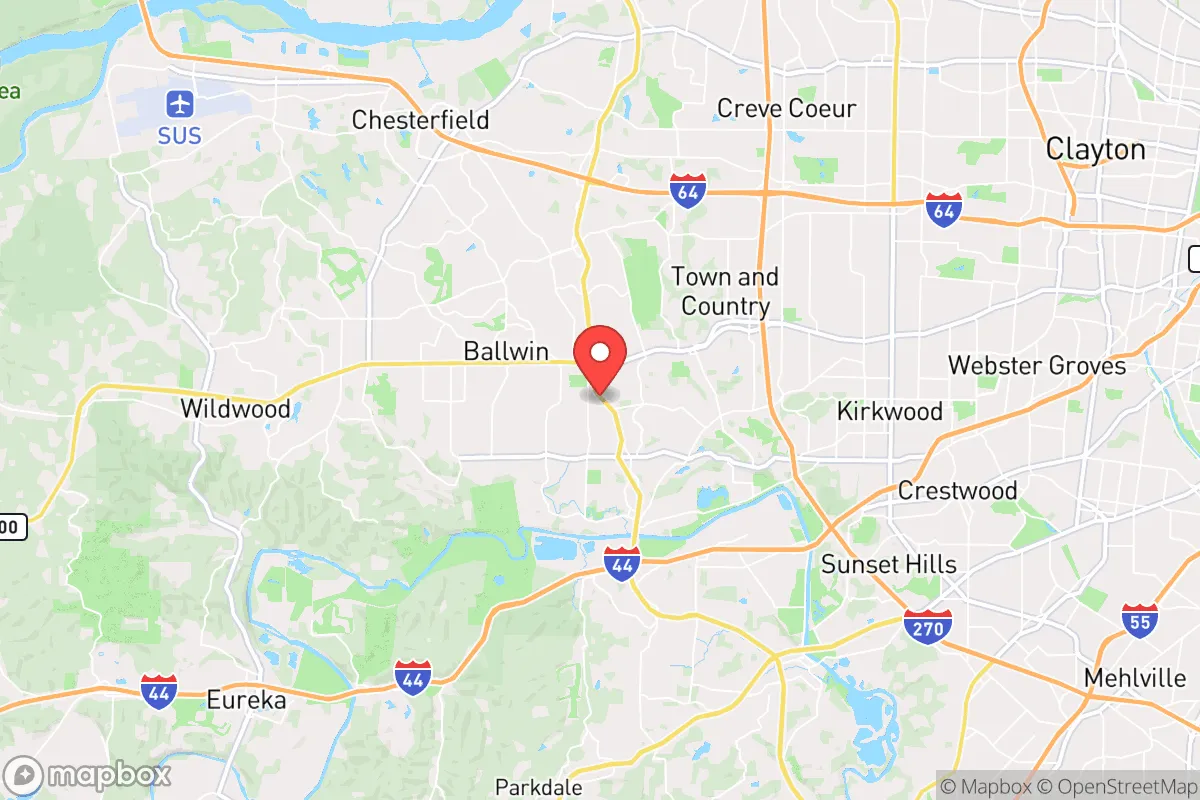
Manchester, Missouri, offers a deceptively strategic position for the prepper-minded relocator, balancing proximity to St. Louis’s resources with a buffer that most suburban enclaves lack. Nestled in western St. Louis County along the I-64/US 40 corridor, this community of roughly 18,000 sits far enough from the urban core to avoid the worst of a city-wide collapse, yet close enough to leverage its infrastructure before the grid goes dark. For the conservative-leaning individual or family looking to weather civic unrest, supply chain disruptions, or a cascading disaster, Manchester’s resilience lies in its geography, its access to natural corridors, and its relative insulation from the most obvious fallout targets. This isn’t a bunker town, but it’s a solid base camp for those who think ahead.
Geographic position and natural advantages for long-term survival
Manchester’s real asset is its location along the Missouri River bluffs, which provide natural elevation and drainage advantages over flood-prone areas closer to the river. The town sits roughly 25 miles west of downtown St. Louis, placing it outside the immediate blast radius of any theoretical nuclear or industrial strike on the city’s core, while still within a day’s travel of the Ozark highlands—a classic bug-out destination. The area’s karst topography, with its limestone bedrock and numerous caves, offers potential for natural shelter or cache sites, though most are on private land. The Meramec River basin, just south of Manchester, provides a reliable water source and a natural barrier against eastward movement from the city, should civil unrest spill outward. For the prepper, this means defensible terrain: the region’s rolling hills and dense tree cover along the Meramec Greenway create natural chokepoints and observation points, while the I-44 and I-64 corridors offer multiple egress routes toward less populated counties like Franklin and Crawford. The local climate, with four distinct seasons and adequate rainfall, supports subsistence gardening and small-scale livestock, though the clay-heavy soil requires amendment for serious crop yields.
Risks, exposures, and proximity to fallout-relevant landmarks
The primary vulnerability for Manchester is its proximity to St. Louis’s critical infrastructure and potential target sets. Lambert–St. Louis International Airport, roughly 20 miles northeast, is a likely first-strike target in a major conflict, and prevailing winds from the west-northwest could carry fallout toward Manchester depending on the detonation altitude. The nearby I-270/I-64 interchange, a major logistics hub, would become a chokepoint and likely target for civil unrest or infrastructure sabotage. Closer to home, the Union Pacific rail line running through the area carries hazardous materials—ammonia, chlorine, and petroleum products—regularly, and a derailment or intentional release could force a rapid evacuation. The town’s water supply, drawn from the Missouri River via the St. Louis County Water Company, is vulnerable to upstream contamination or sabotage at the Chain of Rocks treatment plant. Power infrastructure is similarly centralized: a single substation failure could knock out the entire western county. For the prepper, these risks mean that Manchester is not a standalone survival location—it’s a staging area. The prudent relocator will identify secondary water sources (the Meramec River, private wells in unincorporated areas) and maintain a fuel cache for a 50-mile bug-out to the Ozarks. The town’s police department, while professional, is small—around 30 officers—and would be overwhelmed in a mass casualty event or widespread civil unrest, meaning self-defense and neighborhood watch become paramount.
Practical resilience for a relocator: food, water, energy, and defensibility
For the individual or family serious about self-sufficiency, Manchester offers a mixed bag. The town’s suburban zoning allows for backyard gardens and small livestock (chickens, rabbits) in most residential areas, though homeowners’ associations in newer subdivisions may restrict this. The local farmers’ market, operating seasonally at the Manchester Town Center, is a good source for heirloom seeds and local produce, but it’s not a year-round solution. Water storage is critical: the municipal supply is treated and reliable in normal times, but a prolonged grid-down scenario would require a minimum of two weeks’ worth of stored water per person, plus a Berkey or similar filtration system for the Meramec River. Solar panels are permitted, and several local installers cater to off-grid setups, but the tree canopy in older neighborhoods limits sun exposure—rooftop arrays on south-facing slopes are your best bet. Defensibility is moderate: Manchester’s layout, with its winding suburban streets and cul-de-sacs, creates natural dead ends that can be barricaded, but the town’s proximity to major highways means it’s also a natural funnel for refugees from the city. The smart play is to identify a home on a corner lot with clear sightlines, or better yet, a property backing onto the Meramec Greenway for a discreet escape route. For energy, natural gas is the primary heating fuel, but a backup generator with a 50-gallon propane tank is non-negotiable—the grid here is aging and prone to outages during summer storms and winter ice. The local hardware stores (Ace Hardware on Manchester Road) stock basic prepping supplies, but don’t expect to find ammunition or water filters on the shelf after a crisis hits.
The overall strategic picture for Manchester is one of calculated risk. It’s not a remote redoubt, and it won’t shield you from a direct nuclear strike on St. Louis or a nationwide collapse. But for the conservative relocator who wants to stay close to employment and family networks while maintaining a credible prepping posture, it’s a viable middle ground. The town’s demographic stability—predominantly white, middle-class, with a strong Catholic and Lutheran church presence—means a higher likelihood of like-minded neighbors and mutual aid networks. The local political climate leans conservative, with St. Louis County’s western suburbs consistently voting red in state and local elections, which translates to fewer regulatory hurdles for firearms, generators, and alternative energy. The key is to treat Manchester as a forward operating base, not a final destination. Stock your pantry, drill your family on evacuation routes to the Ozarks, and build relationships with the farmers and homesteaders in Franklin County before you need them. In a world where the cities are tinderboxes and the suburbs are the buffer zone, Manchester gives you a fighting chance—if you’re prepared to leave it behind when the time comes.

* Values derived from national, state, county, city and local statistics and may differ in a specific area. Last updated: 2026-10-10T16:28:12.000Z
Narrative content on this page is AI-generated and may contain mistakes. Verify any details that matter before acting on them.
ReloMaps may earn a commission from affiliate links at no extra cost to you.

