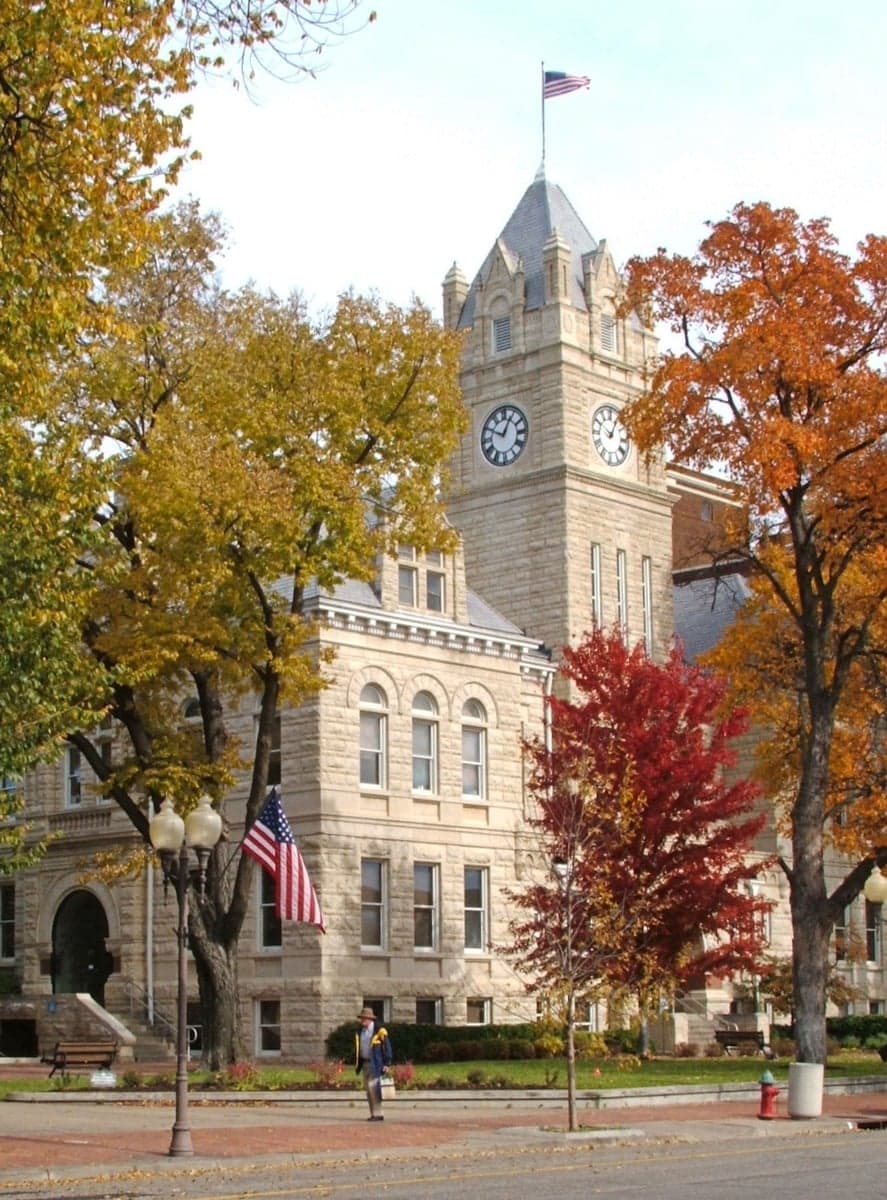
Photo: Wikipedia
Political ClimatePolitical Climate in Manhattan, KS
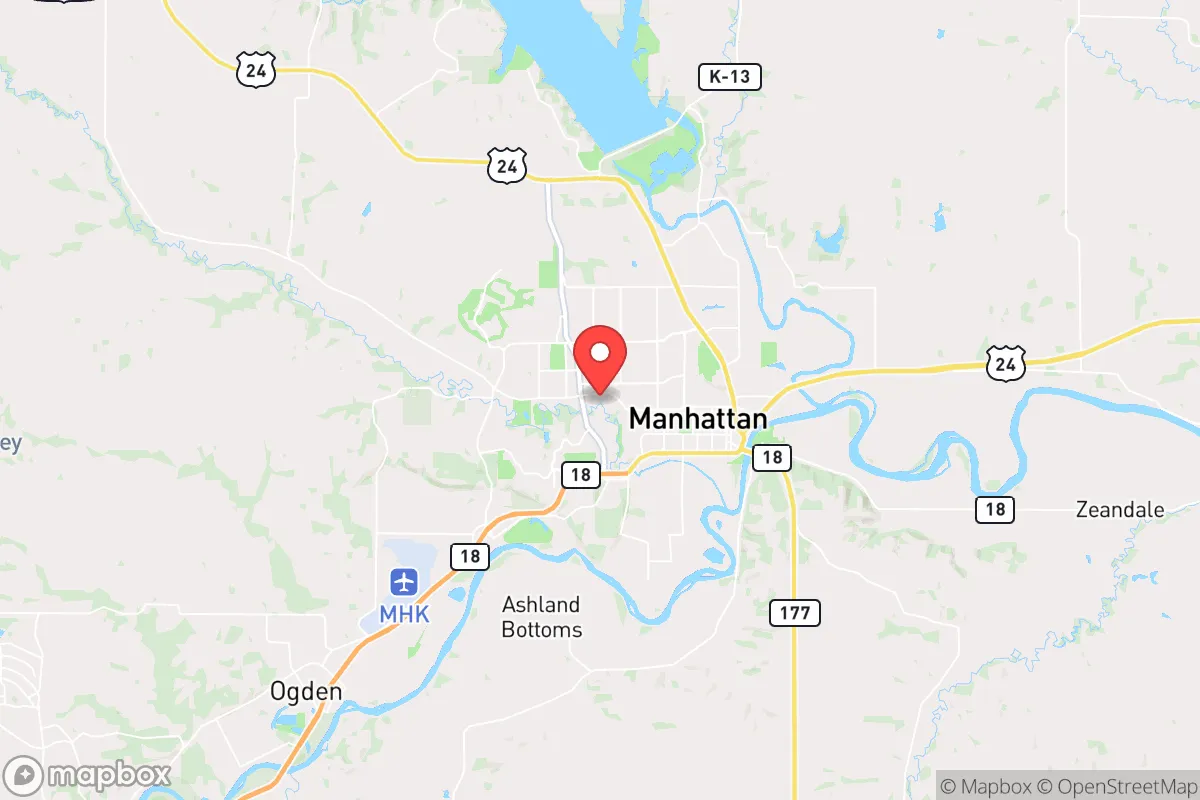
District shown is the primary district for this city’s centroid. Cities may span multiple districts.
Local Political AnalysisPolitical Analysis of Manhattan, KS
Manhattan, Kansas, sits in the heart of the Flint Hills, and for a long time, its politics were as steady as the limestone bedrock under the Konza Prairie. The area’s Cook PVI of R+16 tells you the baseline is deeply Republican, and that’s been the reality for generations. But if you’ve lived here as long as I have, you’ve seen the winds start to shift, especially inside the city limits. The surrounding rural areas—places like Wamego, Junction City, and the unincorporated parts of Riley County—still vote like it’s 1980, but Manhattan itself has been trending a little bluer with each election cycle, driven largely by Kansas State University’s faculty and a growing number of out-of-state transplants. It’s not a blue wave, but it’s a noticeable undercurrent that has folks who value limited government paying close attention.
How it compares
Drive 15 minutes in any direction from Aggieville, and you’re in territory that votes 70-80% Republican. Riley County as a whole still leans red, but Manhattan’s precincts near campus and downtown have been known to flip for Democratic candidates in statewide races. Compare that to Junction City, just 20 miles west, which has a strong military presence from Fort Riley and tends to vote more conservative on national security and fiscal issues. Or head east to Wamego—that town is about as reliably red as they come, with a strong sense of traditional values and a healthy skepticism of government overreach. The contrast is stark: you can go from a coffee shop in Manhattan where people are debating carbon taxes to a diner in Wamego where the talk is about property rights and the Second Amendment. That split is the real story here.
What this means for residents
For those of us who moved here to escape the regulatory creep and progressive social experiments of bigger cities, the trend is a genuine concern. The city commission has seen pushes for things like “sanctuary city” resolutions and diversity, equity, and inclusion mandates in city contracting—ideas that sound nice on paper but often translate into more bureaucracy and less personal freedom. The local school board has also become a battleground, with some members pushing for curriculum changes that prioritize activism over academics. If you value the right to raise your kids without government telling you what they should think, or if you want to run a small business without a dozen new permits, you’re going to want to keep a close eye on local elections. The good news is that the county commission and most of the surrounding towns are still firmly grounded in common-sense, limited-government principles, so the worst of the progressive overreach tends to get checked at the county line.
One thing that sets Manhattan apart culturally is the tension between the university’s influence and the town’s agricultural and military roots. You’ll see “Keep Manhattan Free” bumper stickers next to “K-State Proud” plates. The local gun culture is still strong—open carry is common, and most folks I know have a concealed carry permit—but you’ll also see bike lanes and farmers’ markets that feel more Boulder than Blue Rapids. The long-term trajectory depends on whether the university’s growth continues to attract a more progressive demographic, or if the surrounding conservative base turns out in force to keep the city council and school board from drifting too far left. For now, it’s a place where you can still have a conversation with your neighbor even if you disagree on politics, but that’s getting harder every year.

State Political ClimatePolitical Climate in Kansas
State Political AnalysisPolitical Environment in the State
Kansas has long been a reliably Republican state, but the political climate here is more complex than a simple red label suggests. Over the past 10-20 years, the state has shifted from a moderate, pragmatic conservatism toward a more assertive, freedom-focused posture, though not without significant internal battles. The dominant coalition is a mix of rural conservatives, suburban fiscal hawks, and a growing populist wing, but the state’s trajectory has been anything but smooth, with a notable Democratic governor (Laura Kelly) holding the line against a supermajority GOP legislature.
Urban vs. rural divide
The political map of Kansas is a textbook study in the urban-rural split. The two major metros—Kansas City (Johnson County) and Wichita (Sedgwick County)—are the state’s blue-leaning anchors, but even they are not monolithic. Johnson County, the wealthiest and most educated county, has been trending left for a decade, flipping from a +12-point Republican margin in 2012 to a +4-point Democratic margin in 2020. This shift is driven by suburban professionals and corporate transplants who prioritize education funding and social moderation. Wichita, meanwhile, remains a purple battleground, with its urban core voting blue while the surrounding suburbs and exurbs lean red. The real Republican firepower comes from the vast rural expanse: counties like Thomas (Colby), Sheridan, and Wallace routinely deliver 80-90% of their votes to GOP candidates. The divide is stark—Lawrence (Douglas County), home to the University of Kansas, is the state’s most liberal enclave, while Dodge City and Garden City in southwest Kansas are reliably conservative, though their growing Hispanic populations are slowly shifting the calculus.
Policy environment
Kansas’s policy environment is a mixed bag for conservatives. On the plus side, the state has no income tax on Social Security benefits, a flat state income tax rate of 5.7% (down from a progressive structure a decade ago), and a relatively low corporate tax rate. Property taxes are moderate, though they vary significantly by county. The state is a right-to-work state, and its regulatory posture is generally business-friendly, with minimal red tape for small businesses. However, the education policy front has been a flashpoint: the Kansas Supreme Court has repeatedly forced the legislature to increase K-12 funding, leading to a perennial tug-of-war between the judiciary and the legislature. On healthcare, Kansas has not expanded Medicaid under the Affordable Care Act, a stance that pleases fiscal conservatives but frustrates those who want more coverage options. Election laws are solid: the state requires a photo ID to vote, has no same-day registration, and has purged inactive voters from rolls—measures that have drawn praise from election integrity advocates and criticism from progressives.
Trajectory & freedom
Is Kansas becoming more or less free? The answer depends on the issue. On gun rights, the state has moved decisively in the right direction: in 2021, Kansas enacted constitutional carry (permitless carry for concealed handguns), and it remains a Second Amendment Sanctuary state, with many counties passing resolutions against federal gun control. On parental rights, the 2023 Parents’ Bill of Rights (HB 2236) codified that parents have the fundamental right to direct their children’s education, healthcare, and upbringing—a direct response to school board overreach during the COVID era. On medical autonomy, Kansas bucked the trend by passing a born-alive infant protection act and a ban on gender transition procedures for minors (SB 180, 2023). However, the state’s tax freedom has been a rollercoaster: the infamous “Brownback tax cuts” (2012-2017) were largely repealed after revenue shortfalls, leaving a lingering distrust of aggressive tax-cutting among moderates. Property rights are generally strong, with no statewide rent control and limited eminent domain abuse. The biggest red flag for liberty-minded residents is the state’s overreach in education: the Kansas State Department of Education has pushed progressive curriculum standards, and local school boards in Johnson County have been accused of hiding critical race theory and gender ideology from parents—a fight that is far from over.
Civil unrest & political movements
Kansas has not seen the level of civil unrest seen in coastal states, but it has had its flashpoints. The most notable was the 2022 “Parents’ Rights” protests in Johnson County, where thousands of parents packed school board meetings over mask mandates, critical race theory, and library books with explicit content. These protests were largely peaceful but intense, and they directly led to the election of conservative school board candidates in several districts. On the left, the Kansas People’s Action and ACLU of Kansas have been active in opposing the state’s abortion ban (the 2022 “Value Them Both” amendment failed at the ballot box, a major upset for pro-life forces). Immigration politics are relatively quiet, though Garden City and Dodge City have seen tensions over meatpacking plant labor and housing. There is no serious secession or nullification movement, but the state’s Second Amendment Sanctuary resolutions represent a form of local nullification against federal gun laws. Election integrity controversies have been minimal compared to other states, though the 2020 election saw a brief controversy over the use of drop boxes in Johnson County, which the legislature later restricted.
Projection
Over the next 5-10 years, Kansas is likely to remain a red state, but the margin will narrow. The key demographic shift is the continued growth of Johnson County, which is attracting out-of-state transplants from blue states who bring moderate-to-liberal voting habits. If this trend accelerates, Kansas could become a competitive state at the presidential level within a decade—similar to what happened in Arizona and Georgia. However, the rural areas are not depopulating as fast as in some Plains states, and the GOP’s stronghold in western Kansas will keep the state from flipping blue anytime soon. The biggest wildcard is the Kansas Supreme Court, which has a liberal majority and is likely to continue striking down conservative legislation on education funding and abortion. This could trigger a push for judicial reform, including merit selection changes or even impeachment of justices—a fight that would dominate the political landscape. For a new resident, expect the culture war battles over schools and parental rights to intensify, especially in the suburbs. The state’s tax structure is unlikely to see major changes, but a future Democratic governor could push for Medicaid expansion and higher spending.
For a conservative moving to Kansas, the bottom line is this: you’ll find a state that generally respects your gun rights, keeps taxes low, and protects parental authority, but you’ll need to be vigilant about local school boards and the judiciary. The urban-rural divide means your experience will vary dramatically depending on whether you settle in Overland Park or Hays. If you want a reliably conservative environment, stick to the smaller cities and rural counties. If you need proximity to a metro, be prepared for a political fight at the local level—but know that the state legislature has your back on most issues. Kansas is not Texas or Florida in terms of conservative momentum, but it’s a solid, if imperfect, place to raise a family without the government breathing down your neck.
* Values derived from national, state, county, city and local statistics and may differ in a specific area. Last updated: 2026-04-30T21:39:08.000Z
Narrative content on this page is AI-generated and may contain mistakes. Verify any details that matter before acting on them.
ReloMaps may earn a commission from affiliate links at no extra cost to you.

