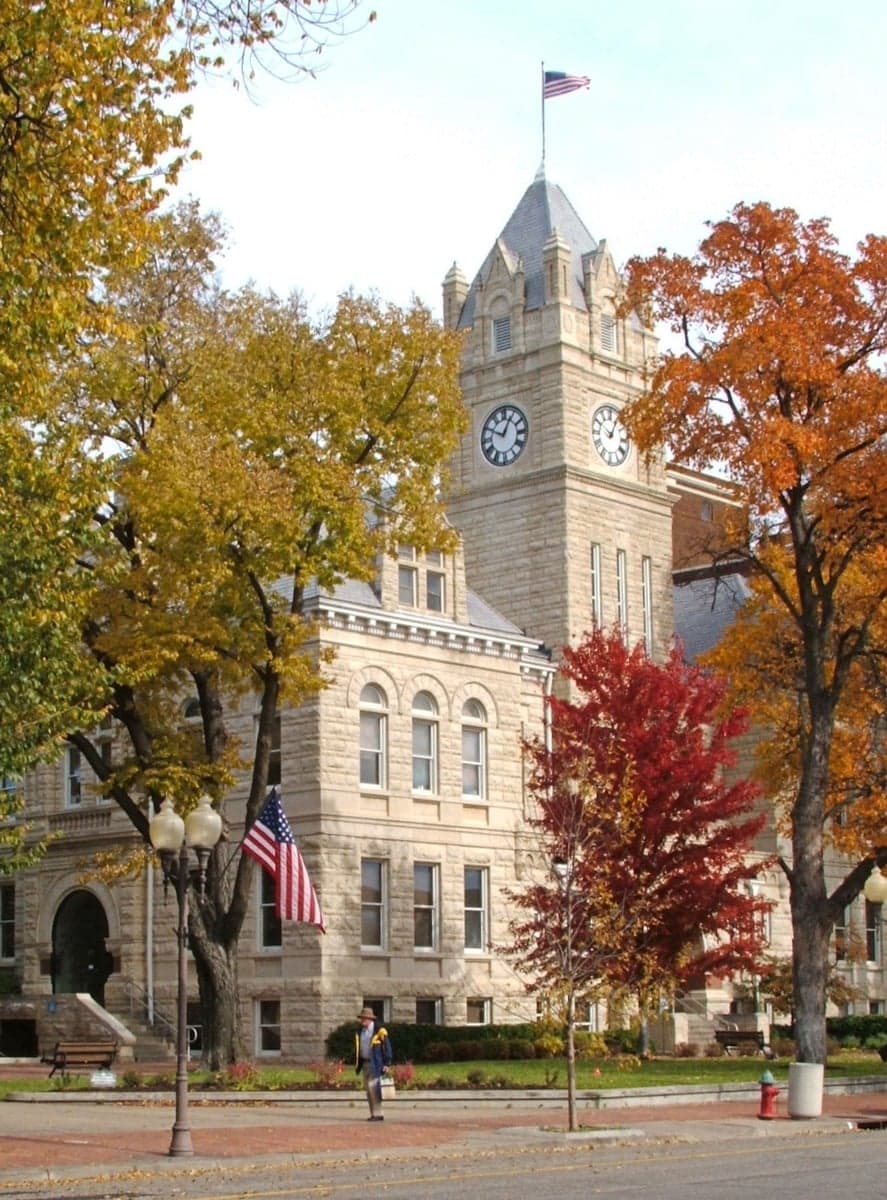
Photo: Wikipedia
Strategic Assessment of Manhattan, KS
Workable tactical position. Some exposure to population density or targets, but generally defensible in a crisis.
What does the Strategic Assessment tell us?
Our Strategic Assessment grades tactical survivability of an area. Major population centers, military targets, fallout zones, natural disasters, and border exposure all drive risk — lower exposure means a more defensible position in a crisis.
This is heavily inspired by Joel Skousen's Strategic Relocation book. Highly recommended you checkout the book ($)What does this tell us?
Our Strategic Assessment grades tactical survivability of an area. Major population centers, military targets, fallout zones, natural disasters, and border exposure all drive risk — lower exposure means a more defensible position in a crisis.
This is heavily inspired by Joel Skousen's Strategic Relocation book. Highly recommended you checkout the book ($)Strategic Pillars

Key Distances
Regional Safe Places
Below is our recommended "safe zones" in Kansas and the surrounding area based on our strategic heuristics. For most people, it's unrealistic to live in a “safe zone” full-time due to work, family or other personal reasons. They tend to be more rural. However, many of these areas are perfect for second homes and retreat properties that double as a vacation home or even a short-term rental.
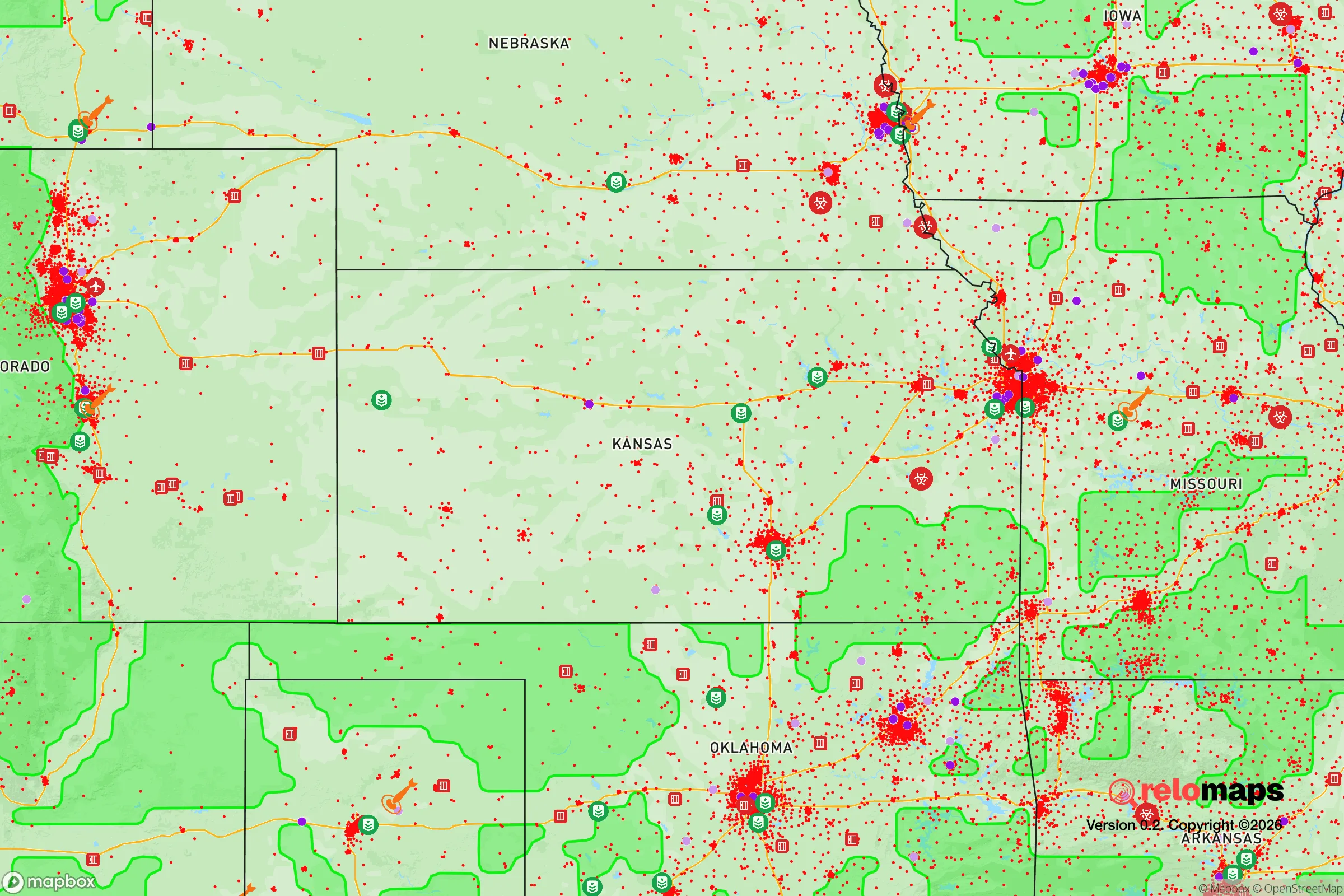
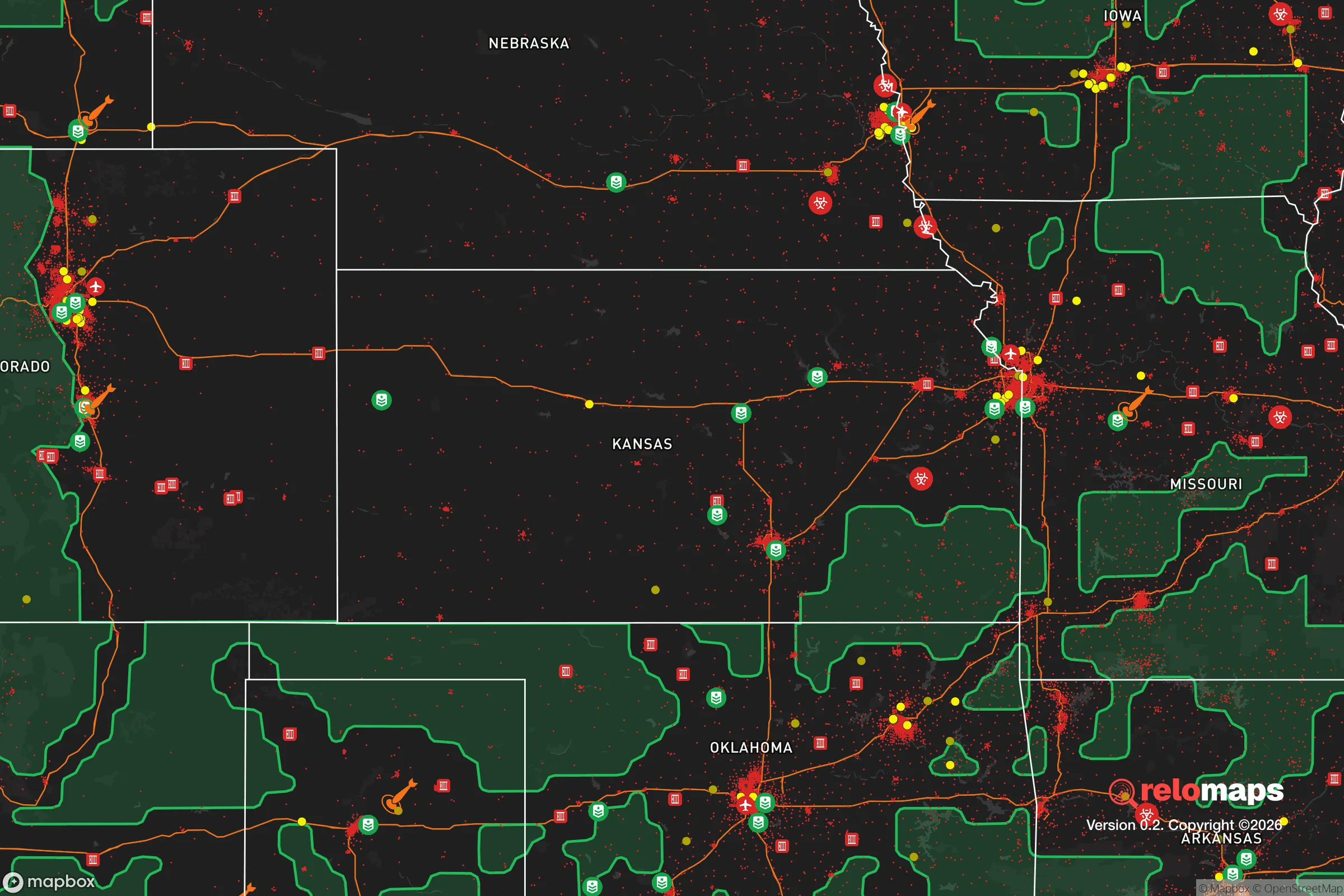


Important Note: For informational purposes only. This does not mean nothing bad ever happens in the green zones. Please use common sense. This is based on public data and modeled with AI. We tried to take a conservative approach but mistakes happen. We update this regularly as new information becomes available.
Solar Generator Recommendations
Backup power matters more here than in safer locations. We've picked three solar generators across budgets and capacity tiers — start with the budget unit if you only need a few essentials, or step up if you want to run a fridge and HVAC for days at a time.

Jackery Portable Power Station Explorer 300
Budget OptionPower on the Go: Weighing only 11 lbs, it's convenient to set up and store with book-sized foldable solar panels

BLUETTI Portable Power Station AC180
Designed for both indoor and outdoor scenarios, AC180 is highly capable as it has a robost capacity and continuous output power.

EF ECOFLOW DELTA Pro Ultra Power Station
Upgraded PickEcoFlow DELTA Pro Ultra is a whole-home energy system designed to grow with your family. Integrated with the Smart Home Panel 2, it scales to meet your evolving energy needs — keeping your home powered, intelligent, and secure through every stage of life.
We earn a commission, at no additional cost to you.
Strategic Assessment Analysis
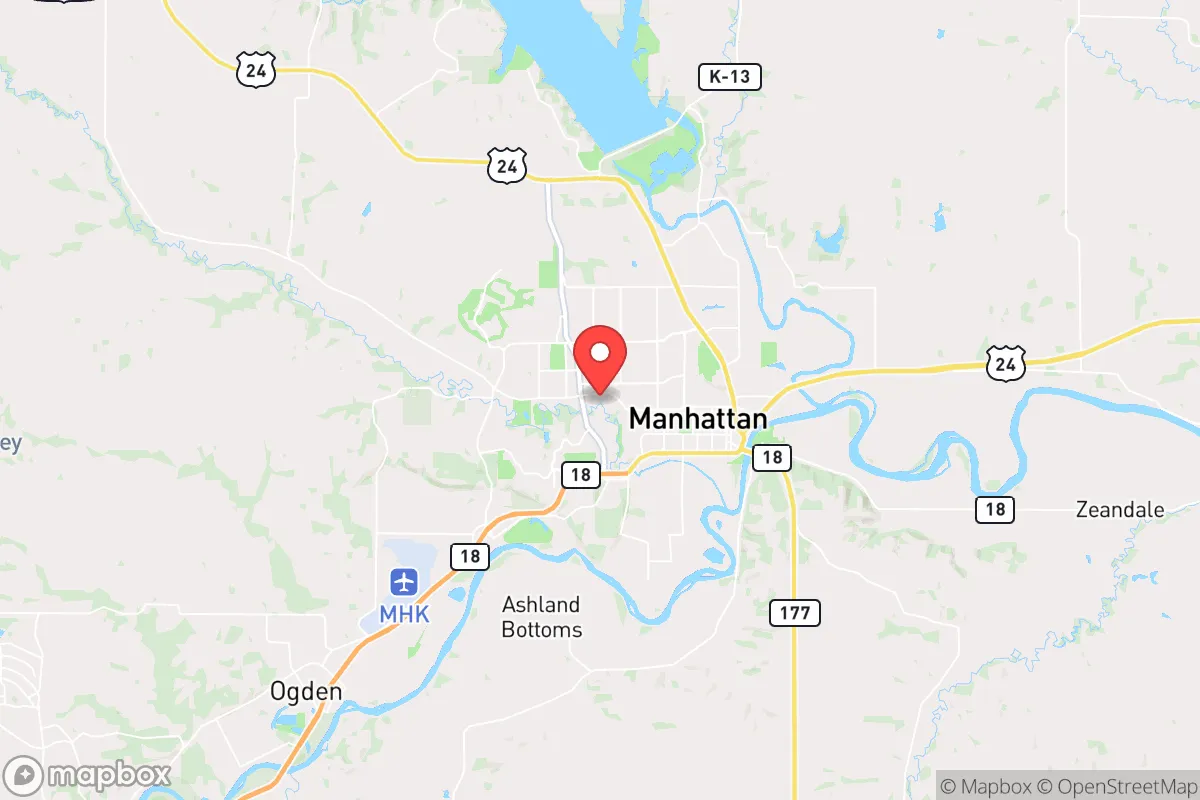
Manhattan, Kansas, offers a compelling blend of geographic isolation and institutional stability that makes it a serious contender for those prioritizing long-term resilience. While it sits within a two-hour drive of the Kansas City metro area, its position in the Flint Hills—a region of low population density and limited strategic value to adversaries—provides a natural buffer against the cascading effects of urban collapse. The presence of Kansas State University and Fort Riley, a major Army base, anchors the local economy and population with a steady, security-minded demographic, which is a distinct advantage in maintaining order during periods of national stress.
Geographic position and natural advantages for long-term security
Manhattan’s location in the rolling Flint Hills is its primary strategic asset. The region’s shallow, rocky soil made it unattractive for large-scale row-crop agriculture, which historically kept development sparse and population density low. This same geology, however, supports excellent native grasslands for grazing, meaning the area has a strong foundation for livestock-based food production. The city itself is nestled in the Kansas River Valley, with the Big Blue and Kansas Rivers converging nearby, providing a reliable surface water source that is less contested than in arid western states. The surrounding terrain—a mix of open prairie and wooded creek bottoms—offers multiple egress routes and defensible positions, while the lack of major interstate highways (I-70 runs 30 miles south) reduces the risk of mass refugee flows from coastal or urban centers. For a relocator, this means a lower probability of being caught in a human-wave evacuation scenario compared to areas closer to I-35 or I-70 corridors.
Risks, exposures, and proximity to fallout-relevant landmarks
The most significant risk for Manhattan is its proximity to two high-value military targets: Fort Riley, 15 miles southwest, and the 1st Infantry Division headquarters there. In a major conflict, this base is a legitimate target for conventional or nuclear strikes. The prevailing winds in Kansas blow from the southwest, meaning fallout from a strike on Fort Riley would likely drift northeast, directly over Manhattan. This is a sobering reality that cannot be ignored. Additionally, the Kansas City metro area (population 2.2 million) lies 120 miles east, and while not a primary target, it could become a secondary one or a source of post-disaster migration. The nearby Tuttle Creek Dam, a large earthen dam on the Big Blue River, presents a secondary risk: while well-maintained, a catastrophic failure or targeted attack could flood low-lying parts of the city. On the positive side, Manhattan has no major petrochemical refineries, nuclear power plants, or large-scale industrial facilities that would be high-priority targets. The area’s low profile in terms of national infrastructure is a net positive for a prepper mindset.
Practical resilience for a relocator: food, water, energy, and defensibility
For a relocator focused on self-sufficiency, Manhattan offers a mixed but workable picture. Water is the strongest asset: the Kansas River and Big Blue River provide abundant surface water, and the alluvial aquifer in the river valley is easily tapped with shallow wells. The city’s municipal water treatment plant draws from the Kansas River, but a prepper should plan for a private well or rainwater catchment system, as municipal systems are vulnerable to power loss and contamination. Food production is viable but requires effort. The growing season is roughly 170 days, with hot summers and cold winters. The surrounding Flint Hills are excellent for cattle, and local farmers’ markets and co-ops (e.g., the Manhattan Farmers Market) provide a baseline for local food networks. However, large-scale row-crop farming is limited by the rocky soil, so a relocator should focus on livestock (chickens, goats, rabbits) and raised-bed gardening. Energy is a vulnerability: the grid is served by Evergy, which relies on a mix of coal, natural gas, and wind. A determined prepper should invest in solar panels with battery storage, as the region gets ample sun (over 200 sunny days per year). Wood for heating is available from the many creek-bottom forests, but it’s not abundant enough for a full winter without careful management. Defensibility is moderate. The city’s layout—a compact downtown surrounded by suburban sprawl and then open prairie—means that a rural property 10-15 miles out offers excellent fields of fire and limited approach routes. The presence of a large, armed population (due to Fort Riley and local hunting culture) is a deterrent to organized looting. The local sheriff’s office and K-State police are professional, but in a prolonged crisis, community-based security would be essential. The area’s strong sense of place and relatively low crime rate (violent crime is below national averages) suggest a population that would organize rather than fragment under stress.
The overall strategic picture for Manhattan is one of calculated trade-offs. It is not a remote mountain redoubt, but it is far enough from major targets to avoid the immediate blast and fire effects of a strike on Kansas City or Wichita. The presence of Fort Riley is a double-edged sword: it provides a security buffer and a population with military skills, but it also makes the area a target. For a relocator willing to invest in a well, solar power, and a rural property with good defensibility, Manhattan offers a solid foundation for weathering a decade of instability. The local culture is conservative, self-reliant, and community-oriented, which aligns well with a prepper mindset. The key is to avoid the immediate fallout zone from Fort Riley (northeast of the base) and to secure a water source independent of the municipal system. If you can accept the risk of being near a military installation, Manhattan provides a rare combination of institutional stability, natural resources, and a like-minded population that makes it a strong choice for strategic relocation in an uncertain future.

* Values derived from national, state, county, city and local statistics and may differ in a specific area. Last updated: 2026-04-30T21:39:08.000Z
Narrative content on this page is AI-generated and may contain mistakes. Verify any details that matter before acting on them.
ReloMaps may earn a commission from affiliate links at no extra cost to you.

