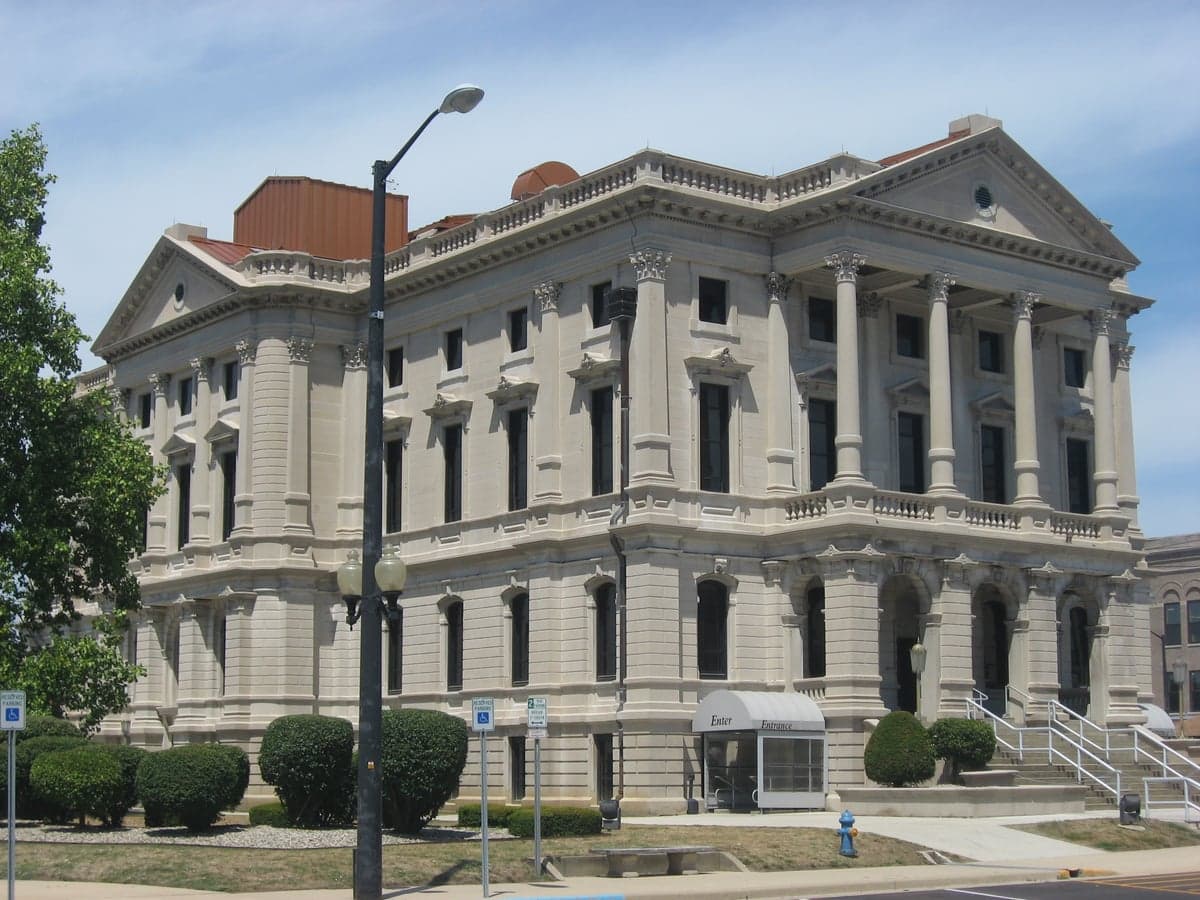
Photo: Wikipedia
Demographics of Marion, IN
Affluence Level in Marion, IN
A low-income area with significant economic hardship. Household wealth and educational attainment are well below national averages.
People of Marion, IN
The people of Marion, Indiana, today form a predominantly white, working-class community of 27,384, marked by a modest but growing Hispanic presence and a stable Black population. With only 2.8% foreign-born residents and a college attainment rate of 17.1%, the city retains a distinctly native-born, blue-collar character rooted in its industrial past. Residents often describe Marion as a place where family ties run deep, church attendance is high, and the pace of life is slower than in the nearby Indianapolis metro. The city’s identity is shaped less by new arrivals and more by the generations who stayed after the factories closed.
How the city was settled and grew
Marion was founded in 1831 as the seat of Grant County, drawing its first wave of settlers from Ohio, Kentucky, and Pennsylvania—mostly farmers of English, German, and Scots-Irish stock. The arrival of the railroad in the 1850s and the discovery of natural gas in the 1880s triggered a boom that transformed Marion into a manufacturing hub. The Gas Belt era brought glass factories, iron foundries, and machine shops, attracting a second wave of European immigrants: Germans, Irish, and later Poles and Italians. These groups settled in working-class neighborhoods near the factories, such as South Marion (south of 38th Street) and the East Side along the railroad corridor, where modest frame houses and Catholic parishes still mark their presence. By 1920, Marion’s population had surged past 25,000, fueled by the automotive parts industry—most notably the Marion Malleable Iron Works and the Marion Power Shovel Company. African Americans began arriving during the Great Migration, particularly after World War I, to work in foundries and rail yards, settling in the West End and Northwest Marion near the industrial plants. This wave was smaller than in nearby Muncie or Indianapolis, but it established a Black community that remains concentrated in those same neighborhoods today.
Modern era (post-1965)
The post-1965 era brought demographic stability rather than dramatic change. The 1965 Hart-Cellar Act had little immediate effect on Marion; the foreign-born share remains low at 2.8%, and the city never became a destination for the large-scale immigration seen in coastal cities. Instead, the dominant population shift was domestic: white flight from the urban core to outlying townships and rural Grant County, and a slow out-migration of younger residents seeking jobs elsewhere. The Black population, which peaked around 12% in the 1990s, has declined slightly to 9.8% as manufacturing jobs disappeared and families moved to larger metros. The West End and Northwest Marion remain the historic Black neighborhoods, though they are now more mixed. The Hispanic population has grown from negligible to 7.2% since 2000, driven by Mexican and Central American families drawn to low-cost housing and remaining factory and warehouse jobs. This community is most visible in the South Marion area and along the Baldwin Avenue corridor, where small tiendas and Spanish-language churches have opened. East/Southeast Asian residents (0.5%) and Indian-subcontinent residents (0.8%) are present in very small numbers, mostly professionals associated with Indiana Wesleyan University or the local hospital system, and they tend to live near the university in the North Marion district. The white population, at 74.9%, is older and more likely to be native-born Hoosiers with multi-generational roots in the county.
The future
Marion’s population is slowly aging and shrinking, with a median age above the state average and a net out-migration of young adults. The Hispanic share is the only segment showing clear growth, projected to reach 10-12% by 2035 if current trends hold, but this growth is gradual—not a rapid transformation. The Black population appears stable, while the white population is declining slightly through natural decrease (more deaths than births) and continued out-migration. The city is not tribalizing into distinct enclaves; rather, it is becoming slightly more Hispanic overall, with most neighborhoods remaining predominantly white. The South Marion area is the most ethnically mixed, while the West End remains the most Black-concentrated. The foreign-born share is unlikely to rise sharply, as Marion lacks the job diversity and immigrant networks of larger cities. The next decade will likely see a continued slow homogenization around a white-and-Hispanic majority, with the Black share steady and Asian/Indian communities remaining tiny.
For someone moving in now, Marion is a stable, low-cost, predominantly white community with a modest but growing Hispanic presence and a small, historically rooted Black population. It is not a place of rapid demographic change or ethnic tension, but rather a city where the population is slowly aging and thinning out. New residents will find a community that values continuity over transformation, with the strongest growth coming from Hispanic families seeking affordable housing and industrial work.

* Values derived from national, state, county, city and local statistics and may differ in a specific area. Last updated: 2026-04-22T10:36:51.000Z
Narrative content on this page is AI-generated and may contain mistakes. Verify any details that matter before acting on them.
ReloMaps may earn a commission from affiliate links at no extra cost to you.

