Photo: Wikipedia
Find The Best Places To Live
in Muncie
PRO TIP! You can paste a Zillow or Redfin link to get info on that property.
What It's Like Living in Muncie, IN
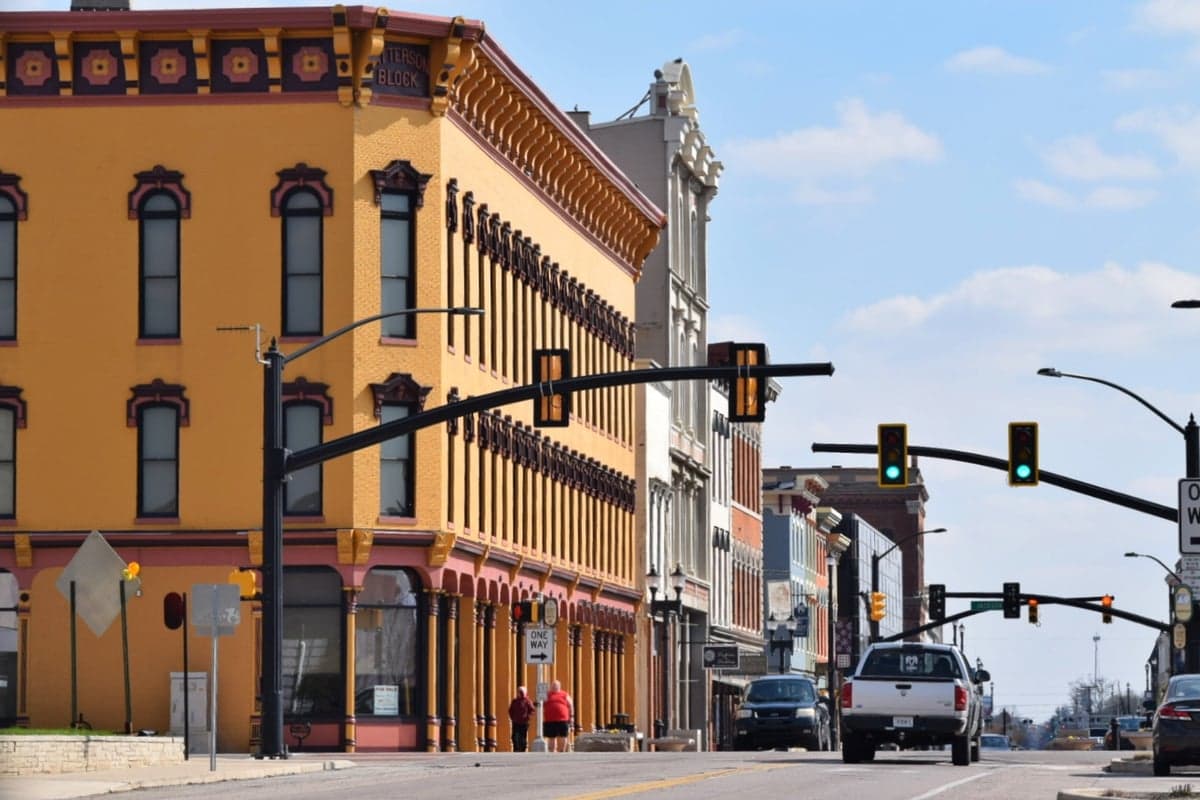
Muncie, Indiana, is one of those places that feels like it’s perpetually caught between a faded postcard and a fresh start. It’s a small city where the old Ball Corporation factories still stand as monuments to a manufacturing heyday, but the real heartbeat now comes from Ball State University and the quiet rhythms of Midwestern family life. If you’re looking for a place where you can actually afford a house on a single income, where high school football still matters, and where “rush hour” means waiting through two red lights, Muncie might surprise you.
The Daily Rhythm: What People Actually Do
Life here moves at a pace that feels almost deliberate. The average commute is just under 19 minutes, which means most people are home in time to actually cook dinner or catch a kid’s soccer game. The median age is 29.5, pulled young by the university, but the city itself has a strong core of families and retirees who’ve been here for decades. On a typical Saturday, you’ll find folks grabbing breakfast at Brittany’s Restaurant on Wheeling Avenue—a no-frills spot where the coffee is hot and the waitresses know your name—or browsing the bins at The Local, a co-op market downtown that’s become a gathering spot for the farm-to-table crowd. For a night out, The Fickle Peach on Walnut Street is the go-to for craft beer and conversation, while Vera Mae’s Bistro offers a more upscale dinner option that feels like a secret find. The city’s cost of living index sits at 58—42% below the national average—so a median income of $43,395 stretches further here than it would in most places. That’s the trade-off: you won’t get rich, but you won’t go broke trying to keep a roof over your head.
Sports, Schools, and the Town-Gown Dynamic
Muncie is a town that lives and dies with its sports, but not in the way you might expect. Ball State Cardinals football and basketball games at Scheumann Stadium and Worthen Arena draw solid crowds, especially when the team is competitive, but the real passion is reserved for high school sports. Muncie Central High School—the same school that produced NBA legend Bonzi Wells—still packs the gym for basketball games, and the rivalry with Delta High School is the kind of thing that gets talked about at church potlucks. The university itself is the largest employer in town, and that creates a unique tension: about 25.7% of residents hold a college degree, which is lower than the national average, but the campus brings in a steady stream of events, lectures, and cultural energy that a town this size wouldn’t otherwise have. For parents, the public schools are a mixed bag—Muncie Community Schools have struggled with funding and enrollment, but the district has been under a state-appointed emergency manager since 2018, and there are signs of stabilization. Many families opt for private or charter options, or simply move to nearby Yorktown or Daleville for the school systems.
What’s There to Do (and What’s Missing)
Entertainment in Muncie is more about community gatherings than big-ticket attractions. The Muncie Three Trails system—a network of paved paths that wind along the White River and through McCulloch Park—is a favorite for runners, bikers, and dog walkers. In the summer, the Muncie Arts and Culture Council hosts the “ArtsWalk” downtown, where local galleries and pop-up vendors take over the streets. The Indiana Muncie Symphony and the Muncie Civic Theatre offer solid cultural programming for a city of 64,739 people. But let’s be honest: if you’re looking for a major concert venue or a Michelin-starred restaurant, you’re driving 45 minutes to Indianapolis. That’s the biggest frustration for longtime residents—the feeling that Muncie has the bones of a great city but lacks the polish. The violent crime rate is 475.7 per 100,000, which is higher than the national average and concentrated in certain neighborhoods, so it’s worth checking block-level data before signing a lease. Property crime is the more common nuisance, especially around the university area.
Pros and Cons of Living Here
- Pro: Housing is absurdly affordable. The median home value is $92,000—you can buy a solid three-bedroom bungalow in the Whitely or Southside neighborhoods for under $80,000. That’s a down payment on a cup of coffee in some cities.
- Con: Job growth is sluggish. The loss of major manufacturing plants (like the old GM stamping plant) has left a hole that hasn’t fully filled. Many residents commute to Indianapolis or work in healthcare (IU Health Ball Memorial Hospital is the second-largest employer) or education.
- Pro: The sense of community is real. People here look out for each other. The annual Muncie Fair at the Delaware County Fairgrounds is a genuine gathering, not a tourist trap.
- Con: The weather is typical Indiana—humid summers, gray winters, and a spring that can’t decide if it wants to snow or bloom. The seasonal rhythm is real, and seasonal affective disorder is a common topic of conversation by February.
- Pro: Traffic is a non-issue. The average commute is under 19 minutes, and you can get from one end of town to the other in 15 minutes flat.
- Con: The downtown revival is still a work in progress. There are bright spots—like the Muncie Public Library’s new branch and the Canan Commons amphitheater—but you’ll still see empty storefronts that remind you the city is recovering, not thriving.
The kind of person who fits in Muncie is someone who values affordability and community over prestige and convenience. It’s a place for people who don’t mind driving a little farther for a big-box store, who are okay with a slower pace, and who see potential in a city that’s still figuring out its next chapter. If you’re a single professional looking for a vibrant nightlife or a parent seeking top-tier public schools, you might find yourself frustrated. But if you’re willing to put down roots, join a church or a civic group, and accept that the best restaurant in town might be a diner with vinyl booths, Muncie has a way of growing on you. It’s not a destination—it’s a home.

Similar small cities to Muncie
* Values derived from national, state, county, city and local statistics and may differ in a specific area. Last updated: 2026-04-22T09:08:19.000Z
Narrative content on this page is AI-generated and may contain mistakes. Verify any details that matter before acting on them.
ReloMaps may earn a commission from affiliate links at no extra cost to you.

