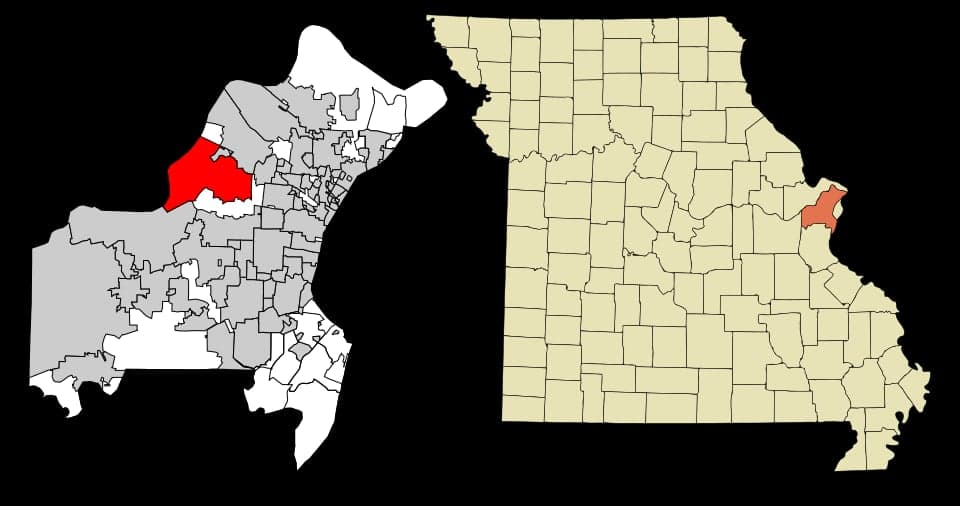
Photo: Wikipedia
Find The Best Places To Live
in Maryland Heights
PRO TIP! You can paste a Zillow or Redfin link to get info on that property.
What It's Like Living in Maryland Heights, MO
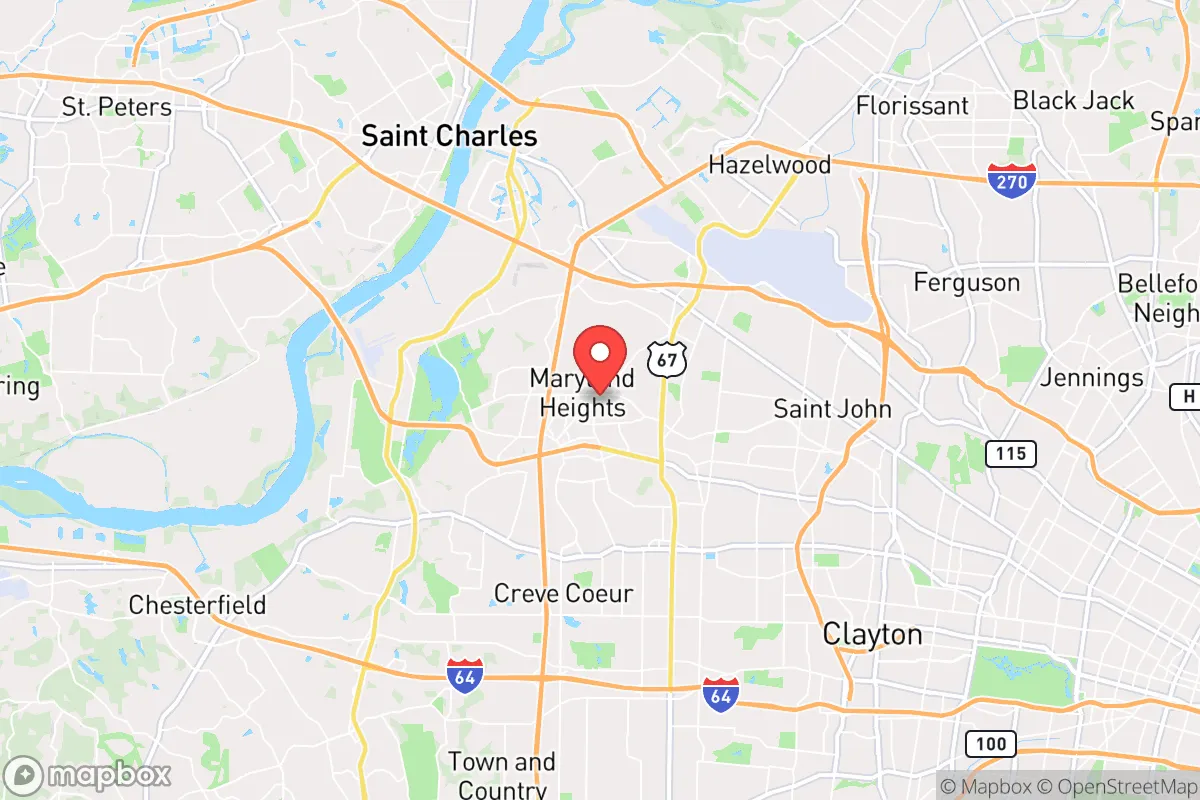
Maryland Heights feels like the quiet middle child of St. Louis County—not the flashy nightlife of downtown, not the sleepy cornfields of the outer suburbs, but a solid, practical place where people actually live their lives. It’s a community of roughly 28,000 that sits just northwest of the city, tucked between Creve Coeur Lake and the Missouri River, and it has the vibe of a place that knows what it is: affordable, convenient, and unpretentious. If you’re a single professional who wants a short commute and a decent apartment, or a parent looking for a safe, mid-priced home with good schools nearby, Maryland Heights is the kind of place you land on after ruling out the pricier options to the west.
The Daily Rhythm: Work, Errands, and the 20-Minute Commute
Most mornings here start with a genuinely easy commute—the average drive time clocks in at just over 20 minutes, which is practically a gift by metro St. Louis standards. People head east into the city for corporate jobs or west toward Chesterfield and the tech corridor along Highway 40. The town itself is a bedroom community with a solid employment base: Express Scripts (now part of Cigna) has a major campus nearby, and the area is thick with logistics and light manufacturing. After work, the routine is practical. You’ll see families at the Schnucks on Dorsett Road, singles grabbing carryout from the strip-mall Thai or Mexican spots, and people walking the paved trails around Creve Coeur Lake. Weekends often involve a trip to the Maryland Heights Community Center (which has a solid indoor pool and a climbing wall) or a drive to the nearby St. Louis Mills outlet mall, though that’s faded a bit in recent years. The median household income here is about $86,500, which goes further than you’d expect—the cost of living is 7% below the national average, and the median home value sits at a manageable $215,300. That’s the kind of math that lets a single person buy a condo or a young family afford a three-bedroom ranch without stretching too thin.
Sports, Community, and the Local Identity
Sports loyalty here is split in a way that tells you everything about the area’s character. High school football is a genuine social anchor—Pattonville High School (the district serving most of Maryland Heights) draws solid crowds on Friday nights, and the Pirates have a proud, if not dominant, tradition. But the real passion flows toward the big-league teams 20 minutes away. You’ll see Cardinals caps everywhere, and Blues jerseys are common in winter. The St. Louis CITY SC soccer craze has reached here too, with bars like Syberg’s on Dorsett packing out for matches. What’s notable is the lack of a single unifying local festival or parade—the town doesn’t have a big signature event. Instead, community life is more diffuse: the Maryland Heights Art Fair in September is a low-key draw, and the Fourth of July celebration at Creve Coeur Park is the closest thing to a town-wide gathering. The cultural quirk here is that people identify more with their immediate neighborhood (the subdivisions off McKelvey, the apartments near Page Avenue) than with “Maryland Heights” as a whole. It’s a place of small pockets, not a single identity.
What’s There to Do: Parks, Bars, and the Outdoor Escape
The biggest single asset is Creve Coeur Lake Memorial Park, which is essentially the town’s backyard. It’s a 2,100-acre county park with a 320-acre lake, a 3.7-mile paved trail that’s packed with joggers and cyclists on weekends, and rental boats in summer. It’s not wilderness—you can hear the highway—but it’s a legitimate escape. For nightlife, the options are modest but functional. Helen Fitzgerald’s Irish Grill & Pub is the reliable standby: good bar food, trivia nights, and a patio that fills up when the weather cooperates. Bristol Seafood Grill in the nearby Westport Plaza area draws a slightly dressier crowd. The real frustration for residents is the lack of a true walkable downtown—there’s no main street, no central square. Everything is strip malls and parking lots. If you want a proper night out, you drive to the Delmar Loop or downtown St. Louis. The trade-off is that you get space and quiet. The violent crime rate here is about 229 per 100,000, which is notably lower than the city of St. Louis but a tick above the safest St. Louis County suburbs—it’s not a concern for most, but it’s not zero either.
Pros and Cons of Living Here
- Pro: Affordability that actually works. A $215,000 median home price with a 93 cost-of-living index means you can live comfortably on a single middle-class salary. Rent for a one-bedroom apartment typically runs $900–$1,100, which is reasonable for the metro area.
- Pro: Location, location, location. You’re 20 minutes from downtown St. Louis, 15 minutes from Lambert Airport, and 10 minutes from the corporate hubs in Earth City and Creve Coeur. The commute is the selling point.
- Pro: Good schools for the price. The Pattonville School District is solid—not the top-tier of the county, but reliably above average, with a strong focus on STEM and a diverse student body. About 51% of adults here hold a college degree, which tracks with the professional-class feel.
- Con: No downtown, no soul. The lack of a walkable core means you’ll drive everywhere. There’s no coffee shop district, no farmers’ market square. The town feels like a collection of subdivisions and strip centers rather than a cohesive community.
- Con: Summer humidity and winter gray. The weather is classic Midwestern misery—July and August are swampy, and January through February are overcast and cold. The lake helps in summer, but there’s no escaping the seasonal grind.
- Con: It’s not for the young and restless. The median age is 34.8, which is youngish, but the social scene is thin. If you’re single and want to meet people organically, you’ll likely end up driving to the city or to the bars in St. Charles.
Maryland Heights works best for people who value practicality over charm. It’s a place where you can buy a decent house, get to work in 20 minutes, and have a lake to walk around on weekends. The trade-off is that you won’t fall in love with it—but you might find it hard to leave.

Similar towns to Maryland Heights
* Values derived from national, state, county, city and local statistics and may differ in a specific area. Last updated: 2026-04-19T10:38:39.000Z
Narrative content on this page is AI-generated and may contain mistakes. Verify any details that matter before acting on them.
ReloMaps may earn a commission from affiliate links at no extra cost to you.

