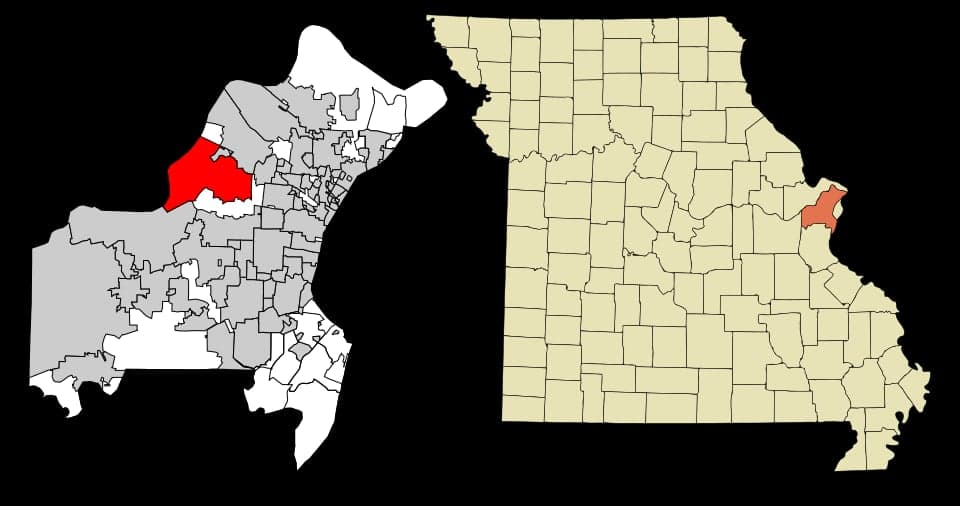
Photo: Wikipedia
Political ClimatePolitical Climate in Maryland Heights, MO
District shown is the primary district for this city’s centroid. Cities may span multiple districts.
Local Political AnalysisPolitical Analysis of Maryland Heights, MO
Maryland Heights is about as blue as it gets in Missouri, with a Cook PVI of D+29 that puts it firmly in the progressive column. That wasn't always the case—back in the 90s and early 2000s, this was a pretty balanced, middle-of-the-road suburb where folks mostly just wanted good schools and low taxes. But over the last decade, the political winds have shifted hard left, and it shows in everything from local ordinances to how the city spends your money. If you're coming from a red county or even a purple town like St. Charles or O'Fallon, you'll notice the difference pretty quick.
How it compares
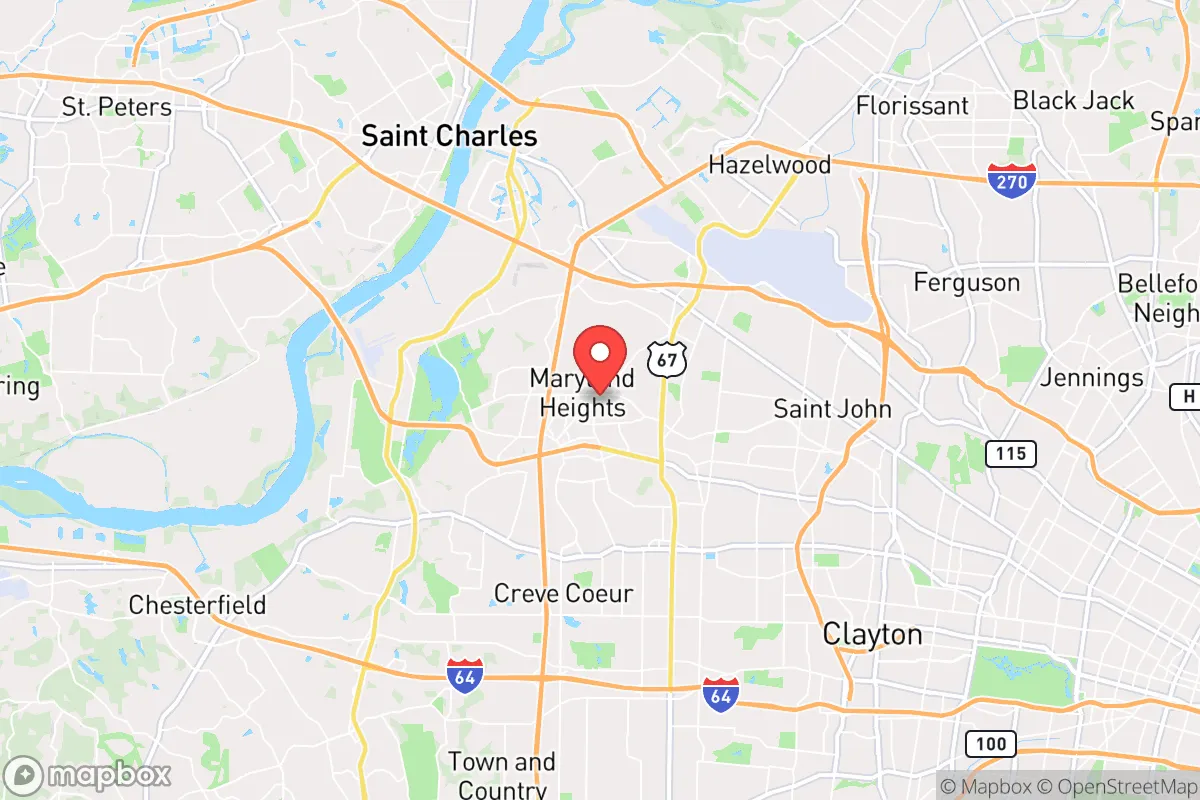
Drive 15 minutes west to St. Charles or Wentzville, and you're in solidly conservative territory—those areas vote Republican by double digits and have a completely different vibe on taxes, zoning, and personal freedoms. Maryland Heights, by contrast, sits in St. Louis County, which has been trending blue for years. The city itself is surrounded by other D+ strongholds like Creve Coeur and Olivette, so there's not much of a conservative counterweight nearby. What's concerning is how quickly the local government has embraced progressive priorities—things like equity initiatives, climate action plans, and zoning changes that prioritize density over single-family neighborhoods. It feels less like a reflection of the residents and more like a top-down push from county leadership.
What this means for residents
Practically speaking, the political lean here means higher taxes and more regulations than you'd find in the surrounding red counties. Property taxes are above the state average, and the city has been aggressive about adding fees and mandates—think stormwater fees, business license requirements, and strict rental inspection programs. There's also been a push for more government involvement in housing, including inclusionary zoning policies that force developers to set aside units for low-income renters. For a longtime resident, it feels like the government is getting deeper into your wallet and your backyard. The school district, Pattonville, has also leaned into progressive curriculum changes, which has been a sticking point for parents who want more local control over what their kids are taught.
Cultural and policy distinctions worth noting
One thing that stands out is the city's approach to public safety. Maryland Heights has its own police department, and while crime rates are moderate, there's been a noticeable shift toward de-escalation training and community oversight boards—stuff that sounds good on paper but often ties officers' hands. The city council has also passed non-discrimination ordinances that go beyond state law, which sounds fine until you realize they're using them to target small businesses that don't fall in line with the latest cultural trends. If you value being left alone to run your life and your business without a bunch of red tape, Maryland Heights is heading in the wrong direction. The long-term trajectory looks like more of the same—more progressive policies, higher costs, and less personal freedom. It's not a bad place to live today, but the trend line is something to keep an eye on.

State Political ClimatePolitical Climate in Missouri
State Political AnalysisPolitical Environment in the State
Missouri has long been considered a bellwether state, but over the past 15 years it has shifted decisively from a classic swing state to a solidly Republican stronghold. The Show-Me State voted for the GOP presidential candidate by double digits in 2020 and 2024, a far cry from the razor-thin margins of the 2000s. This transformation is driven by a powerful rural-urban split, with the fast-growing conservative exurbs and small towns overwhelming the Democratic strongholds of St. Louis and Kansas City. For a conservative looking to relocate, Missouri offers a low-tax, gun-friendly, and culturally traditional environment, but the political landscape is not uniform—you need to know where you’re planting your flag.
Urban vs. rural divide
The political map of Missouri is a study in contrasts. The two major metropolitan areas—St. Louis and Kansas City—are deep blue islands in a sea of red. St. Louis City and County, along with Jackson County (Kansas City), consistently deliver 70%+ Democratic margins. But drive 20 minutes outside either city, and you hit a wall of deep red. The real story is the explosive growth of the outer-ring suburbs and exurbs. Places like St. Charles County (west of St. Louis) and Cass County (south of Kansas City) have become Republican powerhouses, with St. Charles County alone now casting more votes than the city of St. Louis. Meanwhile, the rural "Bootheel" counties like Dunklin and Pemiscot vote 80%+ Republican, while the Ozarks region around Springfield and Branson is as conservative as any place in America. The only real blue dot outside the big metros is Columbia, home to the University of Missouri, which votes reliably Democratic but is surrounded by conservative farmland.
Policy environment
Missouri’s policy environment is a dream for limited-government conservatives. The state has a flat income tax rate that was cut to 4.8% in 2024, with a trigger mechanism to drop it further to 4.5% as revenues grow. There is no estate tax and no inheritance tax. The state is a "right-to-work" state (though the law was repealed by ballot initiative in 2018, the practical effect is minimal as most private-sector jobs are at-will). On education, Missouri has a robust charter school law in St. Louis and Kansas City, and a growing school choice movement—the MOScholars program provides tax-credit scholarships for private school tuition. The state also passed a constitutional amendment in 2024 enshrining parental rights in education, requiring schools to notify parents of any curriculum involving sexuality. On healthcare, Missouri did not expand Medicaid until 2021 (via ballot initiative, not legislative action), and the state maintains some of the most restrictive abortion laws in the nation, with a near-total ban in effect. Election laws are conservative: voter ID is required, and the state purges inactive voters regularly. The Second Amendment is treated as sacred—Missouri passed a "Second Amendment Preservation Act" in 2021 that purports to nullify federal gun laws, though parts of it were struck down in court.
Trajectory & freedom
Missouri is on a clear trajectory of expanding personal liberty, especially for conservatives. The 2021 Second Amendment Preservation Act (SAPA) was a bold statement, though it created legal chaos and the feds sued. More recently, the 2024 "Parental Rights in Education" law (HB 2100) requires schools to get parental consent before teaching about sexual orientation or gender identity. The state also passed a "Save Women's Sports" law in 2023, banning biological males from female sports. On the economic freedom front, the 2024 tax cuts are real and ongoing. However, there are concerning trends: the 2020 legalization of medical marijuana (and 2022 recreational) via ballot initiative shows that direct democracy can override the legislature, and some conservatives worry about the influence of out-of-state money on these campaigns. Also, the 2021 Medicaid expansion, forced by voters, added hundreds of thousands to the rolls, which some see as a step toward bigger government. Overall, though, the state legislature is firmly in conservative hands, and the trend is toward more freedom on guns, education, and taxes.
Civil unrest & political movements
Missouri has a history of civil unrest, most notably in Ferguson (a suburb of St. Louis) in 2014, which sparked the Black Lives Matter movement nationally. That legacy still lingers, and St. Louis remains a flashpoint for racial tensions and protest activity. In 2020, protests in Kansas City and St. Louis turned violent, with looting and arson. On the right, the "Patriot" movement is strong in rural areas, with active "Constitutional Sheriffs" and "Oath Keeper" chapters in places like Joplin and West Plains. The immigration debate is less intense than in border states, but there is a growing concern about fentanyl trafficking along I-44 and I-70. St. Louis and Kansas City have both declared themselves "sanctuary cities" for illegal immigrants, though state law (SB 31, 2023) now bans such policies and allows the Attorney General to sue cities that defy it. Election integrity remains a hot topic—the 2020 election saw no major fraud in Missouri, but the legislature passed stricter voter ID laws and banned ballot drop boxes. A new resident will notice the political divide most acutely in the suburbs: a "Fight for 15" protest in Springfield is a different world from a "Stop the Steal" rally in St. Charles.
Projection
Over the next 5-10 years, Missouri will likely become even more Republican, but with a twist. The in-migration from blue states (especially Illinois and California) is accelerating, but these newcomers are often conservatives fleeing high taxes and crime. The fastest-growing counties are St. Charles, Boone (Columbia), and Christian (near Springfield)—all solidly red. The Democratic base is shrinking as St. Louis City loses population and the rural areas hold steady. However, the suburbs of Kansas City and St. Louis are becoming more competitive as younger, moderate families move in. Expect continued fights over education (school choice vs. public school funding), taxes (further cuts vs. infrastructure needs), and the ongoing tension between local "sanctuary" policies and state preemption. The biggest wild card is the ballot initiative process—progressives have used it to legalize marijuana and expand Medicaid, and they are likely to try again on issues like minimum wage and paid leave. A conservative moving here should expect a state that is broadly friendly to their values, but with persistent blue enclaves in the cities and a constant battle over direct democracy.
Bottom line for a new resident: If you are a conservative looking for a low-tax, gun-friendly, and culturally traditional state, Missouri is a strong choice. Stick to the outer suburbs of St. Louis (St. Charles, O'Fallon, Wentzville) or the Ozarks (Springfield, Nixa, Ozark) for the most aligned political environment. Avoid St. Louis City and Kansas City proper if you want to minimize exposure to progressive policies and higher crime. The state is trending in the right direction on most fronts, but keep an eye on the ballot initiatives—they are the one tool the left has to bypass the legislature. Overall, Missouri offers a solid foundation for a conservative lifestyle, with room to grow and a government that mostly stays out of your way.
* Values derived from national, state, county, city and local statistics and may differ in a specific area. Last updated: 2026-04-19T10:38:39.000Z
Narrative content on this page is AI-generated and may contain mistakes. Verify any details that matter before acting on them.
ReloMaps may earn a commission from affiliate links at no extra cost to you.

