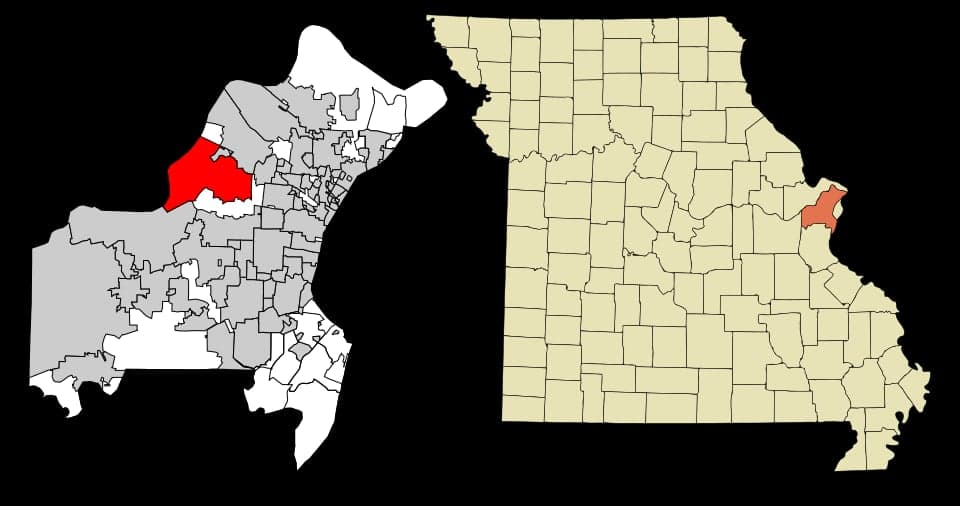
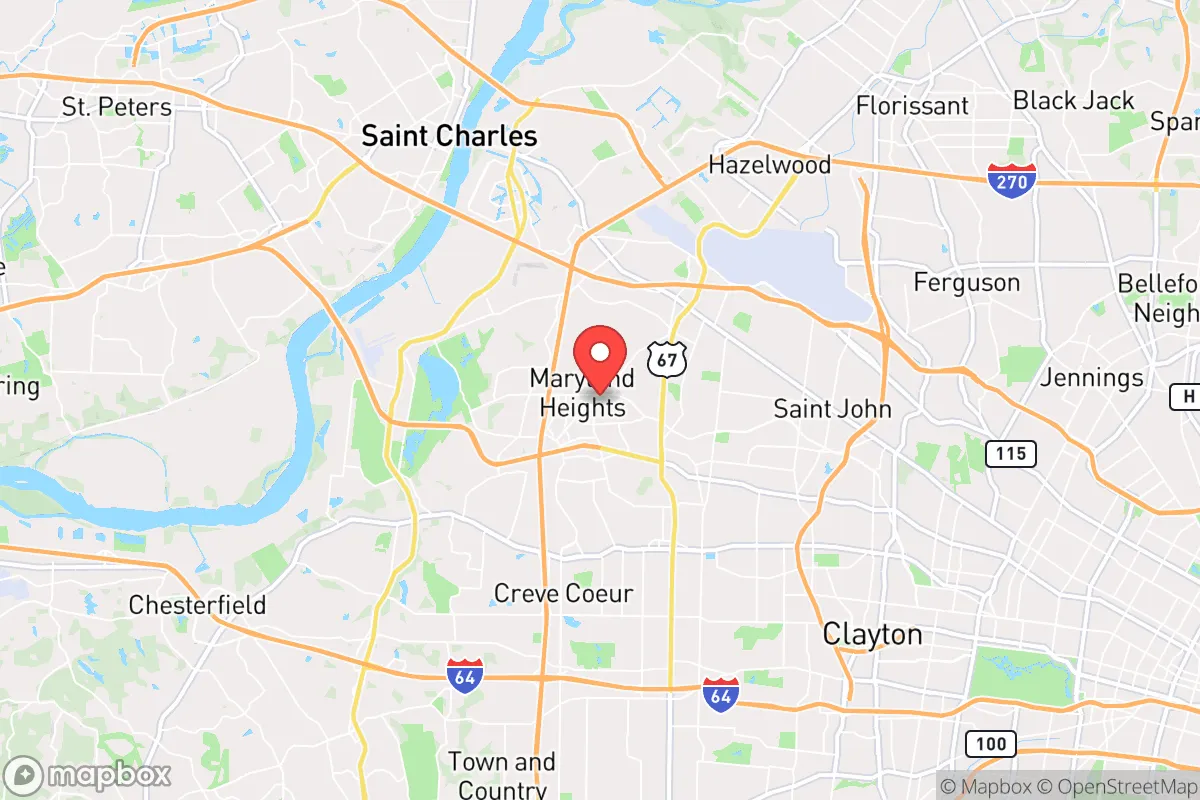
Photo: Wikipedia
Quality of Life in Maryland Heights, MO
Above-average quality of iife. The area offers a reasonable cost of living, decent mobility, and a mix of neighborhood amenities.
What does Quality of Life tell us?
Quality of Life blends cost of living, nearby amenities, socioeconomic signals, and neighborhood character. City-level scores represent the whole municipality; individual neighborhoods can differ.
What does this tell us?
Quality of Life blends cost of living, nearby amenities, socioeconomic signals, and neighborhood character. City-level scores represent the whole municipality; individual neighborhoods can differ.
Cost of Living
7% below national average
The Real Cost of Living in Maryland Heights, MO for 2026
| Tier | Individual | Family (4) |
|---|---|---|
| Survival | $19k | $37k |
| Comfortable | $42k | $61k |
| Luxury | $115k+ | $178k+ |
| Elite (Top 5%) | $135k+ | $209k+ |
141%
The Area Signal
A metric tracking the socioeconomic signals of the area.


Hobbies
Explore the areaGroceries
3 within 10 miles
Gas
0 within 10 miles
Hospital
3 within 20 miles
Airport
MCI — Kansas City International
Post Office
USPS — St. Louis, MO
Critical Amenities
Quality-of-Life Analysis
Maryland Heights, Missouri, offers a quality of life defined by solidly middle-class comfort, with a cost of living that undercuts both the national average and many neighboring St. Louis County communities. The city’s 28,000 residents are a mix of young professionals drawn to its corporate employment base, long-term homeowners, and families seeking well-rated schools without the premium price tags of Clayton or Ladue. Its position along the I-270 and I-70 corridors makes it a practical hub for commuters, while its own job centers—including major employers like Boeing, Express Scripts (now part of Cigna), and World Wide Technology—keep many workers local.
Cost of living, housing, and affordability compared to St. Louis County
With a cost-of-living index of 93 (100 equals the U.S. average), Maryland Heights is notably more affordable than the St. Louis metro area overall, where the index hovers near 96. The median home value of $215,300 is roughly $30,000 below the St. Louis County median, making it one of the more accessible entry points for homebuyers in the western part of the county. Renters also benefit: the median rent of $1,217 undercuts the county average by about $100 per month. Property taxes in Maryland Heights are moderate for Missouri, typically ranging from 1.1% to 1.3% of assessed value, which is lower than in neighboring Creve Coeur or Chesterfield. The average commute of 20.5 minutes is shorter than the St. Louis metro average of 24 minutes, largely because many residents work within a 10-mile radius in the I-270 corridor. For comparison, a similar home in Clayton would cost roughly 60% more, while a comparable rental in Brentwood would run $1,400 or higher.
Parks, schools, and what daily life is like for families
Daily life in Maryland Heights centers on its extensive park system and the Pattonville School District, which serves most of the city. The district’s three elementary schools, two middle schools, and Pattonville High School all earn above-average ratings on GreatSchools (6-8 out of 10), with strong STEM programs and a 92% graduation rate. The city maintains over 20 parks, including the 80-acre Creve Coeur Lake Memorial Park—the largest natural lake in Missouri—which offers hiking, kayaking, and a 3.7-mile paved trail. The Maryland Heights Community Center provides a pool, fitness classes, and youth sports leagues. For shopping and dining, the Westport Plaza area offers a mix of chain restaurants and local spots like The Pasta House Co., while the nearby St. Louis Premium Outlets draw bargain shoppers. The city’s crime rate is roughly 15% lower than the St. Louis metro average, with property crime being the primary concern; violent crime is infrequent and concentrated in a few apartment complexes near I-270.
Maryland Heights is best suited for middle-income families, young professionals, and retirees who want suburban amenities without the high costs of inner-ring suburbs. The combination of affordable housing, short commutes, and solid public schools makes it a practical choice for those working in the I-270 tech and manufacturing corridor. Singles and couples without children may find the social scene limited compared to the Central West End or Delmar Loop, but the trade-off in lower rent and quieter streets is a clear draw. For anyone prioritizing budget-friendly homeownership and a 20-minute drive to most St. Louis attractions, Maryland Heights delivers a stable, unflashy quality of life that consistently ranks among the best values in St. Louis County.

Crime in Maryland Heights, MO
Generally safer than 73% of comparable U.S. locations.
Violent CrimeViolent Crime Analysis
Property CrimeProperty Crime Analysis
Crime Analysis
Maryland Heights, Missouri, presents a mixed safety profile for potential residents. While the city's violent crime rate of 228.9 per 100,000 residents is below the national average, its property crime rate of 1,104.4 per 100,000 is significantly higher, reflecting challenges common to suburbs of large metropolitan areas. As a St. Louis suburb, Maryland Heights is affected by the broader regional crime environment, which is influenced by the progressive policies of St. Louis County's justice system, where liberal judges and district attorneys have been criticized for prioritizing offender rehabilitation over public safety, leading to higher recidivism and more criminals on the street.
Crime in context
Maryland Heights' violent crime rate of 228.9 per 100,000 is roughly 35% lower than the national average of approximately 370 per 100,000, and well below the Missouri state average of about 540 per 100,000. However, the property crime rate of 1,104.4 per 100,000 is nearly double the national average of 600 per 100,000 and significantly exceeds the Missouri state average of around 800 per 100,000. This disparity is a direct consequence of the progressive criminal justice policies in St. Louis County, where district attorneys and judges often favor diversion programs and reduced sentences for property offenders. These policies, while sympathetic to offenders, result in more criminals remaining on the streets, undermining justice for victims and the public. The city's proximity to St. Louis—a metro area with consistently high crime rates—further compounds the issue, as criminal activity frequently spills over into adjacent suburbs.
What residents experience
Residents of Maryland Heights report that property crime is the most tangible safety concern. Theft from vehicles, package theft, and burglaries are common, particularly in apartment complexes and areas near major highways like I-270 and I-70. Violent crime is less frequent but still present, with incidents often concentrated in specific commercial corridors and late-night hours. The progressive justice system in St. Louis County means that even when arrests are made, offenders often face minimal consequences. For example, repeat property offenders frequently receive probation or short jail terms, leading to a cycle of crime that directly impacts residents' sense of security. Many homeowners invest in security systems, and neighborhood watch programs are active but struggle against the systemic leniency that keeps offenders active.
Neighborhood-level variation
Safety varies notably within Maryland Heights. The western and northern residential areas, such as those near Creve Coeur Lake Memorial Park, generally experience lower crime rates. In contrast, the eastern sections near the St. Louis city line and the commercial districts along Dorsett Road and Page Avenue see higher property crime and occasional violent incidents. Apartment complexes along these corridors are particularly vulnerable. While no neighborhood is immune to the effects of the county's progressive policies, choosing a home in a quieter, single-family-home area with active community policing can mitigate some risks. Prospective residents should also consider that the city's police force is well-funded and responsive, but its effectiveness is limited by the judicial environment that prioritizes offender rehabilitation over victim protection.
* Values derived from national, state, county, city and local statistics and may differ in a specific area. Last updated: 2026-04-19T10:38:39.000Z
Narrative content on this page is AI-generated and may contain mistakes. Verify any details that matter before acting on them.
ReloMaps may earn a commission from affiliate links at no extra cost to you.

