
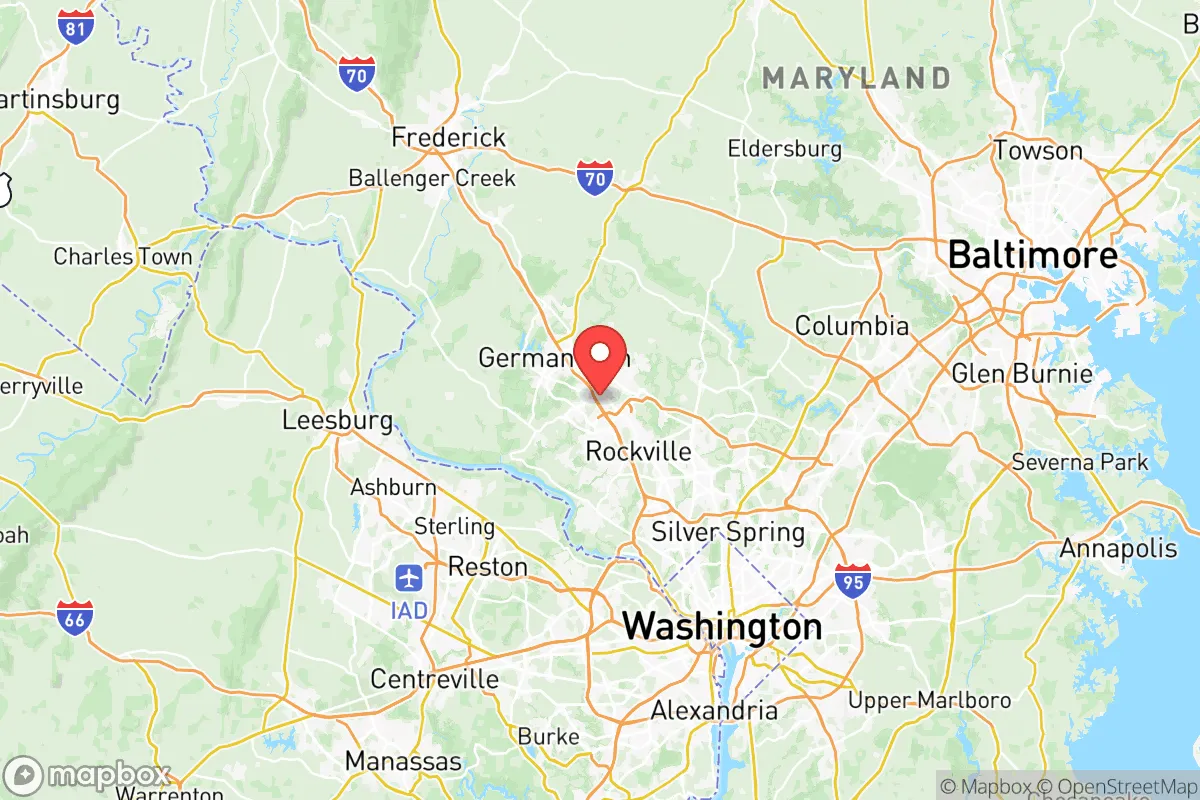
Photo: Wikipedia
Personal Sovereignty in Montgomery County
Viable for self-reliance. Generally workable, though some barriers may limit total independence.
What does Personal Sovereignty tell us?
Personal Sovereignty measures your capacity for self-reliance and independence with minimal government friction. Higher scores mean fewer barriers between you and the way you want to live... but it assumes you have the space you need and good neighbors.
What does this tell us?
Personal Sovereignty measures your capacity for self-reliance and independence with minimal government friction. Higher scores mean fewer barriers between you and the way you want to live... but it assumes you have the space you need and good neighbors.
State Policy
Energy independence: Importer (8% of energy produced in-state)
Personal Liberty
Homesteading

Personal Liberty Analysis
For the individual who values personal sovereignty above all else, Montgomery County, Maryland presents a deeply conflicted environment. While its wealth and proximity to Washington, D.C. offer economic opportunity, the county’s political machinery actively constrains nearly every dimension of personal autonomy—from how you can defend your home to how you can raise your children. The local government, dominated by a progressive majority, treats individual liberty as a privilege to be managed rather than a right to be protected. For a conservative-leaning single person or parent evaluating relocation, the sobering reality is that Montgomery County ranks among the most restrictive jurisdictions in the Mid-Atlantic for self-reliance, gun rights, and freedom from regulatory overreach.
Tax burden and regulatory posture: what you pay for limited freedom
Montgomery County’s tax burden is among the highest in the nation, and the return on that investment is a dense web of regulations that govern daily life. The combined state and local income tax rate can exceed 8.95% for top earners, and property tax rates hover around 1.0% of assessed value—but that’s just the start. The county imposes a recordation tax of $10 per $1,000 on home purchases and an annual energy tax that adds roughly $200–$300 to a typical household bill. For the prepper or homesteader, the regulatory posture is even more stifling. Zoning in most of the county’s urbanized areas—think Bethesda, Silver Spring, and Rockville—prohibits keeping chickens, goats, or bees without costly permits. The county’s Department of Permitting Services requires inspections for even minor structural changes, and the Montgomery County Green Bank pushes mandatory energy-efficiency upgrades on older homes. In contrast, the rural northern tier—places like Poolesville, Barnesville, and Damascus—offers slightly more breathing room, with agricultural zoning that allows livestock and larger lot sizes, but even there, the county’s stormwater management and forest conservation laws can turn a simple shed project into a months-long permitting ordeal.
Self-defense and gun law specifics: a hostile environment for the Second Amendment
For anyone serious about self-defense, Montgomery County is a legislative minefield. Maryland is already a “may-issue” state for concealed carry, but Montgomery County goes further with local ordinances that effectively ban firearms in most public spaces. The county prohibits carrying in parks, recreation centers, and even on public transportation—which covers the entire Metro system and Ride On buses. The county’s Firearm Safety Act requires a state police background check for every transfer, even between private parties, and the county police maintain a registry of handgun purchases. For the prepper, the practical impact is severe: you cannot legally defend yourself with a firearm in many of the places you’d actually need to—like the Glenmont Metro station or Wheaton Regional Park. The county’s “red flag” law allows police to seize firearms based on anonymous tips, and the county sheriff’s office has a reputation for aggressively enforcing these orders. In the rural areas like Dickerson and Beallsville, enforcement is less zealous, but the legal framework remains the same. For a single individual or parent, this means your ability to protect your family is contingent on staying within the narrow boundaries the county permits—a far cry from the constitutional carry environment found in states like Texas or Arizona.
Self-reliance and homesteading viability: lot sizes, zoning, and off-grid feasibility
True self-reliance in Montgomery County is a luxury reserved for the wealthy or the remote. The county’s zoning code divides land into residential zones with minimum lot sizes ranging from 6,000 square feet in dense suburbs to 2 acres in the Agricultural Reserve. That Reserve—a 93,000-acre swath of protected farmland stretching from Poolesville to Brookeville—is the only area where off-grid living is remotely feasible. Even there, the county mandates connection to public water and sewer if available, and the Montgomery County Department of Environmental Protection enforces strict limits on rainwater collection (you can only store 2,500 gallons without a permit). Solar panels are allowed, but the county’s historic preservation rules in areas like Beallsville can block installations on older homes. For the prepper, the biggest obstacle is the county’s ban on burning trash and its strict composting regulations—you cannot legally dispose of waste without a county-approved hauler. In the urban core—Gaithersburg, Germantown, and Olney—lot sizes rarely exceed a quarter-acre, making food production a hobby rather than a survival strategy. The bottom line: if your vision of sovereignty includes growing your own food, harvesting rainwater, and living off the grid, Montgomery County is one of the worst places in the region to attempt it.
Personal liberties: parental rights, medical autonomy, speech, and property
Montgomery County’s progressive governance extends deep into personal liberties, often overriding parental and individual choice. On parental rights, the county’s school board has implemented policies that allow students to change their names and pronouns without notifying parents, and the county’s health department provides reproductive health services to minors without parental consent. For a conservative parent, this means your authority over your child’s medical and educational decisions is effectively nullified by county policy. On medical autonomy, the county mandated COVID-19 vaccines for county employees and contractors, and it maintains a “vaccine equity” program that pressures private businesses to require immunizations. Free speech is protected in theory, but the county’s “hate bias” ordinance allows prosecution for speech deemed to incite hatred—a standard that has been used to target conservative protesters at county council meetings. Property rights are the most constrained: the county’s “moderate-priced dwelling unit” (MPDU) law requires developers to set aside 12.5% of new units for affordable housing, and the county can impose rent control on existing apartments. For a homeowner, the county’s historic preservation commission can block renovations on any property over 50 years old, and the county’s tree canopy law requires a permit to remove a tree larger than 6 inches in diameter. In Takoma Park, the county’s most progressive enclave, these restrictions are enforced with particular zeal.
In the broader Mid-Atlantic context, Montgomery County represents the extreme end of government overreach into personal sovereignty. Compared to neighboring Frederick County, where property taxes are lower and gun laws are enforced more leniently, or to rural Carroll County, where zoning allows genuine homesteading, Montgomery County feels like a different country. For the single individual or parent who values self-reliance, the trade-off is stark: you gain access to high-paying jobs and excellent schools, but you surrender control over your home, your family, and your safety. If your priority is personal sovereignty, the smart move is to look north to Frederick County or west to Washington County, where the regulatory climate is less hostile and the path to self-reliance is still open.

* Values derived from national, state, county, city and local statistics and may differ in a specific area. Last updated: 2026-05-12T23:01:09.000Z
Narrative content on this page is AI-generated and may contain mistakes. Verify any details that matter before acting on them.
ReloMaps may earn a commission from affiliate links at no extra cost to you.

