
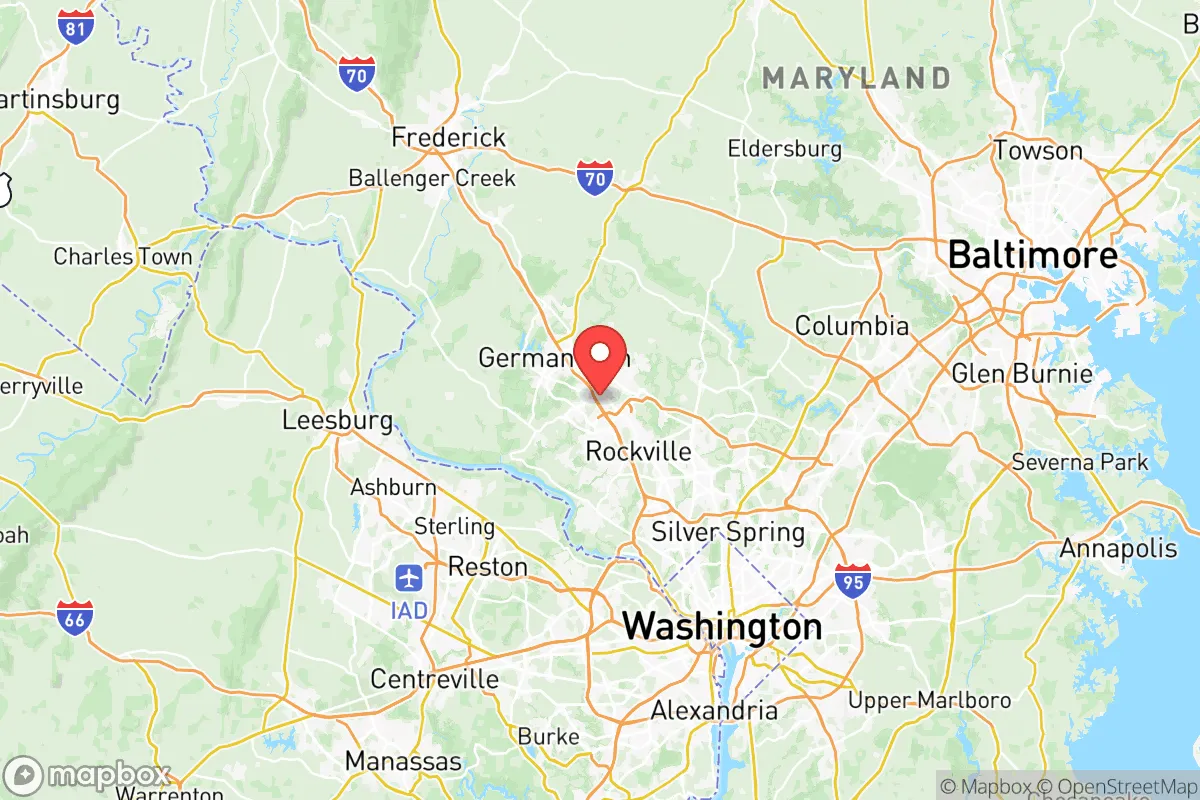
Photo: Wikipedia
Quality of Life in Montgomery County
A livable area that tracks near national norms for affordability, walkability, and neighborhood health.
What does Quality of Life tell us?
Quality of Life measures an area by evaluating factors like cost of living, nearby amenities, country club access, airport proximity, socioeconomic signals and neighborhood character. For large states, this is a general average — quality of life can vary dramatically between metro areas, suburbs, and rural communities within the same state.
What does this tell us?
Quality of Life measures an area by evaluating factors like cost of living, nearby amenities, country club access, airport proximity, socioeconomic signals and neighborhood character. For large states, this is a general average — quality of life can vary dramatically between metro areas, suburbs, and rural communities within the same state.
Cost of Living
92% above national average
73%
The Real Cost of Living in Montgomery County for 2026
| Tier | Individual | Family (4) |
|---|---|---|
| Survival | $32k | $61k |
| Comfortable | $120k | $176k |
| Luxury | $233k+ | $360k+ |
| Elite (Top 5%) | $287k+ | $445k+ |
Quality-of-Life Analysis
Montgomery County, Maryland, offers a remarkably broad quality-of-life spectrum, from dense, transit-oriented urban centers to quiet, semi-rural villages, drawing everyone from young professionals and federal contractors to long-established farming families and Washington, D.C., commuters. The county’s character shifts dramatically as one moves from the high-rise corridor along Interstate 270 and the Red Line into the agricultural reserve and Potomac River hamlets. With a cost-of-living index of 192 (nearly double the national average), a median home value of $615,200, and a median rent of $2,030, the lifestyle options are tied directly to housing type and location.
Largest town(s) & population centers
The county’s primary population anchor is Silver Spring, a bustling, unincorporated urban hub with a downtown core of apartments, condos, and townhouses centered around the Silver Spring Metro station and the AFI Silver Theatre. Daily life here is walkable and transit-rich, with a median commute of 32.4 minutes reflecting easy access to D.C. via the Red Line or I-495. Bethesda and Rockville form the next tier of major centers: Bethesda is an affluent, high-rise employment node with the National Institutes of Health campus and a dense retail core, while Rockville serves as the county seat with a mix of single-family neighborhoods, the Rockville Town Square, and a strong public school system. Gaithersburg and Germantown are large, suburban population centers further up I-270, offering more moderately priced housing stock and a family-oriented lifestyle with extensive parks and community centers. These five areas together concentrate the county’s highest-density housing, most robust transit connections, and the bulk of its office and retail employment.
Smaller towns & rural pockets
Beyond the I-270 corridor, Montgomery County preserves a distinctly different character in its Agricultural Reserve, a 93,000-acre swath of protected farmland in the northern and western parts of the county. Poolesville, a historic town of roughly 5,500 residents, functions as the de facto hub of this rural area, with a walkable main street, local farms, and a strong sense of community isolation from suburban sprawl. Barnesville and Beallsville are unincorporated hamlets where large-lot homes and equestrian properties sit alongside working farms. Along the Potomac River, Glen Echo and Brookmont are small, leafy villages with older homes, limited commercial districts, and direct access to the C&O Canal towpath. Kensington and Garrett Park are compact, walkable towns with their own historic downtowns and Metro-accessible stations, offering a small-town feel within minutes of the urban core. These areas typically lack the density and transit frequency of the larger centers but provide lower crime rates, larger lots, and a quieter pace of life.
Cost & lifestyle range
The cost spread across Montgomery County is wide. At the high end, Chevy Chase and Potomac feature median home values well above $1.5 million, with large estates, private schools, and direct access to D.C. amenities. Bethesda and North Bethesda also command premium prices, with condos and townhouses often exceeding the county median of $615,200. At the more affordable end, Wheaton and Langley Park offer lower entry points for renters and first-time buyers, with median rents closer to the county’s $2,030 figure and a higher proportion of multi-family housing. Germantown and Montgomery Village provide mid-range single-family homes and townhouses, often in planned communities with pools and recreation centers. The lifestyle range is equally broad: a resident in downtown Silver Spring can walk to a dozen ethnic restaurants and a Metro station, while a resident in Poolesville may drive 20 minutes to the nearest grocery store but enjoy direct access to hiking trails and horse farms. The county’s public transit system—Metrorail, MARC train, and Ride On buses—primarily serves the urban corridor, leaving the rural areas car-dependent.
Montgomery County’s diversity of settings means it can suit a wide range of preferences, but it is best suited to those who can afford its premium housing costs and who value either urban convenience or rural tranquility within a single county boundary. Families seeking top-ranked public schools, professionals needing a short commute to D.C. or the I-270 biotech corridor, and retirees looking for walkable downtowns or quiet farmland all find viable options here. The trade-off is consistent: higher cost of living and longer commutes for those in the outer suburbs, versus smaller spaces and higher density for those closer to the urban core. The county’s mix of dense towns, historic villages, and protected farmland ensures that no single lifestyle dominates, making it a region of deliberate choice rather than uniform experience.

Crime in Montgomery County
WARNING: The crime statistics are unreliable for this jurisdiction. Local authorities have either not reported or under reported their data to the FBI. This could be due to bad intentions, incompetence or technical issues. Regardless, we suggest skepticism.
Higher crime rates than 71% of comparable U.S. locations.
Violent CrimeViolent Crime Analysis
Property CrimeProperty Crime Analysis
Crime Analysis
Montgomery County, Maryland, presents a mixed safety profile: its violent crime rate of 351.4 per 100,000 residents is notably lower than the national average, but property crime at 1,814.9 per 100,000 sits above the national median. The county’s overall safety is heavily influenced by its proximity to Washington, D.C., and the progressive policies of its elected officials, which have created significant disparities between affluent, low-crime enclaves and higher-risk corridors.
Crime in context
Montgomery County’s violent crime rate of 351.4 per 100,000 is roughly 20% below the national average of 380 per 100,000, but it is higher than the Maryland state average of 330 per 100,000. Property crime, at 1,814.9 per 100,000, exceeds both the national average (1,954) and the state average (1,700). These figures place the county in a middle tier among Maryland jurisdictions—safer than Baltimore City (which has a violent crime rate above 1,500) but riskier than neighboring Howard County (violent crime around 200 per 100,000). The county’s progressive State’s Attorney, John McCarthy, has been in office since 2007 and has emphasized diversion programs and reduced incarceration for non-violent offenders. Critics argue this approach has contributed to a rise in property crime, particularly auto thefts and shoplifting, which have increased by 15% since 2022. The county’s judicial district, part of the 6th Judicial Circuit, has also seen a trend toward lighter sentencing for repeat offenders, a pattern that concerns residents in higher-crime areas.
What residents experience
Daily safety in Montgomery County varies dramatically by neighborhood. Bethesda, Potomac, and Chevy Chase consistently report violent crime rates below 100 per 100,000, with property crime driven mostly by package theft and occasional car break-ins. These areas benefit from well-funded police patrols and low-density residential layouts. In contrast, Silver Spring, Wheaton, and Langley Park experience elevated crime levels. Silver Spring’s downtown corridor, particularly around the Transit Center and along Georgia Avenue, sees frequent muggings and thefts, with violent crime rates approaching 500 per 100,000 in some census tracts. Wheaton’s commercial district has a property crime rate above 2,500 per 100,000, driven by retail theft and vehicle break-ins. Langley Park, a densely populated, low-income area near the Prince George’s County line, has the county’s highest violent crime rate—over 600 per 100,000—with gang-related activity and drug offenses being common. Residents in these areas report that police response times have lengthened due to staffing shortages, and that the county’s focus on restorative justice has reduced accountability for repeat offenders.
Neighborhood-level variation is stark. Gaithersburg and Rockville fall in the middle: their violent crime rates hover around 300 per 100,000, but property crime is elevated in apartment complexes and near shopping centers. The county’s progressive policies, including a 2023 law limiting police use of traffic stops for minor violations, have been praised by civil liberties advocates but criticized by residents in higher-crime areas who feel enforcement has weakened. For those considering relocation, the safest choices are the western and northern suburbs—Poolesville, Barnesville, and Damascus—where violent crime is nearly nonexistent and property crime is minimal. However, even in these areas, residents should secure vehicles and homes, as property crime can spike seasonally. Overall, Montgomery County offers good safety in affluent pockets but requires vigilance in denser, more diverse communities where progressive justice policies have had unintended consequences for public safety.
* Values derived from national, state, county, city and local statistics and may differ in a specific area. Last updated: 2026-05-12T23:01:09.000Z
Narrative content on this page is AI-generated and may contain mistakes. Verify any details that matter before acting on them.
ReloMaps may earn a commission from affiliate links at no extra cost to you.

