Photo: Wikipedia
Quality of Life in Medford, MA
A high quality of life with strong walkability, manageable living costs, healthy neighborhood signals, and solid amenity access.
What does Quality of Life tell us?
Quality of Life blends cost of living, nearby amenities, socioeconomic signals, and neighborhood character. City-level scores represent the whole municipality; individual neighborhoods can differ.
What does this tell us?
Quality of Life blends cost of living, nearby amenities, socioeconomic signals, and neighborhood character. City-level scores represent the whole municipality; individual neighborhoods can differ.
Cost of Living
129% above national average
The Real Cost of Living in Medford, MA for 2026
| Tier | Individual | Family (4) |
|---|---|---|
| Survival | $40k | $74k |
| Comfortable | $129k | $189k |
| Luxury | $189k+ | $292k+ |
| Elite (Top 5%) | $222k+ | $344k+ |
62%
The Area Signal
A metric tracking the socioeconomic signals of the area.
Hobbies
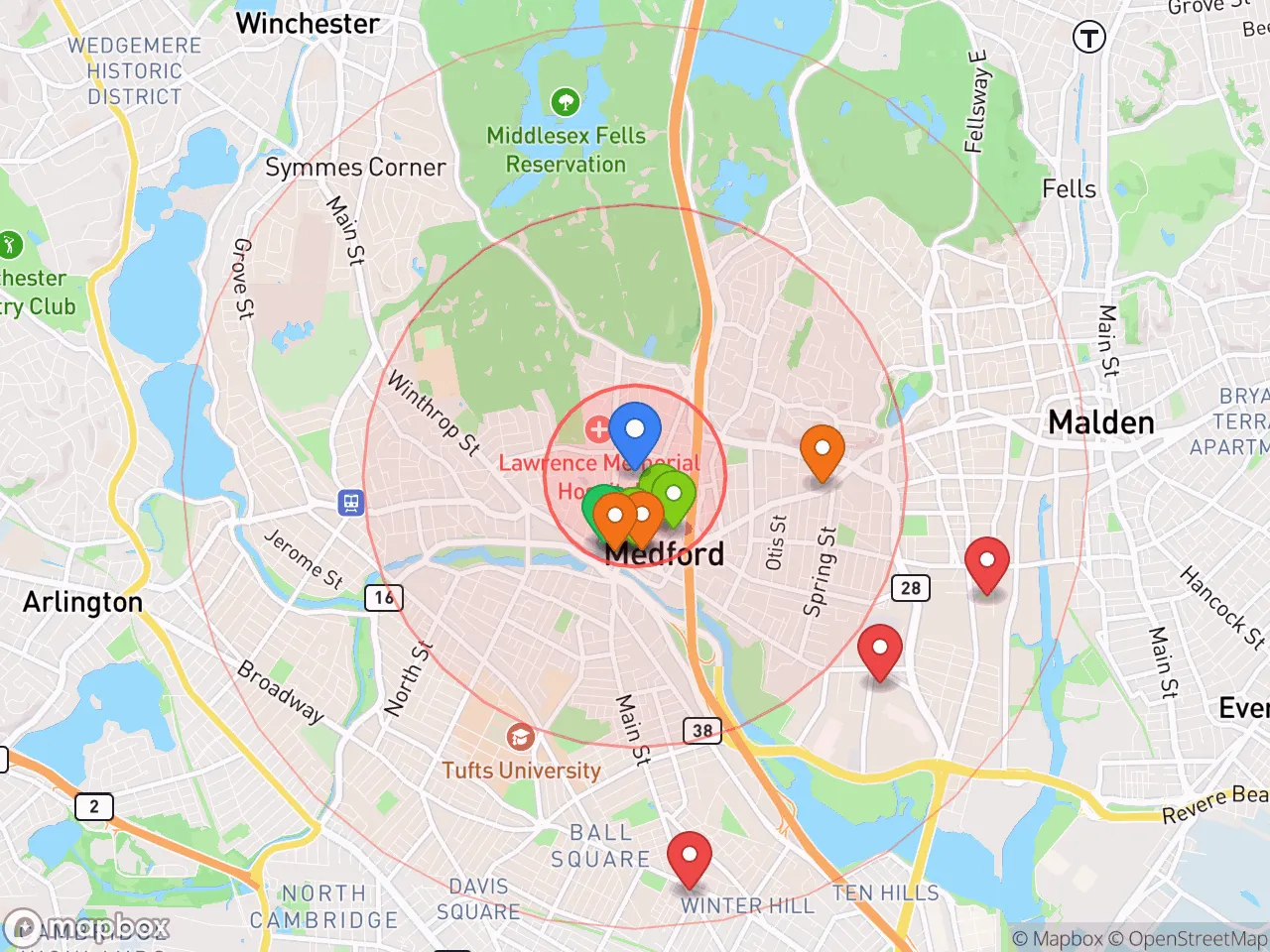
Explore the areaGroceries
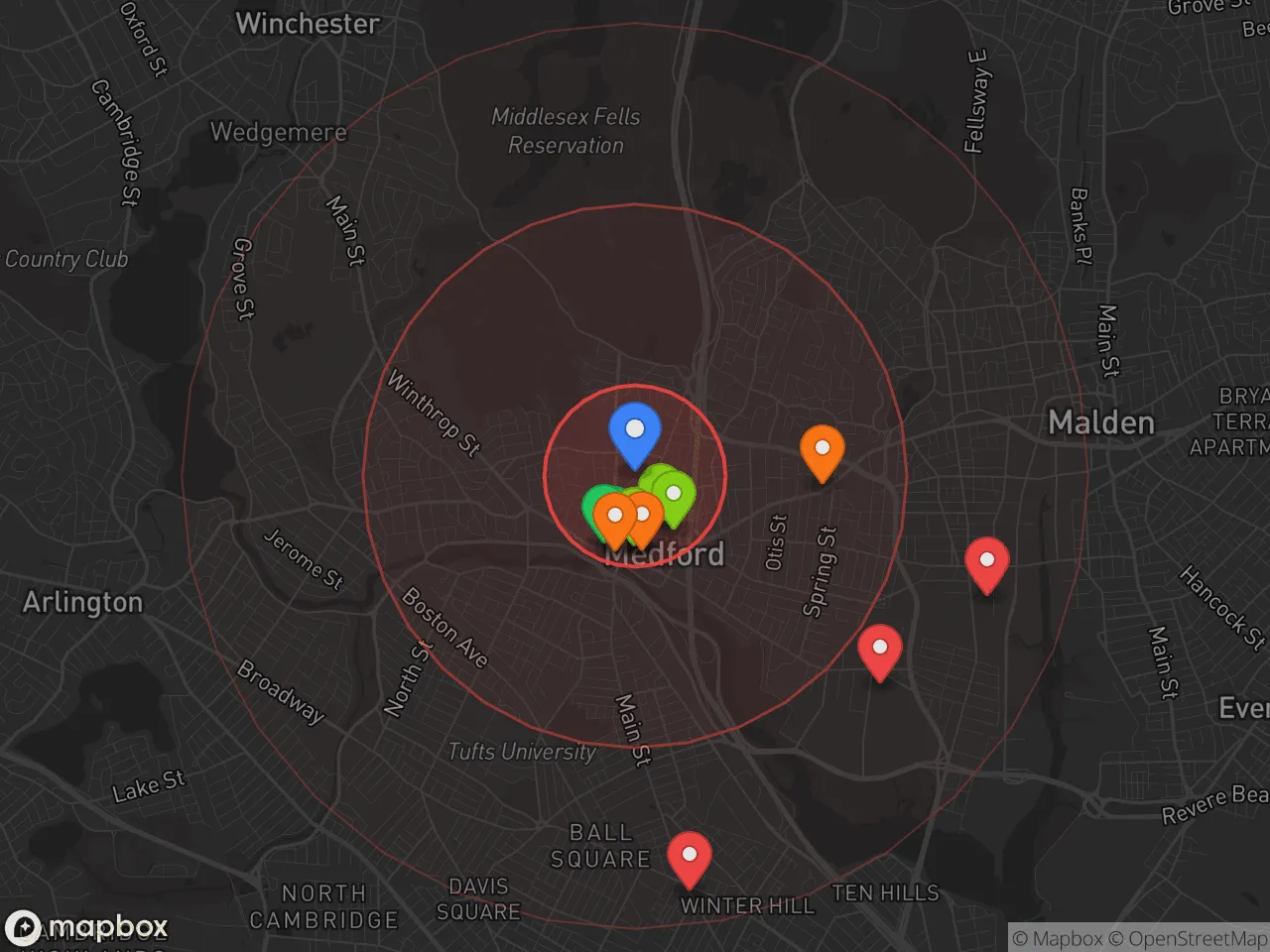
8 within 10 miles
Gas
20 within 10 miles
Hospital
20 within 20 miles
Airport
PDX — Portland International Jetport
Post Office
USPS — Medford, MA
Critical Amenities
Quality-of-Life Analysis
Medford, Massachusetts, is an affluent inner-ring suburb of Boston where the typical resident is a well-educated professional or family drawn by strong schools and proximity to the city. With a cost-of-living index of 229—more than double the national average—the city attracts those who prioritize access to the Boston job market and a dense, walkable New England setting over lower expenses. The population skews toward homeowners and long-term renters, with a median age around 38, reflecting a mix of young families and established professionals.
How Medford’s cost of living and housing compare to Boston and Somerville
Medford’s cost of living is steep but slightly below the most expensive Boston suburbs. The median home value sits at $715,500, roughly 15% lower than neighboring Somerville’s median and about 25% below Cambridge’s. Median rent is $2,477, which undercuts Somerville’s average by roughly $300 per month. For buyers, this means a typical 20% down payment on a single-family home requires about $143,000—a barrier for many but attainable for dual-income households earning above the area’s median household income of $96,000. Property taxes in Medford run about 1.1% of assessed value, slightly lower than the state average, which helps offset the high purchase price. Compared to Boston proper, Medford offers more square footage per dollar, with many single-family homes and duplexes rather than condos. The trade-off is a longer average commute of 30.8 minutes, though the MBTA Orange Line and Commuter Rail provide direct access to downtown Boston in under 20 minutes from Wellington or Medford/Tufts stations.
What daily life is like for families: schools, parks, and local amenities
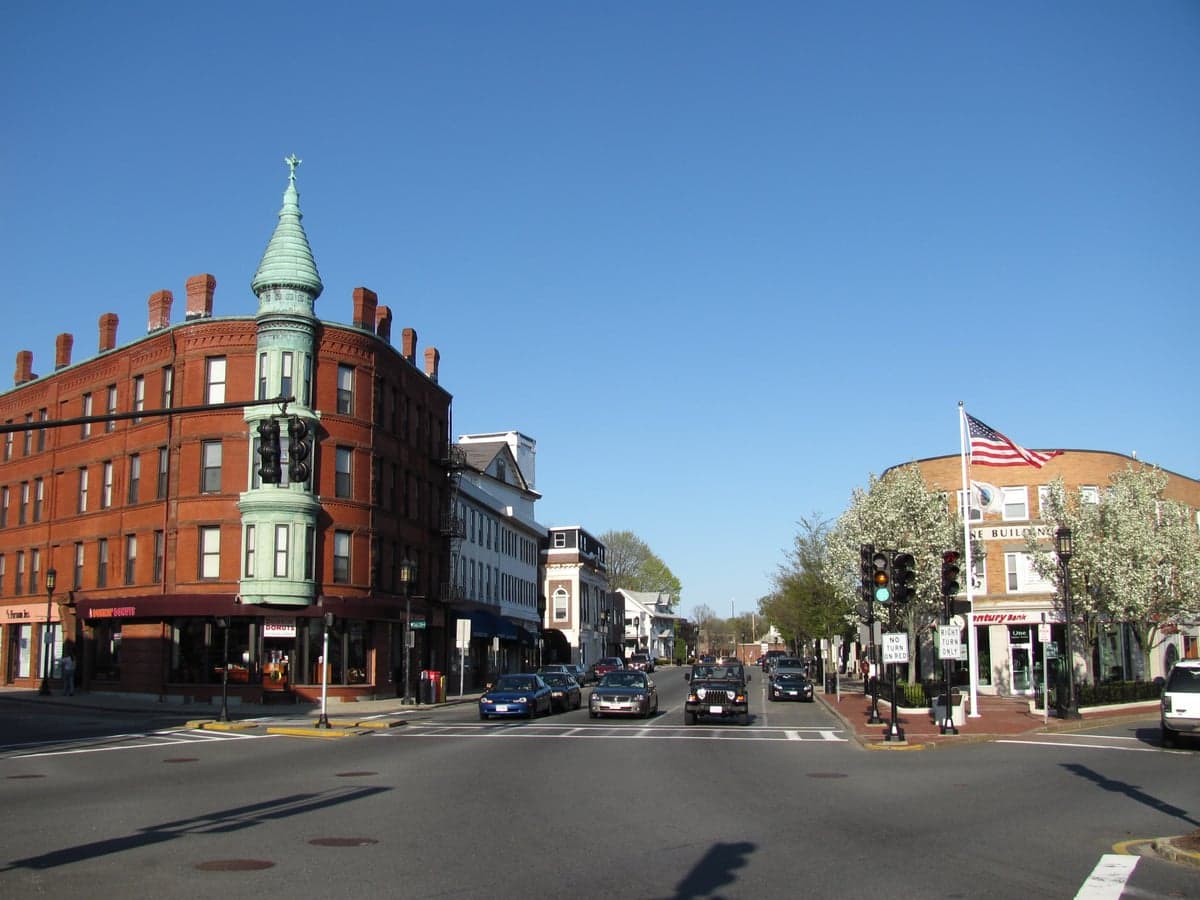
Daily life in Medford centers on its walkable neighborhoods, strong public schools, and easy access to both urban and outdoor recreation. The Medford Public Schools system serves about 4,500 students and is rated above average by the state, with Tufts University located within city limits providing cultural and educational spillover. The city has over 20 parks, including the 124-acre Middlesex Fells Reservation for hiking and mountain biking, and the Mystic River runs through town with a paved bike path connecting to the Minuteman Bikeway. The restaurant scene is concentrated along Main Street and in the Hillside neighborhood, offering a mix of Italian, Portuguese, and Asian cuisines, with a growing number of breweries and coffee shops. Grocery shopping is served by a Market Basket and a Whole Foods, and the Assembly Row shopping district in Somerville is a 10-minute drive. For families, the rhythm is suburban but dense: kids walk to school, parents commute by train or car, and weekends often involve trips to the Fells or into Boston for museums and sports. The city’s crime rate is low for the metro area, with property crime about 30% below the national average, though car break-ins near transit stations are a noted issue.
Medford is best suited for professionals and families who value a short commute to Boston, good public schools, and a walkable, historic setting—and who can afford the high housing costs. It works well for those who want more space than a Boston condo but still want train access and a neighborhood feel. Renters and buyers on a tight budget may struggle, as even a one-bedroom apartment often exceeds $2,000 per month. For dual-income households earning $120,000 or more, Medford offers a strong quality-of-life balance that few other Boston suburbs can match at this price point.

Crime in Medford, MA
Lower crime rates than 82% of comparable U.S. locations.
Violent CrimeViolent Crime Analysis
Property CrimeProperty Crime Analysis
Crime Analysis
Medford, Massachusetts, reports a violent crime rate of 172.1 incidents per 100,000 residents and a property crime rate of 870.6 per 100,000, figures that sit below national averages but warrant careful consideration given the city's location within the broader Greater Boston metro area. As a densely settled suburb just five miles north of Boston, Medford's safety profile is shaped not only by its own statistics but by the policies of the surrounding region, where progressive judicial and prosecutorial approaches have raised concerns about recidivism and public safety. Residents should weigh these local numbers against the reality that lenient sentencing and reduced enforcement in nearby jurisdictions can allow criminal activity to spill across municipal borders.
Crime in context
Medford's violent crime rate of 172.1 per 100,000 is roughly half the national average of 380 per 100,000, while its property crime rate of 870.6 per 100,000 is significantly lower than the U.S. figure of approximately 1,950 per 100,000. However, these comparisons can be misleading for a city embedded in a large metro area. The Middlesex County District Attorney's Office, which prosecutes crimes in Medford, has been characterized by progressive policies, including diversion programs and reduced bail requirements. Critics argue that such approaches, while intended to reduce incarceration, have resulted in repeat offenders cycling back onto the streets more quickly, undermining the deterrent effect of prosecution. This dynamic is especially relevant in a transit-connected suburb like Medford, where criminals from Boston or Somerville can easily access residential neighborhoods.
What residents experience
Daily life in Medford involves a mix of typical suburban concerns and urban-adjacent risks. Property crime—primarily theft from vehicles, package theft, and occasional burglaries—is the most common issue, concentrated near the Wellington MBTA station and along the Mystic River corridor. Violent crime is rarer but not absent; incidents tend to be isolated to specific disputes rather than random attacks. Residents report that police response times are generally adequate, but the broader legal environment in Massachusetts—where state-level criminal justice reforms have reduced penalties for certain offenses—means that even arrested individuals may face minimal consequences. For families and professionals, this creates a sense of unease that raw statistics do not capture.
Neighborhood-level variation is notable. The South Medford area, closer to Somerville and Boston, sees higher foot traffic and associated petty crime, while the West Medford and Hillside neighborhoods are quieter, with lower incident rates. Areas near Tufts University benefit from campus security patrols but also experience occasional thefts targeting students. Prospective residents should prioritize street-level research—talking to local police and neighbors—rather than relying solely on citywide averages, as the block-by-block reality in Medford can differ substantially from the overall picture.
* Values derived from national, state, county, city and local statistics and may differ in a specific area. Last updated: 2026-05-01T06:30:28.000Z
Narrative content on this page is AI-generated and may contain mistakes. Verify any details that matter before acting on them.
ReloMaps may earn a commission from affiliate links at no extra cost to you.

