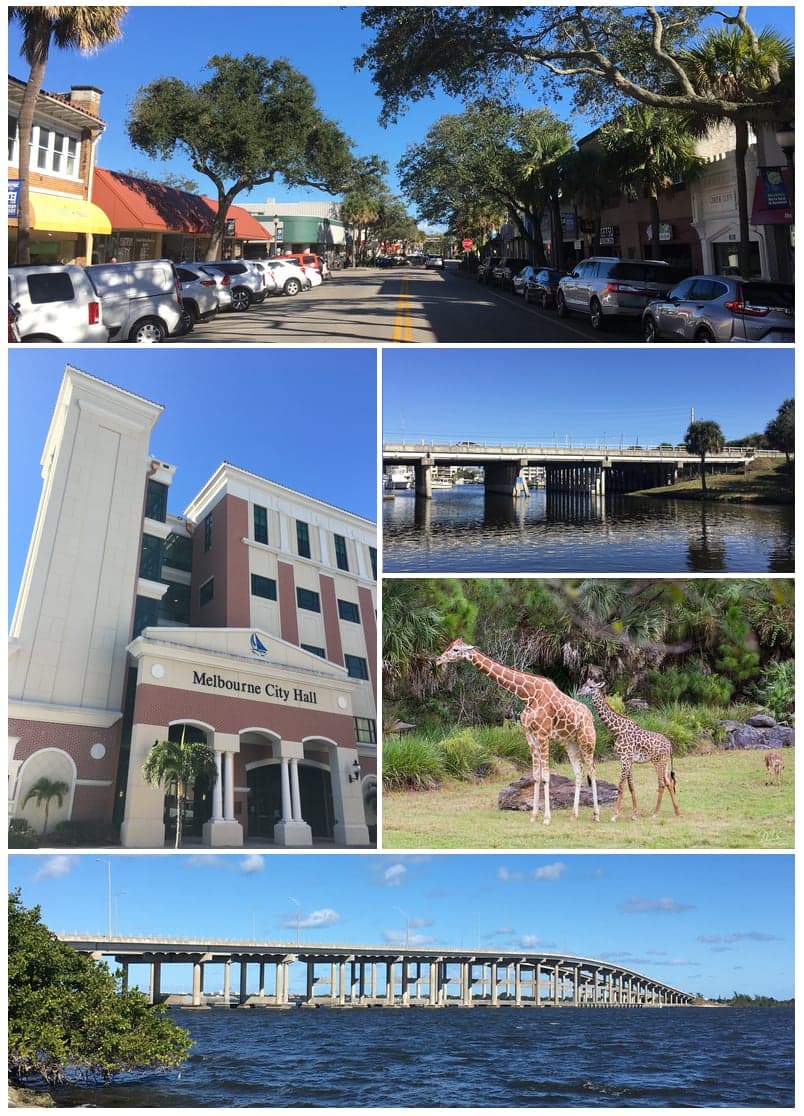
Photo: Wikipedia
Strategic Assessment of Melbourne, FL
Meaningful friction. Expect exposure to either population pressure, blast zones, or natural disaster risk. Consider buying a retreat property.
What does the Strategic Assessment tell us?
Our Strategic Assessment grades tactical survivability of an area. Major population centers, military targets, fallout zones, natural disasters, and border exposure all drive risk — lower exposure means a more defensible position in a crisis.
This is heavily inspired by Joel Skousen's Strategic Relocation book. Highly recommended you checkout the book ($)What does this tell us?
Our Strategic Assessment grades tactical survivability of an area. Major population centers, military targets, fallout zones, natural disasters, and border exposure all drive risk — lower exposure means a more defensible position in a crisis.
This is heavily inspired by Joel Skousen's Strategic Relocation book. Highly recommended you checkout the book ($)Strategic Pillars

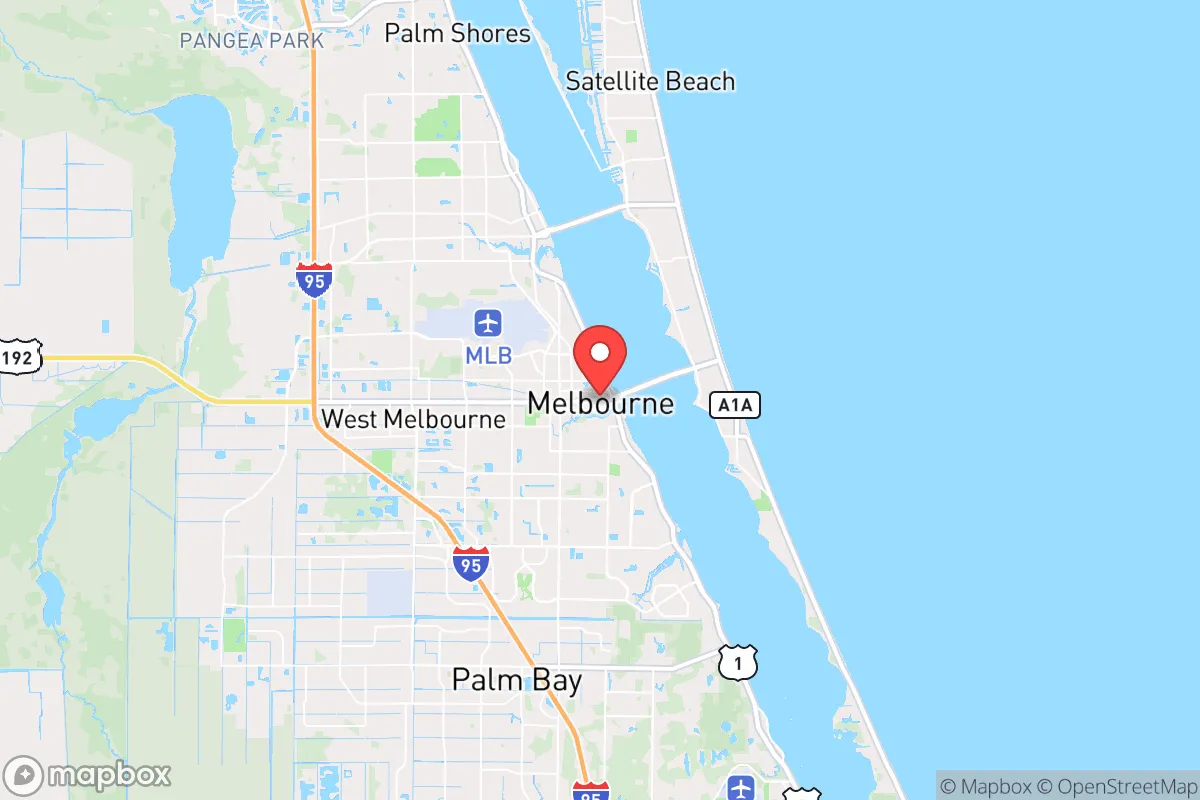
Key Distances
Regional Safe Places
Below is our recommended "safe zones" in Florida and the surrounding area based on our strategic heuristics. For most people, it's unrealistic to live in a “safe zone” full-time due to work, family or other personal reasons. They tend to be more rural. However, many of these areas are perfect for second homes and retreat properties that double as a vacation home or even a short-term rental.

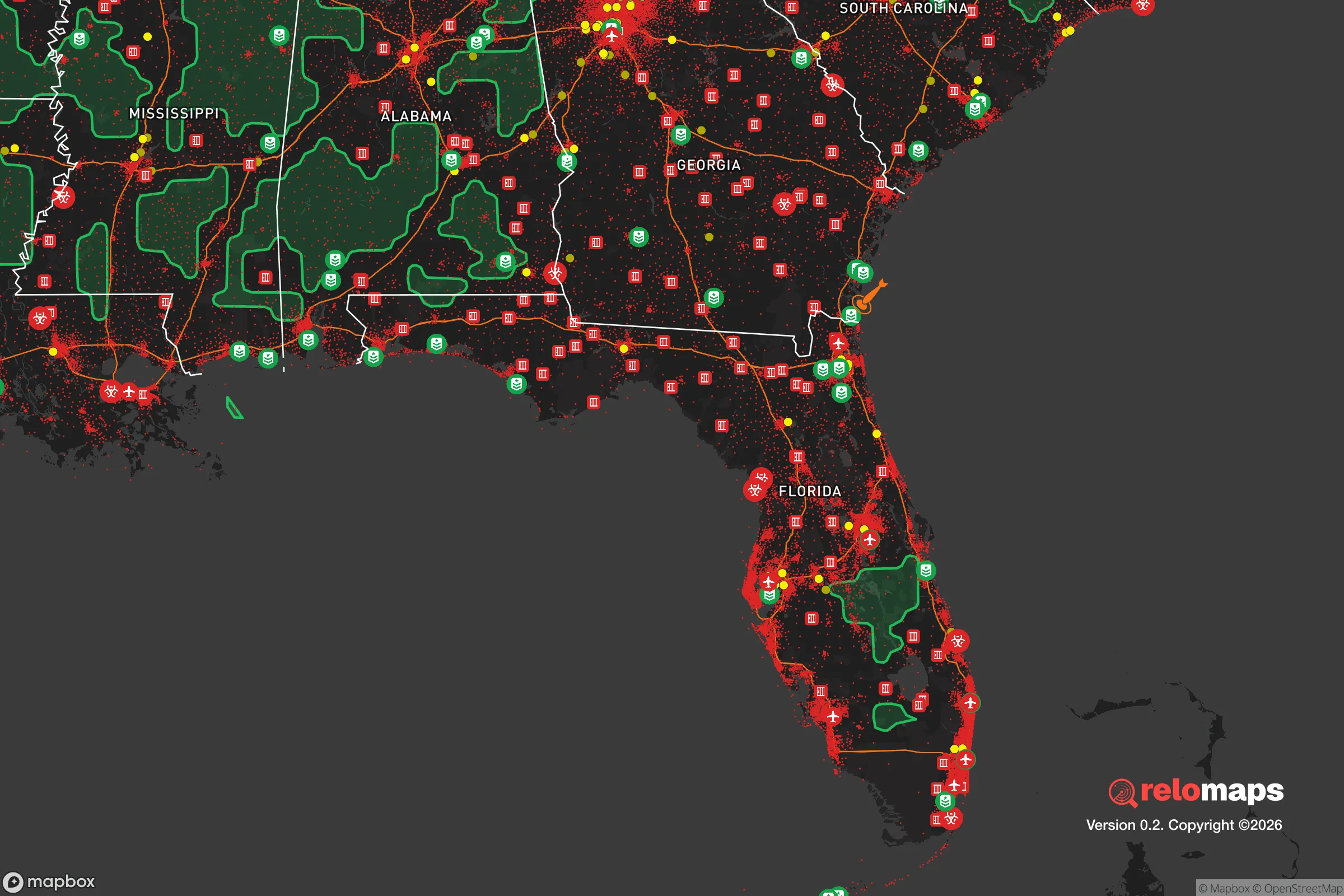


Important Note: For informational purposes only. This does not mean nothing bad ever happens in the green zones. Please use common sense. This is based on public data and modeled with AI. We tried to take a conservative approach but mistakes happen. We update this regularly as new information becomes available.
Solar Generator Recommendations
Backup power matters more here than in safer locations. We've picked three solar generators across budgets and capacity tiers — start with the budget unit if you only need a few essentials, or step up if you want to run a fridge and HVAC for days at a time.

Jackery Portable Power Station Explorer 300
Budget OptionPower on the Go: Weighing only 11 lbs, it's convenient to set up and store with book-sized foldable solar panels

BLUETTI Portable Power Station AC180
Designed for both indoor and outdoor scenarios, AC180 is highly capable as it has a robost capacity and continuous output power.

EF ECOFLOW DELTA Pro Ultra Power Station
Upgraded PickEcoFlow DELTA Pro Ultra is a whole-home energy system designed to grow with your family. Integrated with the Smart Home Panel 2, it scales to meet your evolving energy needs — keeping your home powered, intelligent, and secure through every stage of life.
We earn a commission, at no additional cost to you.
Strategic Assessment Analysis
Melbourne, Florida, sits in a precarious but potentially advantageous position for those prioritizing strategic relocation in an era of increasing uncertainty. Its location on Florida’s Space Coast offers a unique blend of economic resilience tied to federal defense and aerospace spending, but its proximity to major population centers and critical infrastructure introduces significant vulnerabilities. For a conservative-leaning individual or family focused on preparedness, Melbourne presents a mixed bag: it’s not a remote bunker, but it’s far from a helpless urban core, and understanding its specific risks and assets is key to deciding if it fits your long-term plan.
Geographic position and natural advantages for long-term stability
Melbourne’s primary strategic asset is its location along Florida’s central Atlantic coast, roughly midway between Jacksonville and Miami. This places it outside the immediate blast radius of a major event targeting a megacity like Miami or Orlando, yet close enough to access their economic and logistical networks when things are stable. The area is part of the Space Coast, anchored by Cape Canaveral Space Force Station and Kennedy Space Center, which ensures a steady flow of federal dollars and high-skilled jobs that are less susceptible to economic downturns than tourism or real estate. The presence of Patrick Space Force Base to the north and the massive defense contractor presence—including Northrop Grumman, L3Harris, and Boeing—means the local economy is tied to national security priorities, a factor that tends to keep infrastructure and emergency services better funded than in purely civilian towns. The Indian River Lagoon and the Atlantic Ocean provide natural barriers to the west and east, limiting easy overland approaches from those directions, while the St. Johns River basin to the west offers a buffer of wetlands and conservation land that slows any ground-level chaos from the interior.
Risks, exposures, and proximity to fallout-relevant landmarks
The same assets that make Melbourne economically stable also make it a target. Melbourne is within 20 miles of Cape Canaveral, a primary launch site for military and commercial satellites, and Patrick Space Force Base, a hub for space surveillance and missile warning systems. In a conflict involving peer adversaries, these facilities are high-priority targets for kinetic or cyber attack. The city also sits within 60 miles of Orlando, a major tourist and transportation hub that would be a focal point for civil unrest, disease spread, or supply chain disruptions. Interstate 95 runs directly through Melbourne, making it a natural chokepoint for evacuation traffic from the south—and a funnel for chaos moving north. The area is also exposed to hurricane risks, with the 2022 Hurricane Ian and 2024’s Hurricane Milton causing widespread power outages and flooding in low-lying neighborhoods near the river and coast. For a prepper, the combination of military target proximity, hurricane vulnerability, and a major highway corridor means you need a plan for both natural and man-made disruptions. The county’s emergency management is competent but will be overwhelmed in a multi-state crisis, as seen during the 2020 pandemic when supply chains for basic goods like water and ammunition dried up for weeks.
Practical resilience for a relocator: food, water, energy, and defensibility
For a family or individual looking to hunker down, Melbourne’s practical resilience is a mixed picture. Water is the biggest concern: the area relies on the Floridan Aquifer, which is generally abundant but vulnerable to saltwater intrusion from over-pumping and storm surge. Municipal water treatment plants are hardened but not invulnerable to extended power loss. A well on your property with a hand pump or solar-powered pump is a strong hedge, but many suburban lots in Melbourne are too small for a well. Food security is better than in most metro areas: the surrounding Brevard County has active agricultural zones, including citrus groves, cattle ranches, and vegetable farms in the western part of the county near the St. Johns River. Local farmers’ markets and community-supported agriculture (CSA) programs are common, and the Indian River Lagoon offers fishing and crabbing opportunities, though pollution advisories are frequent. Energy is a weak point: Florida Power & Light’s grid is prone to hurricane outages, and while solar adoption is growing, most homes lack battery backup. A generator with a 50-amp inlet and a 100-gallon propane tank is almost mandatory for anyone serious about staying put through a week-long outage. Defensibility is moderate: Melbourne’s suburban sprawl means many neighborhoods have multiple entry points and limited natural cover. However, the area’s many canals, rivers, and conservation lands create natural chokepoints if you choose a home on a cul-de-sac near water. The local gun culture is strong, with several indoor and outdoor ranges and a high rate of concealed carry permits, which means you’re unlikely to be the only prepared person on your block—a double-edged sword in a crisis.
Overall, Melbourne offers a strategic sweet spot for the conservative prepper who wants to stay connected to a stable job market and federal infrastructure without living in a high-risk urban core. The presence of military bases and defense contractors provides a layer of economic and security stability that most cities lack, but the proximity to those same assets makes it a potential target. The key is to buy property west of I-95, away from the coast and the river flood zones, and to invest in self-sufficiency measures—especially water and power—before a crisis hits. If you’re willing to trade absolute remoteness for a strong local economy and a community that largely shares your values on self-reliance and preparedness, Melbourne is a viable option. Just don’t expect it to be a bug-out location; it’s a place to build a resilient life, not to disappear into the woods.

* Values derived from national, state, county, city and local statistics and may differ in a specific area. Last updated: 2026-05-03T05:02:29.000Z
Narrative content on this page is AI-generated and may contain mistakes. Verify any details that matter before acting on them.
ReloMaps may earn a commission from affiliate links at no extra cost to you.

