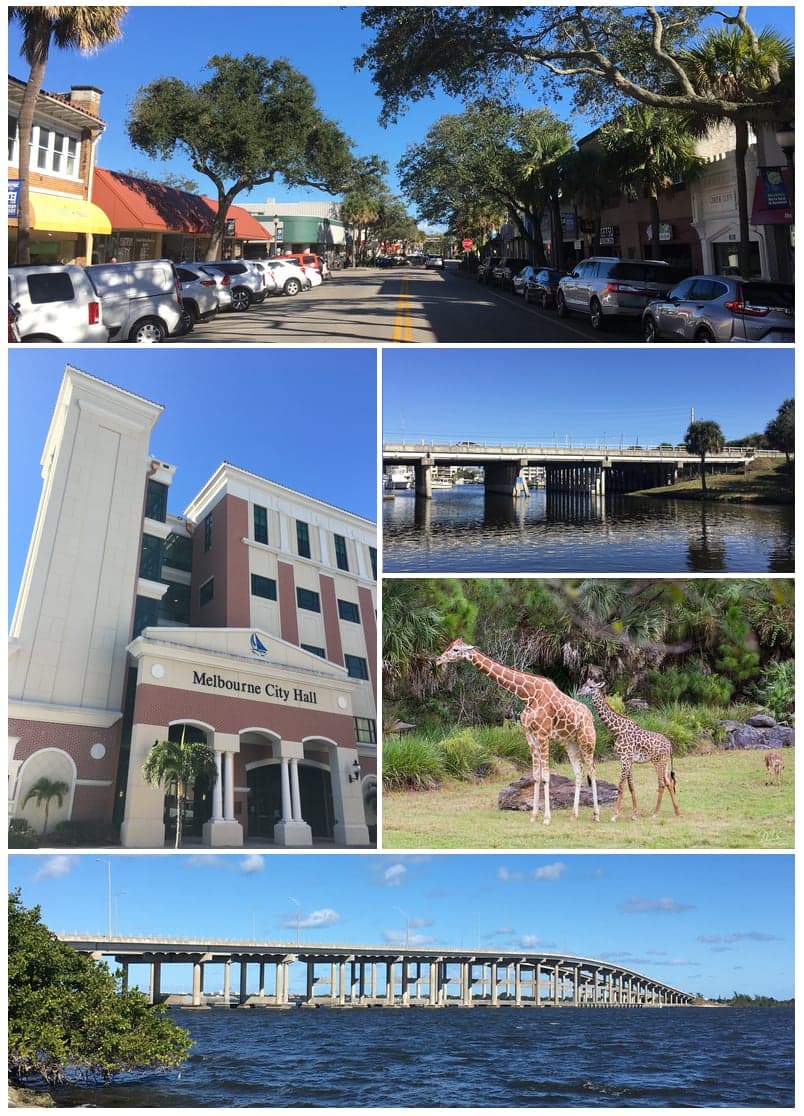
Photo: Wikipedia
Political ClimatePolitical Climate in Melbourne, FL
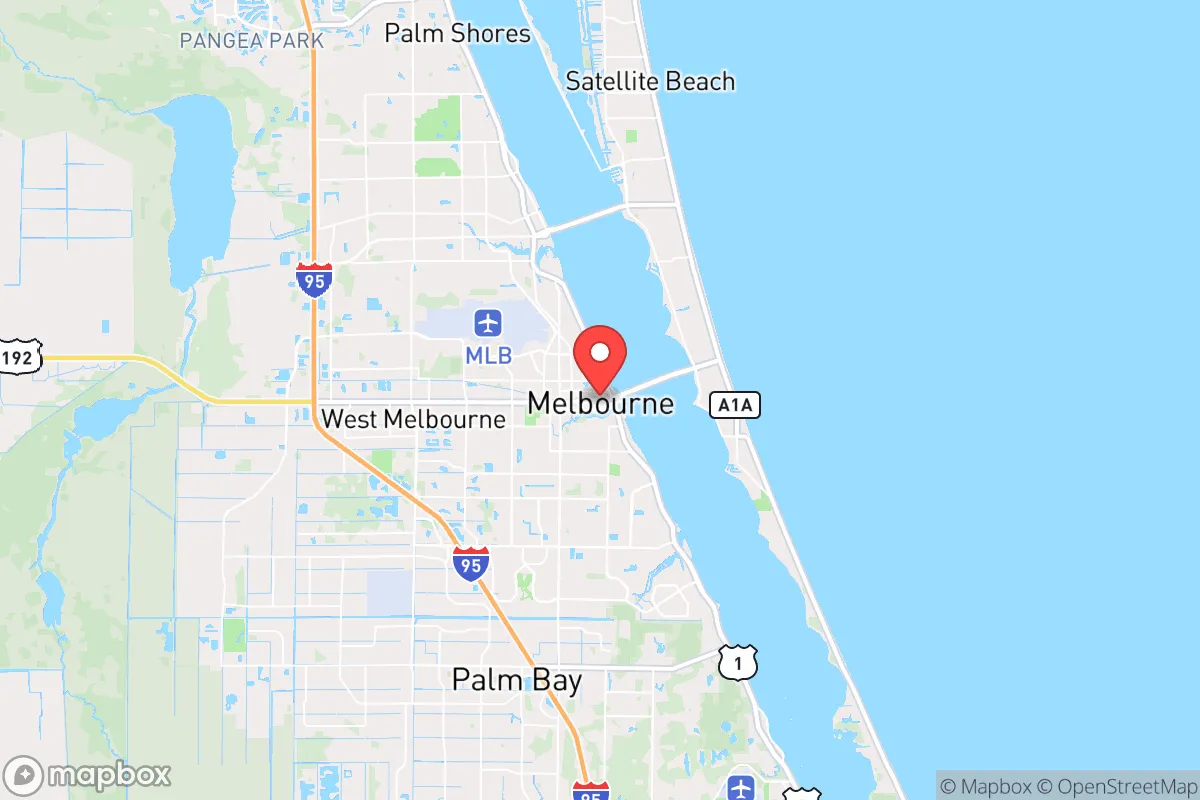
District shown is the primary district for this city’s centroid. Cities may span multiple districts.
Local Political AnalysisPolitical Analysis of Melbourne, FL
Melbourne, Florida, has long been a solidly conservative community, and the numbers back that up with a Cook PVI of R+11. For decades, this area was a place where folks could count on local government to stay out of their business, focusing on keeping the streets safe and the economy humming rather than pushing social experiments. You’d see that reflected in everything from city council meetings to the way neighbors talk over the fence. But like a lot of Florida, there’s been a noticeable shift in the last five to ten years, especially as more people pour in from blue states. The core is still red, but you can feel the pressure at the edges, particularly in the more expensive neighborhoods closer to the beach or around the new tech parks. The old-timers here are watching closely, because the character of the place is on the line.
How it compares
If you drive ten miles west to Palm Bay, you’ll find a community that’s even more reliably conservative, with a stronger working-class backbone and less tolerance for the kind of progressive policies that are creeping into Melbourne’s more affluent enclaves. Head north to Cocoa Beach or south to Vero Beach, and you’ll see a similar story: the coastal towns are trending a bit more purple, especially with the influx of remote workers and retirees from places like New York and California. But Melbourne itself sits in a sweet spot—it’s not as deep red as the rural areas to the west, but it’s nowhere near the liberal strongholds of Orlando or Gainesville. The real contrast is with the college towns like Tallahassee or even parts of Tampa, where you see open calls for defunding police or implementing radical zoning laws. Here, those ideas still get laughed out of the room, but the fact that they’re even being whispered in some circles is a red flag for anyone who values personal freedom and limited government.
What this means for residents
For the average person living here, the political climate means you can still enjoy a lot of the freedoms that are disappearing in other parts of the country. You’re not going to see mask mandates or business shutdowns like you did in some states during the pandemic, and the local sheriff’s office is still focused on real crime, not woke social justice nonsense. Property taxes are reasonable, and there’s no city income tax eating away at your paycheck. But you do have to keep an eye on the city council elections, because that’s where the progressive foot soldiers are trying to get a foothold. They’ll talk about “affordable housing” and “sustainability,” but what that usually means is more regulations, higher fees, and less freedom to do what you want with your own property. The good news is that the majority of residents still vote with their gut, and they’re not easily fooled by slick marketing from out-of-state developers or activist groups.
One thing that sets Melbourne apart culturally is its strong connection to the space industry and the military, which reinforces a practical, can-do mindset. You don’t see a lot of the performative activism you’d find in bigger cities; people here are more concerned with their jobs at Northrop Grumman or Patrick Space Force Base than with virtue signaling on social media. The local schools still teach the basics without a heavy political agenda, and the churches are full on Sunday. That said, the long-term trend is concerning. As the cost of living creeps up and more people move in from high-tax states, there’s a real risk that Melbourne could start to mirror the places those folks fled. The key is staying engaged at the local level, because that’s where the fight for your rights is really happening. If you’re looking for a place where you can still live free and raise a family without the government breathing down your neck, Melbourne is still a solid bet—but you’ve got to stay vigilant.

State Political ClimatePolitical Climate in Florida
State Political AnalysisPolitical Environment in the State
Florida has shifted from a perennial battleground to a solidly Republican-leaning state over the past two decades, driven by a massive influx of conservative-leaning transplants from the Northeast and Midwest. The state now boasts over a million more registered Republicans than Democrats, and in the 2024 presidential election, Donald Trump carried Florida by roughly 13 points, a stark contrast to the nail-biters of the 2000s. The dominant coalition is a mix of suburban families, retirees, and Hispanic voters in places like Miami-Dade and the I-4 corridor, who have increasingly abandoned the Democratic Party over issues like crime, education, and economic freedom.
Urban vs. rural divide
The political map of Florida is a tale of three distinct zones. The deep-red rural Panhandle, from Pensacola to Tallahassee, votes like Alabama, with counties like Santa Rosa and Okaloosa routinely delivering 70%+ margins for Republicans. The I-4 corridor, stretching from Tampa through Lakeland to Daytona Beach, is the classic swing region, but it has trended right: Hillsborough County (Tampa) voted for Trump in 2024 after backing Biden in 2020, while Polk County (Lakeland) has become a GOP stronghold. The biggest story is South Florida: Miami-Dade County, once a Democratic fortress, flipped to Trump in 2020 and expanded that margin in 2024, driven by Cuban, Venezuelan, and Nicaraguan voters who associate Democrats with socialism. Meanwhile, the urban cores of Miami, Orlando, and Fort Lauderdale remain blue, but their suburbs—like The Villages, Naples, and Palm Beach Gardens—are among the most conservative in the nation.
Policy environment
Florida’s policy environment is a case study in conservative governance. There is no state income tax, a major draw for relocators, and property taxes are capped by the Save Our Homes amendment. The regulatory climate is business-friendly, with a right-to-work law and minimal zoning restrictions in most counties. On education, Governor Ron DeSantis signed the Parental Rights in Education Act (HB 1557) in 2022, banning classroom instruction on sexual orientation and gender identity in K-3, and later expanded it through 12th grade. The state also leads in school choice, with over 1.3 million students using vouchers or tax-credit scholarships. Healthcare policy is mixed: Florida did not expand Medicaid, but it has strong protections for medical conscience rights. Election integrity saw major reforms in 2021 (SB 90), including stricter voter ID laws, limits on drop boxes, and a ban on mass mail-in ballot requests—measures that have withstood legal challenges. The state also preempted local gun ordinances, ensuring uniform firearm laws statewide.
Trajectory & freedom
Florida is arguably the most freedom-oriented state in the country right now, and it’s getting freer. The 2023 “Live Free” legislative package eliminated permits for concealed carry of firearms (HB 543), making Florida the 26th constitutional carry state. On parental rights, the 2023 expansion of HB 1557 (now covering all grades) and the “Don’t Say Gay” law have been followed by the “Stop WOKE Act” (HB 7), which restricts critical race theory in workplaces and schools. Medical autonomy saw a win with the 2023 ban on COVID-19 vaccine mandates for private employers (SB 252). Property rights were strengthened by the 2024 “Live Local Act,” which preempts local rent control and streamlines development approvals. The only area where freedom has contracted is on abortion: the state enacted a 15-week ban in 2022 (HB 5), and after a 2024 state Supreme Court ruling, a 6-week ban took effect. For conservatives, this is a feature, not a bug. The trajectory is clear: Florida is doubling down on individual liberty, parental control, and limited government.
Civil unrest & political movements
Florida has seen its share of political flashpoints, but they’ve largely been contained. The 2020 Black Lives Matter protests in Miami, Orlando, and Jacksonville were significant but short-lived, and the state responded with the “Combating Public Disorder Act” (HB 1) in 2021, which enhanced penalties for rioting and blocking roadways. Immigration politics are front and center: Florida passed the toughest anti-sanctuary law in the country (SB 1718) in 2023, requiring businesses with 25+ employees to use E-Verify and making it a felony to transport undocumented immigrants into the state. This has led to a noticeable exodus of illegal immigrants from agricultural areas like Immokalee and Homestead. On the left, activist groups like the Florida Rising and the Dream Defenders continue to organize, but they’ve lost influence as the state’s political center shifts right. Election integrity remains a hot topic: the 2020 recount in Broward and Palm Beach counties exposed systemic issues, leading to the 2021 reforms. A new resident will notice that political conversations are more civil than in, say, California or New York, but the culture war is very real—especially in school board meetings and local library boards.
Projection
Over the next 5-10 years, Florida will only get redder. The in-migration pattern is overwhelmingly conservative: net domestic migration since 2020 has been over 1.5 million people, with the largest shares coming from New York, California, and Illinois—states with high taxes and progressive policies. These transplants are not moving to Florida to vote for the same policies they fled. The Hispanic vote, which is now 22% of the electorate, will continue to shift right, especially among younger Cuban-Americans and Venezuelans. The only wildcard is climate change: rising sea levels and hurricane risk could slow coastal growth, but inland areas like Ocala, Lakeland, and the Panhandle are booming. Expect the state to pass further tax cuts, expand school choice to universal eligibility, and possibly enact a state-level version of the Second Amendment Preservation Act. The Democratic Party in Florida is in a death spiral, with no clear leader or message. A conservative moving here in 2026 can expect to live in a state that is solidly Republican for at least the next decade, with policies that prioritize personal freedom over government control.
For a new resident, the bottom line is this: Florida offers a rare combination of low taxes, strong parental rights, gun freedom, and a growing economy that rewards hard work. You’ll find a state that respects your choices—whether that’s homeschooling your kids, starting a business, or carrying a firearm without a permit. The trade-off is that you’ll live in a place where the culture war is constant, and where the weather and insurance costs can be challenging. But if you value liberty over convenience, Florida is the best bet in the country right now. Just be prepared for the humidity—and the politics that come with it.
* Values derived from national, state, county, city and local statistics and may differ in a specific area. Last updated: 2026-05-03T05:02:29.000Z
Narrative content on this page is AI-generated and may contain mistakes. Verify any details that matter before acting on them.
ReloMaps may earn a commission from affiliate links at no extra cost to you.

