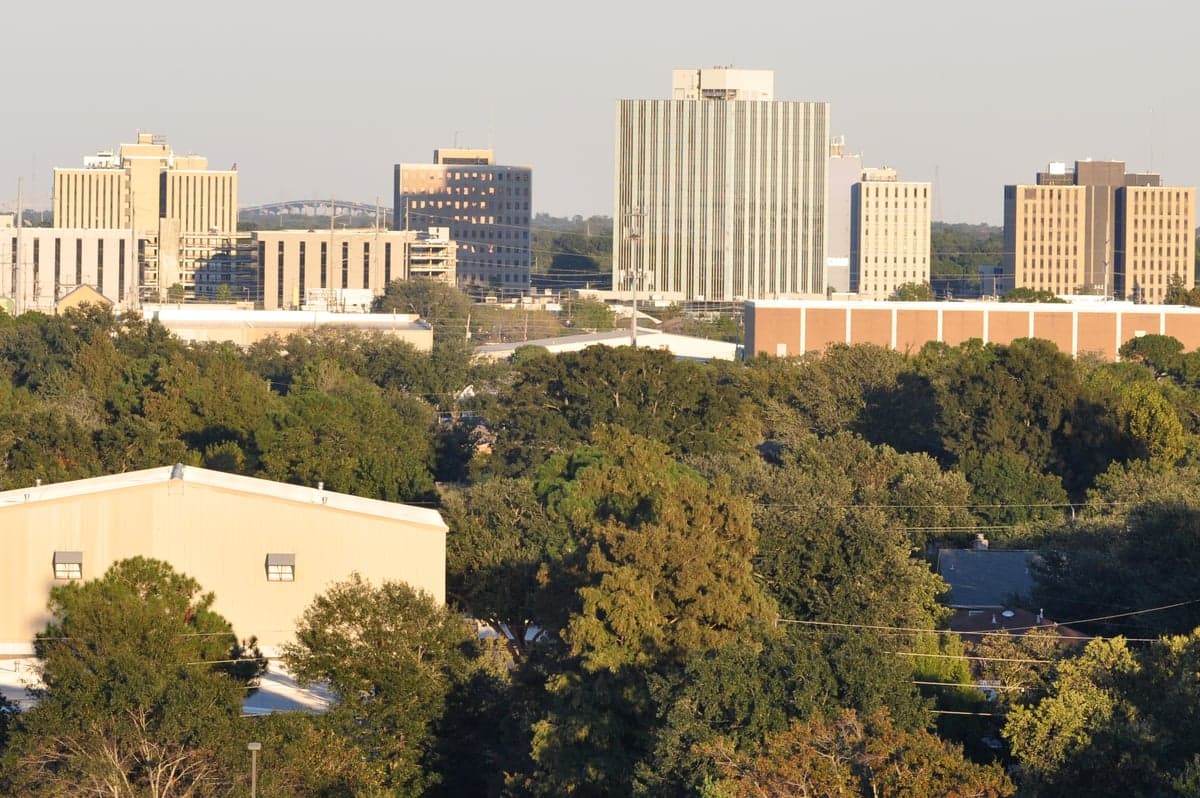
Photo: Wikipedia
Political ClimatePolitical Climate in Metairie, LA
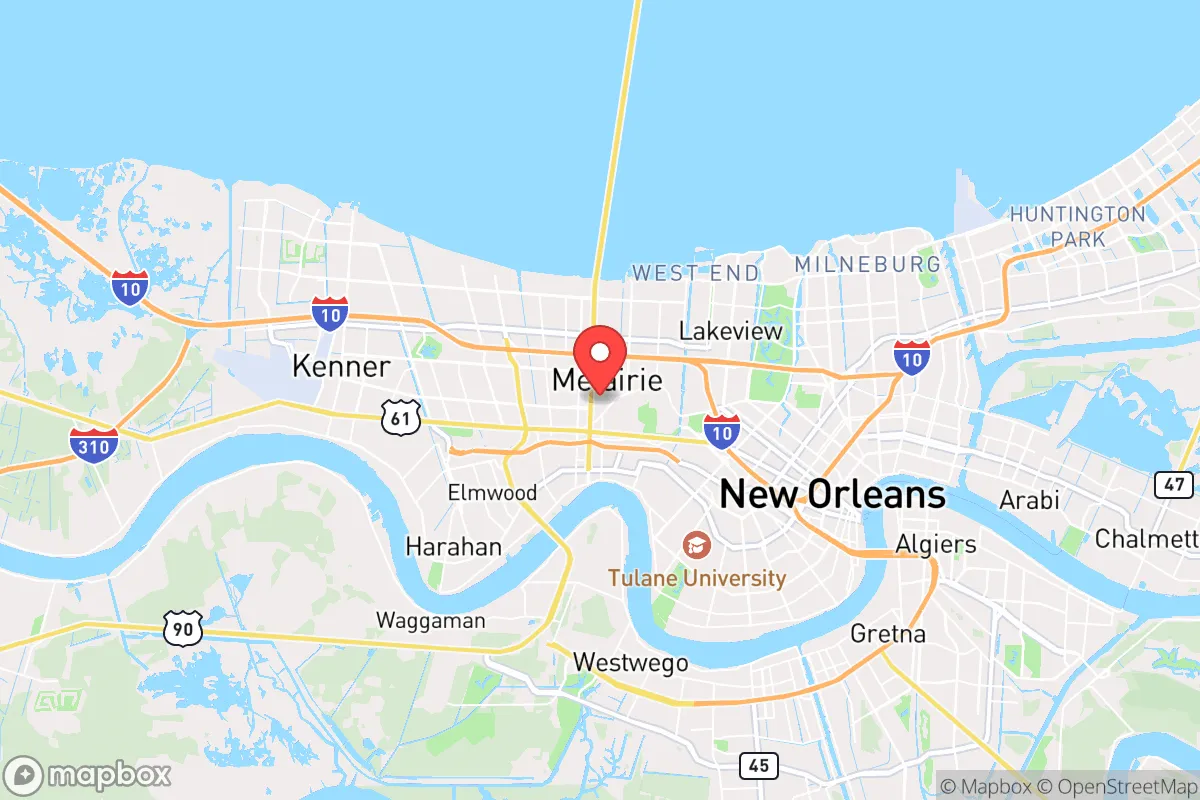
District shown is the primary district for this city’s centroid. Cities may span multiple districts.
Local Political AnalysisPolitical Analysis of Metairie, LA
Look, if you're checking out Metairie, you need to understand the political lay of the land because it shapes everything from your property taxes to how your kids are taught. Metairie is deep red, no two ways about it. The Cook PVI clocks it at R+19, which means it's about 19 points more Republican than the country as a whole. That's not just a number; it's the air you breathe here. For decades, this has been a place where traditional values and personal responsibility aren't just talked about—they're expected. You see it in the local elections, the school board meetings, and the general attitude that the government that governs least governs best. But I've been around long enough to see the winds shifting, and it's got me keeping a close eye on things.
How it compares
To really get Metairie, you gotta look at its neighbors. Head south into New Orleans proper, and you're in a whole different world. Orleans Parish is a solid blue stronghold, with a progressive city council and policies that often feel like they're testing the limits of personal freedom—mask mandates that never seemed to end, heavy-handed business regulations, and a tax structure that feels like it's punishing success. Metairie, in Jefferson Parish, is the counterbalance. We've fought hard to keep that kind of overreach from crossing the parish line. Up north, places like Mandeville and Covington on the Northshore are also conservative, but they're more of the country-club, suburban Republican type. Metairie is grittier, more blue-collar in its conservatism. It's the kind of place where people work hard, keep their guns, and don't want the government telling them how to live. The contrast with New Orleans isn't just political; it's cultural. You feel it the second you cross the 17th Street Canal.
What this means for residents
For the folks living here, this political climate means a few concrete things. First, your taxes are lower than in Orleans Parish, and there's a general resistance to new fees and regulations that would choke small businesses. You see it in the way the local government handles zoning—less red tape, more "let the market sort it out." Second, and this is a big one for families, the school system has held the line on a lot of the progressive curriculum battles you see elsewhere. There's been a real pushback against things like critical race theory and gender ideology in the classroom. Parents here still have a strong voice, and the school board listens. Third, and I can't stress this enough, the Second Amendment is still respected. You don't feel like you're a criminal for owning a firearm. That's a freedom that's under constant attack in blue cities, and Metairie has been a bulwark against it. But I'll be honest, I'm watching the younger generation moving in from other states. Some of them bring ideas that don't fit this place. If we're not careful, the slow creep of progressive ideology—masking itself as "inclusivity" or "sustainability"—could start chipping away at what makes Metairie work.
One thing that sets Metairie apart is its unique blend of Cajun/Creole culture and conservative politics. You don't find that everywhere. The local festivals, the food, the music—it's all tied to a sense of community that resists being homogenized by coastal elites. There's a real distrust of federal mandates here, whether it's on environmental regulations that would hurt the oil and gas industry or public health orders that shut down churches and small businesses. The long-term trajectory? It depends on who moves in and who votes. If we stay vigilant and keep electing people who believe in limited government and personal liberty, Metairie will remain a solid conservative anchor in a state that's slowly turning purple. But if we get complacent, we could end up looking like the very places we moved here to get away from. So yeah, it's a good place to live, but it's not a place to take your freedoms for granted.

State Political ClimatePolitical Climate in Louisiana
State Political AnalysisPolitical Environment in the State
Louisiana has long been a reliably red state in federal elections, but its political climate is far more nuanced than a simple partisan label suggests. The state has voted for the Republican presidential candidate in every election since 2000, with Donald Trump winning by nearly 20 points in 2020 and over 18 points in 2024. However, the state’s political landscape is a complex patchwork of deep-red rural parishes, increasingly conservative suburban enclaves, and a few stubbornly blue urban centers, creating a dynamic where state-level politics often feel like a tug-of-war between traditional conservative values and the lingering influence of a once-dominant Democratic machine. Over the last two decades, the shift has been unmistakable: the state has moved from a competitive, Democrat-heavy environment to a solidly Republican stronghold, driven by the exodus of moderate white voters from the Democratic Party and the rapid growth of conservative suburbs around cities like Baton Rouge, New Orleans, and Lafayette.
Urban vs. rural divide
The political map of Louisiana is a textbook example of the urban-rural divide. The state’s two largest cities, New Orleans and Baton Rouge, are the primary blue anchors. Orleans Parish consistently delivers 75-80% of its vote to Democrats, while East Baton Rouge Parish, though more competitive, still leans left, especially in its core. These cities are surrounded by a sea of deep-red rural and suburban parishes. For instance, Livingston Parish, just east of Baton Rouge, is one of the most reliably Republican parishes in the nation, routinely giving GOP candidates 80% or more of the vote. Similarly, St. Tammany Parish, north of Lake Pontchartrain, is a massive suburban stronghold that has become a key driver of Republican dominance in the New Orleans metro area. The Acadiana region, centered on Lafayette, is another conservative bastion, though it has a unique Cajun cultural identity that sometimes produces independent streaks. The I-10 corridor from Baton Rouge to the Texas line is a mix of suburban and rural areas that lean heavily Republican, while the northern part of the state, including Shreveport and Monroe, has a more mixed character, with the cities themselves being more competitive but the surrounding parishes being deeply red. The key takeaway: if you’re looking for a conservative environment, you’ll find it in the suburbs and rural areas, while the urban cores are the only places where progressive politics have any real foothold.
Policy environment
Louisiana’s policy environment is a mixed bag for conservatives. On the positive side, the state has a relatively low tax burden, with no state property tax and a flat income tax rate of 4.25% (down from a progressive rate structure in recent years). The state’s regulatory posture is generally business-friendly, particularly in the energy and manufacturing sectors. However, the state’s education system is a major concern. Louisiana consistently ranks near the bottom nationally in K-12 outcomes, and while school choice options like charter schools and vouchers exist, the system is still heavily centralized and union-influenced. Governor Jeff Landry, a Republican who took office in 2024, has pushed for significant education reform, including a universal school choice program, but the fight is ongoing. On healthcare, the state expanded Medicaid under the Affordable Care Act, a decision that many conservatives view as a government overreach that has ballooned the state budget. Election laws are relatively secure, with voter ID requirements and no widespread mail-in voting, though there have been ongoing debates about election integrity, particularly in the wake of the 2020 election. The state also has a strong right-to-work law and is a “shall-issue” state for concealed carry permits, though permitless carry was not fully enacted until 2024. Overall, the policy environment is trending in a conservative direction, but the legacy of decades of Democratic control still lingers in areas like education and healthcare.
Trajectory & freedom
Louisiana is on a clear trajectory toward greater personal freedom, but the pace is uneven. The most significant recent development is the passage of a comprehensive permitless carry law in 2024, which allows any law-abiding adult to carry a concealed firearm without a permit. This was a major victory for gun rights advocates. On parental rights, the state has passed laws requiring schools to notify parents of any changes to a student’s mental or physical health, effectively pushing back against the progressive agenda on gender ideology. The state also passed a law banning transgender athletes from competing in women’s sports. On the medical autonomy front, Louisiana has some of the strictest abortion laws in the country, with a near-total ban that took effect after the Dobbs decision. However, the state’s medical marijuana program, while limited, has been expanding, which some conservatives see as a government overreach in a different direction. On property rights, the state has a strong tradition of private property protections, though coastal erosion and the resulting government interventions have created some tensions. The biggest area of concern for freedom-minded residents is the state’s high incarceration rate and the lingering influence of the old political machine, which can make it feel like the government is still too involved in people’s lives. But the trend is undeniably toward more liberty, especially under the current administration.
Civil unrest & political movements
Louisiana has a history of political activism, but it’s generally less volatile than other states. The most visible flashpoints in recent years have been around Confederate monuments and statues, particularly in New Orleans, where the removal of several monuments in 2017 sparked both protests and counter-protests. The state has also seen organized movements on both sides of the abortion debate, with pro-life groups being particularly active and influential in the state legislature. Immigration politics are less of a flashpoint here than in border states, but there is a growing concern among conservatives about the influx of illegal immigrants into the state, particularly in the New Orleans area. There have been no major sanctuary city policies, and the state has taken a hard line against any such measures. Election integrity has been a hot topic, with many conservatives still skeptical of the 2020 results, though no major scandals have been uncovered. The most notable political movement in recent years has been the rise of the “Louisiana Freedom Caucus,” a group of hardline conservative legislators who have pushed for more aggressive action on issues like school choice, gun rights, and tax cuts. Overall, the state is politically engaged but not in a state of constant unrest. A new resident would likely notice a strong sense of local identity and a general skepticism of federal overreach, but not the kind of daily political drama you see in states like California or Texas.
Projection
Over the next 5-10 years, Louisiana is likely to become even more conservative, but with some important caveats. The in-migration patterns are interesting: while the state is losing population overall, the people moving in tend to be more conservative, often coming from higher-tax, higher-regulation states like California and New York. This is particularly true in the suburbs of Baton Rouge and New Orleans, as well as in the growing areas around Lafayette and the Northshore. However, the state’s urban cores are also seeing an influx of younger, more progressive residents, which could make cities like New Orleans even more blue. The demographic shift is also a factor: the state’s African American population, which votes overwhelmingly Democratic, is declining as a percentage of the total population, while the white and Hispanic populations are growing. This trend favors Republicans. The biggest wildcard is the state’s economy, which is heavily dependent on oil and gas. A major shift away from fossil fuels could devastate the state and potentially shift the political calculus. But for now, the trajectory is clear: Louisiana is solidifying its status as a conservative stronghold, with the suburbs and rural areas driving the trend. Someone moving in now should expect to find a state that is increasingly friendly to conservative values, with a government that is actively working to reduce its footprint in people’s lives.
For a new resident, the bottom line is this: Louisiana offers a genuinely conservative environment in most areas outside of the major cities, with a low tax burden, strong gun rights, and a government that is increasingly aligned with traditional values. However, you’ll need to be strategic about where you choose to live. If you want a deep-red, family-friendly suburb with great schools and a strong sense of community, look at places like Mandeville, Covington, or Denham Springs. If you want a more urban experience with a conservative bent, Lafayette is a solid choice. Just be aware that the state’s education system and healthcare infrastructure are still works in progress, and the legacy of decades of Democratic rule means you’ll still encounter some government overreach. But if you’re looking for a place where your personal freedoms are respected and your values are shared, Louisiana is a state worth serious consideration.
* Values derived from national, state, county, city and local statistics and may differ in a specific area. Last updated: 2026-04-23T04:58:29.000Z
Narrative content on this page is AI-generated and may contain mistakes. Verify any details that matter before acting on them.
ReloMaps may earn a commission from affiliate links at no extra cost to you.

