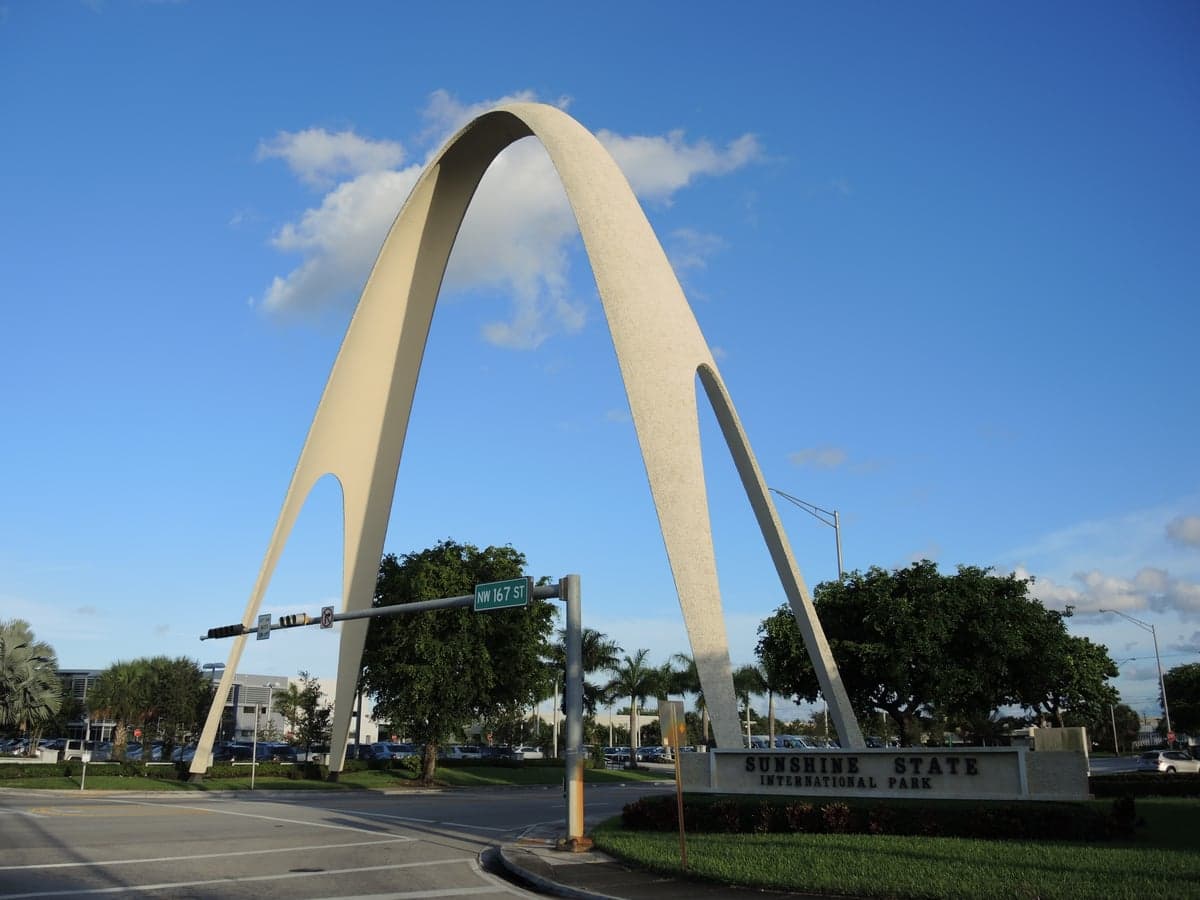
Photo: Wikipedia
Personal Sovereignty in Miami Gardens, FL
Viable for self-reliance. Generally workable, though some barriers may limit total independence.
What does Personal Sovereignty tell us?
Personal Sovereignty measures your capacity for self-reliance and independence with minimal government friction. Higher scores mean fewer barriers between you and the way you want to live... but it assumes you have the space you need and good neighbors.
What does this tell us?
Personal Sovereignty measures your capacity for self-reliance and independence with minimal government friction. Higher scores mean fewer barriers between you and the way you want to live... but it assumes you have the space you need and good neighbors.
State Policy
Energy independence: Importer (10% of energy produced in-state)
Personal Liberty
Homesteading

Personal Liberty Analysis
For a survivalist or prepper evaluating personal sovereignty, Miami Gardens presents a complex picture: you get the benefits of Florida’s strong state-level preemption laws and no state income tax, but you’re embedded in a densely populated, high-regulation urban environment where local ordinances can feel like a constant low-grade friction on your autonomy. The city’s 2024 population of roughly 110,000 sits within Miami-Dade County, a jurisdiction that has historically pushed for stricter local rules on everything from short-term rentals to building codes, meaning your day-to-day freedom is often shaped more by county commission votes than by state-level protections. If your priority is maximum personal latitude with minimal government entanglement, this area demands careful trade-off analysis—especially when compared to Florida’s more rural, less regulated interior counties.
Tax burden and regulatory posture: how much of your money and time the government takes
Florida’s lack of a state income tax is the single biggest win here—your paycheck and any side-hustle income (crucial for prepper savings) aren’t clipped by the state. Miami Gardens’ combined sales tax rate is 7%, which is the state maximum, and property taxes in Miami-Dade County average around 1.0% of assessed value, slightly above the state median. The real sovereignty hit comes from regulatory density: Miami-Dade has some of the strictest building codes in the nation (post-Hurricane Andrew), which means any construction or modification—whether a root cellar, a reinforced safe room, or a backyard workshop—requires permits, inspections, and often engineered plans. Expect permit fees and timelines that can double the cost of a simple shed or fence project compared to a county like Okeechobee or Glades. Business licenses and occupational taxes are also county-level, so starting a home-based side business (e.g., selling dehydrated goods or offering security consulting) involves more paperwork than in less populated Florida counties. The regulatory posture here is “managed growth with heavy oversight,” which directly limits your ability to modify your property without government approval.
Self-defense and gun law specifics: what you can carry and where
Florida is a “shall-issue” state for concealed carry, and as of 2023, permitless (constitutional) carry is legal for residents 21 and older who can legally possess a firearm. This is a solid foundation for personal sovereignty—you can carry a concealed handgun without a government permission slip. However, Miami Gardens is within Miami-Dade County, which has its own layer of restrictions: county ordinances prohibit open carry in most public spaces (even though state law generally allows it for permit holders during specific activities like hunting or fishing), and local parks have posted signage banning firearms. The city itself has a history of gun violence—Miami Gardens’ violent crime rate is roughly 2.5 times the national average—which means police response times can be slower in certain neighborhoods, making personal preparedness more critical. Stand-your-ground laws apply statewide, so you have no duty to retreat in your home, vehicle, or any place you have a right to be. Magazine capacity is unrestricted, and there is no state-level registry for long guns or handguns. For the prepper, the legal framework is permissive at the state level, but you must memorize local no-carry zones (schools, courthouses, airports, and county-owned facilities) to avoid a felony charge.
Self-reliance and homesteading viability: lot sizes, zoning, and off-grid feasibility
This is where Miami Gardens struggles for the serious homesteader. The median lot size in the city is around 6,000 to 7,500 square feet—small by national standards—and most residential zoning is R-1 (single-family) with strict limits on accessory structures, livestock, and agricultural activity. Chickens are generally prohibited within city limits, and keeping bees, goats, or any food-producing animals requires a special exception that is rarely granted. Rainwater collection is legal in Florida, but Miami-Dade County has specific cistern and barrel regulations (e.g., must be screened for mosquitoes, cannot exceed 500 gallons without a permit). Solar panels are allowed but must comply with HOA covenants if you’re in a planned community, and off-grid living (no utility connection) is effectively impossible—the county requires a certificate of occupancy tied to grid power and water. For a prepper wanting to grow a significant portion of food, store water, or generate independent power, this environment is hostile to true self-reliance. You’d be better served by a 1+ acre lot in a county like Hendry or DeSoto, where zoning is looser and neighbors are farther away.
Personal liberties: parental rights, medical autonomy, speech, and property
Florida has been a battleground for parental rights in education, with the Parental Rights in Education Act (HB 1557) and subsequent laws giving parents more say over curriculum and medical decisions for minors. This is a net positive for sovereignty-minded families—you can opt your child out of certain lessons and have access to instructional materials. Medical autonomy is more mixed: Florida has no state-level vaccine mandate for adults, but Miami-Dade County has historically pushed for stricter public health orders (mask mandates, business closures) during emergencies, which can feel like government overreach. Your property rights are protected by Florida’s strong homestead exemption (up to $50,000 off assessed value for primary residence) and a constitutional provision that limits property tax increases to 3% per year for homesteaded properties—a major win for long-term stability. However, Miami-Dade’s code enforcement is aggressive: you can be fined for overgrown grass, unregistered vehicles in the driveway, or even the color of your front door if it violates HOA or county rules. Free speech is protected under the First Amendment, but local noise ordinances and public assembly permits can be used to restrict protests or gatherings. For the prepper, the biggest liberty concern is the county’s emergency management authority—during a hurricane or civil unrest, Miami-Dade can impose curfews, restrict travel, and commandeer resources (under state law), which directly impacts your ability to move freely or protect your supplies.
Overall, personal sovereignty in Miami Gardens is a study in contradictions: you have strong state-level protections for guns, taxes, and parental rights, but you’re living under a dense layer of county and city regulations that constrain property use, self-reliance projects, and daily autonomy. For a survivalist or prepper, this area works best if you’re focused on urban preparedness (bugging in with a well-stocked apartment or small house) and can navigate bureaucracy. If your vision of sovereignty includes a large garden, livestock, off-grid power, and minimal government interaction, you will find Miami Gardens more restrictive than 80% of Florida’s landmass. The trade-off is access to Miami’s economic opportunities and international travel—but that comes at the cost of constant regulatory friction that a more rural county would not impose.

* Values derived from national, state, county, city and local statistics and may differ in a specific area. Last updated: 2026-05-03T05:02:52.000Z
Narrative content on this page is AI-generated and may contain mistakes. Verify any details that matter before acting on them.
ReloMaps may earn a commission from affiliate links at no extra cost to you.

