Photo: Wikipedia
Quality of Life in Miami Gardens, FL
A high quality of life with strong walkability, manageable living costs, healthy neighborhood signals, and solid amenity access.
What does Quality of Life tell us?
Quality of Life blends cost of living, nearby amenities, socioeconomic signals, and neighborhood character. City-level scores represent the whole municipality; individual neighborhoods can differ.
What does this tell us?
Quality of Life blends cost of living, nearby amenities, socioeconomic signals, and neighborhood character. City-level scores represent the whole municipality; individual neighborhoods can differ.
Cost of Living
36% above national average
The Real Cost of Living in Miami Gardens, FL for 2026
| Tier | Individual | Family (4) |
|---|---|---|
| Survival | $23k | $44k |
| Comfortable | $65k | $96k |
| Luxury | $96k+ | $148k+ |
| Elite (Top 5%) | $112k+ | $174k+ |
64%
The Area Signal
A metric tracking the socioeconomic signals of the area.
Hobbies
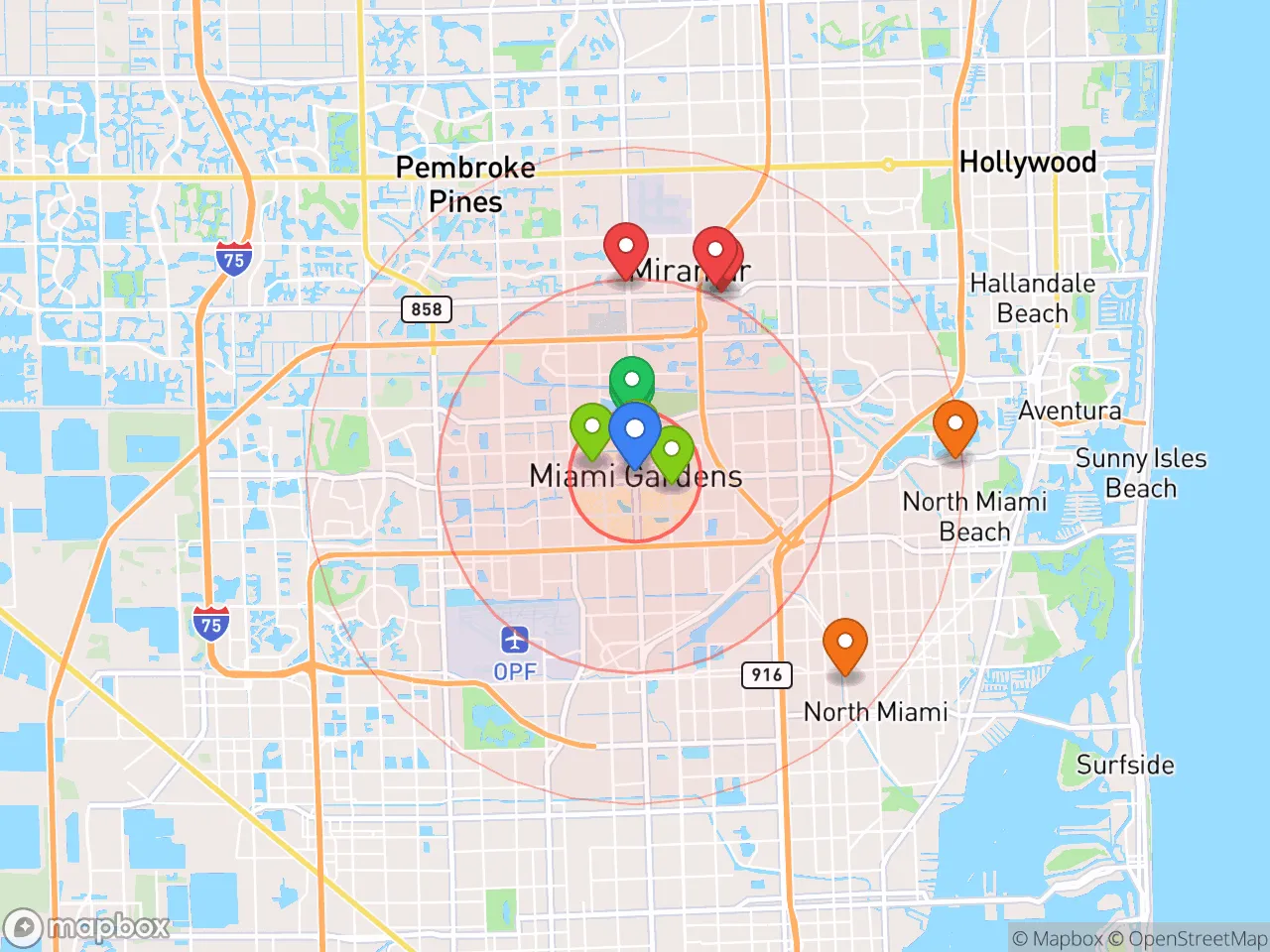
Explore the areaGroceries
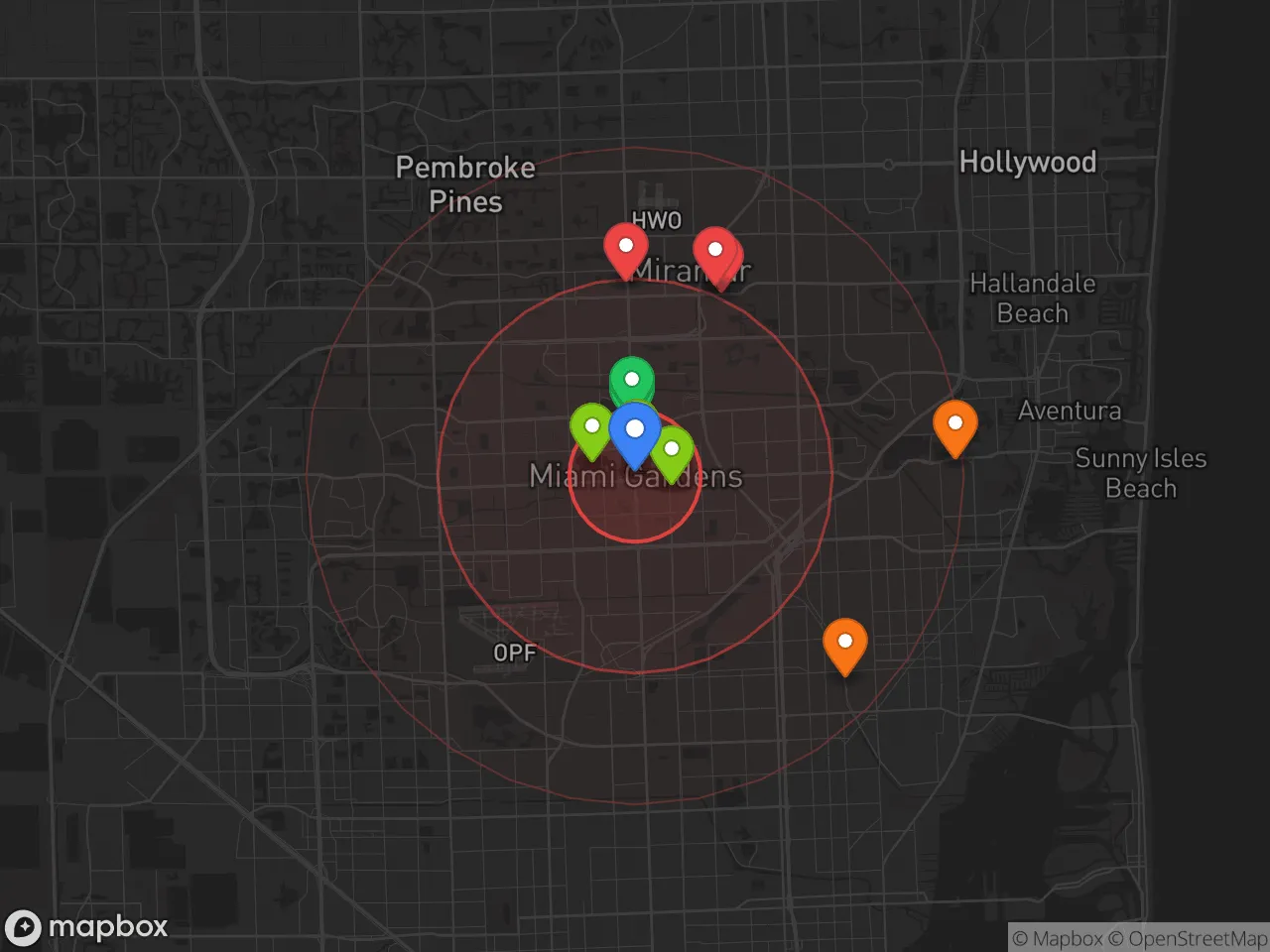
5 within 10 miles
Gas
20 within 10 miles
Hospital
20 within 20 miles
Airport
MIA — Miami International
Post Office
USPS — Miami Gardens, FL
Critical Amenities
Quality-of-Life Analysis
Miami Gardens, Florida, presents a quality-of-life profile that is distinctly middle-class and family-oriented within the context of greater Miami-Dade County. With a cost of living index of 136 (36% above the national average), the city attracts a population of working professionals, educators, and service-industry veterans who prioritize space and community over the high-gloss lifestyle of coastal enclaves. The city’s 113,000 residents are predominantly homeowners and renters who value proximity to both downtown Miami and Fort Lauderdale, creating a suburban rhythm that balances urban access with a quieter, more residential atmosphere.
Cost of living, housing affordability, and how it compares to nearby areas
Miami Gardens is significantly more affordable than its immediate neighbors like Aventura ($600,000+ median home values) or Sunny Isles Beach, yet it remains pricier than the national baseline. The median home value of $337,200 is roughly half that of coastal Miami-Dade, making it one of the more attainable markets for first-time buyers in the county. Median rent sits at $1,709, which is below the Miami metro average of roughly $2,200, though still elevated compared to inland suburbs like Homestead. The average commute of 31.1 minutes is slightly longer than the national average (26 minutes), reflecting the city’s role as a bedroom community for workers heading to downtown Miami, the airport corridor, or Broward County’s employment hubs. Property taxes in Miami Gardens run about 1.1% of assessed value, which is standard for the county, but homeowners should note that Florida’s lack of state income tax partially offsets the higher cost of goods and services. For renters, the market has tightened since 2020, with rents rising roughly 18% over the past three years, though the city’s inclusion in Miami-Dade’s affordable housing programs provides some relief for qualifying households.
Amenities, schools, and what daily life is like for families
Daily life in Miami Gardens revolves around its strong network of public parks and community centers, including the 30-acre Betty T. Ferguson Recreational Complex, which hosts youth sports leagues and senior programs. The city is home to Hard Rock Stadium, a major regional anchor that draws events from Miami Dolphins games to concerts and the Miami Open tennis tournament, injecting a big-city energy into the local calendar. For families, the public school options are mixed: Miami Gardens is served by Miami-Dade County Public Schools, with Miami Carol City Senior High and Miami Norland Senior High as the main zoned high schools, both of which have graduation rates around 80% (below the state average of 87%). Charter school options like Mater Academy Charter Middle/High offer alternative pathways. Grocery access is solid, with multiple Publix and Sedano’s locations, but the city lacks a walkable downtown core—most errands require a car. The area’s cultural life is anchored by the African Heritage Cultural Arts Center, which offers theater, dance, and music programs, and the annual Miami Gardens Jazz in the Gardens festival draws thousands. Crime rates in Miami Gardens are higher than the national average, particularly for property crime, though the city has invested in community policing initiatives and neighborhood watch programs since 2022.
Miami Gardens is best suited for families and long-term renters who want a suburban feel with strong ties to Miami’s job market and entertainment scene, without paying coastal prices. First-time homebuyers who can tolerate a longer commute and prioritize square footage over walkability will find the housing stock—largely single-family homes built in the 1960s–1990s—offers good value. Professionals working at nearby employers like Jackson Health System, the Miami-Dade school district, or the airport will appreciate the 30-minute drive, while those seeking a vibrant nightlife or beachside lifestyle should look east. The city’s affordability relative to the rest of Miami-Dade, combined with its community-focused amenities and major sports venue, makes it a practical choice for those who value space and stability over prestige.

Crime in Miami Gardens, FL
Crime rates similar to the national median for U.S. locations.
Violent CrimeViolent Crime Analysis
Property CrimeProperty Crime Analysis
Crime Analysis
Miami Gardens, Florida, faces a serious public safety challenge, with violent and property crime rates that significantly exceed both state and national averages. The city's 2024 crime data shows a violent crime rate of 358.6 incidents per 100,000 residents and a property crime rate of 1,746.3 per 100,000, placing it among the higher-risk communities in the Miami metropolitan area. These figures reflect a broader regional pattern where progressive criminal justice policies in Miami-Dade County have contributed to a permissive environment for repeat offenders, directly impacting resident safety and community trust.
Crime in context
Miami Gardens' violent crime rate is roughly 25% higher than the Florida state average and nearly double the national median for cities of comparable size. Property crime, while slightly below the state average for some categories, remains elevated due to vehicle theft and burglary. The city's proximity to major highways and its position within a large metro area with a liberal judiciary compound these issues. Miami-Dade County's elected prosecutors and judges have implemented policies that prioritize diversion and reduced sentencing for non-violent offenses, a trend that critics argue has emboldened property criminals and allowed violent offenders to cycle back onto the streets more quickly. This ideological approach to justice, while intended to reduce incarceration, has a direct negative effect on public safety by increasing the number of active criminals in the community.
What residents experience
For those living in Miami Gardens, crime is not an abstract statistic but a daily concern. Residents report frequent car break-ins, package thefts, and occasional armed robberies, particularly in commercial corridors like Northwest 27th Avenue and the area around the Hard Rock Stadium. The city's police department has struggled with staffing shortages, and response times can be slow in outlying neighborhoods. Many families choose to install security systems, form neighborhood watch groups, and avoid walking alone after dark. The prevalence of open-air drug markets in certain pockets further erodes the sense of safety, and the progressive district attorney's office has been criticized for not prosecuting low-level drug offenses, which allows these markets to persist and attract more serious criminal activity.
Neighborhood-level variation is notable. Areas west of I-95, such as the Lake Lucerne and Carol City sections, tend to have higher violent crime rates, while eastern neighborhoods closer to Opa-locka see more property crime. Gated communities and newer developments near the Turnpike generally report lower incident rates, but no part of Miami Gardens is immune from the spillover effects of regional crime trends. Prospective residents should research specific block-level data and consider that the city's overall safety outlook is heavily influenced by the county's lenient judicial environment, which prioritizes offender rehabilitation over victim protection and community security.
* Values derived from national, state, county, city and local statistics and may differ in a specific area. Last updated: 2026-05-03T05:02:52.000Z
Narrative content on this page is AI-generated and may contain mistakes. Verify any details that matter before acting on them.
ReloMaps may earn a commission from affiliate links at no extra cost to you.

