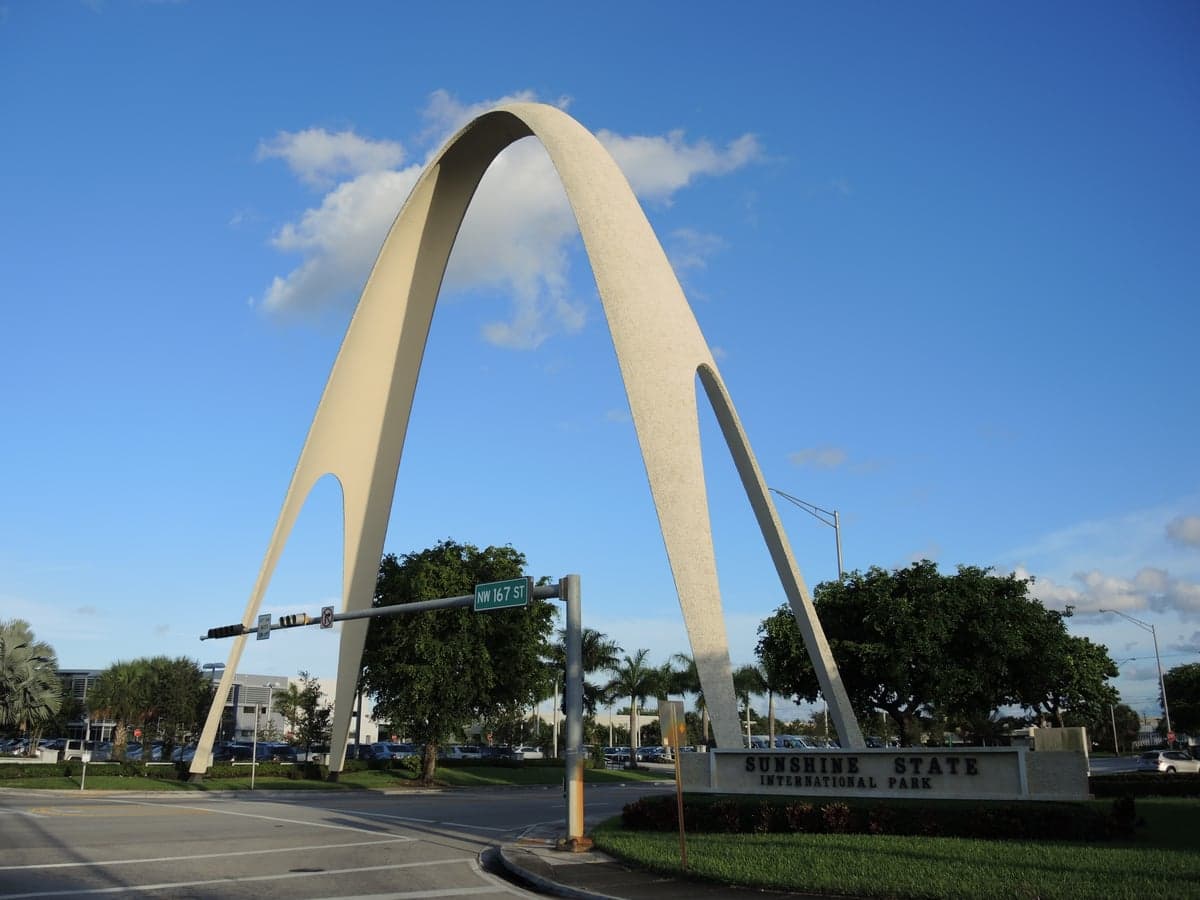
Photo: Wikipedia
Political ClimatePolitical Climate in Miami Gardens, FL
District shown is the primary district for this city’s centroid. Cities may span multiple districts.
Local Political AnalysisPolitical Analysis of Miami Gardens, FL
Look, I’ve been in Miami Gardens long enough to remember when this area was a lot more laid-back politically. Today, it’s a solid Democratic stronghold with a Cook PVI of D+18, meaning it votes about 18 points more Democratic than the national average. That’s a big shift from even a decade ago, and it’s not just about party labels—it’s about a growing appetite for government involvement in daily life that a lot of us old-timers find concerning. The trajectory here is clearly toward more progressive policies, and if you value personal freedoms and limited government, you’ll want to keep a close eye on how things are evolving.
How it compares
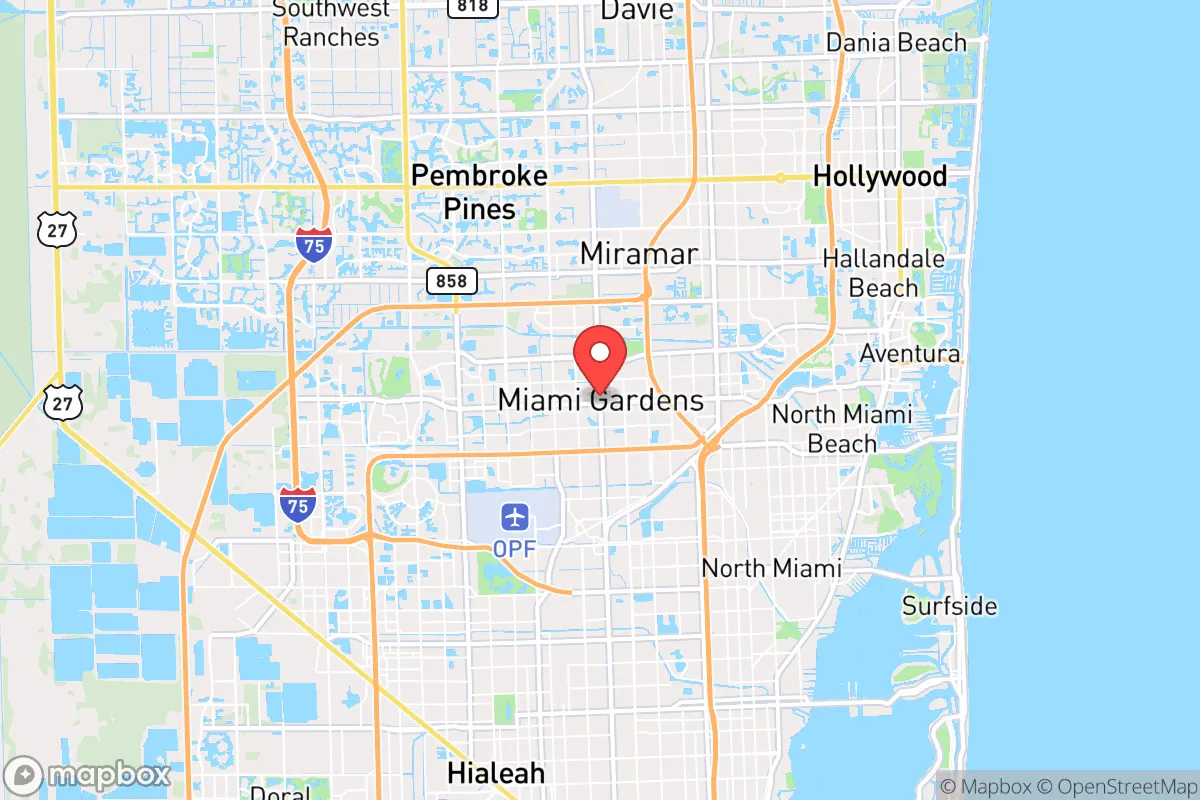
Miami Gardens is an island of deep-blue politics surrounded by a mix of red and purple. Head west to Hialeah or north to Miramar, and you’ll find more conservative-leaning areas where folks are skeptical of big government. Even nearby Miami Lakes has a more moderate vibe. But here in Miami Gardens, the city council and local leadership have embraced a progressive agenda—think higher minimum wages, more public spending, and a willingness to use zoning and permits to control businesses. It’s a stark contrast to places like Cutler Bay or Palmetto Bay, where residents push back harder on tax hikes and regulations. If you’re used to a “live and let live” atmosphere, the political climate here can feel suffocating at times.
What this means for residents
For the average person, this political tilt translates into real-life friction. Property taxes have crept up as the city funds more social programs and infrastructure projects—some necessary, but many feel like overreach. Small business owners I know grumble about new licensing requirements and fees that seem to multiply every year. There’s also a growing push for “equity” initiatives that, in practice, mean more government oversight of everything from housing to hiring. If you’re a homeowner or a entrepreneur, you’ll feel the pinch. The silver lining? Community services are well-funded, and there’s a strong sense of local activism. But that activism often leans toward demanding more from government, not less.
Culturally, Miami Gardens is unique—it’s the heart of Black Miami, with a rich history tied to the civil rights movement and a vibrant music scene (think hip-hop and reggae). But that cultural pride sometimes gets co-opted by politicians pushing policies that limit personal choice, like strict noise ordinances or business curfews that target local venues. The long-term trend worries me: as younger, more progressive voters move in, the pressure to expand government’s role in everyday life will only grow. If you’re considering a move here, just know you’re trading some personal freedoms for a community that’s deeply engaged—but also deeply comfortable with government solutions. It’s not for everyone, especially if you value keeping the state out of your wallet and your backyard.

State Political ClimatePolitical Climate in Florida
State Political AnalysisPolitical Environment in the State
Florida has transformed from a classic swing state into a solidly Republican-leaning powerhouse over the past decade, with a registered Republican voter advantage of over 700,000 as of 2025 and the state voting for Donald Trump by +13 points in 2024. The dominant coalition is a mix of conservative-leaning transplants from the Northeast and Midwest, native-born retirees, and a growing Hispanic population that has shifted rightward, particularly in Miami-Dade County. This represents a dramatic 20-year arc from the 2000 recount battleground to a state where Republicans now hold a supermajority in both legislative chambers and control every statewide office.
Urban vs. rural divide
The political map of Florida is starkly divided between the conservative interior and the increasingly red-leaning suburbs, versus the deep-blue urban cores of Miami, Orlando, and Tampa. The biggest story of the last decade is the collapse of Democratic strongholds: Miami-Dade County, which Hillary Clinton won by 30 points in 2016, went to Trump by 11 points in 2024, driven by Cuban, Venezuelan, and Nicaraguan voters who reject socialist rhetoric. The I-4 corridor, stretching from Tampa through Lakeland to Daytona Beach, remains the key swing region, but even here, fast-growing suburbs like The Villages and Ocala are deeply conservative. Meanwhile, the Panhandle—places like Pensacola, Panama City, and Tallahassee's surrounding counties—is reliably red, though Tallahassee itself is a blue island thanks to state government and Florida A&M. The rural interior, from the cattle ranches of Okeechobee to the pine forests of the Panhandle, votes 70-80% Republican, while the coastal condos of Broward and Palm Beach counties remain the last Democratic strongholds, albeit shrinking.
Policy environment
Florida's policy environment is a national model for limited government, with no state income tax, a right-to-work law, and a regulatory climate that has attracted over 1,000 new businesses since 2020. The state's Parental Rights in Education Act (HB 1557), signed by Governor Ron DeSantis in 2022, prohibits classroom instruction on sexual orientation and gender identity in grades K-3, a policy that has been copied by over a dozen states. On healthcare, Florida did not expand Medicaid under the Affordable Care Act, and the state has aggressively pursued medical freedom, banning vaccine passports and prohibiting employers from mandating COVID-19 shots. Election integrity is a priority: Florida passed SB 90 in 2021, which tightened voter ID requirements, limited drop boxes, and banned ballot harvesting, resulting in the smoothest election administration in the country in 2022 and 2024. The state's constitutional carry law (HB 543), effective July 2023, allows law-abiding adults to carry concealed firearms without a permit, a major expansion of Second Amendment rights.
Trajectory & freedom
Florida is unequivocally becoming more free across nearly every metric, bucking national trends toward government overreach. The 2023 legislative session alone passed the "Live Free" agenda, including the aforementioned permitless carry, a ban on ESG investing by state pension funds, and the expansion of school choice to near-universal eligibility through the Family Empowerment Scholarship program. Property rights were strengthened with the passage of SB 250, which limits the ability of local governments to impose rent control and restricts the use of eminent domain for private development. On the medical freedom front, Florida banned COVID-19 vaccine mandates for private businesses and government employees, and prohibited mask mandates in schools permanently. The state also passed the "Individual Freedom Act" (HB 7), which prohibits workplace training that suggests someone is privileged or oppressed based on race, a direct challenge to critical race theory. However, there are concerns about the expansion of the state's "anti-riot" law (HB 1), which some argue gives law enforcement too much discretion in breaking up protests, though it has been used sparingly.
Civil unrest & political movements
Florida has been remarkably stable compared to states like Oregon or New York, with no major sustained civil unrest since the 2020 George Floyd protests, which were largely confined to downtown Miami and Orlando. The most visible political movements are on the right: the "Moms for Liberty" group, founded in Brevard County in 2021, has become a national force in school board elections, with chapters in all 67 counties. Immigration politics are front and center, with Governor DeSantis's controversial flights of migrants to Martha's Vineyard in 2022 and the passage of SB 1718, which requires businesses with 25+ employees to use E-Verify and makes it a felony to transport undocumented immigrants into the state. There is no sanctuary city movement in Florida—in fact, the state has banned sanctuary policies outright since 2019. Election integrity remains a flashpoint, with the creation of the Office of Election Crimes and Security in 2022, which has prosecuted several cases of illegal voting, though critics call it overreach. The "Don't Say Gay" controversy (HB 1557) sparked national protests, but within Florida, the policy is broadly popular among parents, particularly in the suburban I-4 corridor.
Projection
Over the next 5-10 years, Florida will likely become even more conservative as the demographic trends that have driven its shift continue. The state is adding roughly 900 new residents per day, with the largest influx coming from deep-blue states like New York, California, and Illinois—these transplants tend to be moderate to conservative on fiscal issues and culturally conservative on education and crime. The Hispanic vote, now 22% of the electorate, will continue trending right as second-generation Cuban and Venezuelan Americans solidify their Republican identity. The biggest wildcard is the growing population of Puerto Ricans in Central Florida, who lean more Democratic but are less reliable voters. Climate change and insurance costs could slow growth in coastal areas like Miami-Dade and the Keys, pushing development inland to places like Ocala, Lakeland, and the Panhandle, which are deeply red. The state's political structure is locked in for the foreseeable future: Republicans hold a 28-12 edge in the congressional delegation and a 28-12 majority in the state senate, with no realistic path to a Democratic takeover before 2035.
For a new resident, the bottom line is this: Florida offers a political environment where your tax dollars are respected, your children's education is shielded from radical ideology, and your Second Amendment rights are protected. The state is run by a conservative supermajority that has proven willing to take on federal overreach, corporate ESG mandates, and local government overreach. If you're moving from a high-tax, high-regulation state, you'll find a government that sees itself as your servant, not your master—but you'll also need to accept that the culture wars are real here, and the state is actively fighting them. The traffic in Orlando and Miami is a nightmare, the summer humidity is oppressive, and hurricane season is a fact of life, but if you value personal freedom and limited government, Florida is as close to a sanctuary as you'll find in the continental United States.
* Values derived from national, state, county, city and local statistics and may differ in a specific area. Last updated: 2026-05-03T05:02:52.000Z
Narrative content on this page is AI-generated and may contain mistakes. Verify any details that matter before acting on them.
ReloMaps may earn a commission from affiliate links at no extra cost to you.

