Photo: Wikipedia
Strategic Assessment of Middletown, OH
Meaningful friction. Expect exposure to either population pressure, blast zones, or natural disaster risk. Consider buying a retreat property.
What does the Strategic Assessment tell us?
Our Strategic Assessment grades tactical survivability of an area. Major population centers, military targets, fallout zones, natural disasters, and border exposure all drive risk — lower exposure means a more defensible position in a crisis.
This is heavily inspired by Joel Skousen's Strategic Relocation book. Highly recommended you checkout the book ($)What does this tell us?
Our Strategic Assessment grades tactical survivability of an area. Major population centers, military targets, fallout zones, natural disasters, and border exposure all drive risk — lower exposure means a more defensible position in a crisis.
This is heavily inspired by Joel Skousen's Strategic Relocation book. Highly recommended you checkout the book ($)Strategic Pillars

Key Distances
Regional Safe Places
Below is our recommended "safe zones" in Ohio and the surrounding area based on our strategic heuristics. For most people, it's unrealistic to live in a “safe zone” full-time due to work, family or other personal reasons. They tend to be more rural. However, many of these areas are perfect for second homes and retreat properties that double as a vacation home or even a short-term rental.

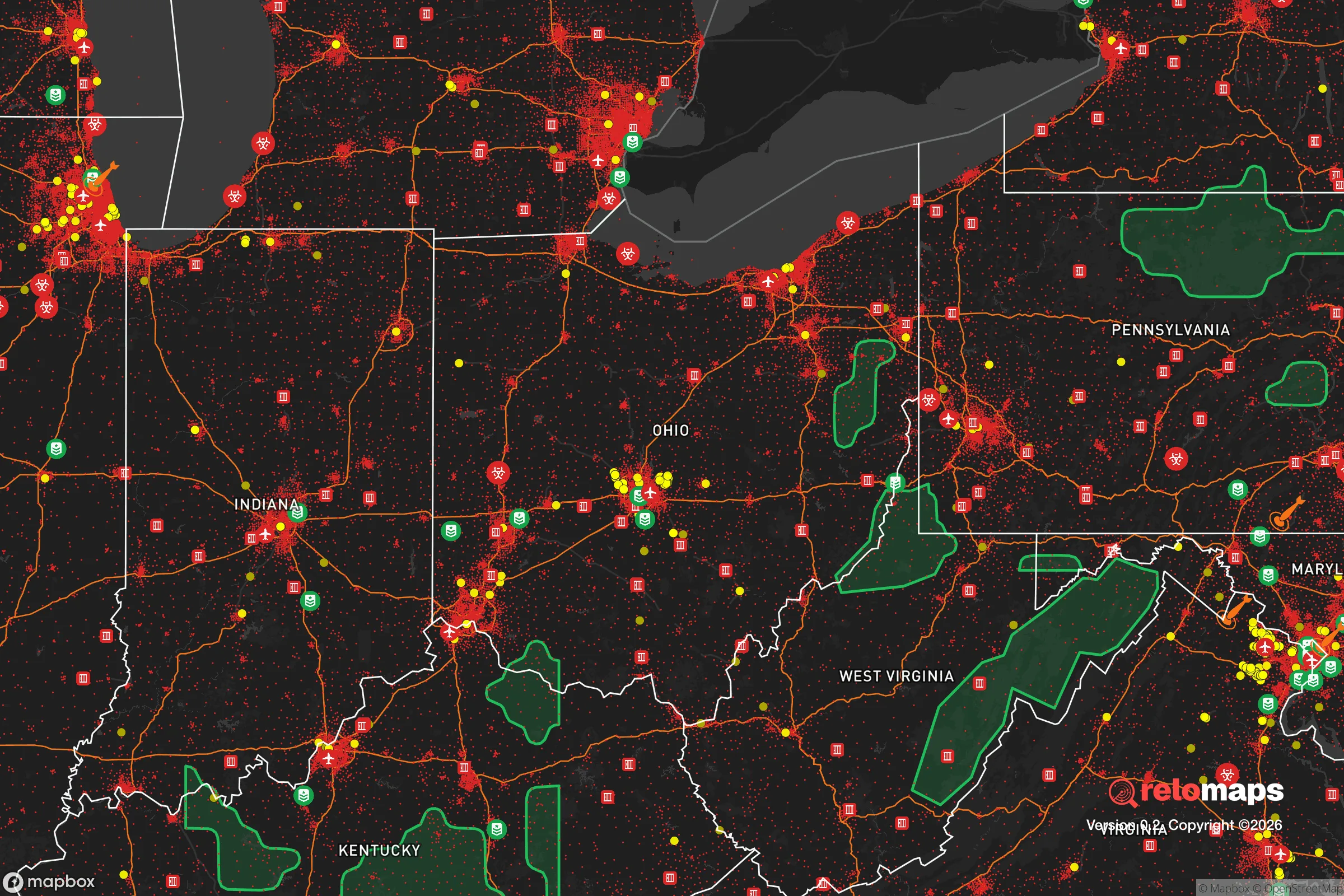


Important Note: For informational purposes only. This does not mean nothing bad ever happens in the green zones. Please use common sense. This is based on public data and modeled with AI. We tried to take a conservative approach but mistakes happen. We update this regularly as new information becomes available.
Solar Generator Recommendations
Backup power matters more here than in safer locations. We've picked three solar generators across budgets and capacity tiers — start with the budget unit if you only need a few essentials, or step up if you want to run a fridge and HVAC for days at a time.

Jackery Portable Power Station Explorer 300
Budget OptionPower on the Go: Weighing only 11 lbs, it's convenient to set up and store with book-sized foldable solar panels

BLUETTI Portable Power Station AC180
Designed for both indoor and outdoor scenarios, AC180 is highly capable as it has a robost capacity and continuous output power.

EF ECOFLOW DELTA Pro Ultra Power Station
Upgraded PickEcoFlow DELTA Pro Ultra is a whole-home energy system designed to grow with your family. Integrated with the Smart Home Panel 2, it scales to meet your evolving energy needs — keeping your home powered, intelligent, and secure through every stage of life.
We earn a commission, at no additional cost to you.
Strategic Assessment Analysis
Middletown, Ohio, occupies a strategic middle ground that resilience-minded relocators should examine closely: it sits far enough from major metro targets to avoid the worst of a cascading collapse, yet close enough to leverage regional resources when things are stable. Positioned along the I-75 corridor between Cincinnati and Dayton, the city offers a blend of industrial history, river access, and rural adjacency that makes it a viable base for those prioritizing self-sufficiency and community cohesion. For a conservative-leaning audience concerned with civic unrest, mass casualty events, and systemic fragility, Middletown presents a mixed but workable picture—one that rewards careful positioning and local knowledge.
Geographic position and natural advantages for long-term stability
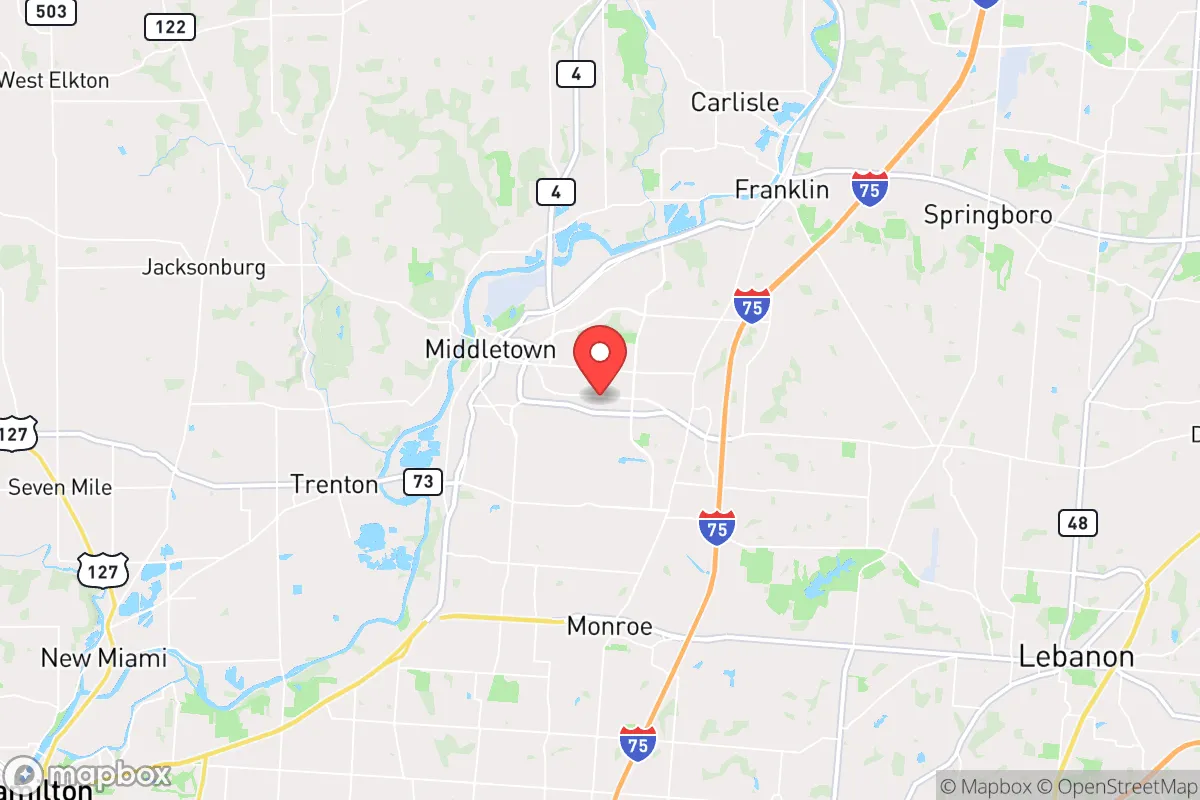
Middletown’s location is its primary strategic asset. The city lies in the Great Miami River valley, with the river itself providing a natural water source and a modest defensive barrier against east-west movement. The surrounding terrain is a patchwork of farmland, woodlots, and small towns—ideal for decentralized food production and low-density living. The area is roughly 35 miles north of Cincinnati and 25 miles south of Dayton, placing it outside the immediate blast or fallout zones of those cities while still within a reasonable driving distance for supply runs or medical care during normal times. The region’s temperate climate supports year-round gardening and livestock, and the local water table is generally reliable, with the Great Miami Buried Valley Aquifer being one of the most productive in the Midwest. For a relocator, this means you can dig a well, plant a garden, and keep animals without fighting desert conditions or extreme cold. The absence of major fault lines, hurricane zones, or wildfire corridors further reduces natural disaster risk, though tornadoes remain a seasonal concern—something a basement or storm shelter easily mitigates.
Risks, exposures, and proximity to fallout-relevant landmarks
The same proximity that gives Middletown access to urban resources also creates exposure. The I-75 corridor is a high-traffic evacuation and supply route; during a crisis, it could become a chokepoint or a target. Cincinnati and Dayton both host major industrial and transportation infrastructure—rail yards, chemical plants, and fuel depots—that could be secondary targets in a conflict or sources of hazardous material releases during a disaster. Wright-Patterson Air Force Base, located about 30 miles northeast in Dayton, is a high-value military installation that could draw kinetic or cyber attacks in a national emergency. While Middletown itself is not a primary target, its position within the blast and fallout radius of a strike on Wright-Patterson or the Cincinnati/Northern Kentucky International Airport is a real consideration. Additionally, the city’s industrial past has left behind brownfield sites and aging infrastructure; the AK Steel plant, while a major employer, also represents a potential industrial accident risk. For the prepper, this means you need to plan for both inbound refugees from larger cities and the possibility of localized contamination events. A bug-out location further into rural Butler or Preble County would be a prudent hedge.
Practical resilience for a relocator: food, water, energy, and defensibility
On the ground, Middletown offers a mixed bag for daily resilience. The city’s water supply comes from the Great Miami River and the aquifer, but treatment plants are centralized and vulnerable to power loss or sabotage. A well with a hand pump or a solar-powered backup is a non-negotiable investment here. The local soil is fertile, and there are active community gardens and farmers’ markets, but the growing season is only about 170 days—adequate for staples like corn, beans, and squash, but not for year-round production without a greenhouse. Energy reliability is average: the grid is served by Duke Energy, and outages during storms are common but usually short-lived. Solar panels are a viable supplement, and the area gets enough sun to make a modest array worthwhile. Defensibility is where Middletown struggles. The city’s layout is typical of a Midwestern industrial town—grid streets, open parks, and a downtown that’s walkable but not easily secured. The best option for a relocator is to buy property on the outskirts, preferably with a rural buffer of at least 10 acres, where you can establish a perimeter, store supplies, and maintain a low profile. The local gun culture is strong, with several ranges and gun shops in the county, and Ohio’s constitutional carry law means you can arm yourself without bureaucratic hurdles. For community resilience, look to the local churches and veteran’s organizations—these tend to be the most organized and trustworthy networks in a crisis.
The overall strategic picture for Middletown is one of cautious viability. It is not a hardened redoubt like a remote mountain valley, nor is it a doomed urban kill box. It is a middle-ground location that rewards preparation and local engagement. If you buy on the rural fringe, dig a well, stockpile supplies, and build relationships with like-minded neighbors, you can ride out most scenarios short of a direct nuclear strike. The city’s industrial base and transport links mean it will recover faster than purely rural areas after a disruption, but that same connectivity makes it a magnet for trouble during the initial shock. For the conservative relocator who wants to stay within a few hours of family or work in the Ohio River Valley, Middletown is a defensible choice—provided you treat it as a base of operations, not a final sanctuary. Plan for the worst, invest in self-sufficiency, and keep a bug-out bag ready for the day the I-75 corridor turns into a parking lot of desperate people.

* Values derived from national, state, county, city and local statistics and may differ in a specific area. Last updated: 2026-04-21T20:22:49.000Z
Narrative content on this page is AI-generated and may contain mistakes. Verify any details that matter before acting on them.
ReloMaps may earn a commission from affiliate links at no extra cost to you.

