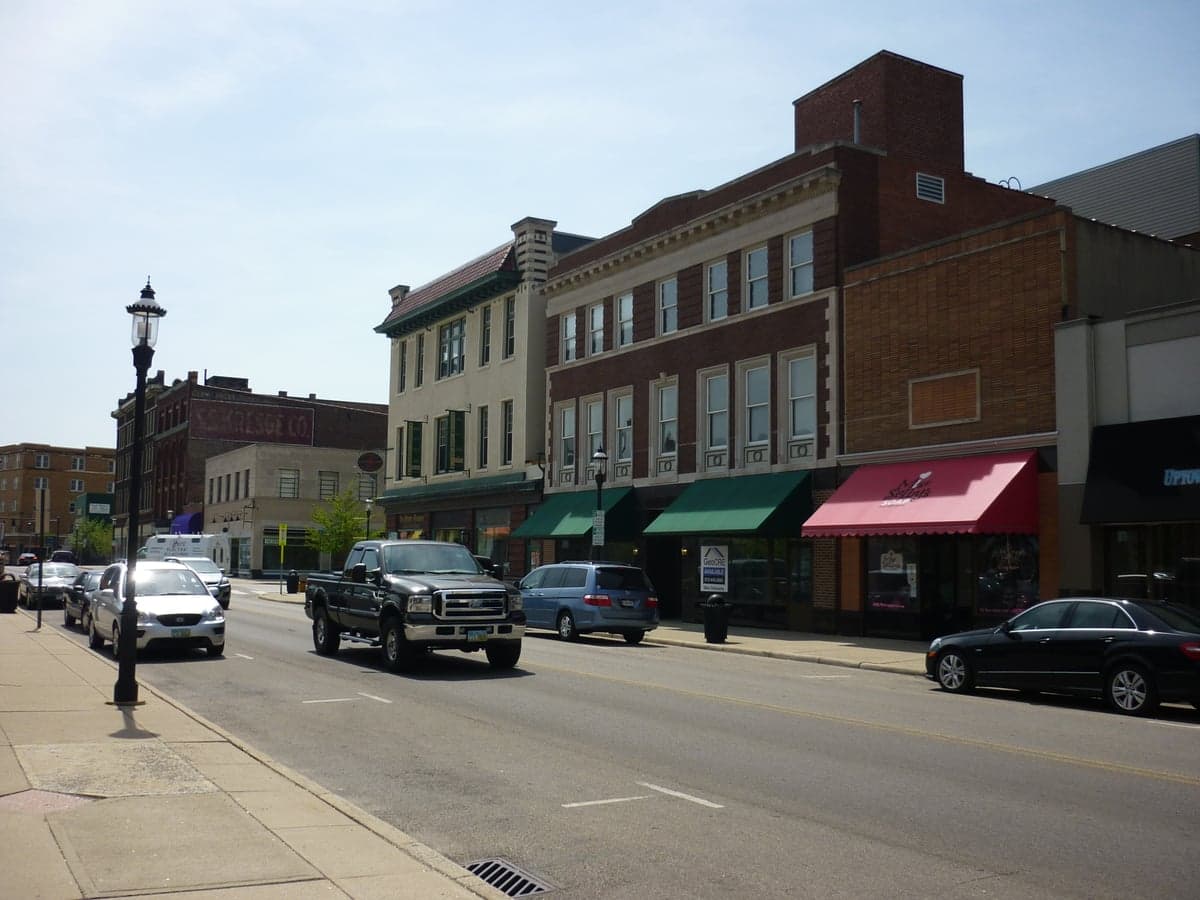
Photo: Wikipedia
Quality of Life in Middletown, OH
A high quality of life with strong walkability, manageable living costs, healthy neighborhood signals, and solid amenity access.
What does Quality of Life tell us?
Quality of Life blends cost of living, nearby amenities, socioeconomic signals, and neighborhood character. City-level scores represent the whole municipality; individual neighborhoods can differ.
What does this tell us?
Quality of Life blends cost of living, nearby amenities, socioeconomic signals, and neighborhood character. City-level scores represent the whole municipality; individual neighborhoods can differ.
Cost of Living
29% below national average
The Real Cost of Living in Middletown, OH for 2026
| Tier | Individual | Family (4) |
|---|---|---|
| Survival | $16k | $29k |
| Comfortable | $29k | $42k |
| Luxury | $93k+ | $143k+ |
| Elite (Top 5%) | $109k+ | $169k+ |
130%
The Area Signal
A metric tracking the socioeconomic signals of the area.
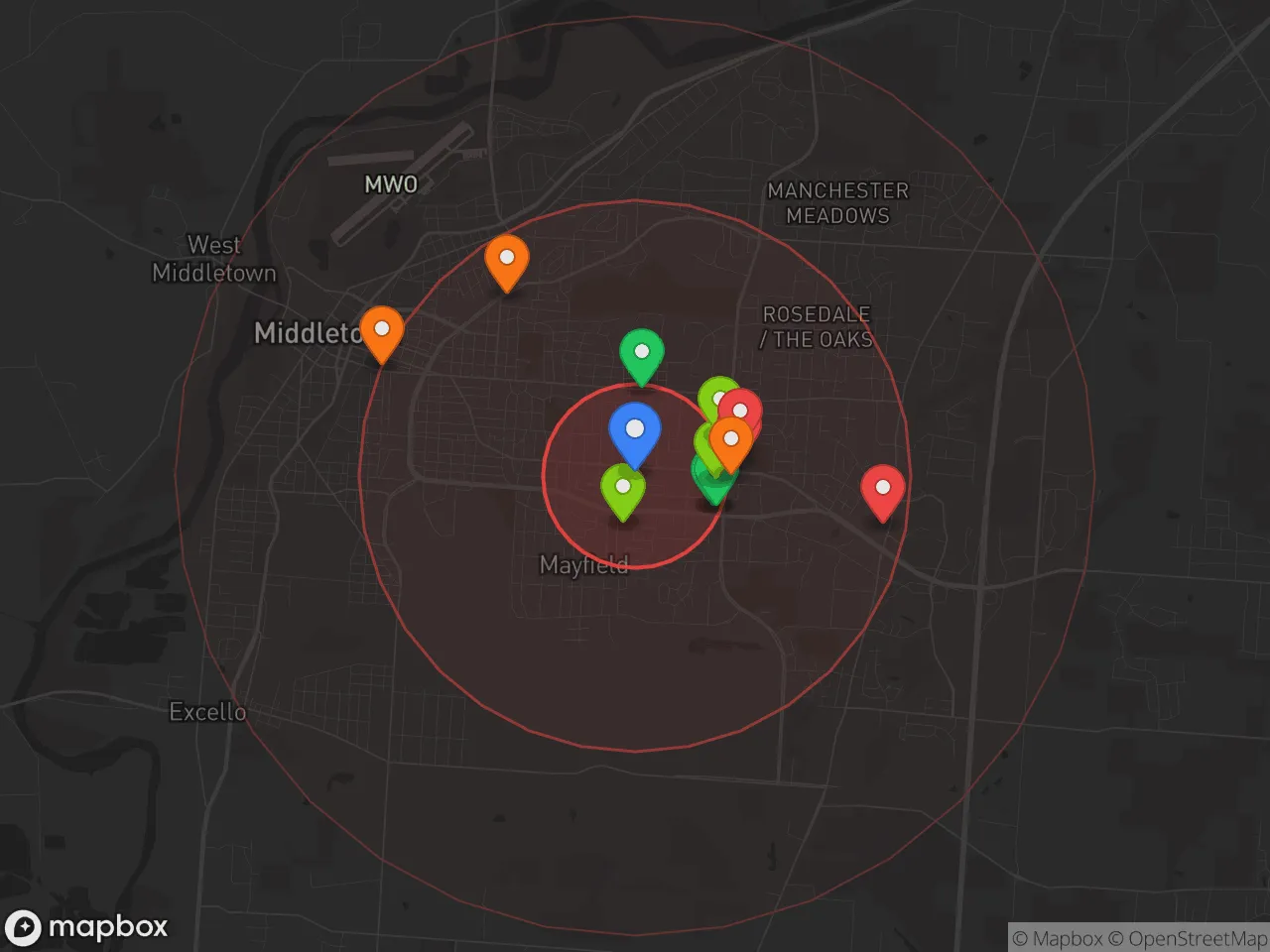
Hobbies
Explore the areaGroceries
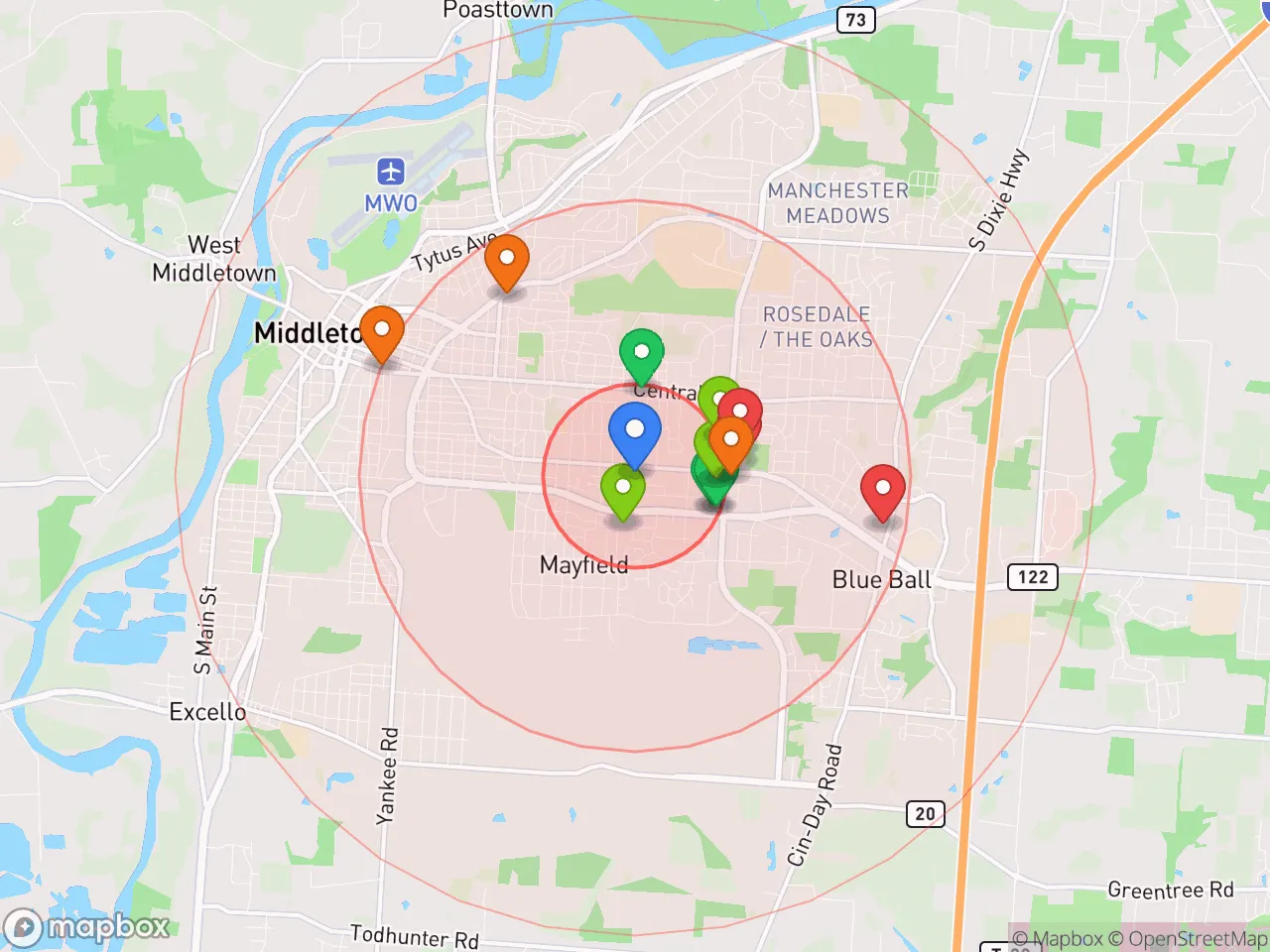
6 within 10 miles
Gas
20 within 10 miles
Hospital
20 within 20 miles
Airport
John Glenn Columbus International Airport
Post Office
USPS — Middletown, OH
Critical Amenities
Quality-of-Life Analysis
Middletown, Ohio, offers a notably lower cost of living than the national average, making it an attractive option for budget-conscious families, first-time homebuyers, and retirees seeking to stretch their dollars. With a cost of living index of 71 (100 = U.S. average), the city is significantly more affordable than nearby Cincinnati (index ~90) or Dayton (index ~85). The median home value sits at $148,300, and the median rent is $974, both well below state and national medians. This affordability gap is a primary driver for newcomers, particularly those relocating from higher-cost regions like the Northeast or West Coast.
How housing costs and affordability compare to Cincinnati and Dayton
Middletown’s housing market is a standout feature for quality of life. The median home value of $148,300 is roughly 40% lower than the Cincinnati metro median and about 30% lower than Dayton’s. Renters also benefit: the median rent of $974 is approximately $200–$300 less per month than comparable units in Cincinnati’s northern suburbs. The average commute time of 23.7 minutes is manageable and shorter than the national average of 26 minutes, allowing residents to access jobs in both the Cincinnati and Dayton metro areas without excessive travel. For those working in manufacturing, logistics, or healthcare—major sectors in the region—this commute is a practical advantage.
Schools, parks, and daily life for families and professionals
Daily life in Middletown centers on a mix of local amenities and proximity to larger urban hubs. The city is served by Middletown City Schools, which includes Middletown High School and several elementary and middle schools. For higher education, Miami University in Oxford is a 20-minute drive, and Cincinnati State Technical and Community College has a Middletown campus. Parks like Smith Park (with a lake, trails, and sports fields) and the Middletown Sportsmen’s Club provide outdoor recreation. The city’s historic downtown has seen revitalization efforts, including the Middletown Arts Center and the South Main Street corridor, which hosts local shops and eateries. For daily errands, residents have access to major grocery chains, a Walmart Supercenter, and a Kroger. The rhythm of life is slower than in Cincinnati or Dayton, with less traffic and a stronger sense of community, though nightlife and high-end dining options are limited.
Who thrives in Middletown? The city is best suited for budget-conscious families, retirees on fixed incomes, and remote workers who value low housing costs and a short commute. Young professionals may find the social scene limited, but those employed in manufacturing (e.g., AK Steel), logistics (e.g., Amazon fulfillment centers nearby), or healthcare (e.g., Atrium Medical Center) will appreciate the affordability and proximity to work. Retirees benefit from the low cost of living and access to medical facilities, while families can take advantage of the parks and lower crime rates compared to some inner-ring suburbs. However, those seeking vibrant nightlife, diverse dining, or top-tier public schools may prefer to look toward Cincinnati’s northern suburbs like Mason or West Chester. Overall, Middletown offers a solid, affordable foundation for a stable, lower-stress lifestyle.

Crime in Middletown, OH
Lower crime rates than 88% of comparable U.S. locations.
Violent CrimeViolent Crime Analysis
Property CrimeProperty Crime Analysis
Crime Analysis
Middletown, Ohio, reports a violent crime rate of 77.9 per 100,000 residents and a property crime rate of 914.2 per 100,000, placing it in a complex safety landscape shaped by its position within the Cincinnati metropolitan area. While the violent crime figure is notably lower than both the Ohio state average and the national median, the property crime rate exceeds national benchmarks, indicating that theft and burglary are more pressing concerns for residents. The city’s proximity to a large, liberal-leaning metro area introduces additional considerations, as progressive prosecutorial policies in surrounding jurisdictions can influence regional crime patterns and recidivism rates.
Crime in context
Middletown’s violent crime rate of 77.9 per 100,000 is roughly 75% lower than the national average of 380 per 100,000 and significantly below Ohio’s statewide rate of approximately 290 per 100,000. This positions Middletown as a comparatively safe city for violent offenses like homicide, assault, and robbery. However, the property crime rate of 914.2 per 100,000 exceeds the national average of about 1,954 per 100,000 but remains below the Ohio average of roughly 1,600 per 100,000. The disparity between low violent crime and elevated property crime is typical of mid-sized Midwestern cities, but the influence of the broader Cincinnati metro area’s justice system cannot be ignored. Butler County, where Middletown is located, has historically elected conservative prosecutors, but the city’s proximity to Hamilton County (Cincinnati) means that regional crime trends—including those driven by lenient sentencing in progressive jurisdictions—can spill over into Middletown’s borders.
What residents experience
For daily life in Middletown, the low violent crime rate means that random acts of violence are uncommon, and most residents feel safe walking in their neighborhoods during daylight hours. Property crime, however, is a tangible concern: vehicle break-ins, package theft, and residential burglaries are the most frequently reported incidents. The city’s police department has responded with targeted patrols and community watch programs, but the effectiveness of these efforts is partially undermined by regional factors. Progressive district attorneys in nearby Hamilton County have adopted policies that reduce cash bail and decline to prosecute certain low-level property offenses, which critics argue emboldens repeat offenders who may travel to Middletown to commit crimes. This dynamic means that while Middletown’s own law enforcement is proactive, the broader justice system’s leniency can create a revolving door for criminals.
Neighborhood-level variation is significant. Areas west of Interstate 75, particularly around the downtown core and near the Great Miami River, report higher property crime rates than the eastern residential neighborhoods like those near Smith Park or the Manchester area. Newer subdivisions along the southern edge of the city, closer to the Monroe border, tend to have the lowest incident rates. Prospective residents should consult the Middletown Police Department’s online crime map and consider visiting neighborhoods at different times of day to gauge real-world conditions. The city’s overall safety profile is favorable for violent crime, but the property crime risk—exacerbated by regional progressive justice policies—requires vigilance and practical precautions like secure parking and home security systems.
* Values derived from national, state, county, city and local statistics and may differ in a specific area. Last updated: 2026-04-21T20:22:49.000Z
Narrative content on this page is AI-generated and may contain mistakes. Verify any details that matter before acting on them.
ReloMaps may earn a commission from affiliate links at no extra cost to you.

