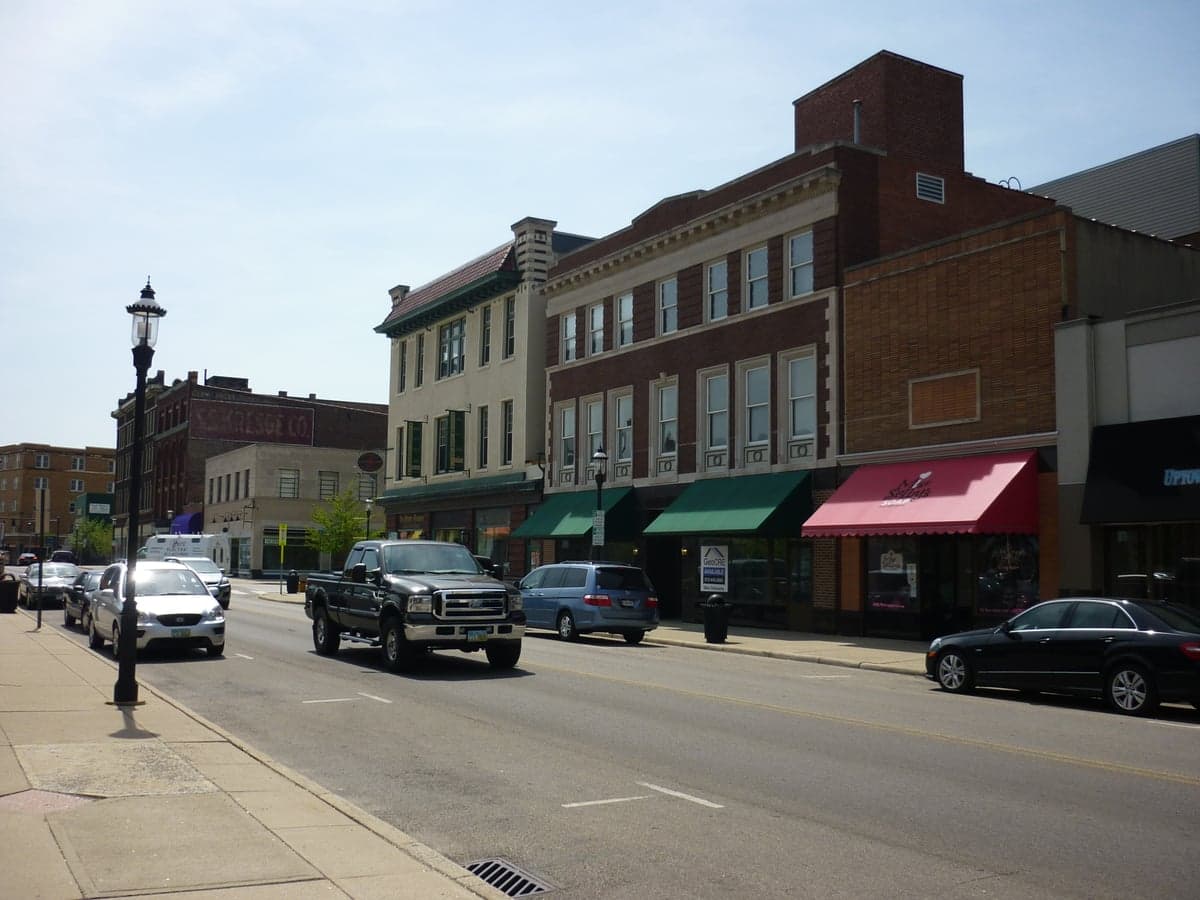
Photo: Wikipedia
Political ClimatePolitical Climate in Middletown, OH
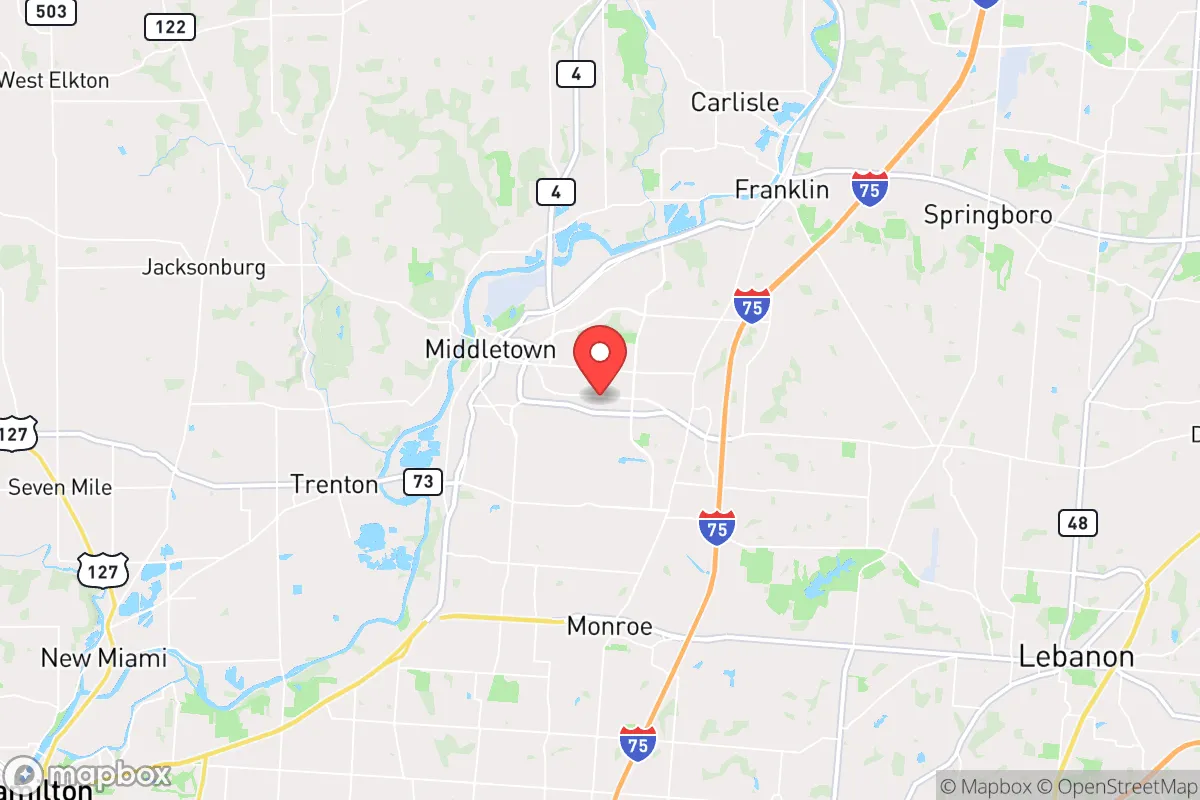
District shown is the primary district for this city’s centroid. Cities may span multiple districts.
Local Political AnalysisPolitical Analysis of Middletown, OH
Middletown, Ohio, has long been a solidly conservative community, and that hasn't changed much—the Cook PVI of R+12 tells you all you need to know about the baseline. You can feel it in the air at the local diners and at the high school football games; this is a place where folks still believe in personal responsibility and keeping the government out of your business. But I've lived here long enough to see the winds shifting, and while the numbers still lean red, there's a real unease about how fast things are changing, especially with outside money and influence creeping into local elections.
How it compares
Drive 15 minutes south to Cincinnati, and you're in a different world—Hamilton County has been trending blue for years, with a lot of progressive energy downtown and in the suburbs like Oakley and Hyde Park. Up north, Dayton is its own beast, but it's also leaning left, especially around the university. Middletown sits right in the middle, and we've always been the buffer zone, the place where people move to get away from the city taxes and the overreach. Compare us to a place like West Chester or Liberty Township, which are also conservative but have a more polished, corporate feel. Here in Middletown, it's grittier, more blue-collar, and the politics reflect that—less about country club Republicans and more about "leave me alone and let me work." The contrast with Oxford, home to Miami University, is especially stark; that town is a liberal bubble where you see a lot of "coexist" bumper stickers and talk about sustainability mandates. We don't have that here, and most of us want to keep it that way.
What this means for residents
For the average person living here, the political climate means you can generally expect lower taxes and fewer regulations than in the big cities. You won't see the kind of zoning fights or business-killing ordinances that plague places like Columbus or Cleveland. But there's a growing concern, and I hear it from neighbors all the time, about the school board and city council getting pushed by outside groups to adopt "equity" policies or DEI training for city employees. That's the kind of government overreach that rubs people the wrong way. We've also seen a push for more bike lanes and "complete streets" projects that feel like a solution in search of a problem—most folks here drive trucks or SUVs, and we don't need the city telling us how to get around. The real worry is that as the state continues to grow, Middletown might get swept up in the same progressive trends that have turned places like Columbus into a bureaucratic nightmare. For now, the R+12 rating gives us some breathing room, but it's not a guarantee.
Culturally, Middletown still holds onto a lot of the old-school values that made the Midwest what it is: church on Sunday, family dinner, and a general distrust of politicians who promise to fix everything. You'll see a lot of Trump flags and "Don't Tread on Me" stickers on trucks, and the local gun culture is strong—people take the Second Amendment seriously here, and any talk of red flag laws or waiting periods gets met with a hard no. The biggest policy distinction is that we've managed to keep most of the woke nonsense out of the schools, at least for now. The curriculum is still focused on reading, writing, and arithmetic, not critical race theory or gender ideology. But I can't lie—I watch the school board meetings online, and every year there's a new fight to keep that stuff out. It's exhausting, but it's the price of living in a place that still believes in freedom. If you're looking for a community that respects your right to live your life without a government checklist, Middletown is still that place. Just keep your eyes open, because the pressure is always there to change what makes us who we are.

State Political ClimatePolitical Climate in Ohio
State Political AnalysisPolitical Environment in the State
Ohio has long been the quintessential bellwether state, but over the past decade it has shifted from a pure purple battleground to a solidly red-leaning state, with Republicans controlling every statewide elected office and both chambers of the legislature. The state voted for Donald Trump by 8 points in 2020 and by 11 points in 2024, a dramatic rightward swing from its 2012 status as a true toss-up. This trajectory reflects a deep cultural and economic realignment, where the old manufacturing-heavy, union-stronghold counties have been replaced by a coalition of exurban, rural, and working-class voters who prioritize economic nationalism and cultural conservatism.
Urban vs. rural divide
The political map of Ohio is a stark study in contrasts. The three major metros—Cleveland, Columbus, and Cincinnati—anchor the Democratic vote, but their influence is shrinking relative to the rest of the state. Cuyahoga County (Cleveland) still delivers massive Democratic margins, but its population has declined for decades, while fast-growing suburban counties like Delaware (north of Columbus) and Warren (north of Cincinnati) have flipped from purple to deep red. The real story is in the exurbs and rural areas: counties like Mercer, Auglaize, and Holmes in the west regularly vote 75-80% Republican, while Appalachian counties in the southeast—once reliably Democratic—have swung hard right, with places like Meigs and Monroe flipping by 30+ points since 2012. The I-71 corridor from Cincinnati to Cleveland remains the Democratic spine, but the rest of the state is now a Republican stronghold. Even Columbus’s Franklin County, once a swing county, is now reliably blue but surrounded by a sea of red that grows with every election cycle.
Policy environment
Ohio’s policy environment is a mixed bag for conservatives. On the plus side, the state has a flat income tax rate of 3.5% (down from a progressive top rate of nearly 5% a decade ago), no estate tax, and a right-to-work law that was passed in 2011 but repealed by voters in a 2011 referendum—though the practical effect of that repeal has been minimal as union membership continues to decline. The state has a Republican supermajority that has passed permitless carry (Constitutional Carry) in 2022, a six-week abortion ban (which was later put on hold by a 2023 voter referendum enshrining abortion rights in the state constitution), and a Parents’ Bill of Rights that requires schools to notify parents of any changes to a student’s health or well-being. However, the 2023 abortion referendum—Issue 1—was a major setback for conservatives, as it passed with 57% of the vote, overriding the legislature’s six-week ban and creating a constitutional right to abortion up to fetal viability. This has energized the pro-life movement to focus on local school board races and municipal ordinances. On election integrity, Ohio has voter ID laws (requiring a photo ID for in-person voting) and automatic voter registration, but the state has not adopted the more aggressive election reforms seen in states like Georgia or Texas.
Trajectory & freedom
Ohio’s trajectory on personal freedom is a tale of two trends. On gun rights, the state has moved decisively toward liberty: Constitutional Carry passed in 2022, and the legislature has preempted local gun ordinances, meaning cities like Columbus and Cleveland cannot enact their own bans on assault weapons or magazine capacity. On parental rights, the 2023 Parents’ Bill of Rights gives parents the ability to opt their children out of any curriculum they find objectionable and requires schools to get parental consent before administering any health survey. However, the 2023 abortion referendum was a clear expansion of government overreach from a conservative perspective, as it removed the legislature’s ability to regulate abortion at all—a loss of democratic control that many conservatives see as a judicial power grab. On property rights, Ohio has not passed a statewide ban on local rent control, but the legislature has considered it. The state’s energy policy is a bright spot: Ohio has become a major producer of natural gas from the Utica Shale, and the legislature has resisted carbon cap-and-trade schemes, keeping energy costs low. The biggest looming threat to freedom is the potential for a state income tax increase to fund the $1.5 billion school funding formula overhaul passed in 2021, which some conservatives worry will lead to higher taxes down the road.
Civil unrest & political movements
Ohio has seen its share of political flashpoints. The 2020 Black Lives Matter protests in Columbus and Cleveland were large but largely peaceful, though the state did see some property damage and looting in downtown Columbus. The most significant recent unrest was the 2023 East Palestine train derailment, which sparked a populist backlash against both Norfolk Southern and the federal government, with local residents forming activist groups demanding stricter rail safety regulations—a rare issue that united both left and right against corporate power. On immigration, Ohio is not a border state, but the issue has become a hot-button topic in smaller cities like Springfield and Dayton, where a surge of Haitian immigrants has strained social services and housing. The state has no sanctuary city policies, and the legislature has passed a law requiring local law enforcement to cooperate with ICE. Election integrity remains a live issue: the 2020 election saw Trump’s legal team challenge results in Cuyahoga County over alleged irregularities, though no major fraud was found. The state’s voter ID law, passed in 2023, was a direct response to those concerns. On the far right, the Ohio Liberty Coalition and other grassroots groups have become influential in local GOP primaries, pushing for school board candidates who oppose critical race theory and mask mandates.
Projection
Over the next 5-10 years, Ohio is likely to become even more Republican, driven by two demographic trends: the continued out-migration of young, college-educated voters from rural areas to Columbus and the suburbs, and the in-migration of conservative retirees from states like California and New York who are drawn to Ohio’s low cost of living and gun-friendly laws. The state’s population is aging and becoming whiter, which favors the GOP. However, the 2023 abortion referendum showed that the GOP’s cultural conservatism has limits—moderate suburban women in places like Delaware County and Warren County are willing to vote for Republicans on taxes and crime but will break for Democrats on abortion rights. This means the legislature will likely avoid further abortion restrictions and focus on economic issues like tax cuts and school choice. The biggest wildcard is the state’s energy transition: if the Utica Shale boom continues, Ohio will remain a low-tax, low-regulation haven; if the federal government pushes a green energy agenda, the state could see a backlash that further entrenches conservative politics. For a new resident, the bottom line is that Ohio is a state where conservative values are ascendant, but where the culture war is fought at the local level—school boards, city councils, and county commissions—rather than at the statehouse.
For a conservative individual or family considering relocation, Ohio offers a strong alignment with traditional values on gun rights, parental control in education, and low taxes. The state is not a libertarian paradise—the income tax, while flat, is still higher than in Texas or Florida, and the 2023 abortion referendum was a clear loss for the pro-life movement. But the overall trajectory is positive: the legislature is reliably conservative, the courts are increasingly so, and the cultural momentum is on the side of traditional values. The key is to choose your location carefully—stick to the exurbs and rural counties where the political climate matches your values, and avoid the urban cores where progressive policies still hold sway. Ohio is a state where you can live free, raise a family, and see your values reflected in your local government—as long as you pick the right zip code.
* Values derived from national, state, county, city and local statistics and may differ in a specific area. Last updated: 2026-04-21T20:22:49.000Z
Narrative content on this page is AI-generated and may contain mistakes. Verify any details that matter before acting on them.
ReloMaps may earn a commission from affiliate links at no extra cost to you.

