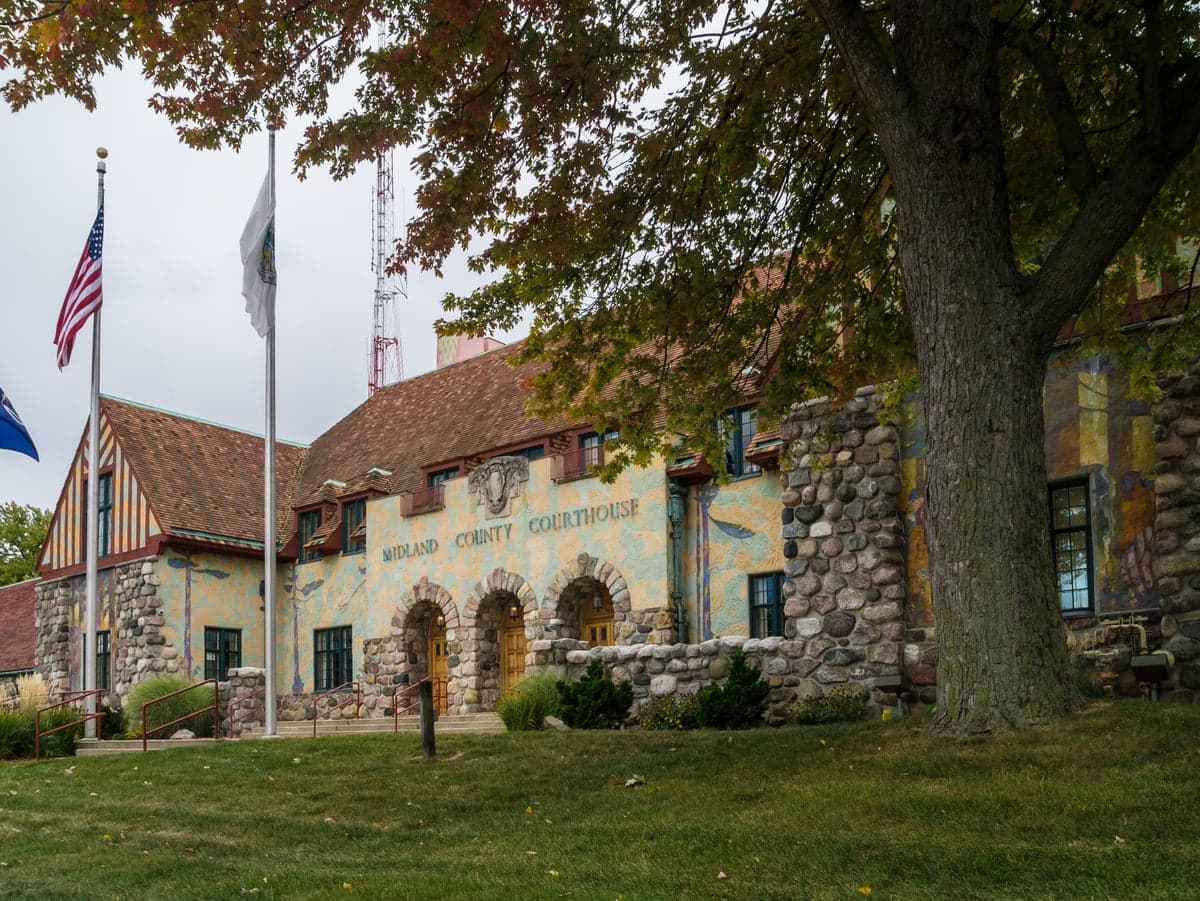
Photo: Wikipedia
Political ClimatePolitical Climate in Midland, MI
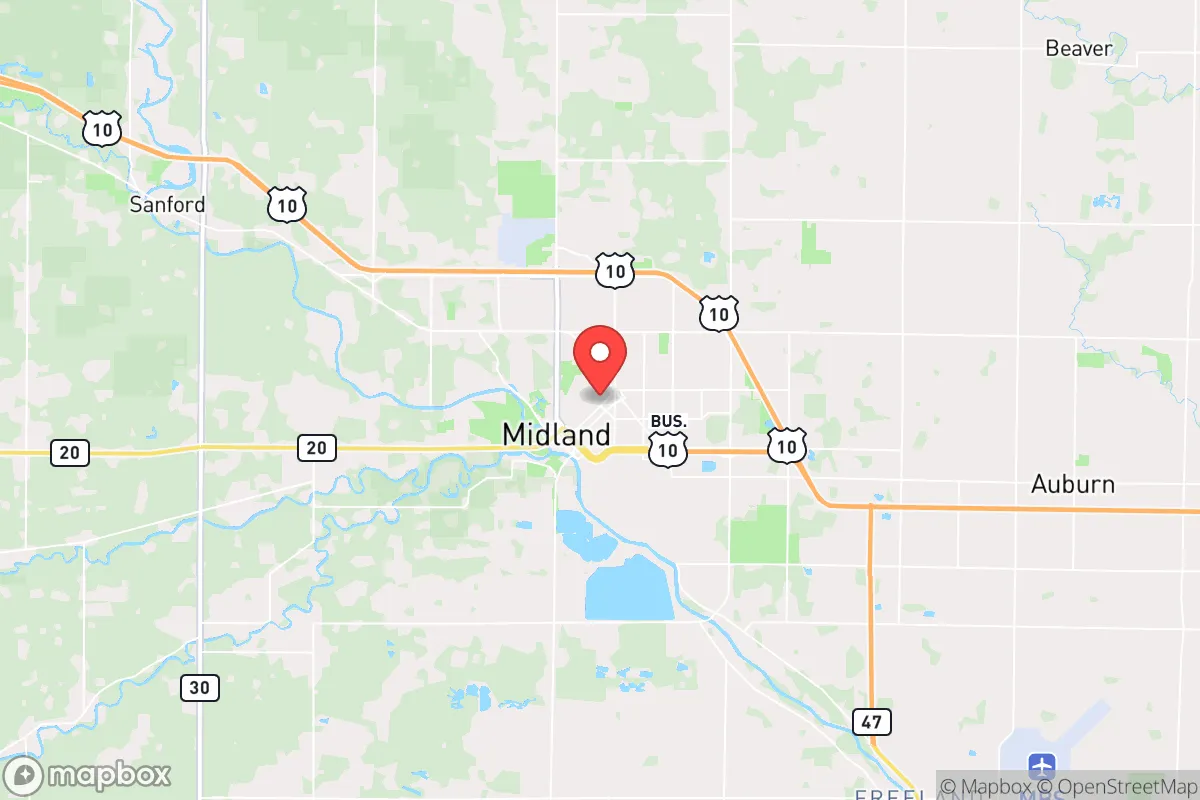
District shown is the primary district for this city’s centroid. Cities may span multiple districts.
Local Political AnalysisPolitical Analysis of Midland, MI
Midland, Michigan, has long been a place where conservative values run deep, but the political landscape here is more nuanced than you might expect from a city that’s home to a major chemical company. The Cook PVI rating of R+1 tells you it’s a lean-Republican district, but that number masks a real tug-of-war happening on the ground. For decades, Midland was reliably red—think of it as the kind of town where folks wave the flag, go to church on Sunday, and expect government to stay out of their business. Lately, though, you’re seeing a slow creep of progressive influence, especially from the university crowd and transplants from places like Ann Arbor or Lansing. It’s not a full-on shift yet, but the trajectory is something to keep an eye on if you value personal freedoms and limited government.
How it compares
If you drive 20 minutes south to Saginaw, you’ll hit a city that’s been trending blue for years—a stark contrast to Midland’s more measured pace. Head north to Bay City, and you’ll find a similar story, with union-heavy politics and a stronger Democratic base. Midland sits right in the middle, acting as a kind of conservative anchor in the Tri-Cities region. Surrounding towns like Sanford and Coleman lean even more red, with folks who are dead-set against any kind of government overreach into their lives. The real contrast, though, is with Ann Arbor, about 90 minutes south. That’s a whole different world—progressive policies on everything from zoning to taxes. Midland residents tend to look at that and shake their heads, preferring a hands-off approach where local control and personal responsibility still mean something.
What this means for residents
For someone living here, the political climate directly affects your day-to-day freedoms. Right now, Midland still feels like a place where you can speak your mind without getting canceled, and where local government isn’t breathing down your neck about every little thing. But there’s been a noticeable push in recent years—things like zoning changes that favor denser development, or school board meetings where progressive curriculum ideas get floated. These aren’t full-blown policies yet, but they’re warning signs. If you’re the kind of person who worries about government overreach, you’ll want to stay engaged. The long-term trend is concerning: as more people move in from blue areas, the pressure to adopt their policies grows. For now, though, you can still enjoy low property taxes relative to the rest of the state, and a local culture that respects the Second Amendment and individual choice.
One thing that sets Midland apart is its unique blend of industry and tradition. Dow Inc. is the big employer here, and while the company itself has made some corporate DEI moves that raise eyebrows, the local workforce is still largely made up of folks who believe in hard work and self-reliance. You’ll also find a strong network of churches and civic groups that push back against any progressive overreach. Culturally, Midland is a place where the Fourth of July parade is a big deal, and where people still wave from their porches. The policy distinctions are subtle but real: the city council has resisted some of the more aggressive environmental mandates you see in places like Ann Arbor, and there’s a general skepticism of state-level mandates on things like energy or land use. If you’re looking for a community that values freedom and common sense, Midland still delivers—but you’ve got to keep your guard up to make sure it stays that way.

State Political ClimatePolitical Climate in Michigan
State Political AnalysisPolitical Environment in the State
Michigan has shifted from a reliably blue state to a genuine battleground over the past decade, but the trend line for conservatives is concerning. The state went for Trump in 2016 by less than 11,000 votes, flipped to Biden in 2020 by about 154,000 votes, and then saw Trump reclaim it in 2024 by roughly 80,000 votes—a sign of deep volatility rather than a settled conservative realignment. The dominant coalition remains a mix of union labor, suburban moderates, and Detroit’s heavy Democratic machine, but the GOP has made inroads in exurbs and rural areas, particularly in West Michigan and the Thumb region.
Urban vs. rural divide
The political map is a tale of three Michigans. Detroit and its inner-ring suburbs (like Southfield and Dearborn) are overwhelmingly Democratic, powered by union households and a large Black population that reliably votes 85-90% blue. Grand Rapids and its surrounding Kent County have been trending leftward—Biden won Kent County in 2020 after Trump won it in 2016—driven by a growing professional class and a moderate Republican base that’s increasingly uncomfortable with the national party. Meanwhile, rural northern Michigan (places like Traverse City’s Leelanau County, which flipped blue in 2020) and the Thumb region (Huron, Sanilac counties) are deeply red, with Trump winning some precincts by 40+ points. The real battleground is the suburban ring around Detroit—Macomb County (Warren, Sterling Heights) is the classic “Reagan Democrat” territory that swung hard for Trump in 2016 and 2024 but remains volatile. Oakland County, once a GOP stronghold, is now reliably blue at the presidential level, a shift that’s been decisive in statewide races.
Policy environment
Michigan’s policy landscape is a mixed bag that leans progressive on most fronts. The state has a flat income tax rate of 4.25%, which is moderate by national standards, but property taxes can be high—especially in affluent suburbs like Birmingham or Ann Arbor. The regulatory posture is generally business-friendly for manufacturing but hostile to energy independence: the state has a renewable portfolio standard targeting 50% clean energy by 2030, and the Democratic legislature passed a package in 2023 that effectively bans new natural gas hookups in some areas. Education policy is a flashpoint: Detroit Public Schools remain under state oversight after years of dysfunction, while charter schools are plentiful but face increasing regulation from the Democratic-controlled legislature. Healthcare is dominated by the Healthy Michigan Plan (Medicaid expansion), which covers over 1 million residents. Election laws are a concern for conservatives: Michigan now has no-excuse absentee voting, same-day voter registration, and nine days of early voting, all passed via a 2022 ballot initiative (Proposal 2) that Republicans argue opens the door to fraud. The state also has a Democratic trifecta (governor, house, senate) as of 2023, which has pushed through a repeal of right-to-work laws and expanded LGBT nondiscrimination protections.
Trajectory & freedom
Michigan is becoming less free for conservatives by nearly every measure. The most glaring example is gun rights: in 2023, Governor Gretchen Whitmer signed a package of laws requiring universal background checks, safe storage requirements, and a 24-hour waiting period for long guns—a sharp reversal from the state’s historically permissive gun culture. Parental rights took a hit with the repeal of the 2012 right-to-work law, which now forces teachers in unionized districts to pay dues or fees, reducing parental choice in education. On medical autonomy, Michigan legalized recreational marijuana in 2018 via ballot initiative, but the state’s COVID-19 mandates were among the strictest in the Midwest—including a 2020 stay-at-home order that lasted months and a vaccine mandate for healthcare workers that was only lifted in 2023. Property rights are under pressure from the state’s aggressive environmental regulations, particularly around wetlands and shoreline development on the Great Lakes. The tax burden is rising: the state’s gas tax was increased by 45 cents per gallon in 2019, and the corporate income tax rate was raised from 6% to 6.5% in 2023. The only bright spot is school choice: Michigan still has a robust charter school sector, though the legislature is considering new oversight rules that could throttle growth.
Civil unrest & political movements
Michigan has been a flashpoint for political activism on both sides. The 2020 Whitmer kidnapping plot—in which a militia group allegedly planned to kidnap the governor—put the state’s far-right under a national microscope. On the left, Black Lives Matter protests in Detroit and Grand Rapids in 2020 were large but largely peaceful, while the 2020 election integrity controversy saw Trump supporters stage protests at the Detroit TCF Center (now Huntington Place) during ballot counting. The state has a sanctuary city in Ann Arbor, which limits cooperation with federal immigration enforcement, and Detroit has a “welcoming city” ordinance. Immigration politics are less heated than in border states, but the influx of Yemeni and Chaldean communities in Dearborn has created a unique political dynamic—Dearborn voted heavily for Biden in 2020 but swung toward Trump in 2024 over Gaza policy concerns. Election integrity remains a live issue: the 2024 election saw Republican poll challengers in Detroit alleging irregularities, though no major fraud was proven. The “Unlock Michigan” movement, which successfully repealed the governor’s emergency powers in 2022, shows that grassroots conservative activism can still win battles.
Projection
Over the next 5-10 years, Michigan is likely to continue its leftward drift at the state level, even as presidential elections remain competitive. The demographic shift is clear: the Detroit suburbs are getting younger and more diverse, while rural counties are aging and shrinking. In-migration from blue states (Illinois, California) is modest but concentrated in liberal enclaves like Ann Arbor and Traverse City. The Democratic trifecta will likely push through a progressive agenda: expect a statewide rent control law, a public option for health insurance, and further gun control measures like a ban on “assault weapons.” The 2026 gubernatorial race will be critical—if Republicans can win back the governor’s mansion, they might halt the leftward momentum, but the state’s structural advantages for Democrats (union density, urban population) make a full reversal unlikely. For conservatives, the best-case scenario is a stabilization at a purple equilibrium, with the state oscillating between parties every few cycles.
For a conservative moving to Michigan, the bottom line is this: you’ll find pockets of freedom in rural areas and exurbs like Grand Haven or Midland, but the state government is increasingly hostile to your values. Expect higher taxes, more regulations on guns and energy, and a public school system that’s tilting left. If you’re a parent, look into charter schools or homeschooling—they’re still viable options. If you’re single and career-focused, the job market is strong in manufacturing and tech, but the cultural climate in cities like Ann Arbor or Royal Oak will feel like a blue state bubble. Michigan is not a lost cause, but it’s a state where conservatives need to be engaged and vigilant—or risk watching it slide further into progressive governance.
* Values derived from national, state, county, city and local statistics and may differ in a specific area. Last updated: 2026-04-29T21:13:13.000Z
Narrative content on this page is AI-generated and may contain mistakes. Verify any details that matter before acting on them.
ReloMaps may earn a commission from affiliate links at no extra cost to you.

