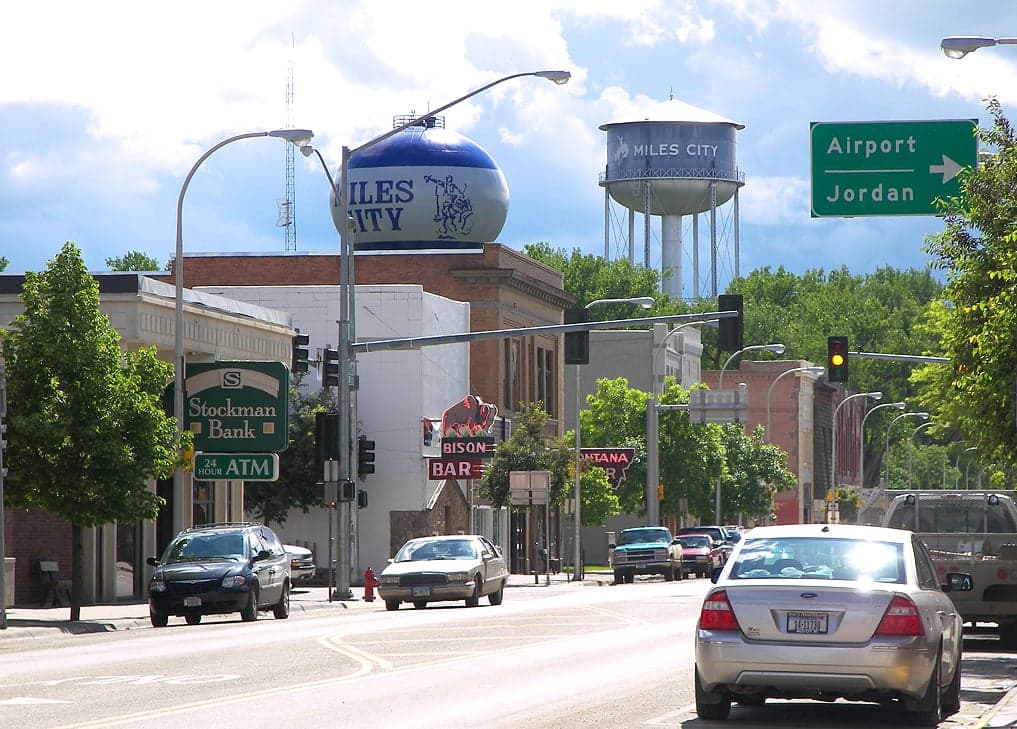
Photo: Wikipedia
Strategic Assessment of Miles City, MT
Workable tactical position. Some exposure to population density or targets, but generally defensible in a crisis.
What does the Strategic Assessment tell us?
Our Strategic Assessment grades tactical survivability of an area. Major population centers, military targets, fallout zones, natural disasters, and border exposure all drive risk — lower exposure means a more defensible position in a crisis.
This is heavily inspired by Joel Skousen's Strategic Relocation book. Highly recommended you checkout the book ($)What does this tell us?
Our Strategic Assessment grades tactical survivability of an area. Major population centers, military targets, fallout zones, natural disasters, and border exposure all drive risk — lower exposure means a more defensible position in a crisis.
This is heavily inspired by Joel Skousen's Strategic Relocation book. Highly recommended you checkout the book ($)Strategic Pillars

Key Distances
Regional Safe Places
Below is our recommended "safe zones" in Montana and the surrounding area based on our strategic heuristics. For most people, it's unrealistic to live in a “safe zone” full-time due to work, family or other personal reasons. They tend to be more rural. However, many of these areas are perfect for second homes and retreat properties that double as a vacation home or even a short-term rental.
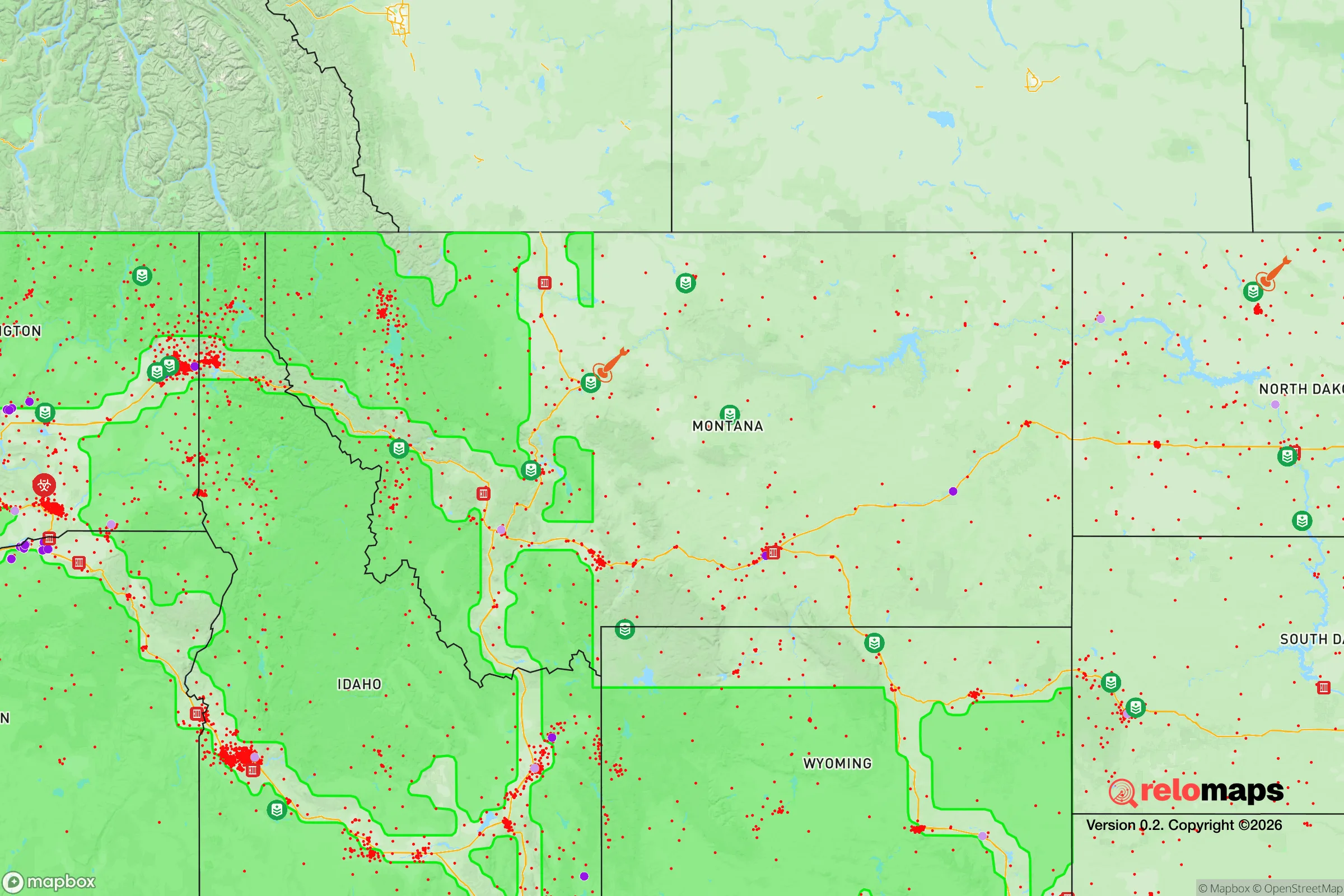


Important Note: For informational purposes only. This does not mean nothing bad ever happens in the green zones. Please use common sense. This is based on public data and modeled with AI. We tried to take a conservative approach but mistakes happen. We update this regularly as new information becomes available.
Solar Generator Recommendations
Backup power matters more here than in safer locations. We've picked three solar generators across budgets and capacity tiers — start with the budget unit if you only need a few essentials, or step up if you want to run a fridge and HVAC for days at a time.

Jackery Portable Power Station Explorer 300
Budget OptionPower on the Go: Weighing only 11 lbs, it's convenient to set up and store with book-sized foldable solar panels

BLUETTI Portable Power Station AC180
Designed for both indoor and outdoor scenarios, AC180 is highly capable as it has a robost capacity and continuous output power.

EF ECOFLOW DELTA Pro Ultra Power Station
Upgraded PickEcoFlow DELTA Pro Ultra is a whole-home energy system designed to grow with your family. Integrated with the Smart Home Panel 2, it scales to meet your evolving energy needs — keeping your home powered, intelligent, and secure through every stage of life.
We earn a commission, at no additional cost to you.
Strategic Assessment Analysis
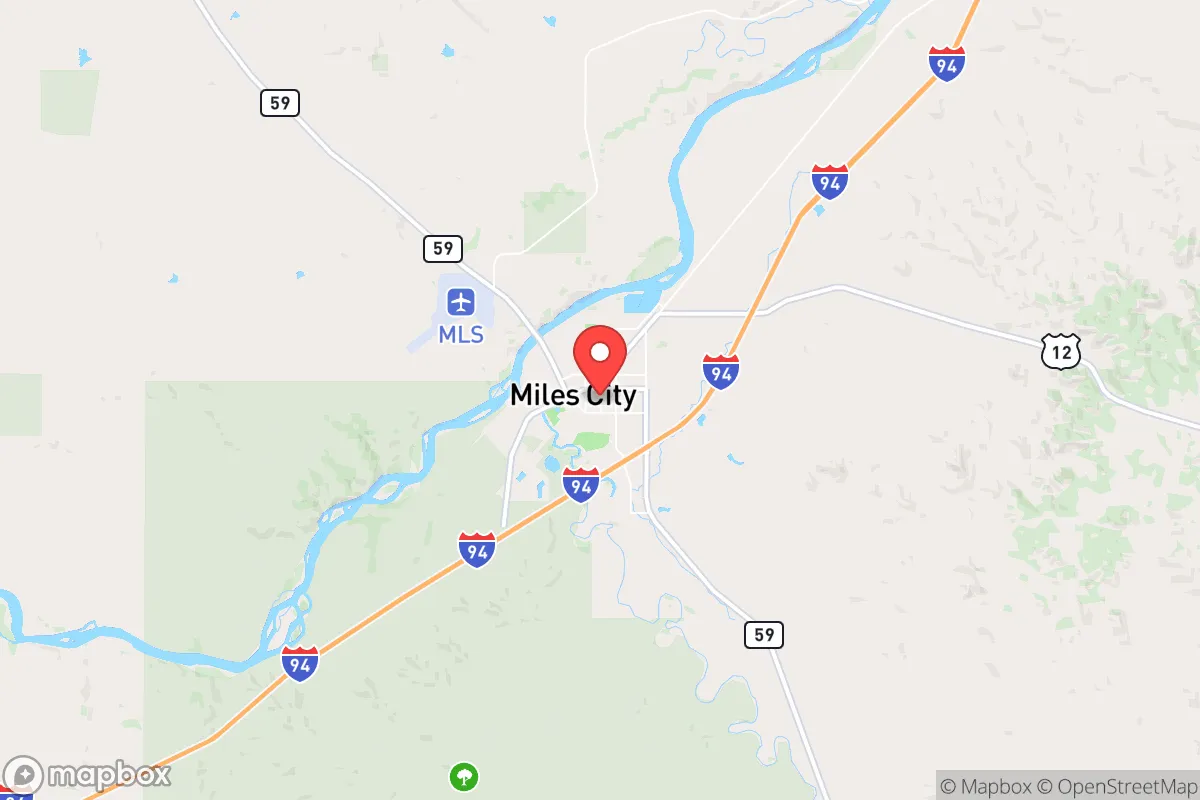
Miles City, Montana, sits in a strategic sweet spot that resilience-minded relocators should study closely. Anchored at the confluence of the Yellowstone and Tongue Rivers in Custer County, this town of roughly 8,000 people offers genuine geographic separation from the chaos corridors of the West Coast, the Eastern Seaboard, and the Front Range. Its location along Interstate 94 and the BNSF Railway mainline provides a lifeline for supply movement without the choke-point vulnerability of a major metro hub. For someone thinking in terms of decades, not just election cycles, Miles City presents a rare combination: it's remote enough to avoid the blast zones and crowd-driven unrest of larger cities, yet connected enough to maintain trade and travel routes when things get tight.
Geographic position and natural advantages for long-term security
Miles City's position in southeastern Montana places it well outside the 500-mile radius of any major strategic target. The nearest cities that would draw a first-strike or civil-unrest scenario—Billings (140 miles west), Bismarck (200 miles east), Rapid City (200 miles south)—are all far enough that fallout patterns and secondary effects from a major event would be significantly diluted by the time they reached Custer County. The area sits on the High Plains at about 2,300 feet elevation, with a semi-arid climate that averages 13 inches of precipitation annually. That's dry enough to avoid the mold and infrastructure rot problems of wetter regions, but the Yellowstone and Tongue Rivers provide a reliable surface water source that doesn't depend on a fragile municipal grid. The surrounding rangeland is open, offering long sightlines and natural defensibility—no dense tree cover to hide threats, but plenty of coulees and buttes for tactical positioning if needed. The local geology includes the Hell Creek Formation, which means accessible groundwater through shallow wells in many areas, a critical advantage when municipal systems fail.
Risks, exposures, and proximity to fallout-relevant landmarks
No location is immune, and Miles City has its own risk profile. The town sits about 90 miles east of the Bull Mountain region, which has seen increased oil and gas activity—pipelines and rail terminals that could become secondary targets or accident sites during a crisis. The BNSF mainline running through town carries hazardous materials, including crude oil from the Bakken fields to the north. A derailment or sabotage event near the Yellowstone crossing could contaminate the river for miles downstream. More broadly, Custer County's population density is roughly 2 people per square mile, which means emergency services are thin. The local hospital, Holy Rosary Healthcare, is a 25-bed critical access facility—adequate for routine care but not for mass casualty events. Law enforcement presence is limited to the Custer County Sheriff's Office and a small Miles City Police Department; state troopers are a 45-minute response from Billings. For the prepper mindset, this means self-reliance isn't optional—it's the baseline assumption. The nearest National Guard armory is in Miles City itself, which could be a stabilizing presence or a target depending on the nature of the unrest. Fallout-wise, the closest significant nuclear infrastructure is the Malmstrom Air Force Base missile fields near Great Falls, 300 miles west—well outside dangerous fallout zones for a single warhead, but a major exchange could send particulate drift eastward depending on wind patterns.
Practical resilience for a relocator: food, water, energy, and defensibility
For someone serious about self-sufficiency, Miles City offers tangible advantages. The Yellowstone River is a perennial, snowmelt-fed water source that flows year-round, even in drought years. Water rights are a real consideration—Montana follows prior appropriation doctrine, so securing a property with senior water rights or a well permit is essential before buying. The growing season is short, roughly 120 days between last and first frost, but the region's agricultural history proves that cold-hardy crops like wheat, barley, alfalfa, and certain vegetables can thrive with proper planning. Local ranchers raise cattle and sheep, and the Miles City Livestock Commission is one of the largest weekly cattle auctions in the region—meaning protein sourcing is built into the local economy. For energy, the area is served by Montana-Dakota Utilities, but grid reliability is a concern during winter storms. Solar potential is good, with over 200 sunny days per year, and wind is abundant—small-scale wind turbines are a viable supplement. Defensibility comes from the open terrain: a rural property with a good well, a propane tank, and a clear field of fire can be made very secure. The town itself has a historic downtown grid that could be barricaded if needed, but most preppers will want to be outside city limits, on at least 20 acres with a creek or river access. The local gun culture is strong—Montana is a constitutional carry state, and Custer County has a sheriff who publicly supports Second Amendment rights. That cultural alignment matters when you're thinking about community trust in a crisis.
The overall strategic picture for a conservative relocator
Miles City isn't a bug-out fantasy—it's a real working town with real infrastructure, real people, and real trade-offs. The winters are harsh, with January averages around 12°F and occasional -40°F wind chills. The economy is driven by agriculture, energy, and government services (the VA hospital and state prison are major employers), so job opportunities for newcomers are limited unless you bring remote work or a trade. But for the conservative-minded relocator who values community cohesion, low crime, and physical distance from the unraveling of the coastal cities, Miles City checks the hard boxes. The 2020 census showed a slight population decline, which means housing is affordable—median home prices hover around $200,000, well below national averages. The local political climate is reliably red; Custer County voted 78% for Trump in 2020, and the culture reflects that: church attendance is high, hunting is a way of life, and neighbors still help neighbors. In a world where supply chains can snap, currencies can wobble, and civil order can fray, Miles City offers a defensible position with real resources and a like-minded population. It's not a fortress—it's a foothold. And for someone thinking strategically about the next 20 years, that might be exactly what you need.

* Values derived from national, state, county, city and local statistics and may differ in a specific area. Last updated: 2026-04-29T21:08:11.000Z
Narrative content on this page is AI-generated and may contain mistakes. Verify any details that matter before acting on them.
ReloMaps may earn a commission from affiliate links at no extra cost to you.

