Photo: Wikipedia
Demographics of Miles City, MT
Affluence Level in Miles City, MT
A middle-class area roughly in line with national averages across income, home values, education, and employment.
People of Miles City, MT
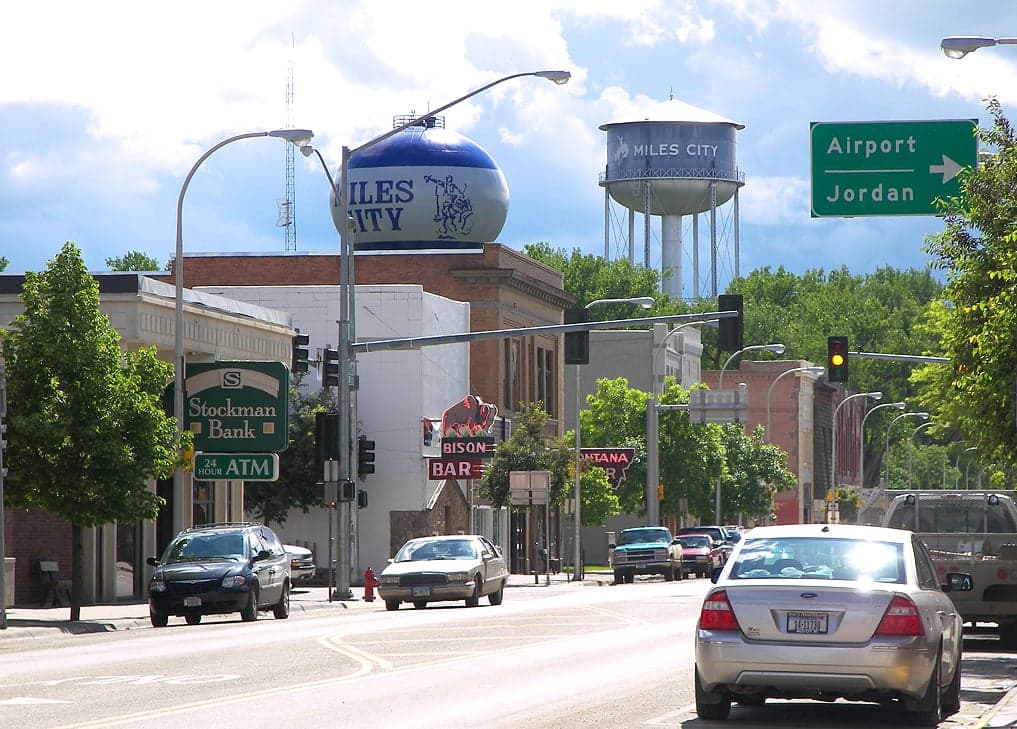
Miles City, Montana, is home to 8,412 residents who form one of the most demographically stable and culturally traditional communities in the state. The population is 88.6% White, with a foreign-born share of just 0.7%, reflecting a city shaped by deep generational roots rather than recent immigration. Its identity is defined by a ranching and railroad heritage, a strong sense of local independence, and a population density of roughly 1,200 people per square mile that gives it a small-town, spread-out feel. For a conservative-leaning audience, Miles City represents a place where community ties are long-standing and demographic change has been minimal for decades.
How the city was settled and grew
Miles City was founded in 1876 as a military outpost, Fort Keogh, established by the U.S. Army to control the Northern Plains after the Battle of the Little Bighorn. The original population was a mix of soldiers, traders, and cattlemen drawn by the open range and the arrival of the Northern Pacific Railroad in 1881. The railroad turned Miles City into a major livestock shipping hub, and the first permanent settlers—primarily of Northern European stock, including German, Irish, and Scandinavian families—built homes in what is now the Historic Downtown District, centered around Main Street and the railroad depot. By the early 1900s, the city's economy was anchored by the Miles City Livestock Commission and the nearby Tongue River, attracting ranchers who settled in the West End and South Side neighborhoods, where larger lots and proximity to grazing land defined the layout. A second wave came during the Great Depression, when drought-driven farm families from the Dust Bowl moved into the North Side and Riverside areas, seeking work in the stockyards and the expanding railroad maintenance yards. These waves established a population that was overwhelmingly White, native-born, and tied to agriculture and transportation—a pattern that persisted through the mid-20th century.
Modern era (post-1965)
After the 1965 Hart-Cellar Act, Miles City saw virtually no immigration-driven demographic change. The foreign-born population remains at 0.7%, and the Hispanic share is just 4.0%, with most Hispanic residents concentrated in the South Side and West End, often working in ranching or meatpacking. The Black population is 0.5%, and East/Southeast Asian communities make up 0.6%, with no Indian subcontinent population recorded. These numbers reflect a city that did not experience the suburbanization or ethnic diversification seen in larger Montana cities like Billings or Bozeman. Instead, domestic in-migration has been limited, with most new residents coming from other parts of rural Montana or the Northern Plains. The Historic Downtown District has seen some reinvestment, but the North Side and Riverside neighborhoods remain predominantly older, White, and working-class, with many homes dating to the 1920s–1950s. The college-educated share is 29.7%, slightly below the national average, reflecting a workforce still heavily oriented toward ranching, energy extraction, and the local hospital and school system rather than white-collar industries.
The future
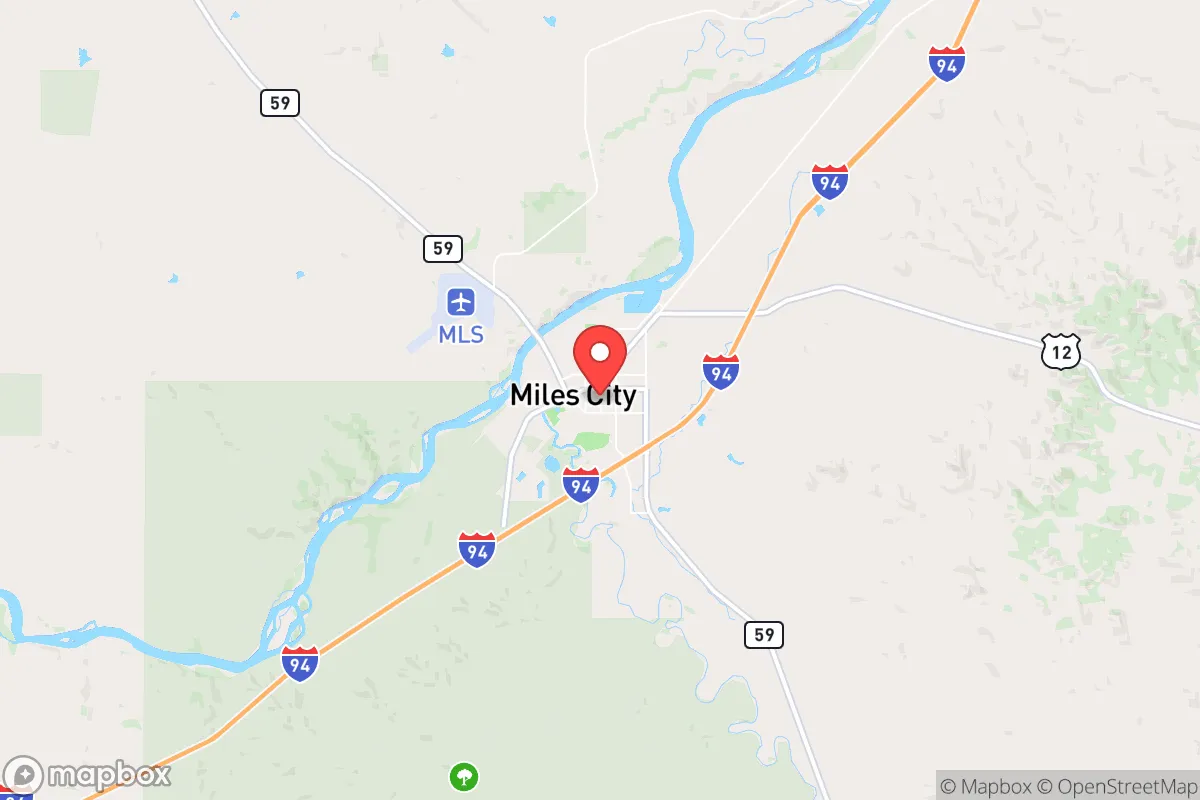
Miles City's population is heading toward gradual decline or stagnation, with the 2020 census showing a drop of roughly 3% from 2010. The city is homogenizing rather than diversifying: the White share has remained above 88% for decades, and the small Hispanic and Asian populations are not growing at rates that would shift the overall composition. Younger residents often leave for college or jobs in Billings (150 miles west) or out of state, and the median age has crept above 40. The West End and South Side may see modest infill from retirees or remote workers seeking lower costs, but the North Side and Riverside neighborhoods are likely to see continued aging and vacancy. No significant immigrant or refugee resettlement programs are active, and the city's economic base—ranching, the prison, and the VA hospital—does not attract large new populations. Over the next 10–20 years, Miles City will likely become older, whiter, and smaller, with little tribalization into ethnic enclaves because the population is already so homogeneous.
For someone moving in now, Miles City is a place where the population is stable to shrinking, culturally uniform, and deeply rooted in ranching and railroad history. It offers a low-crime, low-cost environment with strong community institutions, but little demographic change or growth. New residents should expect to integrate into a community where most families have been here for generations, and where the pace of life remains tied to the land and the seasons rather than urban trends.

* Values derived from national, state, county, city and local statistics and may differ in a specific area. Last updated: 2026-04-29T21:08:11.000Z
Narrative content on this page is AI-generated and may contain mistakes. Verify any details that matter before acting on them.
ReloMaps may earn a commission from affiliate links at no extra cost to you.

