Photo: Wikipedia
Political ClimatePolitical Climate in Miles City, MT
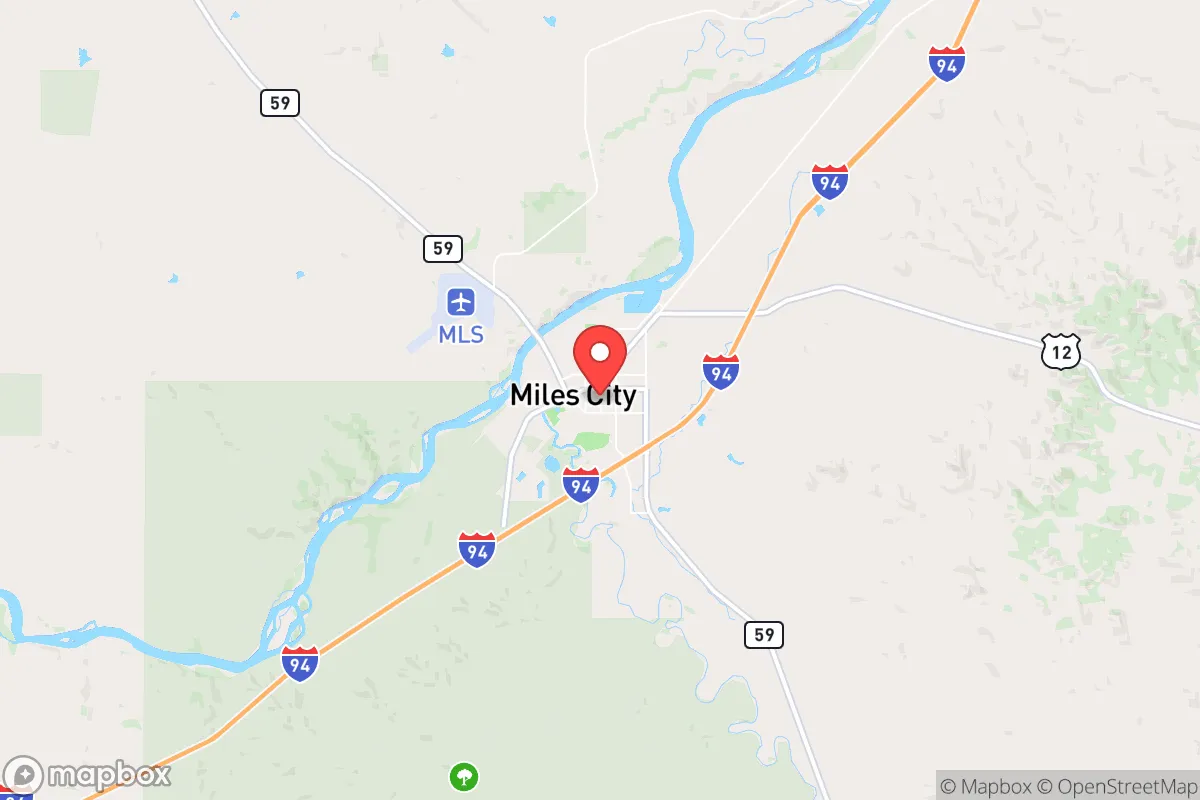
District shown is the primary district for this city’s centroid. Cities may span multiple districts.
Local Political AnalysisPolitical Analysis of Miles City, MT
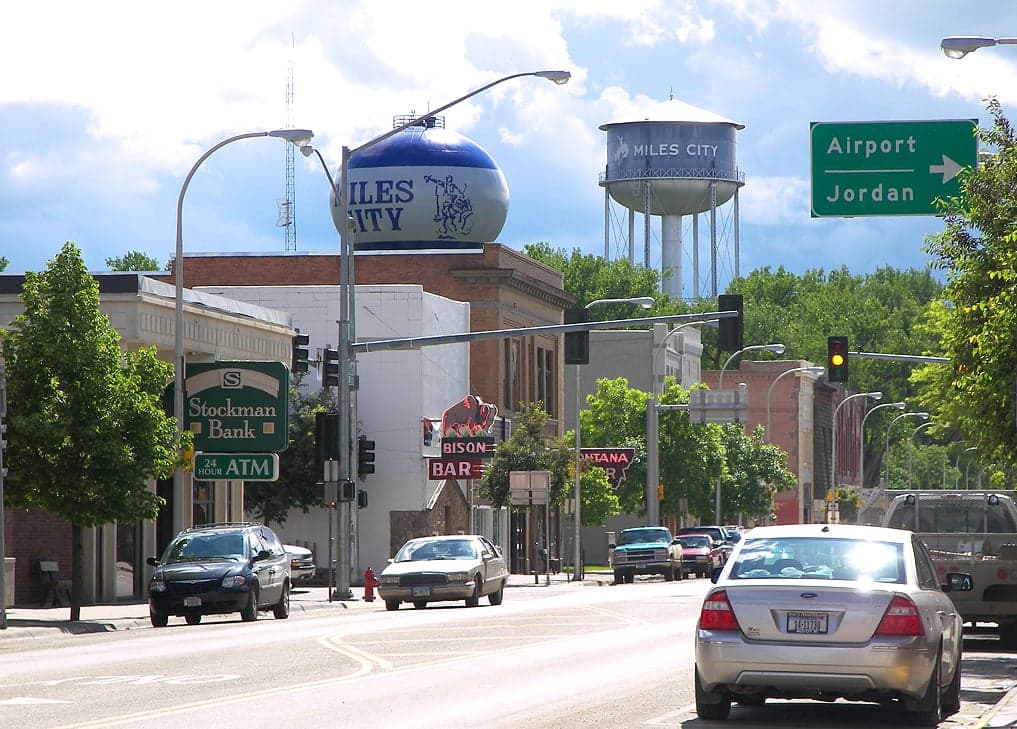
Miles City is about as solidly conservative as they come, and that’s not changing anytime soon. The Cook PVI of R+15 tells you the math, but the real story is in the culture—this is a place where folks still believe in minding their own business and keeping the government out of their lives. You won’t find much appetite for progressive experiments here; the local elections and county commissions consistently reflect a deep skepticism of anything that smells like overreach from Helena or Washington. If anything, the trajectory has been a slow, steady hardening of that stance over the last decade, as national trends push even moderate ranchers and small business owners further to the right.
How it compares
Drive an hour west to Billings, and you’ll feel the difference immediately. Billings has a more mixed political scene—still red overall, but with a noticeable progressive presence in the downtown and near the college. Miles City, by contrast, is a place where the local paper’s letters to the editor still run heavy on Second Amendment rights and property rights. To the east, Glendive is similarly conservative but smaller and even more isolated. The real contrast is with Bozeman or Missoula, which might as well be different countries politically. Here in Miles City, you don’t see the same push for bike lanes, density zoning, or diversity initiatives. It’s a slower, more traditional way of life, and most folks like it that way.
What this means for residents
For anyone who values personal freedom over government convenience, this is a good place to be. You won’t face the same level of regulatory hassle that small business owners in blue states deal with—permits are simpler, taxes are lower, and the county sheriff isn’t interested in enforcing federal overreach on things like land use or gun ownership. That said, the trade-off is that public services are lean. If you’re hoping for robust public transit or a lot of social programs, you’ll be disappointed. But for most residents, that’s the point: they’d rather keep their money and their autonomy than fund programs they don’t trust. The local school board and city council tend to be pragmatic, not ideological, but they’ll push back hard if they sense state or federal mandates infringing on local control.
Culturally, Miles City still holds onto its cowboy and ranching roots, which means a strong emphasis on self-reliance and community mutual aid rather than government solutions. The annual Bucking Horse Sale is a perfect symbol of that—it’s a celebration of independence and grit, not a government-sponsored event. One policy distinction worth noting: the city has resisted adopting some of the more progressive housing and land-use reforms that have popped up in larger Montana towns, keeping zoning simple and property rights strong. Looking ahead, the concern among long-time residents is that as Montana’s population grows and outsiders move in, the political pressure to “modernize” will increase. For now, though, Miles City remains a reliable holdout for conservative values, and most people here intend to keep it that way.

State Political ClimatePolitical Climate in Montana
State Political AnalysisPolitical Environment in the State
Montana has long been a reliably Republican state in presidential elections, voting for the GOP candidate in every contest since 1992, but its political identity is far more complex than a simple red-state label suggests. The state’s dominant coalition is a mix of libertarian-leaning ranchers, conservative small-town residents, and a growing number of out-of-state transplants, creating a dynamic where the rural-urban divide is the central fault line. Over the last 10-20 years, the trajectory has been one of slow but steady polarization: the rural eastern and central counties have hardened their Republican allegiance, while the western mountain towns and the college city of Missoula have become increasingly progressive, making statewide races tighter than the national map would suggest.
Urban vs. rural divide
The political map of Montana is a study in contrasts. The state’s largest city, Billings, anchors the conservative eastern plains and reliably delivers Republican margins, though its growth has brought a slight moderating influence. Missoula, home to the University of Montana, is the state’s progressive stronghold, consistently voting Democratic by double digits and driving much of the left-leaning activism. Bozeman and Gallatin County have been the most dramatic story: once a conservative ranching area, the influx of wealthy out-of-state transplants and tech workers has turned it into a purple-to-blue county, with Democrats now competitive in local races. Helena, the capital, leans Democratic due to its government workforce, while Great Falls and Butte remain working-class Democratic holdovers that have shifted rightward in recent cycles. The rural counties—like McCone, Garfield, and Petroleum—vote Republican by margins of 80% or more, creating a stark urban-rural split that defines every statewide election.
Policy environment
Montana’s policy environment is broadly conservative, with a strong emphasis on limited government and individual liberty. The state has no sales tax, a flat income tax rate of 5.9% (recently reduced from 6.75%), and property taxes that are relatively low by national standards. The regulatory posture is business-friendly, with no statewide zoning mandates and a right-to-work law that limits union power. Education policy is a mixed bag: the state has a robust school choice movement, with charter schools and a growing number of homeschool cooperatives, but public school funding remains a perennial debate, with rural districts often struggling. Healthcare is a flashpoint—Montana expanded Medicaid under the Affordable Care Act, a decision that remains controversial among conservatives, and there is ongoing legislative effort to impose work requirements. Election laws are generally secure: the state requires voter ID, has no same-day registration, and conducts all-mail elections, which has drawn some criticism from those who prefer in-person voting. The legislature is firmly Republican-controlled, but the governor’s office has flipped between parties, with Greg Gianforte (R) currently in office.
Trajectory & freedom
Montana’s trajectory on personal freedom is a mixed bag that should concern anyone who values limited government. On the positive side, the state has expanded gun rights significantly: in 2021, the legislature passed constitutional carry (permitless concealed carry), and in 2023, it passed a law prohibiting state enforcement of federal gun regulations that violate the Second Amendment. Parental rights have been strengthened with the passage of a parents’ bill of rights in 2023, requiring schools to notify parents about curriculum changes and medical services. Medical autonomy has seen a win with the passage of a law banning COVID-19 vaccine mandates by private employers. However, there are troubling signs: the state has seen a push for land use regulations in growing counties like Gallatin, where local governments are imposing growth boundaries and density requirements that infringe on property rights. The Montana Environmental Policy Act (MEPA) has been used by activist groups to delay energy and housing projects, a form of regulatory overreach that conservatives find frustrating. The trend is that while the state legislature is fighting for freedom, local governments in blue-trending areas are imposing more restrictions.
Civil unrest & political movements
Montana has a relatively low level of visible civil unrest compared to coastal states, but there are distinct flashpoints. The most organized activist movement on the right is the Montana Freedom Caucus, which has pushed for stricter immigration enforcement and election integrity measures, including a 2023 law requiring proof of citizenship to register to vote. On the left, groups like Montana Women Vote and Indivisible have been active in Missoula and Bozeman, organizing protests against abortion restrictions and for LGBTQ rights. Immigration politics are less visible than in border states, but there is growing concern about illegal immigration in agricultural areas, with some ranchers reporting trespassing and property damage. There have been no major sanctuary city policies, but Missoula has declared itself a “welcoming city” for immigrants, which conservatives view as a slippery slope. Election integrity controversies have been minimal, though the 2020 election saw some disputes over mail-in ballot procedures. The most visible flashpoint for a new resident would be the housing crisis in Bozeman and Missoula, which has sparked local activism around zoning and short-term rentals, often pitting long-time residents against newcomers.
Projection
Over the next 5-10 years, Montana is likely to become more politically competitive, but not necessarily more liberal. The key demographic shift is the continued influx of out-of-state transplants, many of whom are conservative-leaning but bring different cultural values than native Montanans. This could turn Gallatin County into a permanent swing county, while Missoula will likely remain a Democratic stronghold. The rural counties will stay deeply Republican, but their population is shrinking, which could shift the balance of power in the state legislature. The biggest wildcard is the housing affordability crisis: if it continues to price out young families and working-class residents, the state could see a backlash against growth that benefits progressive candidates who promise more regulation. However, the state’s constitutional structure—with a part-time legislature and strong local control—makes it resistant to rapid change. Someone moving in now should expect a state that remains broadly conservative on fiscal and gun issues, but with increasing cultural battles over land use, education, and healthcare that will play out at the local level.
For a new resident, the bottom line is that Montana offers a high degree of personal freedom compared to most states, but that freedom is under constant pressure from both local government overreach in growing areas and federal mandates. If you value low taxes, gun rights, and minimal regulation, you’ll find a welcoming environment, especially in the eastern and central parts of the state. But if you’re moving to Bozeman or Missoula, be prepared for a political landscape that is increasingly divided, with local elections that can have a real impact on your property rights and daily life. The key is to get involved early—attend county commission meetings, join a local Republican club, and stay informed about state legislation. Montana rewards those who pay attention.
* Values derived from national, state, county, city and local statistics and may differ in a specific area. Last updated: 2026-04-29T21:08:11.000Z
Narrative content on this page is AI-generated and may contain mistakes. Verify any details that matter before acting on them.
ReloMaps may earn a commission from affiliate links at no extra cost to you.

