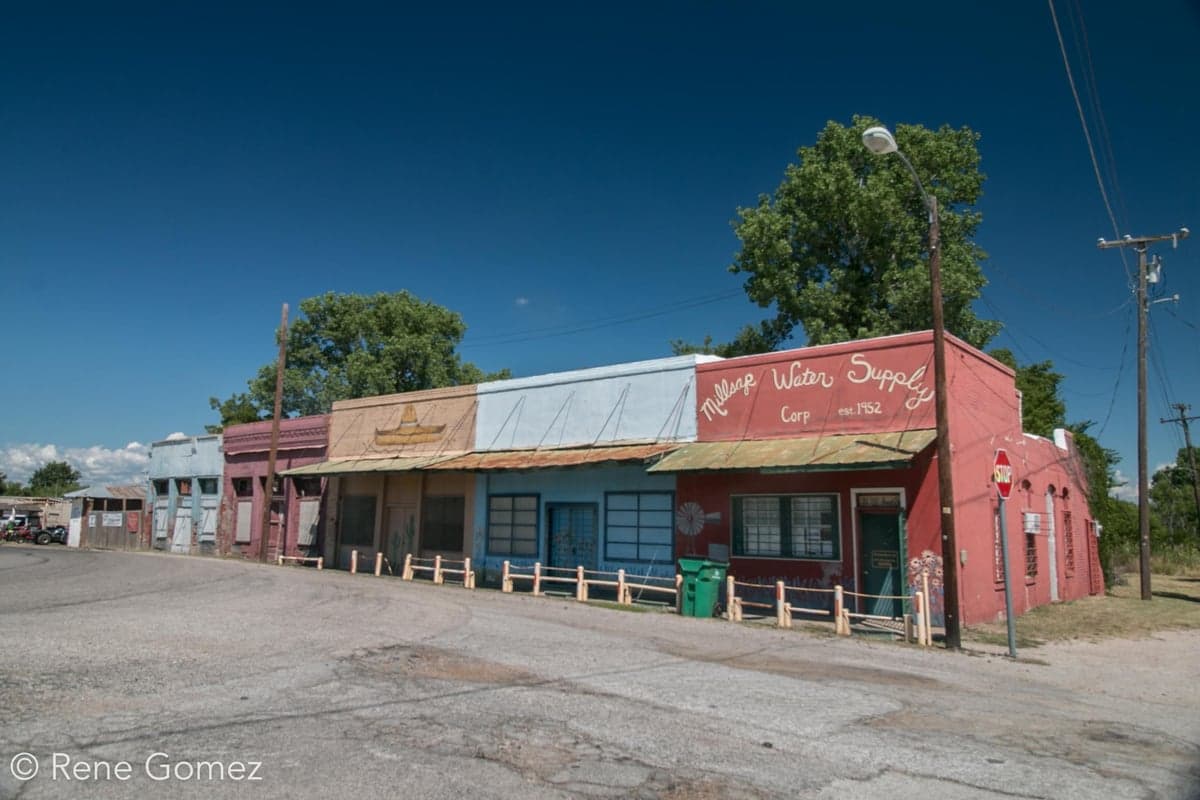
Photo: Wikipedia
Demographics of Millsap, TX
Affluence Level in Millsap, TX
A middle-class area roughly in line with national averages across income, home values, education, and employment.
People of Millsap, TX
Millsap, Texas, is a small, tight-knit community of 520 residents where the population is overwhelmingly White (78.8%) with a significant Hispanic minority (15.4%) and virtually no Black or Asian presence. The town’s identity is rooted in its rural, agricultural past and a strong sense of local independence, with a low foreign-born share of just 2.1% and a college attainment rate of 20.2%. This is a place where family names go back generations, and newcomers are often drawn by the promise of quiet, affordable country living within commuting distance of Fort Worth.
How the city was settled and grew
Millsap’s human history begins in the mid-19th century with Anglo-American settlers drawn by the fertile bottomlands of the Brazos River and the promise of cotton and cattle. The town was officially platted in 1881 as a stop on the Texas & Pacific Railway, which brought a wave of farmers, ranchers, and merchants. The original core, now known as Old Town Millsap around the railroad depot, was built by these families—mostly of English, Scots-Irish, and German descent—who established the town’s first churches, a school, and a cotton gin. A second early settlement, Prairie View Addition to the east, grew as a cluster of farmsteads for families who wanted land but proximity to the depot. By 1900, the population was nearly all White, with a handful of Mexican laborers working on area ranches, but they did not form a permanent neighborhood at this stage. The town remained a small agricultural hub through the Dust Bowl and World War II, with little in-migration beyond the occasional railroad worker or teacher.
Modern era (post-1965)
The post-1965 period brought no major immigration wave to Millsap. The 1965 Hart-Cellar Act, which reshaped U.S. immigration, had almost no local effect: the foreign-born population today is just 2.1%, and the town’s racial composition has shifted only modestly. The most significant change has been the growth of the Hispanic population, which rose from a negligible share in 1970 to 15.4% today. These families largely settled in the Westside Ranchettes area, a collection of small-acreage properties west of the railroad tracks, where they work in construction, landscaping, and agriculture in Parker County. Meanwhile, White residents have concentrated in newer subdivisions like Millsap Meadows (built in the 1990s) and Heritage Estates (early 2000s), which attracted domestic in-migrants from the Dallas-Fort Worth metroplex seeking lower taxes and larger lots. The Black population remains at 0.0%, and East/Southeast Asian residents (0.4%) are a statistical trace, likely a single family or two. The town’s college-educated share of 20.2% is below the national average, reflecting a workforce rooted in trades, small business, and commuting jobs.
The future
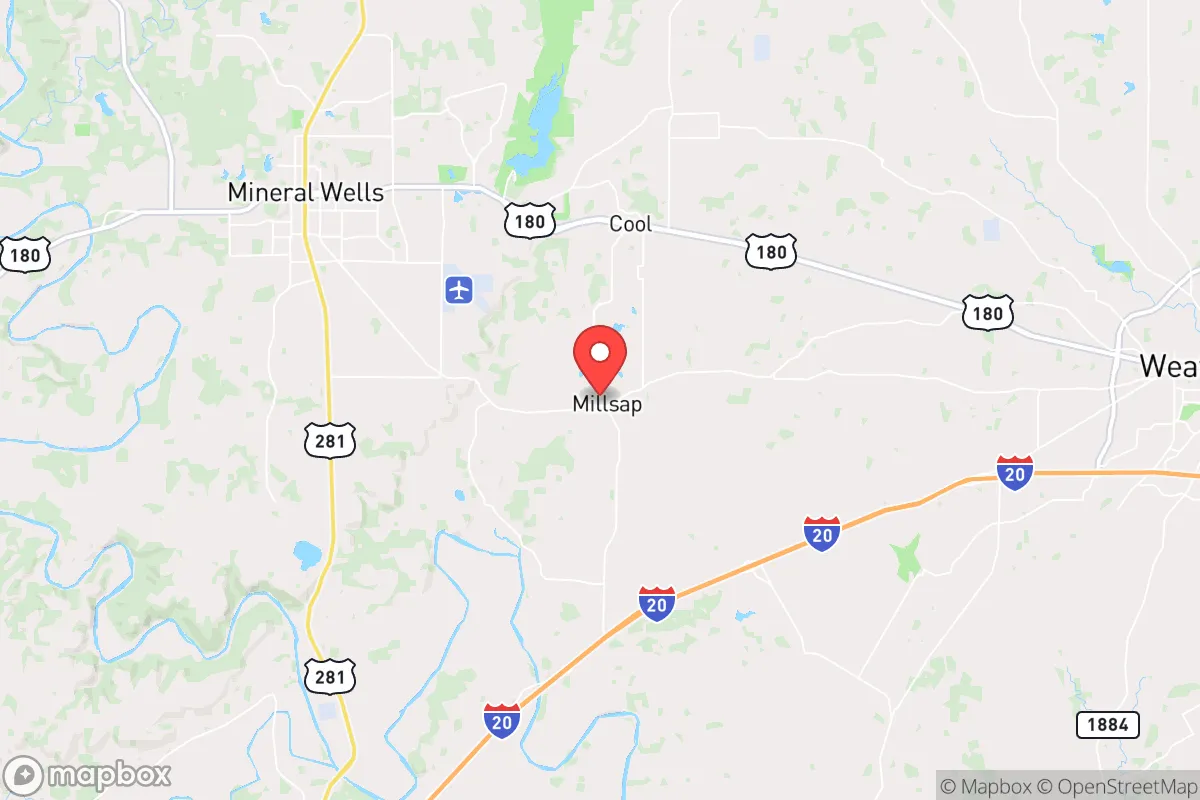
Millsap’s population is heading toward slow, steady growth driven by exurban spillover from Fort Worth, which is about 40 miles east. The town’s 2020 census count of 520 is up from 403 in 2010, a 29% increase, and this trend is likely to continue as developers eye cheap land. However, the demographic character is not homogenizing into a generic suburb. Instead, the town is tribalizing into distinct enclaves: the Old Town core remains a White, multigenerational stronghold; Westside Ranchettes is solidifying as a Hispanic working-class area; and new subdivisions like Prairie View Estates (planned for 2025) are attracting White families from the metroplex who want a rural feel. The Hispanic share is expected to rise slowly, possibly to 20-22% by 2040, as families grow and a few more move in for construction jobs. The foreign-born share will likely remain below 5%, as Millsap lacks the rental housing and social networks that attract immigrants. The Black and Asian populations will probably stay near zero, as the town’s social fabric and housing stock (mostly single-family homes on acreage) do not offer the diversity or amenities that draw those groups.
For someone moving in now, Millsap is becoming a quiet, predominantly White exurb with a growing Hispanic minority, where newcomers are welcomed if they respect the town’s rural rhythms and conservative values. It is not a melting pot but a collection of distinct, stable neighborhoods where family and property are paramount. The next decade will bring more rooftops but little change to the town’s core identity as a low-key, land-oriented community.

* Values derived from national, state, county, city and local statistics and may differ in a specific area. Last updated: 2026-05-09T03:35:10.000Z
Narrative content on this page is AI-generated and may contain mistakes. Verify any details that matter before acting on them.
ReloMaps may earn a commission from affiliate links at no extra cost to you.

