Photo: Wikipedia
Political ClimatePolitical Climate in Millsap, TX
District shown is the primary district for this city’s centroid. Cities may span multiple districts.
Local Political AnalysisPolitical Analysis of Millsap, TX
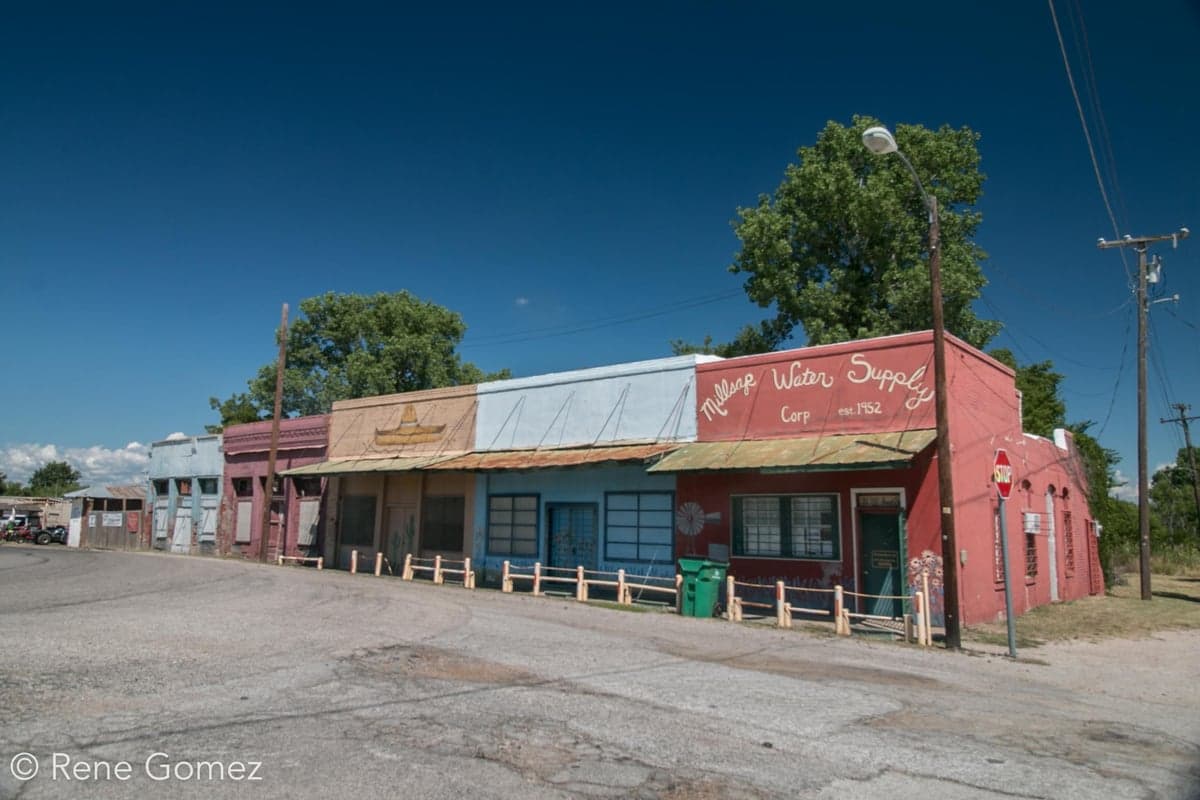
Millsap, Texas, is a place where the old-school, independent spirit of rural Texas still holds strong, and the political climate here leans heavily conservative—much more so than the state as a whole. While Texas itself has a Cook PVI of R+4, which already signals a solid Republican lean, Millsap and the surrounding Parker County are a different beast entirely. You’re looking at a community where folks voted for Donald Trump by margins of 80% or more in recent elections, and that’s not just a trend—it’s a deeply held conviction. The trajectory here is one of cautious resistance; as the Dallas-Fort Worth metroplex creeps westward, there’s a real concern that the progressive policies bleeding out of cities like Fort Worth and Weatherford could start to seep into our way of life. So far, though, Millsap has held the line, and the local vibe is all about keeping government small and out of your backyard.
How it compares
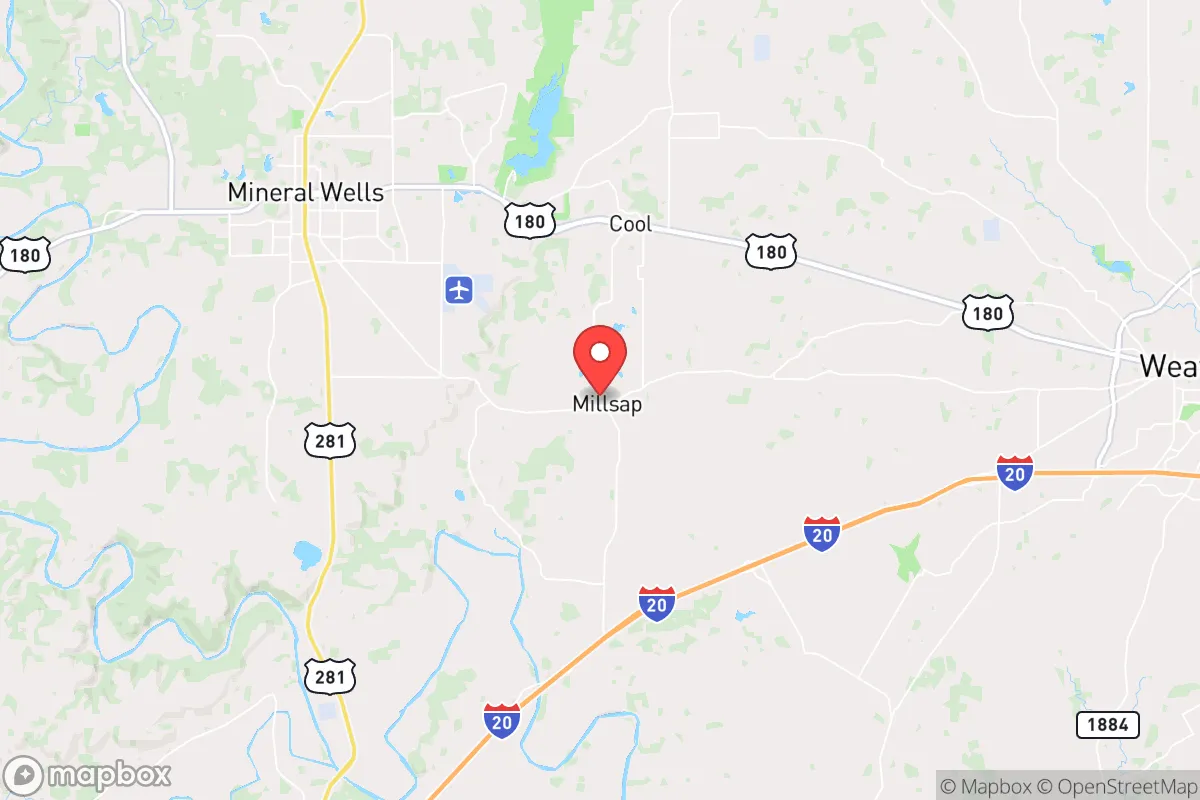
When you stack Millsap up against the rest of Texas, the difference is night and day. The state’s R+4 rating means it’s a battleground for suburban swing voters, especially in places like Tarrant County, where you’ve got a mix of libertarian-leaning independents and a growing progressive base in Fort Worth. But drive 45 minutes west to Millsap, and you’re in a different world. Parker County as a whole voted over 78% for Trump in 2020, and Millsap itself is even more homogeneous. Compare that to nearby Weatherford, which has a few more moderate pockets thanks to its role as a county seat and small college town, or to Aledo, where some new transplants from Dallas have started to nudge things slightly left. In Millsap, you don’t see that. The political conversation here is still about property rights, gun freedoms, and keeping the school board from pushing any kind of woke curriculum. It’s a stark contrast to the state’s urban centers, where you’ve got Houston and Austin pushing for higher taxes and more regulations. For a long-time resident, the worry is that as more people move out here for cheaper land, they’ll bring those big-city voting habits with them.
What this means for residents
For the folks who live here, the political climate translates directly into daily life. You don’t have to worry about the city council imposing strict mask mandates or business shutdowns like you saw in Dallas or Austin during the pandemic. The local government in Millsap and Parker County takes a hands-off approach, trusting residents to make their own choices. That’s a big deal for personal freedoms—whether it’s carrying a firearm without a permit, thanks to Texas’s constitutional carry law, or building a workshop on your property without a dozen permits. Property taxes are still a pain, but they’re lower than in the metroplex, and there’s no talk of adding a city income tax or heavy zoning laws. The downside? You’ve got fewer public services, but most folks here see that as a fair trade-off for not having a bureaucrat tell you what to do with your land. The school board is conservative, so you won’t see critical race theory or gender ideology pushed in the classroom, which is a relief for parents. It’s a place where your vote actually means something because it’s not canceled out by a million urban voters.
One cultural distinction that sets Millsap apart is the strong sense of self-reliance and distrust of federal overreach. You’ll hear folks talk about the “good old days” when the county sheriff was the highest authority, and there’s a lingering skepticism of state mandates from Austin. The local economy is tied to agriculture and oilfield services, so policies that threaten those industries—like green energy mandates or stricter environmental regulations—are met with serious pushback. Looking ahead, the biggest threat is the encroaching suburban sprawl. If developers keep building those cookie-cutter subdivisions, we could see a shift in the next decade. But for now, Millsap remains a pocket of old Texas conservatism, where the motto is basically “leave us alone, and we’ll leave you alone.” It’s a place where you can still breathe free, and that’s worth holding onto.

State Political ClimatePolitical Climate in Texas
State Political AnalysisPolitical Environment in the State
Texas has been a reliably Republican state for decades, with a Cook PVI of R+4, but the coalition that keeps it red is shifting under your feet. The dominant coalition is still a mix of rural conservatives, suburban families, and business-minded fiscal conservatives, but the margins have tightened from double-digit wins in the 2000s to single-digit ones in the 2020s. Over the last 10-20 years, the state has gone from a solid red fortress to a lean-red battleground, driven by explosive growth in the blue-leaning metros of Austin, Dallas, Houston, and San Antonio, while the rural and exurban counties—places like Lubbock, Midland, and the Rio Grande Valley’s Hidalgo County—have held the line or, in some cases, flipped redder.
Urban vs. rural divide
The political map of Texas is a stark checkerboard. The big four metros—Austin (Travis County), Dallas (Dallas County), Houston (Harris County), and San Antonio (Bexar County)—have become Democratic strongholds, with Travis County voting nearly 75% for Biden in 2020. These cities are the engines of the state’s progressive shift, driven by tech transplants, young professionals, and minority voters. Meanwhile, the rural and exurban counties—like Collin County (north of Dallas) and Montgomery County (north of Houston)—have moved in the opposite direction, becoming more Republican as suburban families flee the urban core. The Rio Grande Valley, once a Democratic bastion, has seen a dramatic shift: Hidalgo County went from +38 D in 2012 to +15 D in 2024, with Zapata County actually flipping to Trump. This urban-rural split is the defining political fault line in Texas today.
Policy environment
Texas’s policy environment is a mixed bag for conservatives. On the plus side, there is no state income tax, a cap on property tax growth (Proposition 4, 2023), and a regulatory climate that is business-friendly by design. The state has a Republican trifecta—governor, house, senate—and has passed some of the strongest Second Amendment protections in the nation, including permitless carry (HB 1927, 2021) and preemption laws that block local gun ordinances. Education policy has been a battleground: the 2023 school voucher bill (SB 8) failed in the House, but Governor Abbott has made it a priority for 2025, and the state has banned critical race theory and DEI programs in public schools (SB 3, 2021; SB 17, 2023). On the concerning side, the state has expanded government power in ways that should worry liberty-minded residents: the 2021 election law (SB 1) tightened voting rules but also gave the state unprecedented authority to overturn local elections in Harris County, and the 2023 property tax relief package (SB 2) was funded by a massive surplus rather than structural spending restraint. Healthcare remains a sore spot—Texas has the highest uninsured rate in the nation, and the state has refused Medicaid expansion, which keeps costs down for taxpayers but leaves many without coverage.
Trajectory & freedom
Texas is becoming more free in some areas, less free in others. On the positive side, the state has aggressively expanded personal liberty: permitless carry (HB 1927, 2021) means you don’t need a government permission slip to defend yourself; the Heartbeat Act (SB 8, 2021) protects unborn life and has withstood legal challenges; and the 2023 ban on COVID-19 vaccine mandates (SB 7) protects medical freedom. Parental rights were strengthened with the 2023 law requiring schools to get parental consent for student pronoun changes and bathroom use (SB 14). On the negative side, the state has grown its regulatory footprint: the 2021 election law (SB 1) created new criminal penalties for mail-in ballot assistance, which some see as government overreach into private voting decisions. The state also expanded its power to override local governments—for example, the 2023 law (HB 2127) that preempts local ordinances on everything from labor to agriculture, which conservatives applaud for uniformity but libertarians worry about centralization. The trajectory is toward a more active state government that picks winners and losers, rather than a hands-off approach.
Civil unrest & political movements
Texas has seen its share of political flashpoints. The 2020 Black Lives Matter protests in Austin and Dallas were large and occasionally violent, leading to property damage and a lasting distrust between urban activists and law enforcement. The border crisis has been a constant source of tension: Governor Abbott’s Operation Lone Star (2021-present) has deployed state troopers and National Guard to the border, leading to legal battles with the Biden administration over razor wire and buoys in the Rio Grande near Eagle Pass. The state has seen a rise in organized activist movements on both sides: on the right, the Texas GOP’s 2022 platform included a call for a secession referendum, though it has no practical force; on the left, groups like Moms Demand Action and the Texas Democratic Party have become more aggressive. Election integrity remains a hot-button issue: the 2020 and 2022 elections saw widespread allegations of irregularities in Harris County, leading to the state takeover of elections there in 2023. A new resident would notice the political polarization in everyday life—yard signs, bumper stickers, and local news coverage that feels like a national cable news channel.
Projection
Over the next 5-10 years, Texas is likely to become more competitive but not blue. The in-migration from California and other blue states—roughly 300,000 new residents per year—is split about 60-40 Republican-leaning, according to moving company data, meaning the net effect is a slight reddening of the suburbs. The urban cores will continue to get bluer, but the exurbs and rural areas will get redder, and the Rio Grande Valley’s shift toward the GOP could offset Democratic gains in the cities. The state’s Hispanic population, which is growing rapidly, is not monolithic: younger Hispanic voters in San Antonio lean left, but older and more religious Hispanic voters in the Valley lean right. The biggest wildcard is the state’s education and economic policies: if Texas continues to attract high-skilled workers with low taxes and light regulation, the conservative coalition will hold; if the state’s infrastructure and schools deteriorate, the progressive urban vote could grow. Expect the state to remain under Republican control for the next decade, but with narrower margins—think 52-48 instead of 58-42.
For a new resident, the bottom line is this: Texas is still a conservative state, but it’s not the Texas of 2000. You’ll find a strong culture of personal freedom—no income tax, gun rights, parental rights—but you’ll also see a state government that is increasingly willing to use its power to enforce conservative values, which cuts both ways. If you’re moving to Lubbock or Midland, you’ll find a deeply red community; if you’re moving to Austin or Dallas, you’ll be in a blue bubble. The key is to pick your county wisely, because in Texas, local government still matters more than state government. The state is trending toward a more active, centralized conservative governance model, which is a trade-off: more protection for traditional values, but less room for the libertarian hands-off approach that many conservatives once prized.
* Values derived from national, state, county, city and local statistics and may differ in a specific area. Last updated: 2026-05-09T03:35:10.000Z
Narrative content on this page is AI-generated and may contain mistakes. Verify any details that matter before acting on them.
ReloMaps may earn a commission from affiliate links at no extra cost to you.

