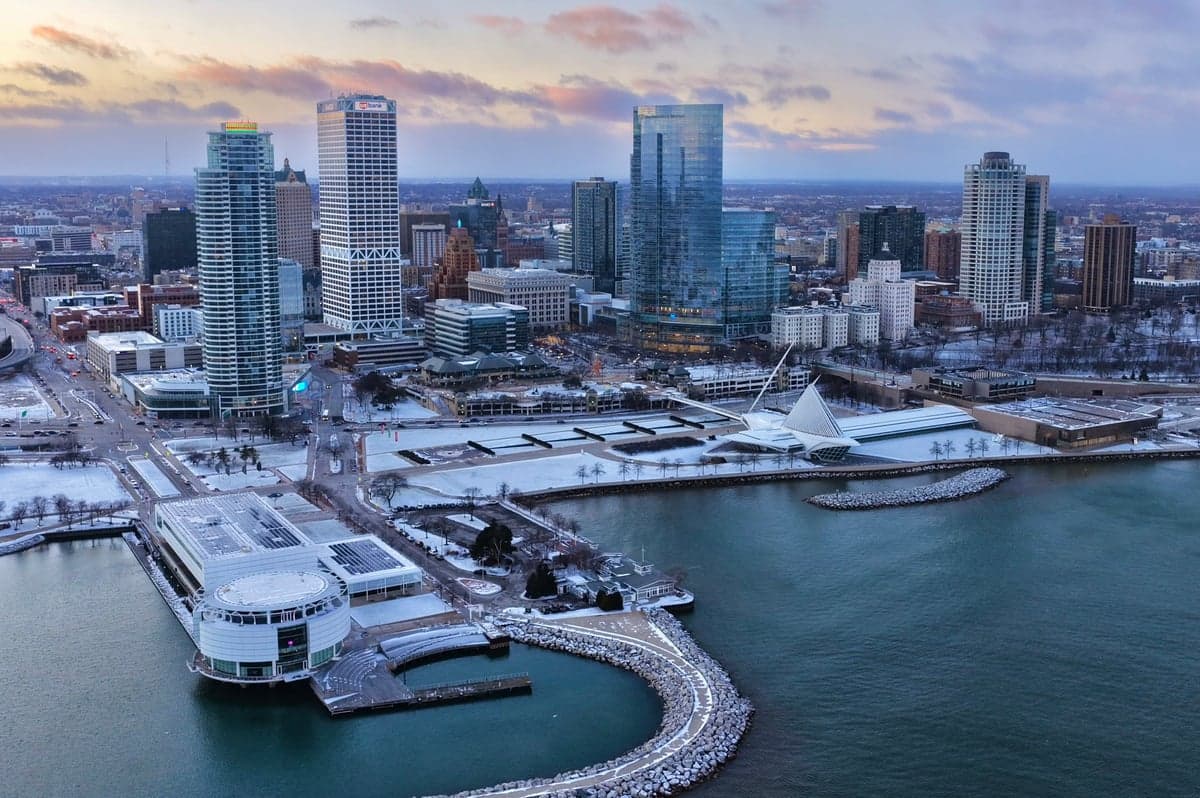
Photo: Wikipedia
Strategic Assessment of Milwaukee, WI
Multiple tactical vulnerabilities. Population density, target proximity, or disaster risk are likely compounding. A retreat property and exit planning is required.
What does the Strategic Assessment tell us?
Our Strategic Assessment grades tactical survivability of an area. Major population centers, military targets, fallout zones, natural disasters, and border exposure all drive risk — lower exposure means a more defensible position in a crisis.
This is heavily inspired by Joel Skousen's Strategic Relocation book. Highly recommended you checkout the book ($)What does this tell us?
Our Strategic Assessment grades tactical survivability of an area. Major population centers, military targets, fallout zones, natural disasters, and border exposure all drive risk — lower exposure means a more defensible position in a crisis.
This is heavily inspired by Joel Skousen's Strategic Relocation book. Highly recommended you checkout the book ($)Strategic Pillars

Key Distances
Regional Safe Places
Below is our recommended "safe zones" in Wisconsin and the surrounding area based on our strategic heuristics. For most people, it's unrealistic to live in a “safe zone” full-time due to work, family or other personal reasons. They tend to be more rural. However, many of these areas are perfect for second homes and retreat properties that double as a vacation home or even a short-term rental.
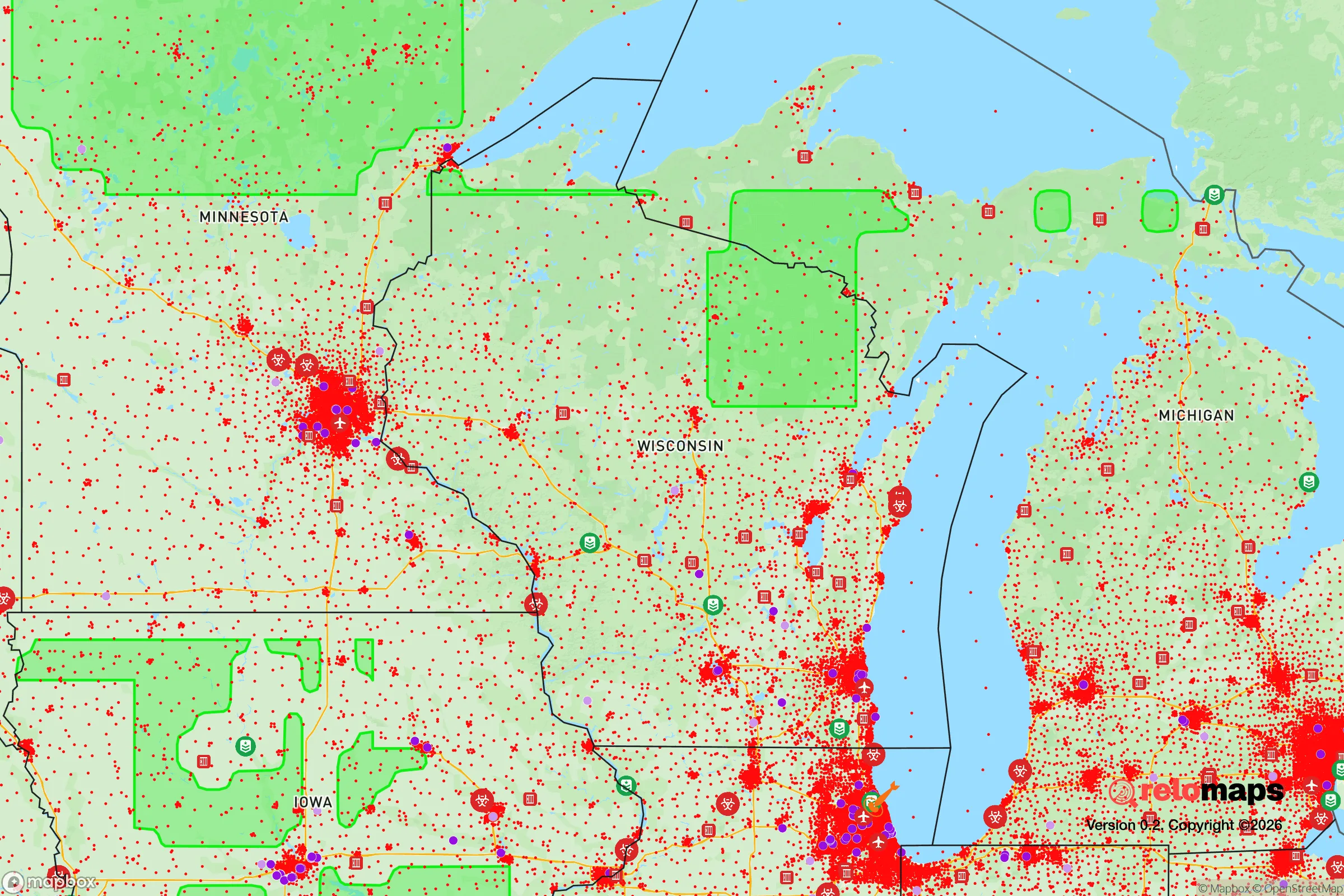
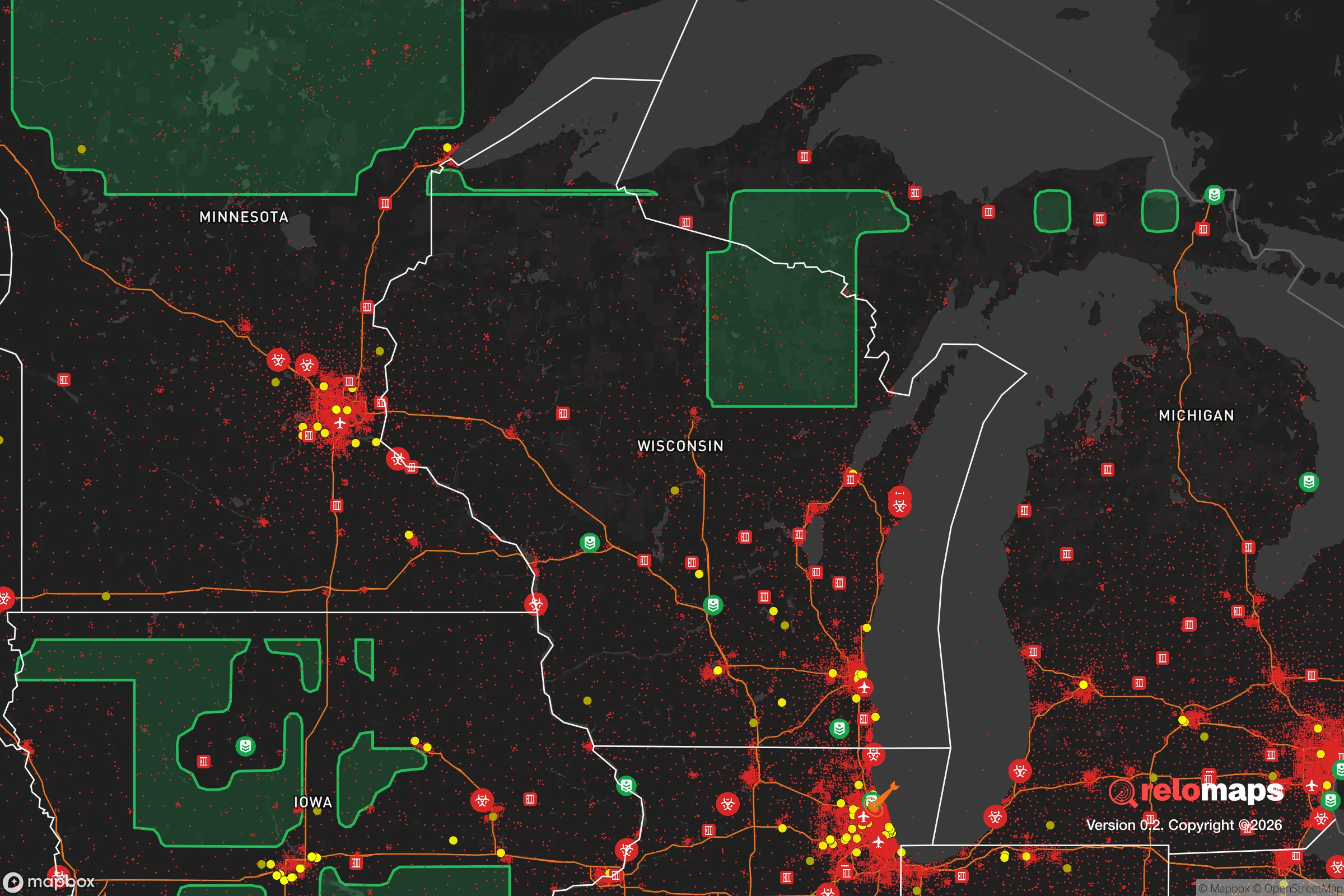


Important Note: For informational purposes only. This does not mean nothing bad ever happens in the green zones. Please use common sense. This is based on public data and modeled with AI. We tried to take a conservative approach but mistakes happen. We update this regularly as new information becomes available.
Solar Generator Recommendations
Backup power matters more here than in safer locations. We've picked three solar generators across budgets and capacity tiers — start with the budget unit if you only need a few essentials, or step up if you want to run a fridge and HVAC for days at a time.

Jackery Portable Power Station Explorer 300
Budget OptionPower on the Go: Weighing only 11 lbs, it's convenient to set up and store with book-sized foldable solar panels

BLUETTI Portable Power Station AC180
Designed for both indoor and outdoor scenarios, AC180 is highly capable as it has a robost capacity and continuous output power.

EF ECOFLOW DELTA Pro Ultra Power Station
Upgraded PickEcoFlow DELTA Pro Ultra is a whole-home energy system designed to grow with your family. Integrated with the Smart Home Panel 2, it scales to meet your evolving energy needs — keeping your home powered, intelligent, and secure through every stage of life.
We earn a commission, at no additional cost to you.
Strategic Assessment Analysis
Milwaukee, Wisconsin, presents a complex strategic picture for the conservative prepper or survivalist. While its location on Lake Michigan offers a critical water and transportation advantage, its status as a major urban center and a Democratic stronghold introduces significant vulnerabilities in a collapse or unrest scenario. The city’s industrial past and current economic struggles create a mixed bag of resources and risks, making it a location that demands careful, eyes-wide-open assessment rather than a simple thumbs-up or thumbs-down for relocation.
Geographic position and natural advantages for long-term survival
Milwaukee’s primary strategic asset is its position on the western shore of Lake Michigan, one of the largest freshwater bodies on the planet. This provides a virtually inexhaustible water source, a critical resource in any long-term disruption scenario. The city sits at the confluence of three rivers—the Milwaukee, Menomonee, and Kinnickinnic—which historically powered its industry and could be leveraged for small-scale hydropower or irrigation in a post-grid world. The surrounding terrain is relatively flat, part of the Great Lakes Plain, which offers good agricultural potential in the fertile glacial soils of southeastern Wisconsin. The climate is a double-edged sword: harsh winters provide a natural barrier to movement and slow the spread of disease, but they also demand serious preparation for heating, food storage, and transportation. The region’s position roughly 90 miles north of Chicago places it within a potential fallout zone from a major event at that city, but also puts it at the edge of the densest population corridor in the Midwest. The Lake Michigan shoreline itself offers a defensible eastern flank, though the lake’s weather can be unpredictable and dangerous for small craft.
Risks, exposures, and proximity to high-value fallout targets
The most glaring risk for a prepper in Milwaukee is its proximity to multiple high-value targets. The city itself is a major Great Lakes port and industrial hub, with a significant petroleum storage and refining presence along the lakefront and in the Menomonee Valley. This infrastructure is a prime target for both state and non-state actors in a conflict scenario. Furthermore, Milwaukee is directly downwind of the Chicago metro area, a massive population and economic center that would be a primary target in any major conflict. A nuclear detonation or even a conventional attack on Chicago’s O’Hare airport, rail yards, or financial district would send fallout and refugees northward along the I-94 corridor. The city’s own Mitchell International Airport and the sprawling General Mitchell Air National Guard Base are also potential targets. Beyond military threats, Milwaukee faces significant civil unrest risks. The city has a history of racial tension and high-profile protests, and its political leadership is overwhelmingly progressive. In a scenario of national economic collapse or political fracture, the city’s dense, segregated neighborhoods could become flashpoints for violence, looting, and resource conflict. The 2020 riots, which saw significant property damage and arson, are a recent example of this potential. The city’s crime rate, particularly violent crime, is already elevated, suggesting a baseline of instability that would worsen in a crisis.
Practical resilience for a relocator: food, water, energy, and defensibility
For a relocator, Milwaukee offers some practical advantages but requires significant upfront work. Water is the city’s strongest card—Lake Michigan is a massive, reliable source, but it requires treatment. Boiling, filtration, or chemical treatment will be necessary, and access to the lakefront is public, meaning competition for shoreline access could be fierce. The city’s water utility draws from the lake, but a grid-down scenario would render that useless, making personal filtration systems and knowledge of local streams and wells essential. Food production is viable in the surrounding counties, particularly in Ozaukee and Washington counties to the north, which have strong agricultural bases. However, Milwaukee County itself is mostly urbanized, so a relocator would need to secure land outside the city limits for serious gardening or livestock. The city’s industrial past means there are abundant supplies of scrap metal, tools, and mechanical parts that could be repurposed, but accessing them in a collapse would be dangerous. Energy-wise, the region is served by We Energies, which relies on a mix of coal, natural gas, and renewables. A grid failure would be prolonged, so solar panels with battery storage, a backup generator, or a wood stove are non-negotiable. Defensibility is a major concern. The city’s flat terrain and dense urban grid offer few natural chokepoints. The best defensive posture would be to secure a property on the outskirts—perhaps in the northern suburbs like Mequon or Cedarburg, or in the rural areas west of the city in Waukesha County. These areas offer more space, lower population density, and a more politically conservative population, which aligns with a prepper mindset. The city itself is a liability; its population density and reliance on just-in-time logistics make it a trap in a prolonged crisis. A relocator should view Milwaukee as a resource hub to be visited for specific supplies, not a place to live.
The overall strategic picture for Milwaukee is one of high potential but equally high risk. Its Lake Michigan location and industrial resources are genuine assets, but they are offset by its vulnerability to fallout from Chicago, its own critical infrastructure, and its history of civil unrest. The city’s political and demographic realities mean that a conservative prepper would likely find themselves in a hostile cultural environment during normal times, and a dangerous one during a crisis. The smart play is not to relocate into Milwaukee itself, but to secure a property in the surrounding conservative-leaning counties—Waukesha, Ozaukee, or Washington—where you can leverage the city’s resources while maintaining a defensible, self-sufficient base. If you are willing to invest in serious water treatment, food storage, and a robust security plan, the region offers a viable long-term survival option. But if you are looking for a low-risk, low-drama location with a like-minded community, you would be better served looking further north or west, away from the Great Lakes megacity corridor. Milwaukee is a high-risk, high-reward play that requires a serious commitment to preparation and a clear-eyed understanding of its vulnerabilities.

* Values derived from national, state, county, city and local statistics and may differ in a specific area. Last updated: 2026-04-29T23:26:13.000Z
Narrative content on this page is AI-generated and may contain mistakes. Verify any details that matter before acting on them.
ReloMaps may earn a commission from affiliate links at no extra cost to you.

