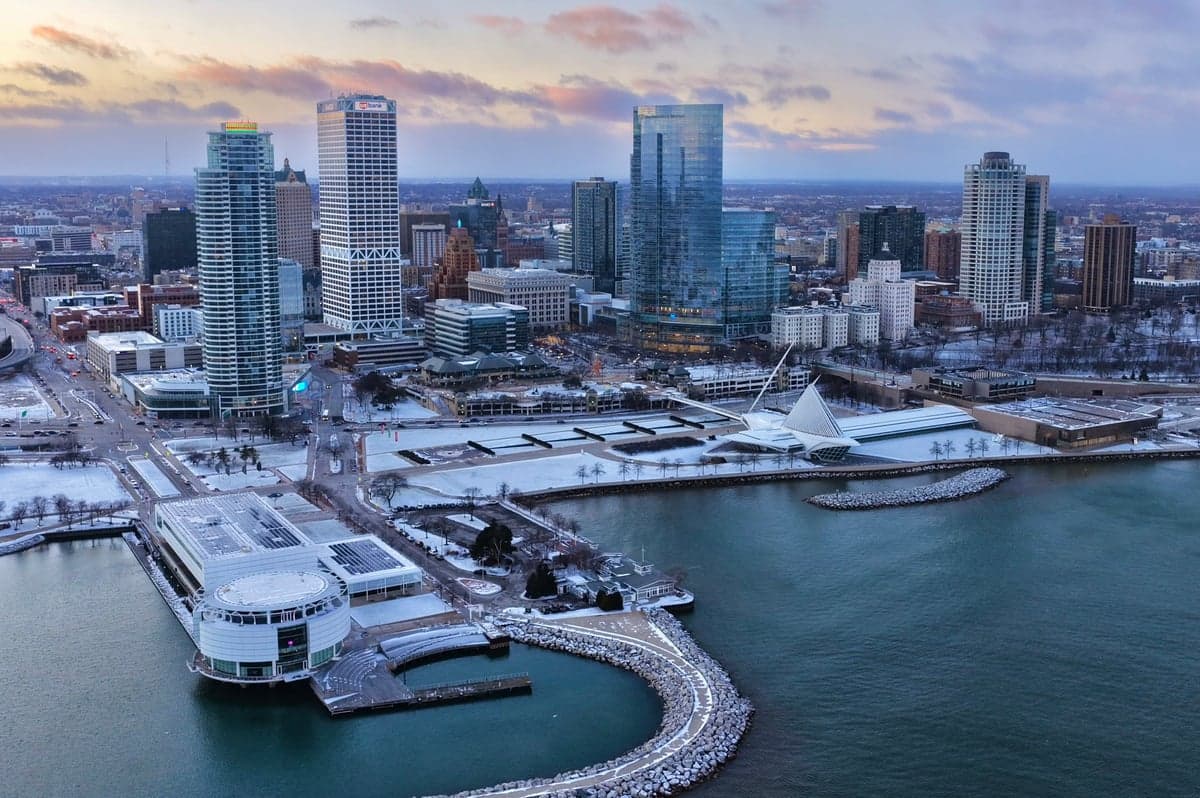
Photo: Wikipedia
Political ClimatePolitical Climate in Milwaukee, WI
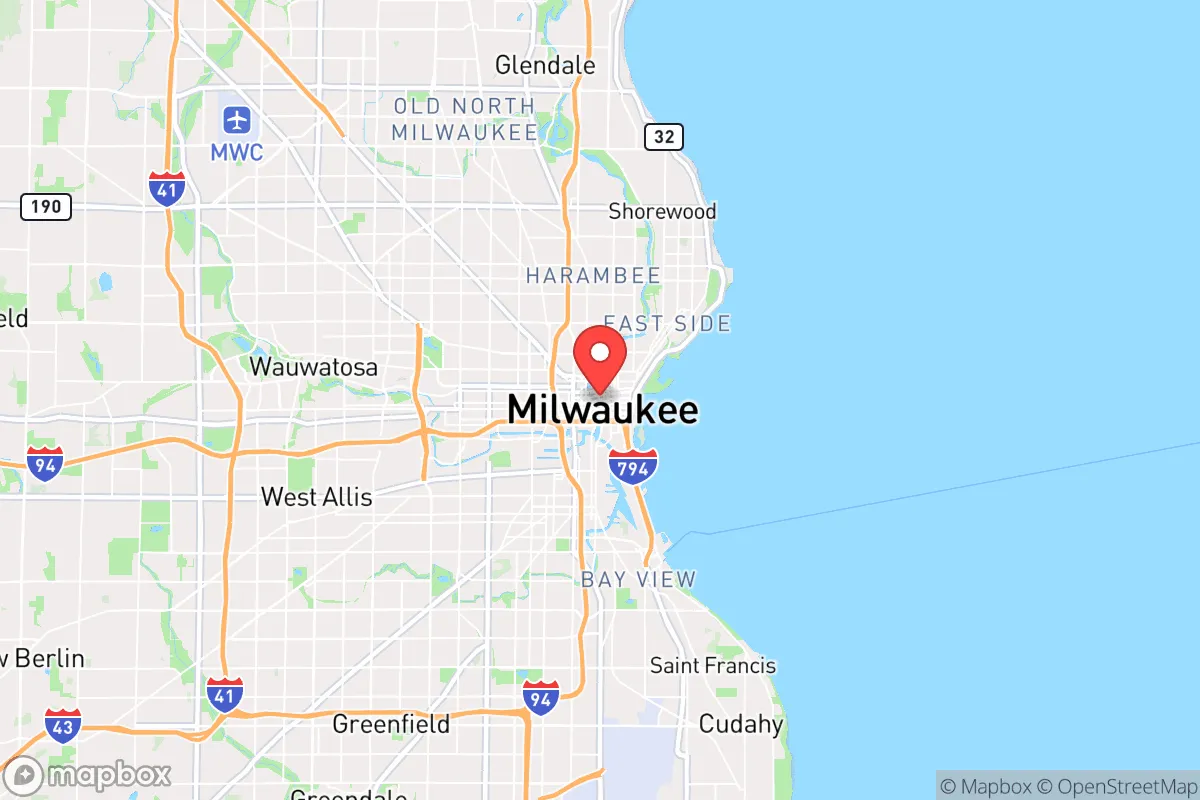
District shown is the primary district for this city’s centroid. Cities may span multiple districts.
Local Political AnalysisPolitical Analysis of Milwaukee, WI
Milwaukee is about as blue as it gets in Wisconsin, with a Cook PVI of D+26, meaning the city votes 26 points more Democratic than the national average. That’s not just a lean; it’s a landslide in every local, state, and federal election. You’ll see it in the city council, the county board, and the school board—all solidly progressive. But here’s the thing: this wasn’t always the case. Back in the 1980s and 1990s, Milwaukee was a union-heavy, working-class Democratic town, but it was also a place where you could disagree without being called a bigot. Now, it’s shifted hard into a one-party system where progressive orthodoxy is the only game in town. If you’re not on board with the latest social experiments, you’re pretty much out of the conversation.
How it compares
Drive 15 minutes west to Waukesha or Brookfield, and you’re in a completely different world—those suburbs vote Republican by 20 to 30 points. Waukesha County is the conservative anchor of the region, and it’s where a lot of Milwaukee refugees have moved over the past decade to escape the city’s rising crime and tax burden. Even closer in, places like Shorewood and Whitefish Bay lean left, but they’re still more moderate than the city core. The contrast is stark: Milwaukee’s politics are driven by a coalition of public-sector unions, nonprofit activists, and a heavily subsidized urban core, while the surrounding suburbs are built around small business owners, tradespeople, and families who just want to be left alone. That divide has only widened since 2020, as Milwaukee’s leadership doubled down on police defunding rhetoric and COVID lockdowns that lasted longer than almost anywhere else in the state.
What this means for residents
If you value personal freedom—like choosing whether to send your kid to a school that actually teaches them to read, or deciding how to run your small business without a dozen new regulations—Milwaukee’s political climate is going to feel suffocating. The city council has passed ordinances that effectively ban landlords from screening tenants, which has made property crime worse and driven up insurance costs for everyone. The school board, meanwhile, has focused more on renaming buildings and pushing critical race theory than on fixing the fact that only about 20% of eighth graders are proficient in math. And the county executive has proposed tax hikes year after year, even as the city’s population shrinks. It’s a classic case of government overreach: they keep spending more, getting less, and blaming the people who leave for the mess they created.
On the cultural side, Milwaukee has a strong tradition of ethnic festivals, corner taverns, and a no-nonsense Midwestern friendliness. But that’s being slowly replaced by a more activist, protest-driven culture. You’ll see fewer neighborhood block parties and more organized marches downtown. The long-term trajectory is concerning: unless there’s a serious course correction—like a tax revolt or a school choice expansion that actually works—Milwaukee will likely continue its slide into a high-tax, low-opportunity city that only the wealthy and the heavily subsidized can afford to live in. If you’re thinking of moving here, I’d recommend looking at the suburbs first, or at least understanding that the city’s politics are not going to change anytime soon.

State Political ClimatePolitical Climate in Wisconsin
State Political AnalysisPolitical Environment in the State
Wisconsin has long been a classic swing state, but over the past decade it has hardened into a deeply polarized battleground where the rural-urban divide is the central political fact. The state’s overall partisan lean is essentially a coin flip—presidential margins have been within a point in three of the last four elections—but that razor-thin statewide balance masks a dramatic geographic sorting. The blue wall of Milwaukee and Madison has grown more Democratic, while the rest of the state, particularly the small towns and farming communities, has swung hard to the right. This trajectory has created a state where your experience of freedom and governance depends almost entirely on which side of the county line you live on.
Urban vs. rural divide
The political map of Wisconsin is a story of two worlds. Milwaukee County, home to the state’s largest city, consistently delivers massive Democratic margins—often exceeding 60% of the vote. Dane County, anchored by Madison and the University of Wisconsin, is even more lopsided, regularly giving Democrats 70% or more. These two counties alone produce enough Democratic votes to nearly offset the rest of the state. Meanwhile, the rural and exurban counties have shifted dramatically. Waukesha County, just west of Milwaukee, is the GOP’s suburban stronghold, routinely delivering 60%+ Republican margins. Further north, counties like Marathon (Wausau), Brown (Green Bay), and Outagamie (Appleton) have trended redder as blue-collar voters and farmers have abandoned the Democratic Party. The Driftless Region in the southwest, including Vernon and Crawford counties, has become a fascinating microcosm—historically Democratic but now competitive, with Trump making inroads among rural voters who once voted for Russ Feingold. The Fox Valley, from Oshkosh to Green Bay, is the real battleground within the battleground, where working-class voters have flipped from Obama to Trump and stayed there.
Policy environment
Wisconsin’s policy environment is a mixed bag for conservatives. On the plus side, the state has a flat income tax rate of 4.4% (down from 7.75% in 2011), and the corporate tax rate has been cut to 7.9%. Property taxes are moderate, and the state has a right-to-work law (passed in 2015) that has weakened public-sector unions. However, the state’s regulatory posture is uneven. Act 10, the 2011 law that effectively ended collective bargaining for most public employees, remains a landmark conservative victory, but it has been under constant legal attack. On education, Wisconsin has a robust school choice program—the Milwaukee Parental Choice Program is the oldest in the nation—and the state has expanded voucher programs to other cities like Racine and Green Bay. However, the state also has a high minimum wage ($7.25, tied to the federal floor) and a Medicaid expansion that was accepted under Governor Tony Evers, which some conservatives view as a step toward government dependency. Election laws are a flashpoint: Wisconsin has strict voter ID requirements, but also widespread use of drop boxes (a subject of ongoing litigation). The state’s legislative maps, drawn by Republicans in 2011, have been a source of constant Democratic outrage, but they have given the GOP a structural advantage that has allowed them to pass conservative policies even under a Democratic governor.
Trajectory & freedom
The trajectory of freedom in Wisconsin is a tug-of-war. On the positive side, the state has seen significant expansions of gun rights. Act 35 (2011) made Wisconsin a “shall issue” state for concealed carry, and in 2023, the legislature passed a bill to allow permitless carry (though it was vetoed by Governor Evers). The state also has a strong Castle Doctrine law and preemption of local gun ordinances. On parental rights, Wisconsin has a relatively strong school choice system, but there is no statewide parental rights in education law like Florida’s. The state has seen a growing movement for school board transparency, particularly in Waukesha County and the Fox Valley, where parents have pushed back against critical race theory and gender ideology in classrooms. However, the state’s medical freedom record is concerning. During COVID, Governor Evers imposed a statewide mask mandate and business restrictions, though the state Supreme Court struck down his stay-at-home order in 2020. The state has not passed any broad medical autonomy legislation, and vaccine mandates remain a live issue. Property rights are generally strong, but the state has a relatively high property tax burden. The biggest freedom concern is the growing power of the state government in Madison, where Democrats have used the governor’s office to veto conservative legislation while pushing for expanded government programs.
Civil unrest & political movements
Wisconsin has been a flashpoint for civil unrest. The Kenosha riots of 2020, sparked by the shooting of Jacob Blake, saw widespread property destruction and the tragic killing of two protesters by Kyle Rittenhouse, who was later acquitted. This event crystallized the state’s political divide, with conservatives viewing it as a case of self-defense and left-wing violence, while progressives saw it as a symbol of racial injustice. The Waukesha Christmas parade attack in 2021, where a man drove an SUV through a parade, killing six, further inflamed tensions, as the perpetrator had a long criminal record and was out on bail. Immigration politics are less visible in Wisconsin than in border states, but the issue has become a rallying cry in rural areas, particularly in Marathon County, where a surge of Hmong and Latino immigrants has changed the demographic landscape. The state has no sanctuary cities, but Milwaukee has a “welcoming city” ordinance that limits cooperation with federal immigration enforcement. Election integrity remains a hot-button issue, with the 2020 election in Wisconsin being one of the most contested in the nation. The state’s bipartisan Elections Commission has been a target of conservative criticism, and there have been ongoing efforts to reform election administration, including a push to ban private funding of elections (the “Zuckerbucks” issue). The Waukesha County area has seen a strong grassroots movement for election integrity, with activists regularly attending county board meetings.
Projection
Over the next 5-10 years, Wisconsin is likely to remain a purple state, but the trend lines favor conservatives in the long run. The rural and exurban areas are becoming more Republican, while the urban cores are becoming more Democratic. The key demographic shift is the continued growth of the Fox Valley and the Waukesha County suburbs, which are attracting families and businesses from Illinois and other high-tax states. This in-migration is likely to reinforce the state’s conservative lean in the legislature, even as the governor’s office remains competitive. The biggest wild card is the state Supreme Court, which flipped to a 4-3 liberal majority in 2023 after the election of Janet Protasiewicz. This court is likely to strike down the current legislative maps, which could erode the GOP’s structural advantage and make the state more competitive at the legislative level. However, even with fair maps, the underlying political geography favors Republicans in most statewide races. The state’s demographic future is also uncertain: the population is aging and growing slowly, with the Milwaukee area losing residents while the Madison area and the Fox Valley grow. A new resident moving to Wisconsin now should expect a state that remains politically divided but where conservative values have a strong foothold in the legislature and in local government, particularly outside of the two big blue cities.
For a conservative family or individual considering a move to Wisconsin, the bottom line is this: you will find a state where your vote matters, where your local school board and county government can reflect your values if you choose the right area, and where the state legislature has been a reliable check on progressive overreach from the governor’s office. The key is to pick your location carefully. The Waukesha County suburbs, the Fox Valley cities like Appleton and Green Bay, and the smaller towns of the Driftless Region offer a high quality of life with strong communities and a conservative political culture. Avoid Milwaukee and Madison if you want to escape high taxes, progressive policies, and the social unrest that has plagued those cities. Wisconsin is not a red state, but it is a state where conservatives can thrive if they choose their ground wisely.
* Values derived from national, state, county, city and local statistics and may differ in a specific area. Last updated: 2026-04-29T23:26:13.000Z
Narrative content on this page is AI-generated and may contain mistakes. Verify any details that matter before acting on them.
ReloMaps may earn a commission from affiliate links at no extra cost to you.

