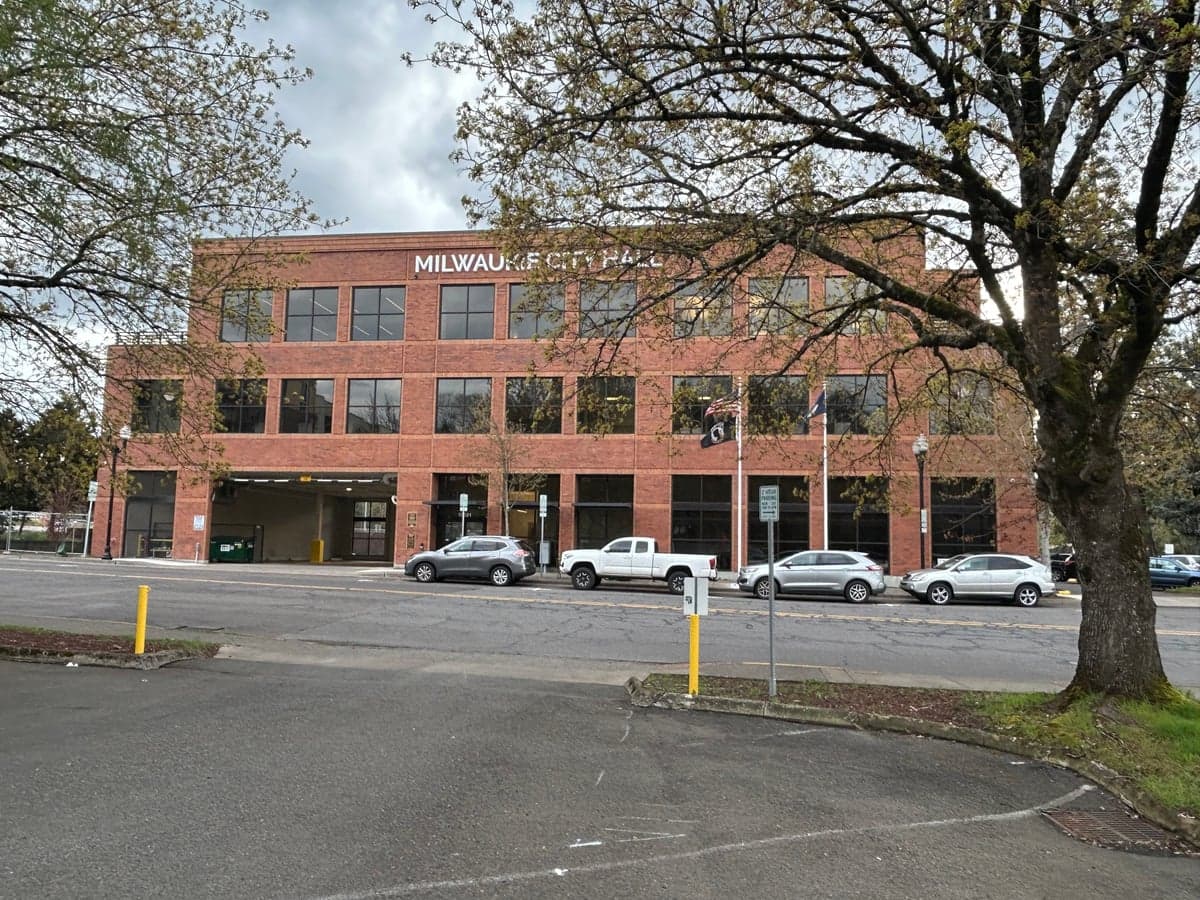
Photo: Wikipedia
Personal Sovereignty in Milwaukie, OR
Viable for self-reliance. Generally workable, though some barriers may limit total independence.
What does Personal Sovereignty tell us?
Personal Sovereignty measures your capacity for self-reliance and independence with minimal government friction. Higher scores mean fewer barriers between you and the way you want to live... but it assumes you have the space you need and good neighbors.
What does this tell us?
Personal Sovereignty measures your capacity for self-reliance and independence with minimal government friction. Higher scores mean fewer barriers between you and the way you want to live... but it assumes you have the space you need and good neighbors.
State Policy
Energy independence: Importer (35% of energy produced in-state)
Personal Liberty
Homesteading

Personal Liberty Analysis
For the liberty-minded individual or family evaluating Milwaukie, Oregon, personal sovereignty is a mixed bag shaped by state-level mandates and local culture. While Oregon’s constitution offers some protections, the reality is that Milwaukie sits within a metro area where progressive policies on taxes, self-defense, and medical autonomy often override individual choice. A survivalist or prepper will find the region’s natural resources appealing, but must navigate a regulatory environment that can feel like government overreach into daily life. This analysis breaks down the key sovereignty factors—tax burden, gun laws, homesteading viability, and personal liberties—so you can decide if Milwaukie aligns with your values of self-reliance and minimal state interference.
Tax burden and regulatory posture: how much the state takes and controls
Oregon’s tax structure is a significant drag on personal sovereignty. The state imposes a progressive income tax ranging from 4.75% to 9.9% on all earned income, with no deduction for federal taxes paid—meaning you’re double-taxed on every dollar. There is no sales tax, which sounds good, but property taxes in Clackamas County (where Milwaukie lies) average around 1.0% of assessed value, and assessments are capped at 3% annual growth under Measure 50, so long-time owners pay far less than new buyers. For a prepper, this means your land and improvements are a recurring cost, not a store of value free from government claims. The regulatory posture is equally intrusive: Oregon has some of the strictest land-use laws in the nation, governed by statewide planning goals that limit rural development and enforce urban growth boundaries. Milwaukie’s zoning is predominantly residential, with minimum lot sizes of 5,000 to 7,000 square feet in most single-family areas, but any significant construction—like a workshop, root cellar, or alternative dwelling—requires permits and inspections that can take months. The state’s energy code mandates efficiency standards that raise building costs, and water rights are tightly controlled by the Oregon Water Resources Department, making independent well drilling or rainwater catchment a bureaucratic hurdle. For the survivalist, this regulatory thicket feels like a deliberate erosion of self-sufficiency, forcing reliance on municipal utilities and government-approved systems.
Self-defense and gun law specifics: what you can and cannot do
Oregon’s gun laws have shifted dramatically toward restriction, and Milwaukie residents must comply with state mandates that limit personal defense options. As of 2023, Measure 114 (currently tied up in court but partially enforced) requires a permit to purchase any firearm, a background check for every transfer (including private sales), and bans magazines over 10 rounds. While the law is being challenged on Second Amendment grounds, the practical effect is that acquiring firearms for self-defense or prepping is slower and more bureaucratic. Open carry is legal without a permit, but concealed carry requires a license from the county sheriff—Clackamas County is generally shall-issue, but processing times can stretch to 45 days. There is no state preemption on local gun laws, meaning Milwaukie’s city council could theoretically pass its own restrictions (e.g., bans on firearms in city parks or public buildings). For the prepper, this means your ability to defend your home or bug-out location is constrained by magazine capacity limits and purchase delays. Stand-your-ground laws do not exist in Oregon; you have a duty to retreat if safely possible before using deadly force. Castle doctrine applies only to your dwelling, not your vehicle or property. In a crisis scenario, these legal constraints could leave you vulnerable, especially if local law enforcement is slow to respond—a real concern in a metro area with understaffed police departments. The takeaway: Milwaukie is not a gun-friendly haven; it’s a place where you must navigate a restrictive legal framework to exercise your right to self-defense.
Self-reliance and homesteading viability: lot sizes, zoning, and off-grid feasibility
For those seeking to live off-grid or grow their own food, Milwaukie offers limited but not impossible opportunities. The city’s zoning is primarily R-5 and R-7 (residential lots of 5,000 to 7,000 square feet), which allows for vegetable gardens, small livestock like chickens (up to 6 hens, no roosters), and beekeeping with a permit. However, goats, pigs, or larger livestock are prohibited within city limits, and any structure over 200 square feet—like a shed, greenhouse, or tiny house—requires a building permit. The urban growth boundary means you cannot simply buy cheap rural land nearby; the closest unincorporated areas with acreage are in Clackamas County’s rural zones, where minimum lot sizes are 5 to 20 acres, but those parcels are expensive (often $100,000+ per acre) and subject to strict forestland or farm-use zoning that limits residential development. Off-grid feasibility is low: Oregon law requires connection to municipal water and sewer if available, and solar panels must comply with building codes and utility interconnection agreements. Rainwater catchment is legal but limited to 5,000 gallons of storage without a permit, and graywater systems require a licensed installer. For the prepper, this means true self-reliance—like living without grid power, drilling a well, or keeping a food forest with pigs—is virtually impossible within Milwaukie’s boundaries. You’d need to look 30-45 minutes east toward Estacada or south toward Molalla for land with fewer restrictions, but even there, state land-use laws and fire codes (especially in high-risk zones) impose limits. Milwaukie is better suited for a suburban homesteader who wants to supplement groceries with a garden and eggs, not a full-scale survivalist retreat.
Personal liberties: parental rights, medical autonomy, speech, and property
Oregon’s progressive tilt directly impacts personal liberties in ways that concern conservative and liberty-minded individuals. On parental rights, the state has some of the weakest protections in the nation: there is no statutory right to opt your child out of sex education or LGBTQ-inclusive curriculum, and the Oregon Department of Education mandates comprehensive sexual health instruction starting in kindergarten. Medical autonomy is similarly constrained: Oregon has legalized assisted suicide (Death with Dignity Act) and has no parental consent requirement for minors to access reproductive health services, including contraception and abortion, without notifying parents. Vaccine mandates are strict—schools require a full slate of immunizations, and religious exemptions were eliminated in 2019, leaving only medical exemptions. For the prepper, this means your ability to make medical decisions for your family is heavily circumscribed by state law. Free speech is protected under the Oregon Constitution, which is broader than the First Amendment in some areas (e.g., no limits on political speech in public forums), but local ordinances in Milwaukie can restrict signage, noise, and public gatherings. Property rights are the most concerning: Oregon’s land-use system, upheld by the state Supreme Court, gives the government broad authority to regulate how you use your land, including banning certain crops, structures, or activities. The Oregon Constitution’s “takings” clause is weaker than the federal version, meaning you have less recourse if a regulation devalues your property. For a survivalist, this erosion of property rights is a red flag—your land is not truly yours if the state can dictate its use. Overall, Milwaukie’s personal liberties are constrained by state-level mandates that prioritize collective outcomes over individual choice, making it a challenging environment for those who value maximum autonomy.
In the broader Pacific Northwest context, Milwaukie ranks low on personal sovereignty compared to rural Oregon counties like Lake or Harney, where land is cheaper, regulations are looser, and gun culture is stronger. However, it offers better access to natural resources (the Willamette River, nearby forests) and a lower cost of living than Portland proper. For the survivalist or prepper, the key trade-off is between convenience and freedom: Milwaukie provides infrastructure and community but demands compliance with state overreach. If you’re willing to navigate permits, taxes, and legal restrictions, you can carve out a modest self-reliant lifestyle here. But if your goal is maximum independence—off-grid living, unrestricted gun ownership, and minimal government interference—you’ll find better sovereignty in Idaho or eastern Oregon. Milwaukie is a compromise, not a stronghold, for personal liberty.

* Values derived from national, state, county, city and local statistics and may differ in a specific area. Last updated: 2026-04-22T21:33:05.000Z
Narrative content on this page is AI-generated and may contain mistakes. Verify any details that matter before acting on them.
ReloMaps may earn a commission from affiliate links at no extra cost to you.

