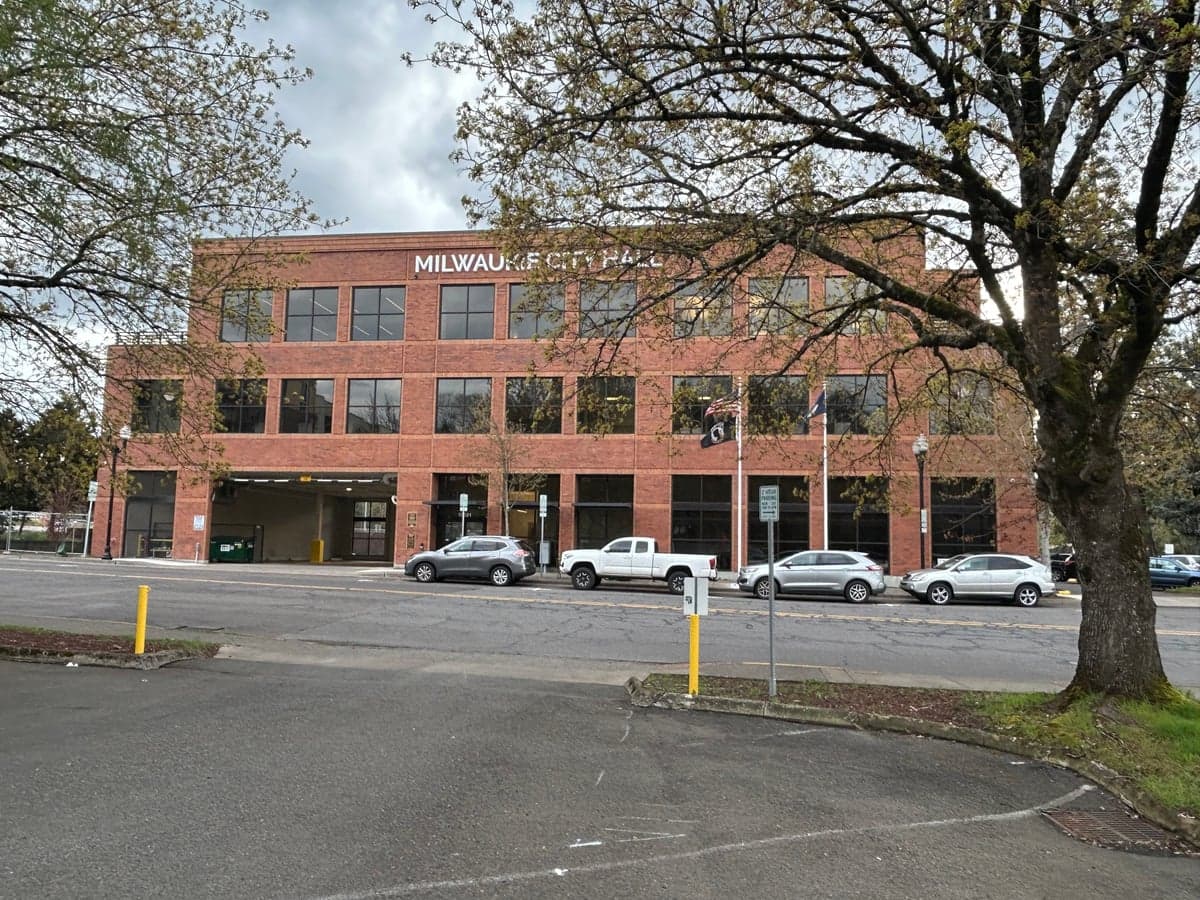
Photo: Wikipedia
Political ClimatePolitical Climate in Milwaukie, OR
District shown is the primary district for this city’s centroid. Cities may span multiple districts.
Local Political AnalysisPolitical Analysis of Milwaukie, OR
Milwaukie, Oregon, has a political climate that leans solidly left, with a Cook PVI of D+4, meaning it votes about four points more Democratic than the national average. But if you’ve lived here as long as I have, you know that number doesn’t tell the whole story. This town used to be a quiet, blue-collar suburb where folks kept to themselves and didn’t want the government poking into their business. Over the last decade or so, that’s shifted hard toward progressive activism, and it’s something you notice in everything from city council meetings to how your neighbors talk about property rights.
How it compares
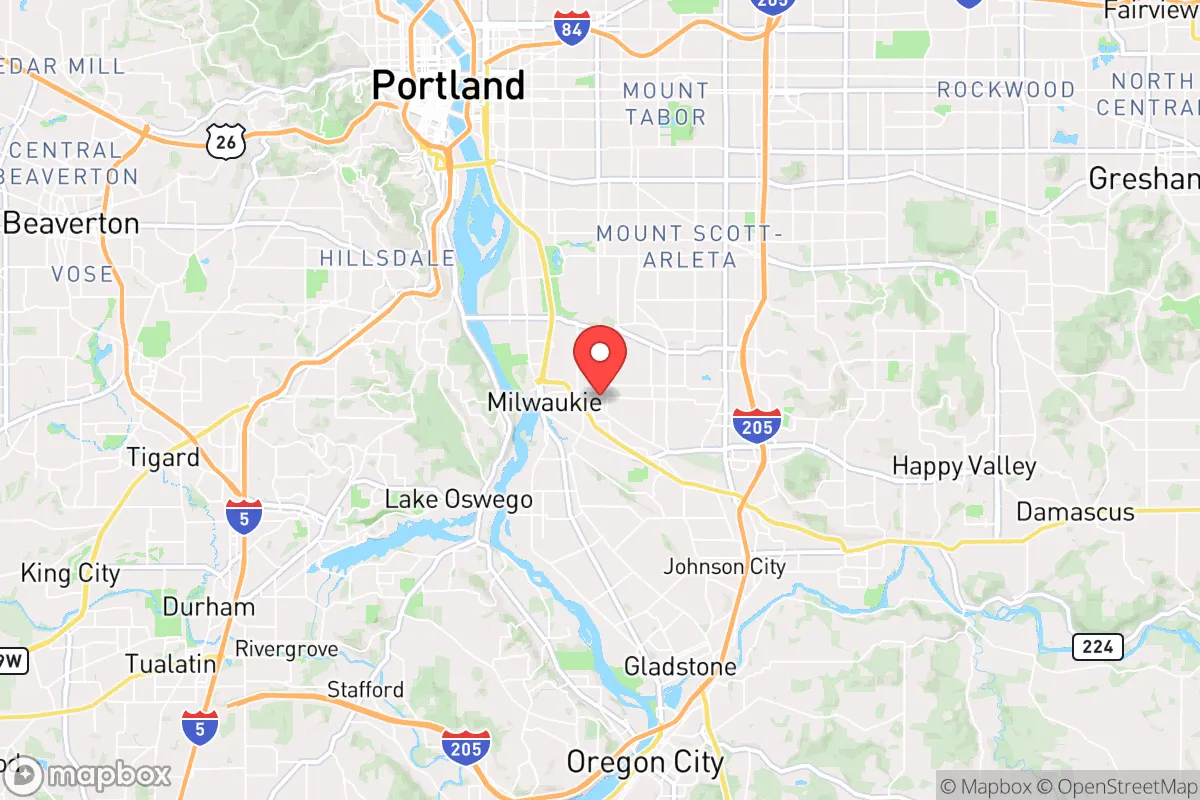
Milwaukie sits in a bit of a political bubble compared to the surrounding area. Head south down Highway 99E into Gladstone or Oregon City, and you’ll find a more mixed political landscape—still blue in parts, but with a noticeable conservative streak, especially in Clackamas County’s rural eastern edges. Drive west across the Willamette River into Lake Oswego, and you’re in a wealthy, reliably Democratic enclave, but one that’s more moderate and business-friendly than Milwaukie’s brand of leftism. The real contrast is north into Portland proper, where Milwaukie’s politics look tame by comparison. But here’s the thing: Milwaukie used to be a place where a guy could put a “Don’t Tread on Me” sticker on his truck without getting side-eye. Now, you’re more likely to see yard signs for rent control measures and city-funded homeless services. The shift from “live and let live” to “we know what’s best for you” has been steady, and it’s accelerated since the 2020 protests.
What this means for residents
For a long-time resident, the biggest red flag is how the city government has started reaching into personal freedoms under the banner of progress. Milwaukie was one of the first cities in Oregon to pass a plastic bag ban, and it’s been aggressive with zoning changes that make it harder to do simple things like park an RV on your own property or run a small home business without layers of permits. The city council has also pushed for higher density housing mandates, which sounds good on paper but often means less say for homeowners about what happens on their street. If you value the right to use your property as you see fit—within reason—you’ll find yourself butting heads with a local government that seems to think it knows better. The police department has been defunded in practice, with budgets shifted to social services, and while that sounds compassionate, it means response times for property crimes have crept up. Neighbors I know have stopped reporting break-ins because they figure nothing will come of it.
On the cultural side, Milwaukie’s identity is being reshaped by transplants from Portland and California who bring big-city expectations about taxes, regulations, and what “community” means. The old hardware store on Main Street closed a few years back, replaced by a kombucha bar. That’s not a crime, but it tells you something about who’s moving in and who’s moving out. The school board has also leaned into equity initiatives that prioritize group outcomes over individual merit, which has some parents looking at private options or moving to Oregon City.
Looking ahead, I’d expect Milwaukie to keep trending left, especially as Portland’s housing crisis pushes more progressive renters south. The city’s small size means a motivated minority can dominate local elections, and that minority is increasingly made up of people who see government as a tool for social engineering rather than a protector of individual rights. If you’re considering a move here, just know that the “Milwaukie Nice” you’ll hear about often comes with a side of “Milwaukie Mandates.” It’s a fine place to live if you share the prevailing views, but if you value personal freedom and a light touch from City Hall, you might want to look a little farther south.

State Political ClimatePolitical Climate in Oregon
State Political AnalysisPolitical Environment in the State
Oregon has shifted from a purple swing state to a solidly blue stronghold over the past two decades, with Democrats controlling every statewide office and both legislative chambers since 2018. The state’s overall partisan lean is now roughly D+10 in presidential elections, but this masks a deep and growing chasm between the liberal I-5 corridor and the rest of the state. For a conservative considering relocation, the trajectory is concerning: the state has moved leftward by about 8 points since 2000, driven by explosive growth in the Portland metro and the influx of out-of-state transplants, while rural counties have become more Republican in response.
Urban vs. rural divide
The political map of Oregon is essentially a tale of two states. Multnomah County (Portland) alone casts about 20% of the state’s vote and delivers margins of 75-80% for Democrats, effectively canceling out the entire eastern half of the state. The Portland metro area—including Washington and Clackamas counties—accounts for nearly half the state’s population and votes roughly 60-65% Democratic. Lane County (Eugene) and Benton County (Corvallis) are also deep blue, driven by the University of Oregon and Oregon State University respectively. Meanwhile, the rural interior—places like Klamath Falls, Pendleton, and Baker City—votes 70-80% Republican. The I-5 corridor from Portland through Salem to Eugene is the Democratic engine; everything east of the Cascades is solidly red. A notable exception is Bend (Deschutes County), which flipped from red to purple to light blue over the past decade as California transplants poured in, making it a microcosm of the state’s demographic shift.
Policy environment
Oregon’s policy environment is among the most progressive in the nation, and conservatives will find it increasingly restrictive. There is no state sales tax, but property taxes are high and income taxes are among the steepest in the country—top marginal rate of 9.9% kicks in at just $125,000 for single filers. The state has a sanctuary law (ORS 181A.820) that prohibits state and local law enforcement from using resources to enforce federal immigration law. Measure 110, passed in 2020, decriminalized possession of small amounts of all drugs, though it was partially rolled back in 2024 due to the fentanyl crisis. Oregon has no right-to-work law, meaning union dues can be mandatory in many workplaces. Parental rights are weak: the state passed a law in 2023 (HB 2002) that allows minors as young as 15 to access gender-affirming care without parental consent. Gun laws are among the strictest in the West: Measure 114, passed in 2022, requires a permit to purchase a firearm and bans magazines over 10 rounds (currently tied up in court). Election laws are mail-in ballot only, with no voter ID requirement—a system that has drawn scrutiny from election integrity advocates.
Trajectory & freedom
Oregon is becoming less free across multiple dimensions, particularly for conservatives. The 2023 legislative session was a blitz of progressive bills: HB 2002 (parental rights erosion), SB 577 (ban on conversion therapy for minors), and HB 3045 (mandatory paid family leave funded by payroll tax). On property rights, HB 2001 (2019) effectively ended single-family zoning statewide, allowing duplexes and triplexes in neighborhoods previously reserved for detached homes. Measure 114 represents the most significant gun control expansion in state history. On the positive side for conservatives, Oregon has no income tax on Social Security benefits, and property tax increases are capped at 3% per year under Measure 50 (1997), providing some predictability. However, the overall trend is toward higher taxes, more regulation, and less individual autonomy. The state’s homelessness crisis—driven in part by permissive drug laws and weak enforcement—has led to visible quality-of-life deterioration in Portland, Salem, and Eugene, prompting some backlash but no major policy reversal.
Civil unrest & political movements
Oregon has a long history of political extremism on both sides. The 2020 Portland protests—which lasted for months and included the federal courthouse occupation—were the most sustained civil unrest in any American city that year. Antifa and far-left activists remain organized, particularly in Portland and Eugene. On the right, the Oregon Citizens Alliance (anti-LGBTQ) was active in the 1990s, and more recently the People’s Rights network (founded by Ammon Bundy) has a presence in rural areas. Greater Idaho movement—a secessionist effort to move 20 rural Oregon counties into Idaho—has gained traction, with 13 counties voting to join the movement as of 2024. Immigration politics are a flashpoint: the sanctuary law has led to tensions between state and federal authorities, and Portland’s “Green Light” law (2019) prohibits police from asking about immigration status. Election integrity remains contested: Oregon’s mail-in system has no voter ID requirement, and the 2020 election saw Clackamas County’s GOP chair arrested for ballot harvesting. A new resident would notice political yard signs are rare in Portland (social pressure against conservative expression) but common in rural areas.
Projection
Over the next 5-10 years, Oregon is likely to continue its leftward drift, but with increasing friction. Demographic trends favor Democrats: the Portland metro is growing, while rural counties are stagnant or declining. California transplants—who make up about 10% of new residents—tend to vote blue. However, the Greater Idaho movement could gain real traction if rural frustration boils over, and Measure 114’s court battle could reshape gun politics. The fentanyl crisis may force a partial retreat from decriminalization, but don’t expect a return to tough-on-crime policies. Housing costs in Portland and Bend are pushing some conservatives to cheaper rural areas like Klamath Falls or La Grande, but those areas lack economic opportunity. School choice is virtually nonexistent—no vouchers, no charter school expansion—so parents should expect limited options. A conservative moving in now should expect to live in a state where their political views are increasingly marginalized, where taxes will rise, and where personal freedoms (especially gun rights and parental rights) will continue to erode.
Bottom line for a new resident: Oregon offers stunning natural beauty and a relatively mild climate, but the political environment is hostile to conservative values. If you’re moving here, choose your county carefully—rural areas like Baker City or Lakeview offer a more traditional lifestyle, but you’ll still be subject to state-level policies you likely oppose. The state’s trajectory suggests things will get worse before they get better, and the Greater Idaho movement may be the only realistic path to conservative governance in the region. For parents, the lack of school choice and weak parental rights are major red flags. For gun owners, the legal uncertainty around Measure 114 is a dealbreaker. Oregon is a beautiful place to visit, but for a conservative looking to put down roots, it’s a tough sell.
* Values derived from national, state, county, city and local statistics and may differ in a specific area. Last updated: 2026-04-22T21:33:05.000Z
Narrative content on this page is AI-generated and may contain mistakes. Verify any details that matter before acting on them.
ReloMaps may earn a commission from affiliate links at no extra cost to you.

