 Popular
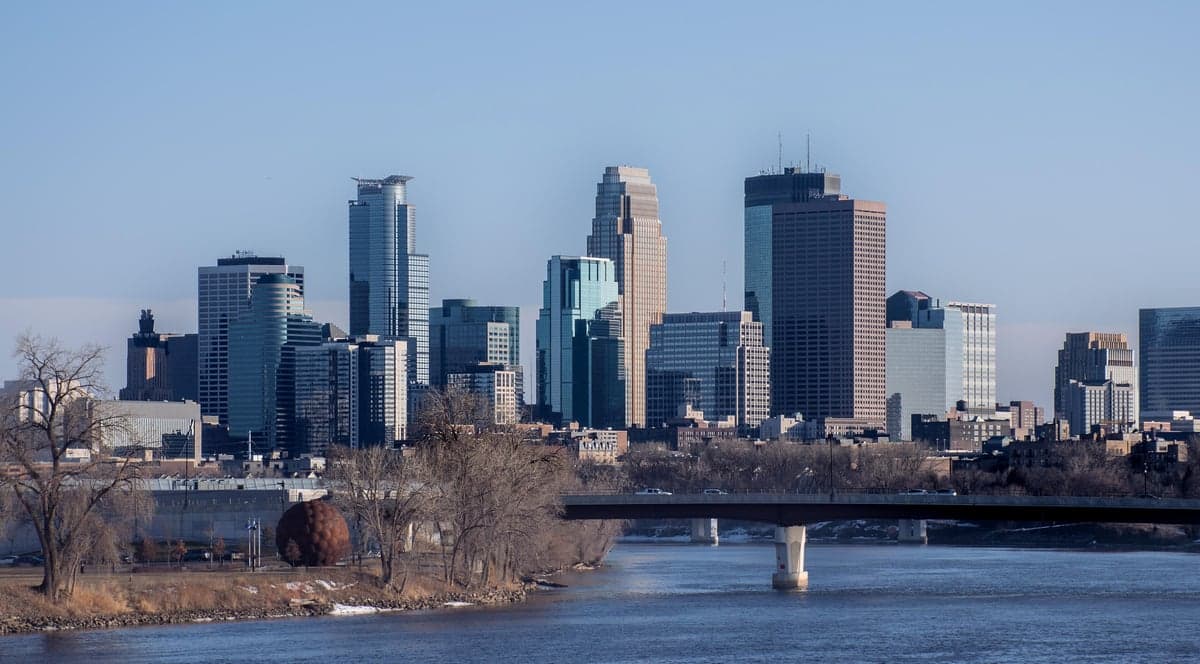
Photo: Wikipedia
Demographics of Minneapolis, MN
Affluence Level in Minneapolis, MN
A middle-class area roughly in line with national averages across income, home values, education, and employment.
People of Minneapolis, MN
The people of Minneapolis today number 426,845, forming a densely populated urban core that is notably more educated and racially diverse than the surrounding state. With 54.5% of adults holding a college degree, the city has a pronounced professional-class character, yet it also contains significant working-class and immigrant communities. The population is predominantly white (59.5%), but Black residents (18.1%) and Hispanic residents (10.5%) represent substantial and historically rooted minorities, while East/Southeast Asian communities (4.2%) and Indian-subcontinent residents (1.0%) add further layers of diversity. The city’s identity is shaped by a blend of Scandinavian and German pioneer heritage, a major African American migration, and more recent waves of Somali, Hmong, and Latino arrivals, creating a complex social fabric that is both progressive-leaning and economically stratified.
How the city was settled and grew
Minneapolis was founded in the 1850s at the confluence of the Mississippi and Minnesota Rivers, with the original European settlers drawn by the waterpower of St. Anthony Falls. The first major wave consisted of Yankees from New England and upstate New York, who established the milling and lumber industries that made the city the "Flour Milling Capital of the World." They built their homes in the Lowry Hill and Kenwood neighborhoods, areas that remain affluent and architecturally distinguished today. A second, far larger wave arrived from Scandinavia—Norwegians and Swedes—beginning in the 1860s and continuing through the 1910s, drawn by jobs in the mills, railroads, and emerging manufacturing. These immigrants concentrated in Northeast Minneapolis, a district still marked by its Scandinavian churches, social clubs, and the annual Syttende Mai parade. Germans and Poles also settled in significant numbers, particularly in the Near North and Phillips neighborhoods, creating a dense, working-class, ethnic patchwork. By 1900, Minneapolis was overwhelmingly white and European-born, with a population that had surged past 200,000.
Modern era (post-1965)
The 1965 Hart-Cellar Immigration Act and the end of restrictive national-origin quotas reshaped Minneapolis’s population dramatically. The most transformative change was the arrival of Hmong refugees from Laos beginning in the late 1970s, resettled by church and state agencies. They concentrated in the Phillips and Powderhorn Park neighborhoods on the South Side, creating a vibrant East/Southeast Asian commercial corridor along Franklin Avenue. Today, Hmong and other Southeast Asian communities remain a visible presence in these areas, though younger generations are suburbanizing to places like Brooklyn Park and St. Paul. Simultaneously, the city’s Black population, which had grown steadily during the Great Migration from the South (1910–1970), expanded further with the arrival of Somali refugees in the 1990s and 2000s. Somali families settled heavily in the Cedar-Riverside neighborhood, now often called "Little Mogadishu," and in the Bryn Mawr and Whittier areas. The Hispanic population, largely Mexican and Central American, grew from the 1980s onward, clustering in the East Lake Street corridor and the Midtown Phillips area. Meanwhile, white flight to suburbs like Edina and Bloomington reduced the city’s white share from over 90% in 1960 to 59.5% today, though recent years have seen a modest return of young white professionals to downtown and the North Loop.
The future
The population of Minneapolis is likely to continue diversifying slowly, with the white share declining gradually as the city becomes a destination for both domestic migrants and international refugees. The East/Southeast Asian population is plateauing as Hmong families suburbanize and birth rates fall, but the Indian-subcontinent population (1.0%) is growing from tech and medical professionals, though it remains small. The Hispanic share (10.5%) is expected to rise steadily through both immigration and higher birth rates, with the East Lake Street corridor becoming an increasingly Latino commercial and residential hub. The Black population (18.1%) is stabilizing, but internal migration from the South has slowed, and Somali families are beginning to follow the Hmong pattern of moving to first-ring suburbs. The city is not homogenizing; rather, it is tribalizing into distinct enclaves—wealthy, white, and highly educated in the Southwest and downtown; Black and Somali in the North and Cedar-Riverside; Hispanic in the South-Central corridor; and a shrinking but still significant Scandinavian-descended working class in Northeast. The next 10–20 years will likely see continued gentrification pressure on historically immigrant neighborhoods, pushing lower-income residents outward while the core becomes more professional and white.
For someone moving to Minneapolis now, the city offers a highly educated, culturally varied environment, but one where neighborhood choice strongly determines daily experience. The population is becoming more polarized by income and education, with the college-educated white majority concentrated in amenity-rich districts while immigrant and minority communities face rising housing costs and displacement pressure. It is a city of distinct, self-reinforcing demographic zones rather than a melting pot, and newcomers should expect to find their social and economic niche quickly.

* Values derived from national, state, county, city and local statistics and may differ in a specific area. Last updated: 2026-04-29T21:30:58.000Z
Narrative content on this page is AI-generated and may contain mistakes. Verify any details that matter before acting on them.
ReloMaps may earn a commission from affiliate links at no extra cost to you.

