 Popular
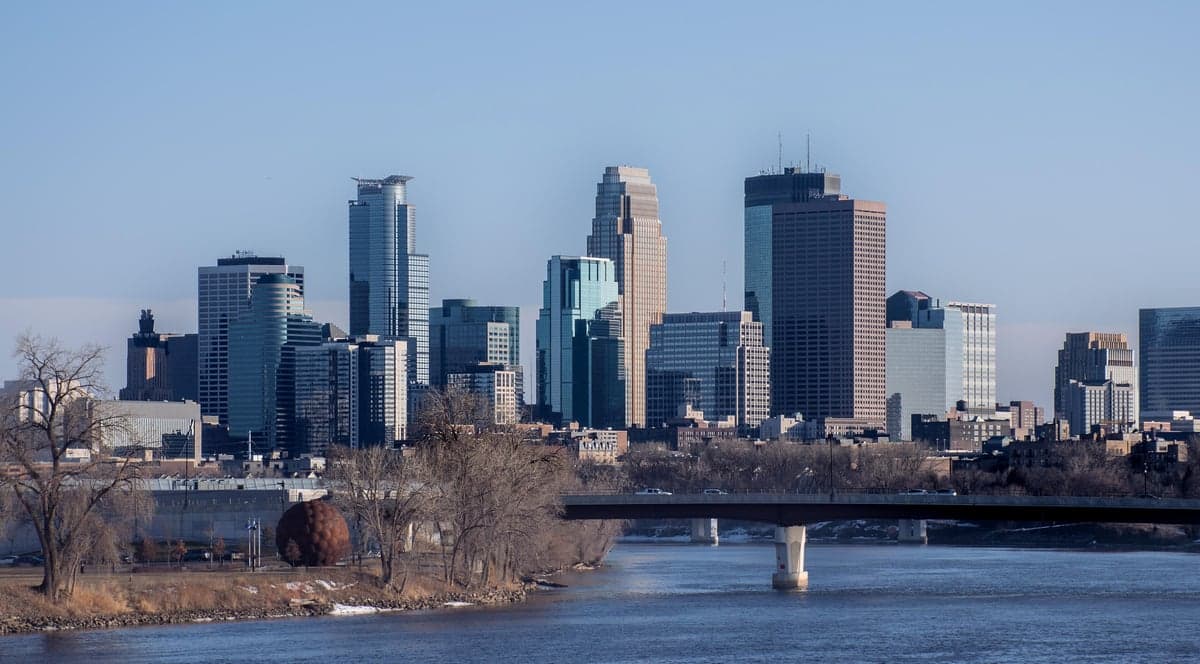
Photo: Wikipedia
Personal Sovereignty in Minneapolis, MN
Viable for self-reliance. Generally workable, though some barriers may limit total independence.
What does Personal Sovereignty tell us?
Personal Sovereignty measures your capacity for self-reliance and independence with minimal government friction. Higher scores mean fewer barriers between you and the way you want to live... but it assumes you have the space you need and good neighbors.
What does this tell us?
Personal Sovereignty measures your capacity for self-reliance and independence with minimal government friction. Higher scores mean fewer barriers between you and the way you want to live... but it assumes you have the space you need and good neighbors.
State Policy
Energy independence: Importer (20% of energy produced in-state)
Personal Liberty
Homesteading

Personal Liberty Analysis
Minneapolis presents a challenging environment for personal sovereignty, characterized by a dense regulatory landscape that significantly constrains individual autonomy. The city's governance model, heavily influenced by state-level progressive policies, creates a framework where personal freedoms in areas like self-defense, medical choice, and property use are notably restricted compared to less urbanized parts of the Midwest. For those prioritizing self-reliance and minimal government interference, Minneapolis ranks low on the sovereignty scale, requiring careful navigation of numerous local ordinances and state mandates that can feel intrusive to a survivalist or prepper mindset.
Tax burden and regulatory posture: How much the state takes and controls
Minnesota's tax burden is among the highest in the nation, and Minneapolis residents bear the brunt of it. The state's progressive income tax tops out at 9.85% for high earners, while Minneapolis adds a city sales tax of 0.5% on top of the state's 6.875% rate, bringing the total in some areas to over 8%. Property taxes in Hennepin County are also steep, with effective rates often exceeding 1.2% of a home's assessed value, which is significantly higher than neighboring states like South Dakota or Iowa. This heavy taxation funds a sprawling public sector that directly impacts personal sovereignty—funding extensive social programs, public transit, and regulatory agencies that dictate everything from building codes to business operations. The regulatory posture is similarly aggressive: Minneapolis has a robust rental licensing system, strict energy efficiency mandates for homes, and a city-wide minimum wage of $15.57 per hour (as of 2025) that applies to nearly all employers, limiting the ability to negotiate private contracts. For a prepper, this means every dollar earned is heavily taxed before it can be saved or invested in self-reliance supplies, and every property improvement requires permits and inspections that can delay or derail projects like installing a backup generator or building a root cellar.
Self-defense and gun law specifics: What you can and cannot do
Minneapolis operates under Minnesota's "permit to carry" system, but the city itself adds layers of restriction that make self-defense a legal minefield. The state requires a permit to carry a handgun in public, which involves a training course and background check, but Minneapolis has gone further by banning firearms in city-owned buildings, parks, and public transit stations—effectively disarming law-abiding citizens in large swaths of the urban core. The city council has also passed ordinances requiring safe storage of firearms, which can be interpreted broadly to include locking devices that slow access in a home defense scenario. Magazine capacity is not currently restricted at the state level, but Minneapolis has considered local bans, and the political climate suggests such measures could be enacted. Stand-your-ground laws do not exist in Minnesota; instead, the state imposes a duty to retreat in public spaces if safely possible, which can complicate self-defense claims. For a survivalist, this means carrying a firearm for personal protection in Minneapolis requires constant awareness of prohibited zones, and using it in self-defense could lead to legal scrutiny even in a justified situation. The city's high violent crime rate—with 2023 data showing over 1,200 aggravated assaults per 100,000 residents—makes these restrictions particularly concerning for those who prioritize personal safety over government mandates.
Self-reliance and homesteading viability: Lot sizes, zoning, and off-grid feasibility
Minneapolis is fundamentally hostile to traditional homesteading and off-grid living. The city's zoning code mandates minimum lot sizes of 5,000 square feet in most residential areas, but the reality is that many lots are smaller, and the dense urban layout leaves little room for substantial food production or livestock. Raising chickens is permitted in some residential zones, but only with a permit and strict limits on the number of birds, while goats, pigs, or larger livestock are outright banned in nearly all city limits. Gardening is allowed, but homeowners' associations and city codes often restrict the height of fences, the use of rain barrels, and the installation of solar panels without extensive permitting. Off-grid feasibility is virtually nonexistent: Minneapolis requires connection to the municipal water and sewer system for all habitable structures, and building codes mandate grid-tied electrical systems for new construction. The city's climate—with harsh winters and limited growing seasons—further complicates self-reliance, as heating a home without natural gas or electricity is impractical under current regulations. For a prepper, the best option within city limits is a small urban garden and a backup generator, but true self-sufficiency requires moving to the exurbs or rural areas like Wright County or Chisago County, where lot sizes are larger and zoning is more permissive.
Personal liberties: Parental rights, medical autonomy, speech, and property
Minneapolis's approach to personal liberties reflects a progressive governance model that often prioritizes collective outcomes over individual rights. Parental rights are notably constrained: the state has a robust child protection system that can intervene in family decisions, and Minneapolis Public Schools have implemented policies on gender identity and curriculum that allow schools to withhold information from parents if they deem it necessary. Medical autonomy is heavily restricted by state mandates, including vaccine requirements for school attendance and a strict regulatory environment for alternative medicine. The city also has a "safe injection site" pilot program that some view as government overreach into public health decisions. Free speech is protected under the First Amendment, but Minneapolis has enacted "disorderly conduct" ordinances that can be used to limit protests or public gatherings, and the city's hate speech policies can chill certain expressions. Property rights are the most constrained area: the city's rent control ordinance, passed in 2021, limits annual rent increases to 3% plus inflation, which some argue infringes on landlords' ability to manage their property. Additionally, Minneapolis has a strong eminent domain authority and has used it for redevelopment projects, raising concerns about government seizure of private land. For a conservative-leaning individual, these policies create an environment where personal decisions—from how to raise children to what medical treatments to pursue—are subject to extensive government oversight.
Overall, Minneapolis ranks poorly for personal sovereignty compared to other areas in the Upper Midwest. The combination of high taxes, restrictive gun laws, limited homesteading opportunities, and intrusive government policies makes it a difficult place for those who value self-reliance and minimal state interference. Neighboring states like Wisconsin, Iowa, and South Dakota offer significantly more freedom in terms of lower taxes, less restrictive gun laws, and more permissive zoning for self-sufficient living. For a survivalist or prepper, Minneapolis is best viewed as a place to work or visit, not a place to build a long-term strategy for personal autonomy. The city's governance model is fundamentally at odds with the principles of individual sovereignty, and those who prioritize these values should look elsewhere for a home base that respects their right to live as they see fit.

* Values derived from national, state, county, city and local statistics and may differ in a specific area. Last updated: 2026-04-29T21:30:58.000Z
Narrative content on this page is AI-generated and may contain mistakes. Verify any details that matter before acting on them.
ReloMaps may earn a commission from affiliate links at no extra cost to you.

