 Popular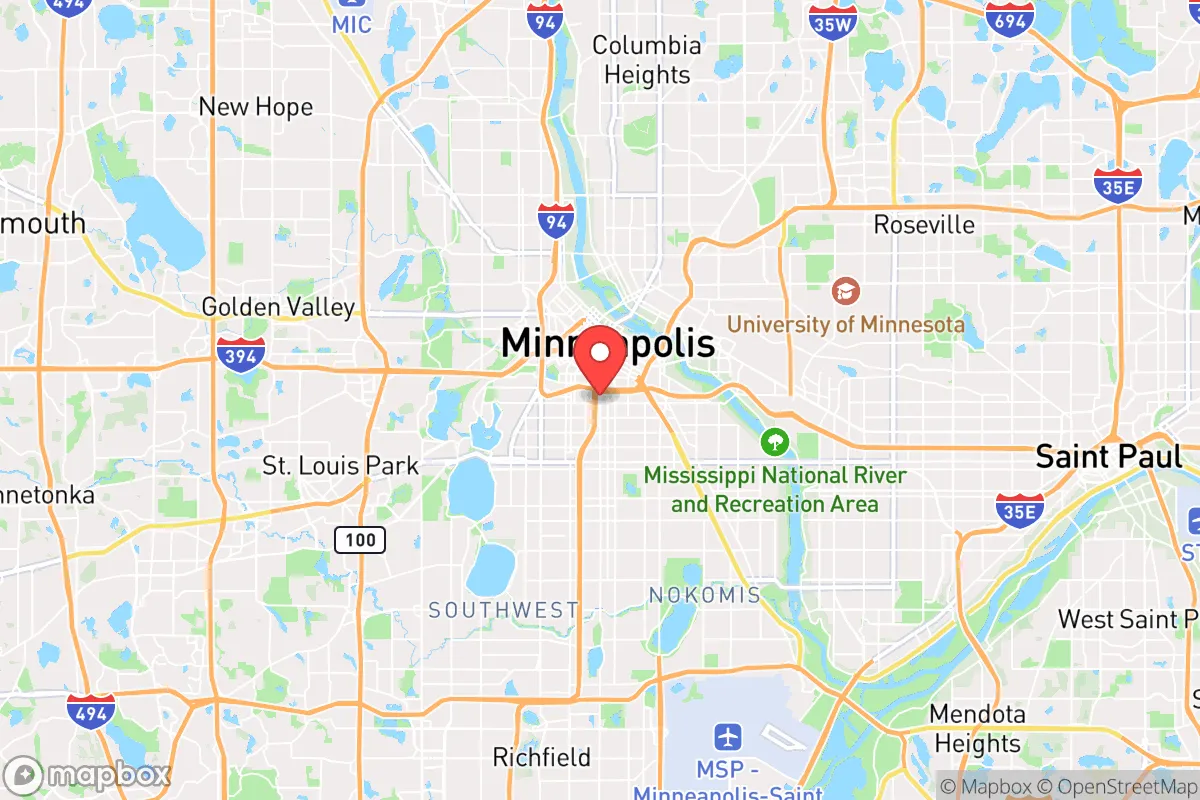
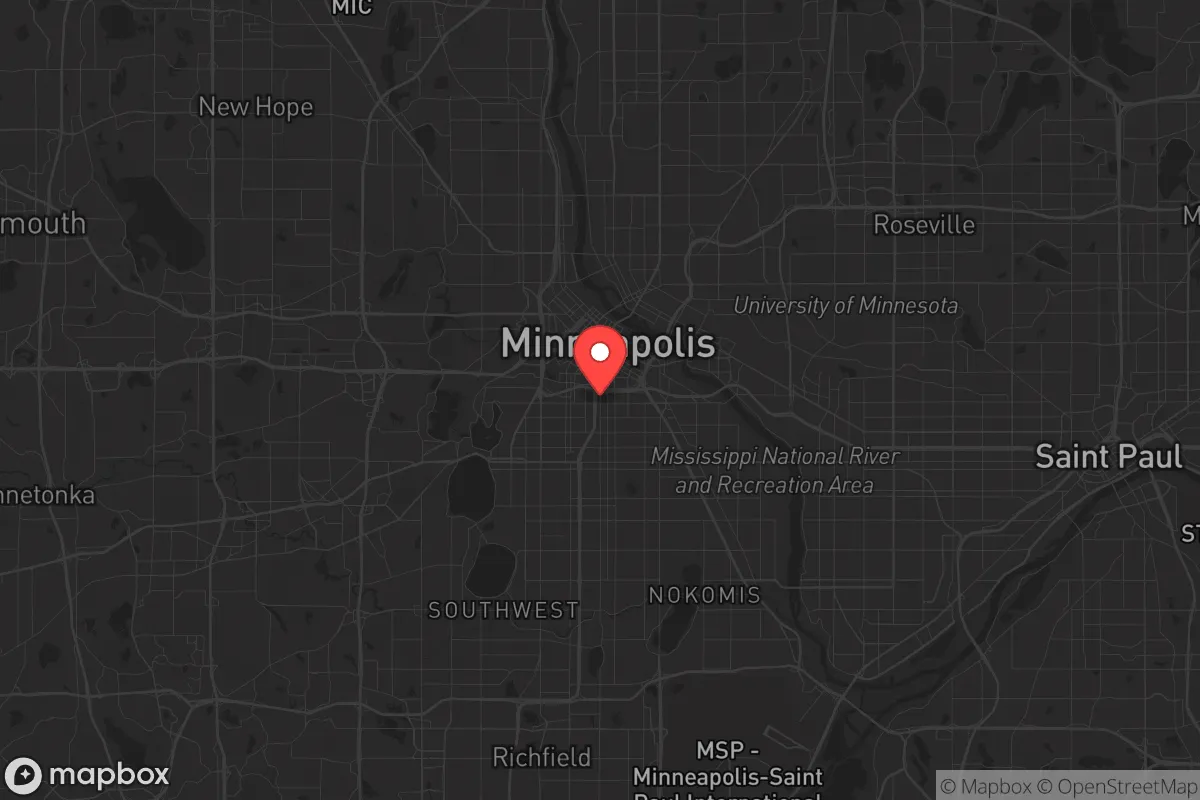
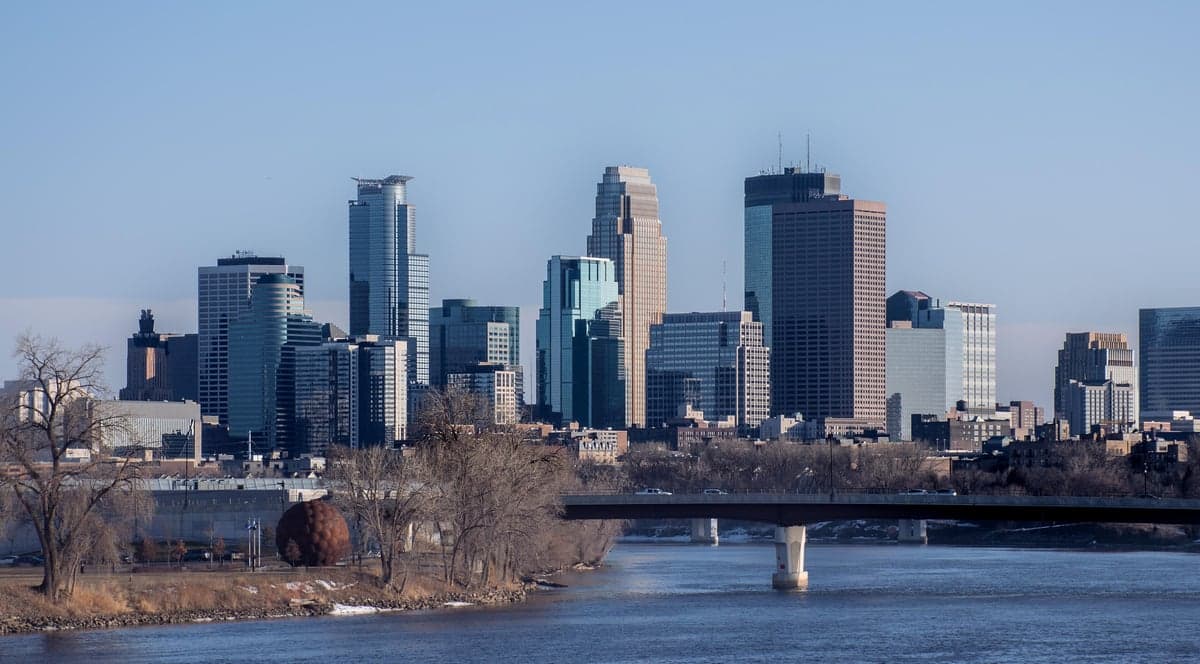
Photo: Wikipedia
Political ClimatePolitical Climate in Minneapolis, MN
District shown is the primary district for this city’s centroid. Cities may span multiple districts.
Local Political AnalysisPolitical Analysis of Minneapolis, MN
Minneapolis has been a deep-blue stronghold for decades, but the political climate here has shifted dramatically in just the last few years. The Cook PVI of D+32 tells you the city leans heavily Democratic, but that number doesn't capture the radical turn toward progressive activism that's reshaped local governance since 2020. If you're used to a more balanced, common-sense approach to government, you'll notice the difference almost immediately—especially in how city leaders handle public safety, taxes, and personal freedoms.
How it compares
Drive just 15 minutes west to St. Louis Park or Edina, and you'll find a more moderate, business-friendly vibe—though still solidly blue. The real contrast comes when you head to the outer-ring suburbs like Lakeville or Chaska, or farther out to exurbs like Northfield or Stillwater. Those areas lean Republican or purple, with lower property taxes, less restrictive zoning, and a stronger emphasis on individual property rights. Minneapolis itself, however, has become a laboratory for progressive policies—from defunding the police (which actually happened in 2020, though the term is now avoided) to rent control measures and a citywide minimum wage hike that's squeezed small businesses. The surrounding towns often watch Minneapolis with a mix of curiosity and caution, as some of those policies ripple outward through regional politics.
What this means for residents
If you value personal freedoms—like the right to keep and bear arms, choose your own healthcare, or run a business without endless red tape—Minneapolis will feel increasingly restrictive. The city council has pushed for stricter gun control ordinances, expanded paid leave mandates, and a "just cause" eviction law that makes it harder for landlords to manage their properties. Property taxes have risen steadily, partly to fund expanded social programs and a police department that's been rebuilt after the 2020 cuts, but with new oversight that some residents find intrusive. The school board has also embraced progressive curriculum changes, including critical race theory-inspired lessons and gender identity policies that have sparked heated debates at school board meetings. For families, this means more involvement in your kids' education just to ensure their values aren't being overwritten.
Looking ahead, the trajectory is concerning. The city's population has actually declined since 2020—down about 6%—as families and businesses relocate to less politically charged suburbs or out of state entirely. The homelessness crisis has worsened, with tent encampments appearing in parks and along highways, while city leaders debate whether to enforce camping bans or embrace "housing first" models that critics say enable addiction. The 2024 election saw Minneapolis vote for Kamala Harris by a 70-point margin, but turnout was lower than in 2020, suggesting some disillusionment even among the base. Long-term, if the current trend continues, Minneapolis risks becoming a cautionary tale of how fast a city can lose its middle-class backbone when government overreach goes unchecked. For now, it's a place where you'll need to stay vigilant about your rights—and maybe keep one eye on the exit.

State Political ClimatePolitical Climate in Minnesota
State Political AnalysisPolitical Environment in the State
Minnesota has undergone a dramatic political transformation over the past two decades, shifting from a classic purple battleground to a reliably blue state in presidential elections, though with a deep and widening urban-rural split. The state hasn’t voted for a Republican presidential candidate since 1972, but the margin has tightened and loosened with national trends; in 2024, Kamala Harris carried it by about 7 points, down from Joe Biden’s 7.4-point win in 2020. The real story is the state legislature: Democrats (DFL) have held the governorship since 2019 and, after the 2022 midterms, secured a full trifecta for the first time in a decade, passing a sweeping progressive agenda that has alarmed many conservatives. The old “Minnesota Nice” moderation is giving way to a more polarized, high-stakes political environment.
Urban vs. rural divide
The political map of Minnesota is a textbook case of the urban-rural chasm. The Twin Cities metro area—Minneapolis, St. Paul, and their inner-ring suburbs like Edina, Bloomington, and Roseville—is the engine of Democratic dominance, producing massive vote margins that swamp the rest of the state. In 2024, Hennepin and Ramsey counties alone delivered a net margin of over 400,000 votes for Harris. Meanwhile, greater Minnesota is overwhelmingly Republican: counties like Stearns (St. Cloud), Olmsted (Rochester), and Wright (west of the metro) have trended redder, with Wright County voting +35 points for Trump in 2024. The Iron Range in the northeast—historically a DFL stronghold due to union mining—has been flipping hard toward the GOP, driven by cultural and economic grievances. St. Louis County (Duluth) is now a true swing county, while Lake and Cook counties on the North Shore remain blue but are shrinking in population. The divide isn’t just geographic; it’s cultural, with rural residents feeling increasingly alienated from the metro-driven policy agenda.
Policy environment
Since the DFL trifecta took effect in 2023, Minnesota has enacted a policy blitz that would make a Texas conservative’s head spin. The state now has a progressive income tax with a top rate of 9.85% on income over $200,000 (single filers), one of the highest in the nation. Corporate taxes sit at 9.8%, and the state sales tax is 6.875% (with local add-ons). In 2023, the legislature passed a paid family and medical leave program funded by a new payroll tax, a carbon-free electricity mandate by 2040, and a driver’s license-for-all law allowing undocumented immigrants to obtain licenses. On education, the state poured billions into public schools and expanded free school meals, but also passed a “trans refuge” law shielding gender-affirming care for minors from out-of-state parents’ objections—a major flashpoint for parental rights advocates. Election laws were loosened: automatic voter registration, pre-registration for 16- and 17-year-olds, and no-excuse absentee voting are now permanent. For a conservative, the policy environment feels like a one-party progressive steamroller.
Trajectory & freedom
On the freedom index, Minnesota is moving decisively in the wrong direction for conservatives. The 2023 session saw the passage of red flag (Extreme Risk Protection Order) laws, universal background checks for gun transfers, and a repeal of the permit-to-carry preemption, allowing cities like Minneapolis and St. Paul to enact their own gun restrictions. The PRO Act (Protecting Reproductive Options) codified abortion rights into state law, removing nearly all restrictions. Meanwhile, the Minnesota Human Rights Act was expanded to include “gender identity” and “sexual orientation” as protected classes, with enforcement powers that have been used against Christian bakers and photographers. On the plus side, the state has no income tax on Social Security benefits, and property taxes are relatively moderate compared to the Northeast. But the overall trajectory is clear: the state is using its trifecta to centralize power in St. Paul, preempt local control, and expand the regulatory state. The 2024 legislative session added a new “clean transportation” standard that effectively mandates electric vehicle adoption, and a data privacy bill that, while well-intentioned, adds compliance burdens for small businesses.
Civil unrest & political movements
Minnesota has been a national flashpoint for civil unrest since the 2020 murder of George Floyd in Minneapolis, which sparked the largest protests in the state’s history and a wave of arson, looting, and property destruction that damaged over 1,500 businesses. The aftermath saw a dramatic defund-the-police movement in Minneapolis, though a 2021 ballot measure to replace the police department was narrowly defeated. The Minnesota Freedom Fund and other bail-out organizations became national symbols of progressive activism. On the right, the “Take Back Minnesota” movement and the Minnesota Gun Owners Caucus have grown in influence, organizing at the grassroots level. The 2022 election saw a surge in rural turnout, but it wasn’t enough to overcome the metro. Immigration politics are also a live wire: Minnesota is a sanctuary state in practice, with the driver’s license law and a 2023 law prohibiting local law enforcement from cooperating with ICE detainers. The St. Cloud area has seen tensions over Somali immigration, while Worthington in the southwest has a large meatpacking immigrant workforce. Election integrity remains a concern for conservatives, given the state’s move to universal mail-in ballots in 2020 and the lack of strict voter ID laws.
Projection
Over the next 5-10 years, Minnesota is likely to become more, not less, progressive at the state level, driven by continued population growth in the Twin Cities metro and the exodus of conservative-leaning rural residents to states like Florida, Texas, and South Dakota. The DFL trifecta may not last forever—the state Senate is up in 2026 and could flip—but the structural advantage for Democrats in the metro is hard to overcome. The 2020 census showed Minnesota growing slowly, with most gains in the metro and exurbs like Lakeville, Prior Lake, and Woodbury, which are trending purple but still lean blue. The Iron Range’s shift to the right may slow, but it won’t reverse the metro’s dominance. A new resident moving in now should expect higher taxes, more regulations, and a cultural environment that is increasingly hostile to traditional values. The state’s “North Star” economic development initiatives are focused on green energy and tech, not traditional industries. If you value low taxes, gun rights, school choice, and local control, Minnesota is a tough place to raise a family unless you can afford the exurbs or a rural property with a long commute.
For a conservative considering relocation, Minnesota offers a high quality of life in many respects—great schools, abundant nature, and a strong economy—but the political climate is a serious headwind. The state government is actively working to expand its reach into your healthcare decisions, your children’s education, and your business operations. If you’re willing to fight at the local level and can stomach the tax burden, there are still conservative-friendly pockets like Rogers, St. Michael, and the St. Croix Valley. But if you’re looking for a state that respects your freedom to live as you see fit, you’ll find more alignment in the Dakotas, Iowa, or Wisconsin. Minnesota is a beautiful state with a troubled political trajectory—come for the lakes, but be ready to vote like your rights depend on it.
* Values derived from national, state, county, city and local statistics and may differ in a specific area. Last updated: 2026-04-29T21:30:58.000Z
Narrative content on this page is AI-generated and may contain mistakes. Verify any details that matter before acting on them.
ReloMaps may earn a commission from affiliate links at no extra cost to you.

