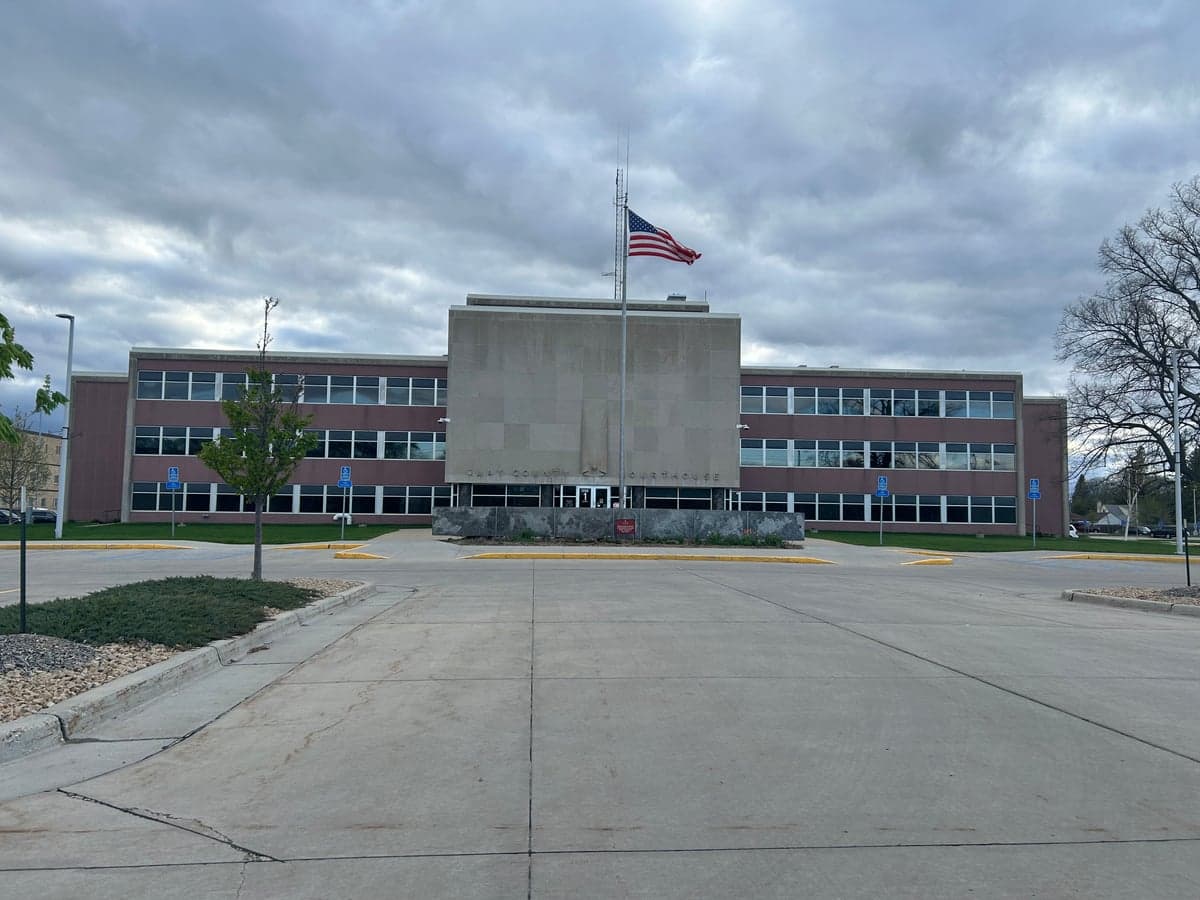
Photo: Wikipedia
Personal Sovereignty in Clay County
Viable for self-reliance. Generally workable, though some barriers may limit total independence.
What does Personal Sovereignty tell us?
Personal Sovereignty measures your capacity for self-reliance and independence with minimal government friction. Higher scores mean fewer barriers between you and the way you want to live... but it assumes you have the space you need and good neighbors.
What does this tell us?
Personal Sovereignty measures your capacity for self-reliance and independence with minimal government friction. Higher scores mean fewer barriers between you and the way you want to live... but it assumes you have the space you need and good neighbors.
State Policy
Energy independence: Importer (20% of energy produced in-state)
Personal Liberty
Homesteading

Personal Liberty Analysis
Clay County, Minnesota offers a notably higher degree of personal sovereignty than much of the Twin Cities metro, but it is not a libertarian free zone. The county’s rural character, combined with Minnesota’s relatively moderate state-level regulatory framework, creates an environment where self-reliant individuals can operate with fewer constraints than in Hennepin or Ramsey County. However, state-level taxes, gun laws, and education mandates still impose significant limits on autonomy, making Clay County a mixed bag for those prioritizing maximum personal freedom. The key is understanding where local enforcement and culture diverge from state statutes, particularly in the county’s smaller towns versus the Moorhead urban core.
Tax burden and regulatory posture: How Clay County compares to the state
Minnesota’s overall tax burden ranks among the highest in the nation, and Clay County residents are not exempt. The state income tax tops out at 9.85%, and property taxes in Clay County average around 1.1% of home value, slightly below the state average but still significant. For a survivalist or prepper mindset, the concern is less about the raw rate and more about what you get for it: extensive state mandates on land use, building codes, and environmental regulations. Within Clay County, the regulatory posture varies sharply. Moorhead, the county seat and largest city, enforces standard suburban zoning with minimum lot sizes of 6,000-8,000 square feet and requires permits for most outbuildings. Drive 15 minutes east to Barnesville or Hawley, and the regulatory touch lightens considerably. These smaller towns have more permissive zoning for accessory structures, livestock, and home-based businesses. The county itself has no county-wide zoning in unincorporated areas, meaning if you buy land outside city limits—say near Georgetown or Downer—you face far fewer bureaucratic hurdles. The state’s wetland and shoreland regulations still apply near the Red River and smaller lakes, but for dry land parcels, the regulatory burden is manageable.
Self-defense and gun law specifics: What Minnesota’s carry permit system means for Clay County
Minnesota is a shall-issue state for concealed carry, and Clay County’s sheriff’s office processes permits efficiently—typically within 30 days. There is no county-level restriction on magazine capacity or firearm types beyond state law. However, the state does require a permit to purchase for handguns and semi-automatic rifles, a background check for all private sales, and a 30-day waiting period for handgun purchases from dealers. For the prepper mindset, this is a significant infringement compared to free states like Idaho or Montana. Moorhead has a few gun-friendly businesses and ranges, but the culture is more subdued than in rural areas. In Ulen or Hitterdal, firearms are a routine part of life, and open carry is common without drawing attention. The practical reality is that enforcement of state gun laws is lax in the county’s rural precincts; sheriff’s deputies are more focused on drug interdiction and traffic safety than on checking magazine capacities. Stand-your-ground laws do not exist in Minnesota—duty to retreat applies outside the home—so self-defense legalities are less favorable than in Texas or Florida. For those prioritizing armed autonomy, Clay County is workable but not ideal; the state legislature in St. Paul remains a persistent threat to further restrictions.
Self-reliance and homesteading viability: Lot sizes, zoning, and off-grid feasibility
Homesteading viability in Clay County depends almost entirely on location. In unincorporated areas, there are no county-wide minimum lot sizes for agricultural use, but building a primary residence requires a minimum of 1-2 acres depending on the township. Off-grid living is legally feasible but practically challenging. Minnesota state law requires dwellings to have a sanitary sewage system (septic or holding tank) and a potable water source; there is no state mandate to connect to grid electricity, but local townships may have their own building codes. Felton and Glyndon have more relaxed enforcement of these codes, while Moorhead requires full utility connections for any new construction. Rainwater collection is legal but limited to outdoor use; indoor use requires a permit and treatment system. Solar panels are permitted statewide, but net metering rules are favorable only for grid-tied systems. For a serious off-grid setup, look at parcels in Beltrami or Kragnes townships, where enforcement is minimal and neighbors are far enough apart to avoid complaints. The county’s soil is rich for gardening, and the growing season (about 130 days) supports corn, beans, squash, and root vegetables. Livestock is allowed in unincorporated areas without special permits, though state animal waste management rules apply for large operations. For the self-reliant individual, Clay County offers a middle ground: more freedom than the suburbs, but less than the open-range counties of western South Dakota.
Personal liberties: Parental rights, medical autonomy, speech, and property
Parental rights in Minnesota are under increasing pressure from state mandates. The state requires comprehensive sex education in public schools, and parents cannot opt out of specific lessons—only the entire health curriculum. School choice is limited; open enrollment is available, but transportation is not provided. Moorhead Area Public Schools and Barnesville Public Schools both follow state standards, but the smaller districts like Ulen-Hitterdal and Hawley have more conservative school boards that resist progressive curriculum overreach. Medical autonomy is similarly constrained. Minnesota has a vaccine mandate for school attendance (with medical and philosophical exemptions available, though the latter is under legal challenge). The state’s emergency powers law, used extensively during COVID-19, remains a concern for those who value medical choice. Property rights are relatively strong in Clay County. There is no county-wide rent control, no inclusionary zoning mandates, and no short-term rental bans outside Moorhead. Eminent domain is rarely used for non-transportation projects. Free speech is protected under the First Amendment, but Minnesota’s hate speech statutes and campaign finance laws create a chilling effect for those who speak controversially. The county’s political culture is mixed: Moorhead leans left, while the rural townships vote reliably conservative. This means that in practice, personal liberties are respected in daily life as long as you stay out of the Moorhead city limits for controversial activities.
Overall, Clay County offers a moderate level of personal sovereignty that is significantly better than the Twin Cities but falls short of the free-state ideal. For the survivalist or prepper, the county’s rural townships—Barnesville, Hawley, Ulen, Felton, and Georgetown—provide a workable base for self-reliant living, with lower taxes, lighter regulation, and a gun-friendly culture. The Moorhead urban core, by contrast, mirrors the state’s progressive overreach. The biggest threats to autonomy here come from St. Paul, not the county courthouse. If you can tolerate Minnesota’s state-level taxes, gun laws, and education mandates, Clay County’s local environment gives you room to breathe. If those state-level constraints are dealbreakers, look west to North Dakota or south to South Dakota for a more complete package of personal sovereignty.

* Values derived from national, state, county, city and local statistics and may differ in a specific area. Last updated: 2026-05-09T01:57:22.000Z
Narrative content on this page is AI-generated and may contain mistakes. Verify any details that matter before acting on them.
ReloMaps may earn a commission from affiliate links at no extra cost to you.

