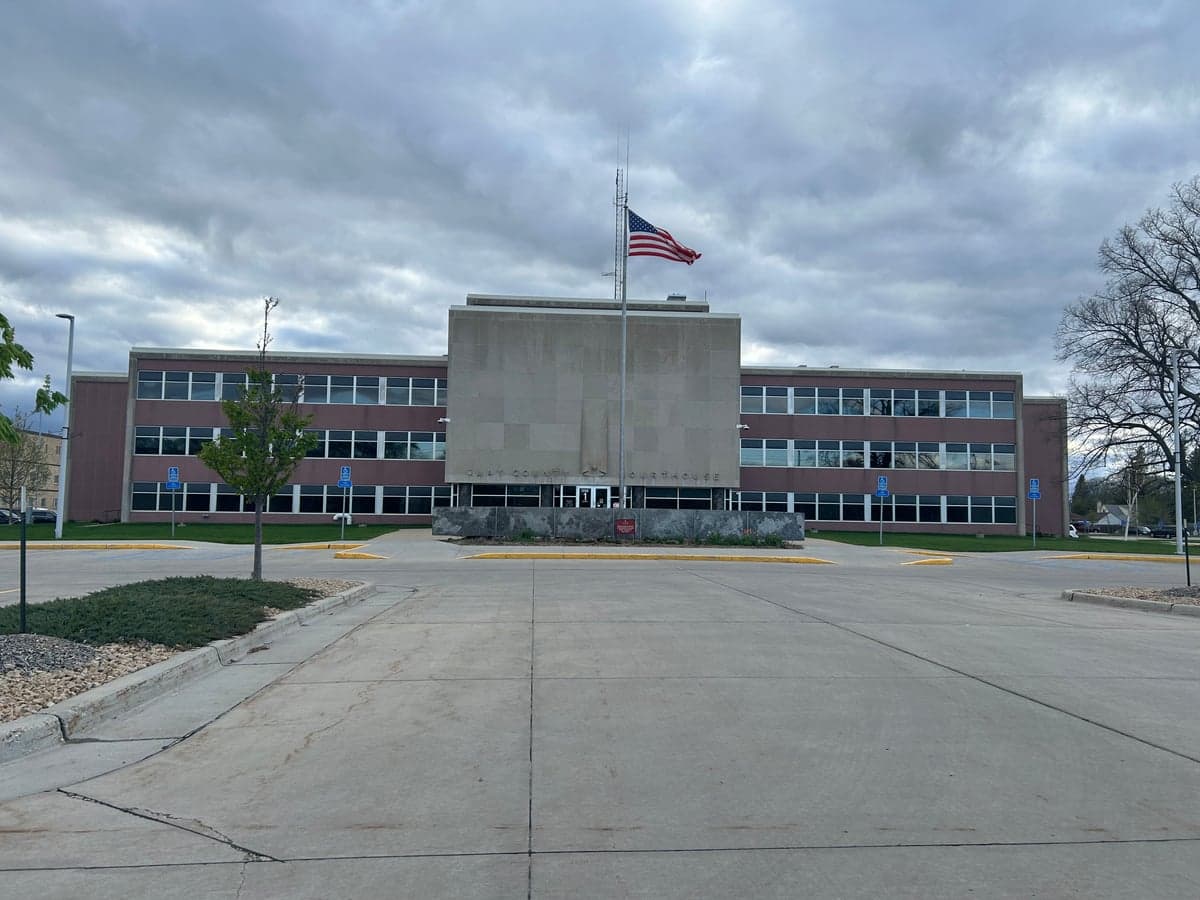
Photo: Wikipedia
Political ClimatePolitical Climate in Clay County
Showing district-level results — no local-only data available.
Local Political AnalysisPolitical Analysis of Clay County
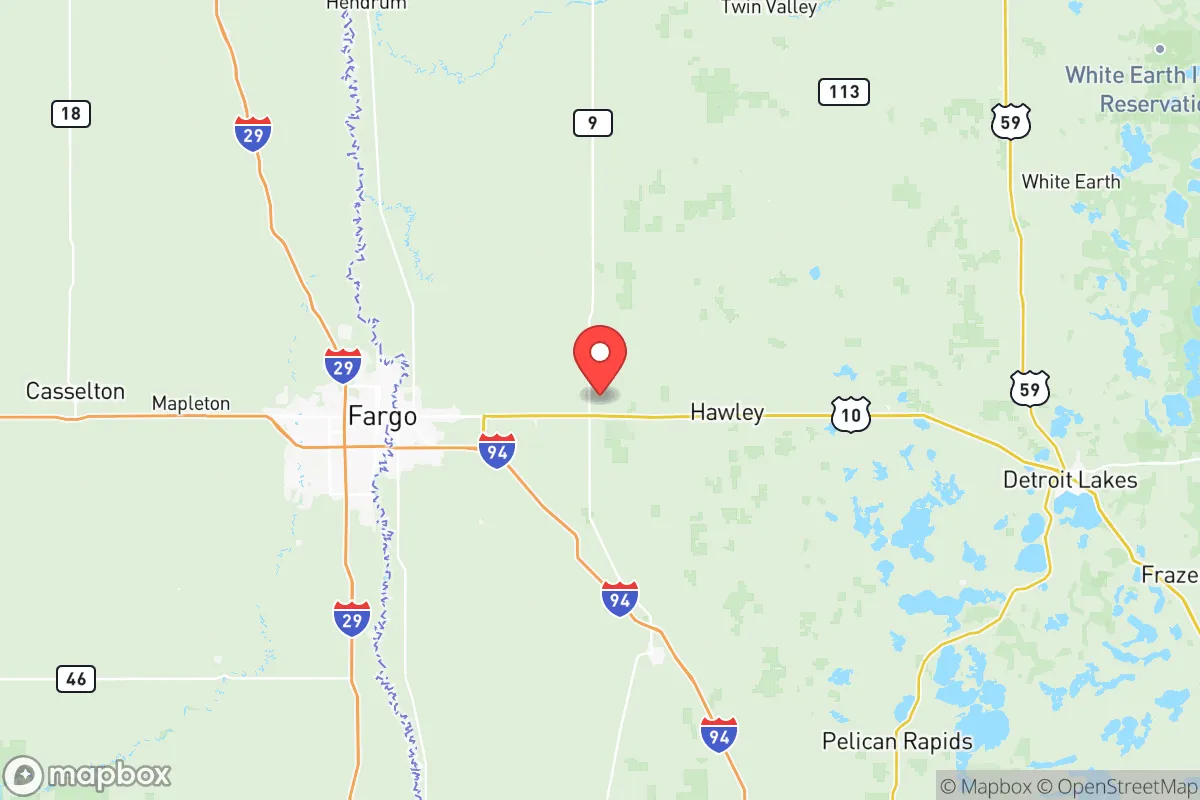
Clay County, Minnesota, is a solidly conservative area with a Cook PVI of R+18, meaning it votes about 18 points more Republican than the nation as a whole. That’s a stark contrast to the state of Minnesota, which leans Democratic with a PVI of D+3. The county has been reliably red for decades, but you can feel the political winds shifting, especially in the county seat of Moorhead, where progressive policies are starting to creep in. The rural townships and smaller communities like Barnesville, Hawley, and Ulen are still deeply conservative, but the urban core is becoming a battleground.
How it compares
The difference between Clay County and the rest of Minnesota is night and day. While the state as a whole has been trending blue—thanks to the Twin Cities metro—Clay County remains a Republican stronghold. In the 2024 presidential election, the county went for the GOP candidate by a comfortable margin, while Minnesota overall went blue. The real split is inside the county itself. Moorhead, home to Minnesota State University Moorhead and a growing population of younger, more transient residents, has precincts that lean left. Areas near the downtown core and the campus are where you’ll find the blue votes. But drive 15 minutes east to Barnesville or north to Hawley, and you’re in deep red territory. The swing precincts are in the suburban fringe of Moorhead—places like the Oakport Township area—where families are feeling the squeeze from rising taxes and overreach from the state government. These folks are the ones who decide elections here, and they’re getting nervous about how fast the progressive agenda is moving in St. Paul.
What this means for residents
For those of us who’ve lived here a while, the political climate means we’re constantly fighting to keep our freedoms intact. The state government in Minnesota has been pushing mandates on everything from energy standards to education curriculum, and Clay County residents are pushing back. You see it in local school board meetings, where parents are demanding transparency, and in county commission votes on land use and property rights. The rural areas are holding the line, but Moorhead is where the real tension is. The city council has flirted with zoning changes and “equity” initiatives that feel like government overreach to many. Long-term, if the progressive wave in Moorhead keeps growing, the county could become a purple patch, but the rural vote is still strong enough to keep it red for now. The key is whether the conservative base stays engaged—if they do, Clay County will remain a refuge from the worst of state-level overreach.
One thing that sets Clay County apart culturally is its strong agricultural roots and a no-nonsense attitude about personal responsibility. You won’t find the same level of government intervention here that you see in the Twin Cities. Local gun rights are respected, property taxes are lower than in the metro, and there’s a general distrust of any policy that tells you how to live your life. That said, the influence of North Dakota—just across the Red River—is real. Fargo’s more business-friendly environment and lower taxes are a constant reminder of what Minnesota could be if it got out of its own way. For now, Clay County is a conservative island in a blue state, but the tide is rising, and residents are watching closely.

State Political ClimatePolitical Climate in Minnesota
State Political AnalysisPolitical Environment in the State
Minnesota has a Cook PVI of D+3, meaning it leans about three points more Democratic than the national average, but that number masks a state that has shifted noticeably leftward over the past decade. The dominant coalition is a Twin Cities metro machine powered by Hennepin and Ramsey counties, combined with a growing suburban progressive base in places like Edina and St. Louis Park, while the rest of the state—particularly Greater Minnesota—has trended redder. Over the last 10-20 years, the state has moved from a purple battleground that went for George W. Bush in 2000 to a solidly blue state where Democrats now control the governorship, both legislative chambers, and the entire constitutional office slate, a trifecta they’ve used aggressively since 2023.
Urban vs. rural divide
The political map of Minnesota is a tale of two states. The Twin Cities metro—Minneapolis, St. Paul, and their inner-ring suburbs like Richfield and Roseville—drives the state’s blue lean, producing massive Democratic margins that swamp the rest of the state. In 2024, Hennepin County alone gave Democrats a net margin of over 300,000 votes, enough to cancel out Republican wins in most rural counties. Meanwhile, Greater Minnesota—places like St. Cloud, Mankato, and the Iron Range—has been shifting right. The Iron Range, once a reliably blue-collar Democratic stronghold, has flipped hard; St. Louis County outside Duluth now votes Republican in many precincts, and counties like Morrison and Mille Lacs have become deep red. The suburbs are the real battleground: places like Woodbury and Lakeville are competitive, but the trend is toward Democrats, especially among college-educated women. If you’re looking for a conservative-friendly pocket, you’re better off in exurbs like Chisago City or rural counties like Stearns, where the GOP still holds strong.
Policy environment
Minnesota’s policy environment has become a case study in progressive governance since the DFL (Democratic-Farmer-Labor Party) took full control in 2023. The state now has a progressive income tax with a top rate of 9.85% on income over $200,000, one of the highest in the nation, and a state sales tax of 6.875% that applies to most goods and some services. Property taxes are locally set but generally high, especially in the metro. On regulation, Minnesota has adopted California-style environmental rules, including a 2040 deadline for 100% carbon-free electricity, which is driving up energy costs. Education policy is a flashpoint: the state passed a universal school meal program and increased per-pupil funding, but also eliminated the requirement for parental notification when a student changes gender identity or pronouns at school—a major concern for parents. Healthcare is heavily regulated, with a state-run insurance exchange and a Medicaid expansion that covers about 1.2 million residents. Election laws are among the most liberal in the country: Minnesota has same-day voter registration, no-excuse absentee voting, and automatic voter registration through the DMV, which critics say opens the door to fraud, though no widespread issues have been proven. The state also restored felon voting rights upon release from prison in 2023.
Trajectory & freedom
On the freedom index, Minnesota is moving in the wrong direction for conservatives. The 2023 legislative session was a blitz of bills that expanded government control: the state passed a red flag law (Extreme Risk Protection Order) allowing courts to temporarily seize firearms from individuals deemed a risk, a universal background check law, and a waiting period for handgun purchases. Parental rights took a hit with the aforementioned school policy on gender identity, and the state also banned conversion therapy for minors. Medical autonomy was curtailed by a law codifying abortion access as a “fundamental right” and removing parental notification requirements for minors seeking abortions. On property rights, the state tightened rent control in Minneapolis and allowed local governments to impose inclusionary zoning. The only bright spot for liberty-minded residents is that Minnesota has no right-to-work law, meaning union membership can be required for employment in some sectors, and the state has a high minimum wage ($10.85 for large employers). The trajectory is clear: more regulation, higher taxes, and less personal autonomy, especially on guns and family decisions.
Civil unrest & political movements
Minnesota has been a hotbed of civil unrest since the 2020 murder of George Floyd in Minneapolis, which sparked riots that caused over $500 million in property damage and led to a national conversation about policing. The city saw a sustained protest movement, including the “Autonomous Zone” in the George Floyd Square area, which lasted for weeks. Since then, organized activist groups on the left, like the Minnesota Freedom Fund and Reclaim the Block, have pushed for defunding the police, though Minneapolis has since partially reversed course and increased police funding. On the right, the Minnesota Gun Owners Caucus and the Minnesota Family Council are active, but they’re fighting an uphill battle. Immigration politics are tense: Minnesota is a sanctuary state, with a 2023 law prohibiting state and local law enforcement from cooperating with federal immigration authorities, which has led to an influx of migrants, particularly in the Twin Cities. Election integrity remains a hot-button issue; the 2020 election saw no major fraud, but the 2023 law allowing automatic voter registration and same-day registration has conservatives worried about future integrity. Visible flashpoints include the ongoing debate over the Minneapolis police department’s future and the growing presence of Somali-American communities in Cedar-Riverside, which has shifted local politics leftward.
Projection
Over the next 5-10 years, Minnesota is likely to become even more blue. Demographic trends favor Democrats: the Twin Cities metro is growing, while rural counties are shrinking, and the state’s growing immigrant population—particularly in the metro—tends to vote Democratic. In-migration from other states is mixed, but the people moving in are often drawn to the progressive policies, not away from them. The DFL trifecta is likely to hold for the foreseeable future, barring a major scandal or economic downturn. Expect more gun control, higher taxes, and further erosion of parental rights. The one wildcard is the 2026 gubernatorial election; if a Republican can win the governor’s office, they could veto the worst bills, but the legislature is likely to remain blue. For a conservative moving in now, the state will feel increasingly hostile to traditional values and personal freedoms, especially on guns, education, and family law.
For a new resident, the bottom line is this: Minnesota is a beautiful state with great outdoor recreation and a strong economy, but the political climate is aggressively progressive and trending left. If you value low taxes, gun rights, parental control over your kids’ education, and limited government, you’ll find yourself swimming against the current. The best bet for conservatives is to settle in exurban or rural counties like Washington, Carver, or Stearns, where local governments are more aligned with your values, but you’ll still be subject to state-level policies that are increasingly restrictive. It’s not a lost cause, but it’s a state where you’ll need to be politically active to protect your freedoms.
* Values derived from national, state, county, city and local statistics and may differ in a specific area. Last updated: 2026-05-09T01:57:22.000Z
Narrative content on this page is AI-generated and may contain mistakes. Verify any details that matter before acting on them.
ReloMaps may earn a commission from affiliate links at no extra cost to you.

