
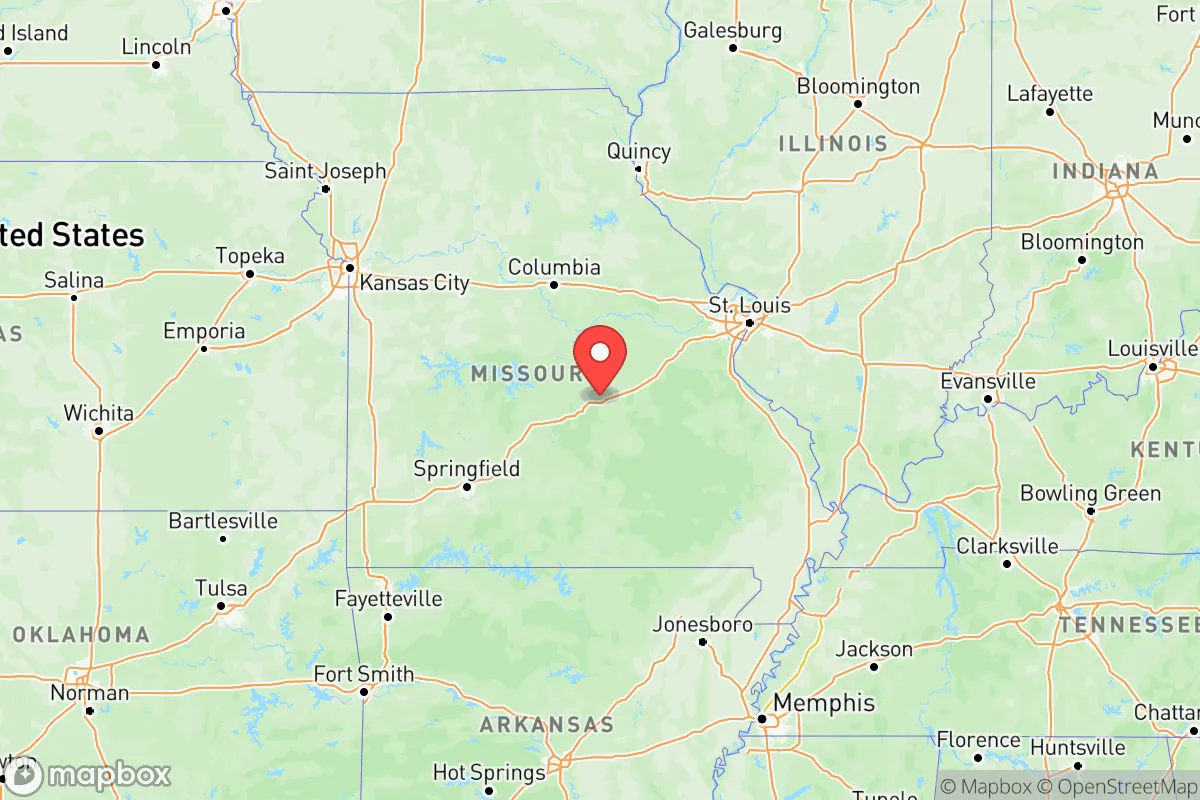
Photo: Wikipedia
Personal Sovereignty in Missouri
Strong independent fundamentals that actively favor personal liberty and low regulation.
What does Personal Sovereignty tell us?
Personal Sovereignty measures your capacity for self-reliance and independence with minimal government friction. Higher scores mean fewer barriers between you and the way you want to live... but it assumes you have the space you need and good neighbors.
What does this tell us?
Personal Sovereignty measures your capacity for self-reliance and independence with minimal government friction. Higher scores mean fewer barriers between you and the way you want to live... but it assumes you have the space you need and good neighbors.
State Policy
Energy independence: Importer (15% of energy produced in-state)
Personal Liberty
Homesteading

Personal Liberty Analysis
Missouri stands as one of the few remaining states where personal sovereignty is not just a talking point but a lived reality, offering a legal and cultural environment that actively resists federal overreach and prioritizes individual autonomy. For those seeking to minimize government intrusion into daily life—whether through taxation, self-defense, medical choices, or property use—Missouri provides a robust framework that many coastal and Midwestern states have abandoned. The state’s constitutional protections, coupled with a legislature that has consistently pushed back against federal mandates, create a unique sanctuary for those who view personal sovereignty as the bedrock of freedom. However, the degree of this autonomy varies significantly between urban corridors like St. Louis and Kansas City and the rural strongholds where self-reliance is not a lifestyle choice but a necessity.
Tax burden and regulatory posture: how Missouri compares to surrounding states
Missouri’s tax structure is deliberately designed to leave more money in your pocket and less in government coffers, a critical factor for anyone prioritizing financial sovereignty. The state’s flat income tax rate of 4.95% is among the lowest in the region, and recent legislation is on a path to reduce it further, with triggers that could drop it to 4.5% as revenues allow. Property taxes are equally restrained, averaging just 0.87% of assessed home value, which is well below the national average and significantly lower than states like Illinois or Kansas. Sales tax rates vary by locality, but the state rate of 4.225% is manageable, and many rural counties keep combined rates under 8%. On the regulatory front, Missouri has aggressively rolled back occupational licensing requirements and business red tape, making it easier to start a small farm, workshop, or home-based enterprise without drowning in permits. In towns like West Plains and Poplar Bluff, the regulatory posture is almost libertarian—county officials often view their role as facilitating, not controlling, economic activity. This stands in stark contrast to the regulatory gauntlet found in St. Louis County, where municipal codes and zoning boards still exert heavy influence. For the sovereignty-minded, the clear choice is to locate outside the state’s major metropolitan areas, where the tax and regulatory burden is lightest and local governments are more aligned with the principle of limited interference.
Self-defense and gun law specifics: constitutional carry and castle doctrine in practice
Missouri is a national leader in firearm freedom, having enacted constitutional carry in 2016, meaning no permit is required to carry a concealed firearm for any law-abiding adult. This is not a loophole or a temporary measure—it is a codified right that the state has defended against federal challenges, including the 2021 Second Amendment Preservation Act, which declares federal gun laws that infringe on the Second Amendment to be null and void in Missouri. The castle doctrine is fully in effect, with no duty to retreat in any place where a person has a lawful right to be, including vehicles and public spaces. Stand-your-ground protections are absolute, and the state preempts local municipalities from enacting their own gun control ordinances, meaning a single standard applies from Branson to Kirksville. For the prepper or survivalist, this legal environment means you can train, carry, and store firearms without fear of arbitrary local restrictions. However, practical differences exist: in Kansas City, law enforcement may be less supportive of aggressive self-defense claims due to urban political pressures, while in Rolla or Farmington, the sheriff’s office is likely to view a defensive shooting as a clear-cut case of a citizen exercising their rights. The key takeaway is that Missouri’s statutory framework is among the strongest in the nation, but the cultural enforcement of those laws varies—choose your county wisely.
Self-reliance and homesteading viability: lot sizes, zoning, and off-grid feasibility
Missouri’s rural landscape is a paradise for those seeking to live off the grid or establish a self-sufficient homestead, with zoning laws that are among the most permissive in the Midwest. In unincorporated areas of counties like Texas County or Ozark County, there are often no building codes, no permit requirements for sheds or barns, and no restrictions on rainwater collection or composting toilets. Minimum lot sizes for agricultural use can be as small as 5 acres, but many parcels of 20 to 40 acres are available for under $5,000 per acre, making land ownership accessible. Off-grid solar and wind systems are legal and common, and the state has no net-metering cap that would penalize homeowners who generate their own power. Water rights are favorable: landowners can drill wells without a permit in most areas, and surface water from ponds and creeks can be used for irrigation and livestock. In Salem and Houston, you can literally build a cabin in the woods with cash and a chainsaw, and the county assessor will only care about property tax valuation, not your construction methods. The contrast with Springfield or Columbia is stark—those cities enforce suburban-style zoning that restricts livestock, limits accessory structures, and requires engineered septic systems. For maximum autonomy, the rule is simple: buy land in a county with a population under 25,000 and a zoning code that fits on one page.
Personal liberties: parental rights, medical autonomy, speech, and property protections
Missouri has become a battleground for personal liberties, and the state has largely sided with individual freedom over government mandates. Parental rights are explicitly protected under state law, with the 2014 Parental Rights Amendment ensuring that parents have the fundamental right to direct the education, healthcare, and upbringing of their children without state interference. This has translated into strong school choice options, including charter schools in urban areas and a robust homeschool community that operates with minimal reporting requirements. Medical autonomy is equally protected: Missouri passed a law in 2021 prohibiting vaccine passports and government-mandated vaccinations, and the state’s Right to Try Act allows terminally ill patients access to experimental treatments without FDA interference. Free speech is broadly protected, with no hate speech laws that could chill political or religious expression, and the state has resisted federal pressure to adopt digital surveillance programs. Property rights are enshrined in the state constitution, with strong protections against eminent domain abuse—the 2006 Amendment 1 prohibits taking private property for economic development purposes, a direct response to the Kelo decision. In Joplin and Cape Girardeau, these protections are taken seriously by local courts, whereas in St. Louis, property rights can still be eroded by municipal redevelopment authorities. For the sovereignty-focused individual, the legal framework is excellent, but vigilance is required in urban jurisdictions where progressive local governments may test the limits of state preemption.
Overall, Missouri ranks among the top five states in the nation for personal sovereignty, offering a legal and cultural environment that actively resists the encroachment of federal and state power into individual lives. The combination of constitutional carry, low taxes, permissive zoning, strong parental rights, and medical autonomy creates a rare trifecta for those seeking to live free from government overreach. The state is not perfect—urban pockets like Kansas City and St. Louis still harbor progressive enclaves that chafe against state preemption laws, and the property tax system, while low, is administered by counties that vary in efficiency. But for the strategic relocator who values self-reliance and personal liberty above all else, Missouri offers a blueprint for how a state can balance order with freedom. The key is to choose your location carefully: the sovereignty you seek is waiting in the rural counties and small towns, not in the cities that have already begun to compromise it.

Top Cities for Personal Sovereignty in Missouri

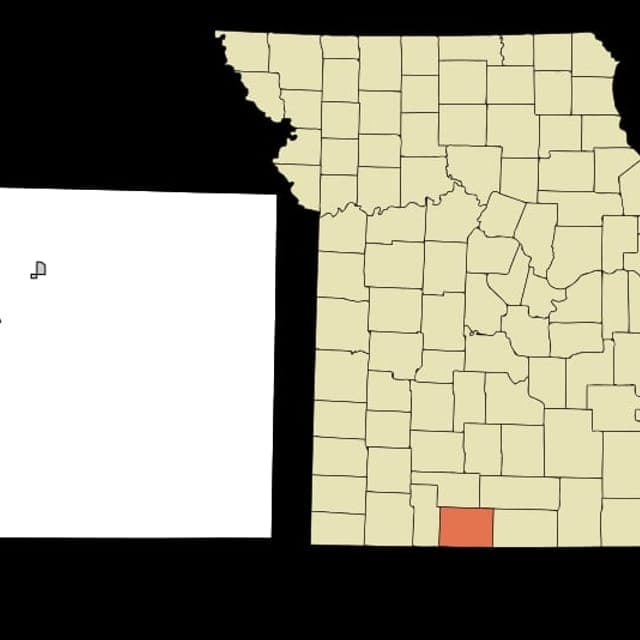




* Values derived from national, state, county, city and local statistics and may differ in a specific area. Last updated: 2026-04-18T23:36:58.000Z
Narrative content on this page is AI-generated and may contain mistakes. Verify any details that matter before acting on them.
ReloMaps may earn a commission from affiliate links at no extra cost to you.

