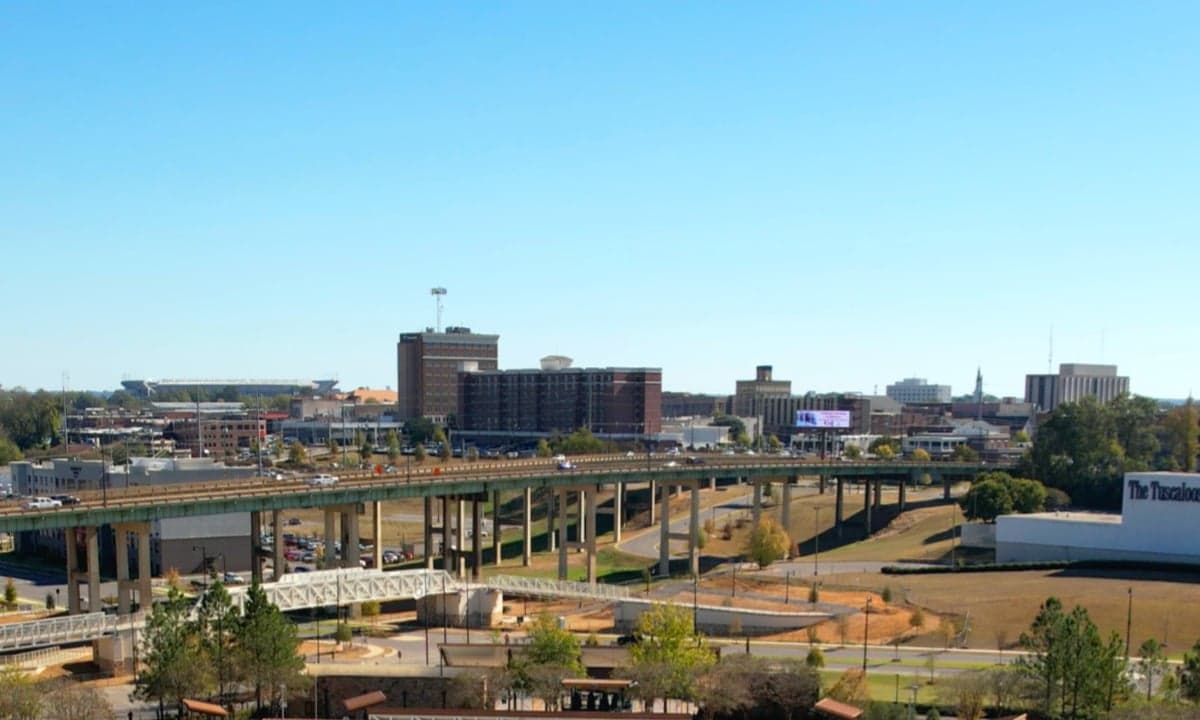
Photo: Wikipedia
Find The Best Places To Live
in Tuscaloosa
PRO TIP! You can paste a Zillow or Redfin link to get info on that property.
What It's Like Living in Tuscaloosa, AL
Tuscaloosa has a split personality, and that’s exactly what makes it interesting. By day, it’s a college town where the University of Alabama’s crimson wave washes over everything from coffee shops to construction sites; by night—and especially on fall Saturdays—it transforms into a 100,000-person block party fueled by tailgate smoke and bourbon. Living here means navigating that tension between a young, transient student population (median age 28.2) and a deeply rooted local community that remembers when Bryant-Denny Stadium held half as many people.
Daily Rhythm: Gamedays, Groceries, and the Commute
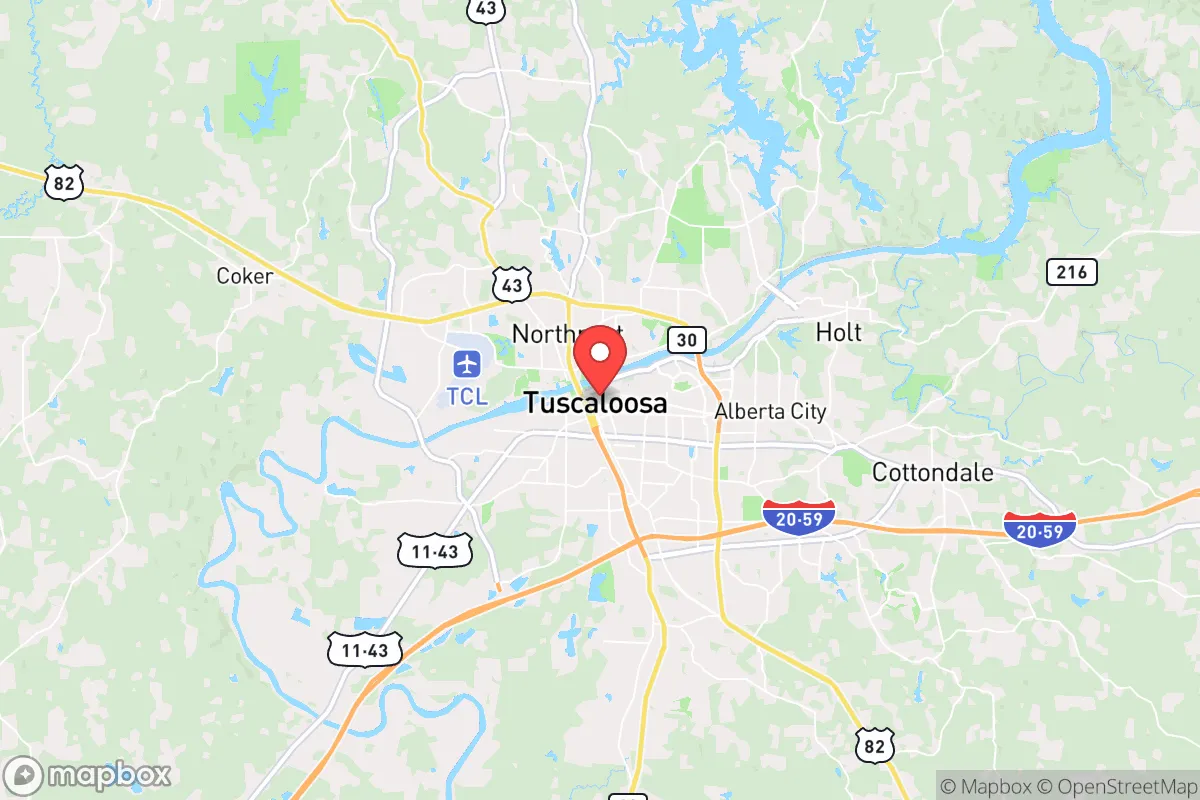
Most weekdays in Tuscaloosa move at a Southern pace—slow enough to notice the humidity but fast enough to get things done. The average commute is just over 18 minutes, which means you can live in a quiet neighborhood off Rice Mine Road and still be at a downtown restaurant in under 15. The city’s layout is simple: the University dominates the eastern side near I-359, while residential areas stretch west toward Northport and south along McFarland Boulevard. Grocery shopping means Publix for the transplants, Winn-Dixie for the locals, and the Midtown Village area for Target runs and chain dining. For a real taste of place, locals hit City Cafe on Greensboro Avenue for meat-and-three lunches or the Waysider for breakfast biscuits that have been a tradition since Bear Bryant ate there.
Weekends here revolve around the seasons. Fall is sacred—Alabama football games turn the entire city into a single-purpose organism. Spring brings the Tuscaloosa Amphitheater to life with national touring acts, and summer means slow afternoons at Lake Tuscaloosa, where pontoons and jet skis outnumber the students. The city’s median household income of $48,536 is modest, but the cost of living index sits at 85—well below the national average—so that paycheck stretches further than it would in Birmingham or Huntsville. The trade-off is that high-paying professional jobs are concentrated in education, healthcare (DCH Regional Medical Center), and a handful of manufacturing plants like Mercedes-Benz in nearby Vance.
Sports & Community: More Than Just the Tide
It’s impossible to overstate how central Alabama football is to daily life here. The Crimson Tide isn’t just a team; it’s the civic religion, the economic engine, and the social calendar all rolled into one. During home games, the city’s population effectively doubles, and locals either lean into the chaos or plan their errands around kickoff. But the sports culture runs deeper than the university. High school football at Central High School and Hillcrest draws real crowds on Friday nights, and the Tuscaloosa County School System is a major community anchor—parents often choose neighborhoods based on which elementary school feeds into which middle school. The median home value of $236,600 buys a three-bedroom brick house in a decent school district, something that feels increasingly rare in the rest of the country.
The kind of person who fits in here is someone who values community over convenience. You’ll find young families who moved for a job at the University or the medical center, empty nesters downsizing from larger homes in Birmingham, and single professionals who appreciate that a night out at the Houndstooth or Alcove International Tavern costs half what it would in a bigger city. The unspoken rule is that you need to be comfortable with a certain sameness—there aren’t many international grocery stores, the restaurant scene leans heavily on fried food and barbecue, and the cultural calendar is dominated by university events. But for the right person, that predictability is a feature, not a bug.
What’s There to Do: Parks, Music, and the River
Outdoor life here centers on the Black Warrior River and the lakes it feeds. Lake Tuscaloosa is the main recreational draw—boating, fishing, and floating are summer rituals. The Riverwalk along the Black Warrior is a paved trail that connects the Amphitheater to the University, popular for jogging and dog-walking. For a quieter escape, Hurricane Creek Park offers hiking trails and a swimming hole that feels a world away from the strip of bars on The Strip. The Druid City Arts Festival and the Kentuck Festival of the Arts (just north in Northport) bring in regional artists and craftspeople, giving the city a creative edge that surprises visitors expecting only football.
Music is a bigger deal than outsiders realize. The Amphitheater books acts from country to classic rock, but the real scene is in smaller venues like the Green Bar and Egan’s, where local bands and touring indie acts play to intimate crowds. The Bama Theatre downtown hosts film series and concerts in a restored Art Deco space that feels like a secret. For families, the Children’s Hands-On Museum and the University of Alabama Arboretum are reliable weekend stops. The downside is that nightlife options are limited for anyone over 30—once you’ve exhausted the college bars on The Strip and the slightly more grown-up spots downtown, there’s not much left.
Pros and Cons of Living Here
- Pro: Low cost of living. A median home value of $236,600 and an overall cost index of 85 mean you can own a home and still have money for travel or hobbies.
- Con: Violent crime is a real concern. The rate of 471.7 per 100,000 is well above the national average, and it’s concentrated in specific areas—most notably parts of the West End and near the university’s fringe. Most long-term residents know which blocks to avoid after dark.
- Pro: Strong sense of identity. People here are proud of Tuscaloosa in a way that feels genuine, not performative. You’ll hear “Roll Tide” as a greeting, a farewell, and a statement of belonging.
- Con: The economy is a one-trick pony. The University of Alabama is the dominant employer, and when the academic calendar shifts, so does the local economy. Summer feels noticeably slower, and some businesses struggle to stay open year-round.
- Pro: Weather that rewards patience. Summers are hot and humid (90°F with 80% humidity is normal), but spring and fall are genuinely beautiful—mild enough for outdoor festivals and porch-sitting from March through May and again from September through November.
- Con: Limited career diversity. If you’re not in education, healthcare, or manufacturing, you’ll likely be commuting to Birmingham (about an hour east) for work. The 38.1% college-educated population is skewed heavily toward university staff and recent graduates who often leave after a few years.
Living in Tuscaloosa means accepting that your social life will revolve around the university calendar, your weekends will be shaped by football season, and your idea of a good restaurant will eventually settle on a handful of reliable spots. It’s not a city for people who crave constant novelty or career mobility. But for those who want a place where neighbors know each other, where a Saturday morning can be spent on a lake and a Saturday night at a concert, and where the cost of living lets you actually enjoy both—it’s hard to beat.

Similar small cities to Tuscaloosa
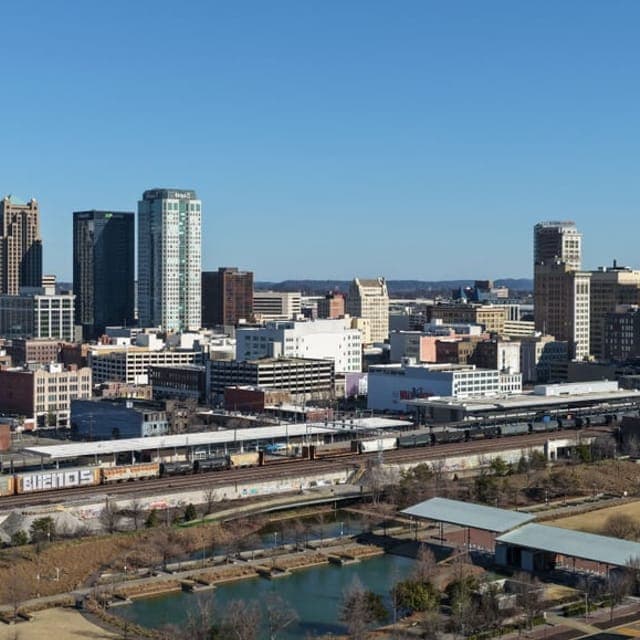
* Values derived from national, state, county, city and local statistics and may differ in a specific area. Last updated: 2026-04-19T19:11:40.000Z
Narrative content on this page is AI-generated and may contain mistakes. Verify any details that matter before acting on them.
ReloMaps may earn a commission from affiliate links at no extra cost to you.

